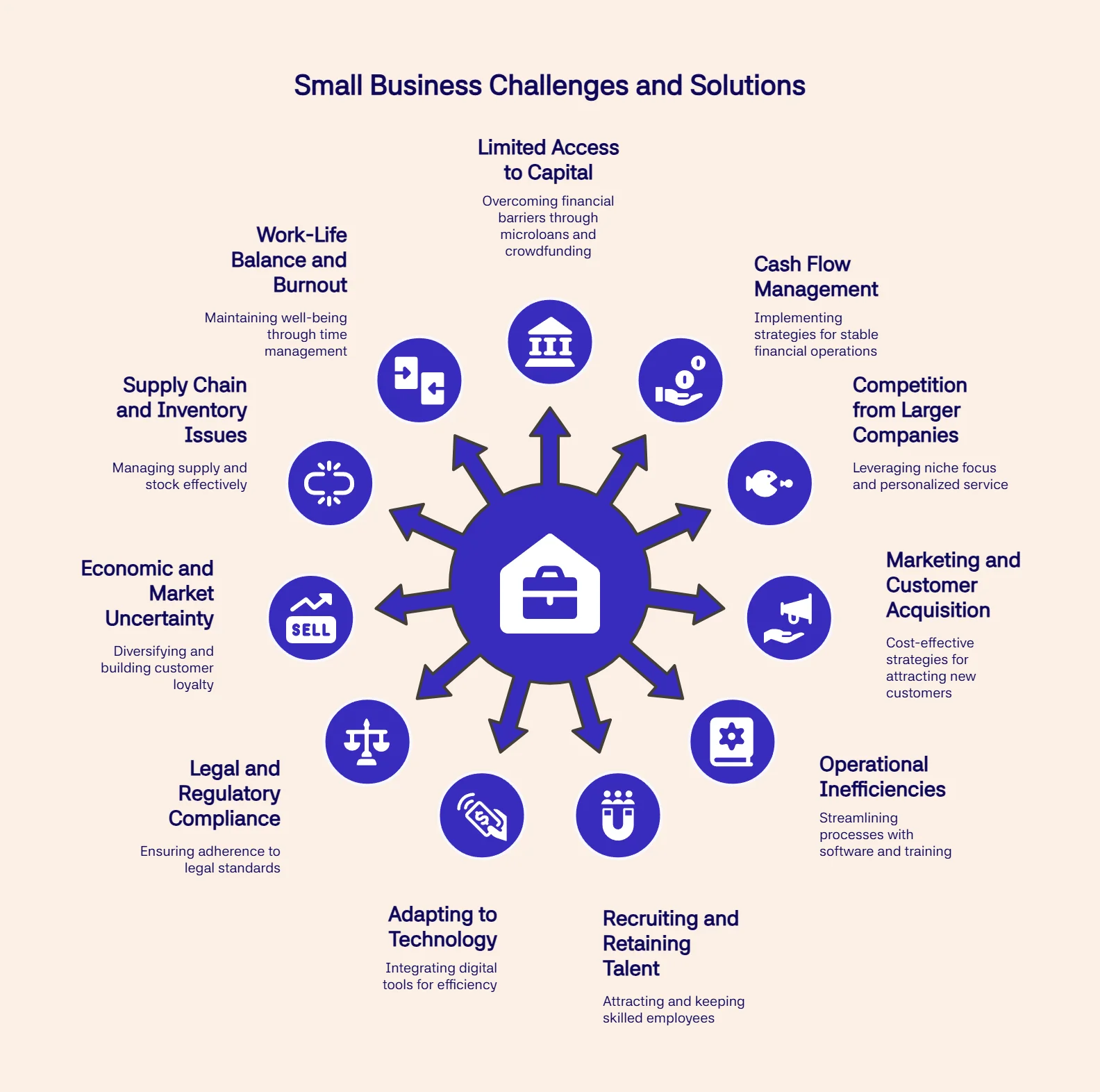
AI Emerges as Key Driver for Small Business Productivity and Innovation
Small businesses are poised for a transformative year as AI agents, consumer brand AI adoption, and hyper-focused apps redefine operational efficiency and customer engagement. Discover the latest trends.

AI Trends 2026: Quantum, Agentic AI & Smarter Automation

Cybersecurity Trends for 2025 and Beyond
One Of The Best Businesses To Start In 2026
The landscape of small business technology and innovation is currently undergoing significant shifts, with artificial intelligence (AI) emerging as a pivotal force. Recent insights, curated as of January 25th at 10 p.m. ET, highlight how AI is becoming increasingly accessible and impactful for small to medium-sized businesses (SMBs), alongside a strategic move towards specialized applications. These developments point to a future where enhanced productivity and smarter operational strategies are within reach for a broader spectrum of enterprises, extending beyond the traditional tech startup sphere.
Autonomous AI Agents: Empowering SMBs
One of the most compelling trends observed is the growing accessibility of autonomous AI agents for small and medium-sized businesses. These sophisticated AI tools are not merely theoretical concepts; they are actively being deployed to handle specific, critical roles within organizations. Examples of their application include lead capture, which automates the identification and initial engagement with potential customers, thus streamlining sales pipelines. Additionally, AI agents are proving invaluable in meeting summarization, distilling lengthy discussions into concise, actionable points, and content creation, generating various forms of media to support marketing and communication efforts. This integration underscores a clear path towards boosting overall productivity for SMBs by automating tasks that traditionally consumed significant time and resources, as highlighted by Forbes.
AI Beyond Tech: Consumer Brands Embrace Core Operations
The adoption of AI is no longer confined to the tech sector or innovative startups. A significant development indicates that mainstream consumer brands are now actively utilizing AI for core operational functions. This broader integration signals a maturation of AI technology and its proven benefits across diverse industries. Consumer brands are leveraging AI to manage complex supply chains, optimizing logistics, inventory, and distribution to ensure efficiency and reduce costs. Furthermore, AI is instrumental in data-driven decision-making, particularly in discerning which new products to manufacture. By analyzing vast datasets, AI can identify market gaps, consumer preferences, and potential demand, allowing brands to make more informed and strategic product development choices. This demonstrates AI's capacity to move beyond peripheral applications and become an integral part of business strategy and execution.
Shifting Strategies: Beyond Blogs to Problem-Solving Apps
In a notable strategic pivot, small businesses are being encouraged to evolve beyond traditional blog-centric content strategies. The new focus is on creating simple, highly focused applications designed to address a specific customer problem at the precise moment of need. This shift represents a move towards hyper-utility, where digital solutions deliver immediate value and cater to acute pain points. Unlike broad informational blogs, these apps aim to be direct and functional, providing solutions that enhance customer experience and loyalty. This strategy aligns with the growing consumer expectation for instant gratification and tailored digital services, allowing small businesses to carve out niche markets and offer unique value propositions. This approach signals a more direct and engaging form of customer interaction, moving towards practical problem-solving as a core digital strategy.
Curated Insights and Expert Perspectives
To further deepen understanding of these ongoing transformations, a curated selection of articles and expert perspectives is offered within the domain of Small Business Tech and Innovation. These resources delve into key discussions, providing valuable insights for business leaders and entrepreneurs. The emphasis is on enabling users to choose a specific focus, allowing for a personalized feed of the latest insights, ensuring relevance and timely information. This tailored approach, powered by Forbes AI, through Adelaide, underscores the dynamic nature of the tech and innovation space, where continuous learning and adaptation are paramount for success, as noted by Forbes.
The Future of Small Business Tech: A Data-Driven Landscape
The current trends paint a clear picture: the future of small business technology is intrinsically linked to data and artificial intelligence. From autonomous agents augmenting human capabilities to AI dictating product lines for consumer brands, data-driven decisions are becoming the bedrock of modern enterprises. The move towards highly specialized, problem-solving apps further solidifies this, as these applications often leverage data to understand user needs and deliver effective solutions. Small businesses that embrace these technologies and adapt their strategies to incorporate AI's capabilities and lean, problem-solving app development are likely to gain a significant competitive advantage in an increasingly digital marketplace. This ongoing evolution, regularly updated and analyzed, remains a critical area for business leaders to monitor closely.
Related Articles

Joby Aviation Stock Tumbles 13% on $1 Billion Capital Raise Plan
Joby Aviation shares dropped significantly after announcing plans to raise $1 billion through stock and convertible note sales, sparking dilution fears among investors.