Supreme Court Signals it Will Block Trump's Bid to Fire Fed Governor Lisa Cook
Supreme Court expresses deep skepticism toward Trump's attempt to fire Fed Governor Lisa Cook, signaling likely protection of central bank independence.

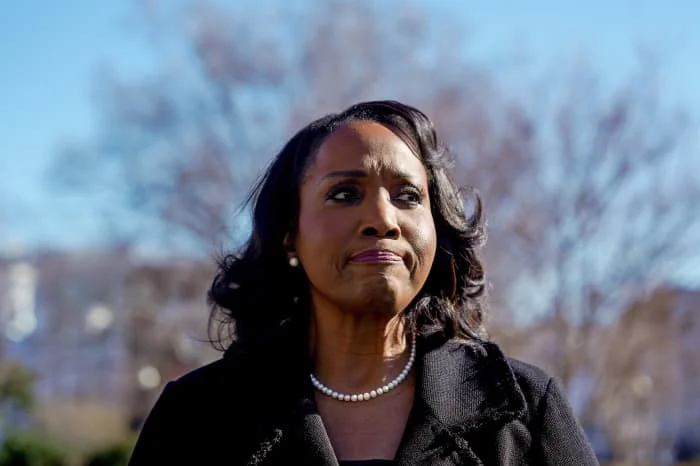
WASHINGTON — The Supreme Court Wednesday seemed likely to block President Trump's attempt to immediately remove Lisa Cook from the Federal Reserve's governing board, marking a rare rebuke of the administration's expansive claims of presidential power.
In a spirited argument that lasted more than two hours, all nine justices—liberal and conservative--expressed doubts about the president's claim of absolute power to fire members of the Fed board. The case represents one of the most consequential challenges to Trump's efforts to control the nation's central bank.
The Core Legal Question
Under the Federal Reserve Act of 1913, only the president can terminate a Fed board member, and a governor like Cook can only be terminated "for cause." The law does not detail what would constitute "cause," but cause has historically been understood to mean malfeasance or dereliction of duty.
Unhappy with the Fed's position on interest rates, Trump moved to fire Governor Lisa Cook, a Democratic-appointee, in August after members of his administration raised unproven allegations of mortgage fraud they said happened prior to her taking office. Cook denies the claims, though she has acknowledged through an attorney of making an "inadvertent" mistake on bank application paperwork.
The disputed mortgage applications stem from 2021, before Cook joined the Federal Reserve board. The case against Cook stems from allegations she claimed two properties, in Michigan and Georgia, as "primary residences" in June and July 2021, before she joined the Fed board. Such claims can lead to a lower mortgage rate and smaller down payment than if one of them was declared as a rental property or second home.
Justices Across the Ideological Spectrum Express Concern
Perhaps most significantly, even Trump-appointed justices signaled alarm at the administration's position. Justice Brett Kavanaugh was far more doubtful about the Trump administration's position. "Your position that there's no judicial review, no process required, no remedy available, a very low bar for cause that the president alone determines," he said. "I mean, that would weaken, if not shatter, the independence of the Federal Reserve."
Chief Justice John Roberts appeared skeptical of the administration claims. "You began talking about deceit," he asked Sauer, "Does what you said after that apply in the case of an inadvertent mistake contradicted by other documents in the record?" Roberts appeared to be alluding to Cook's defense that other bank paperwork properly indicated her second mortgage was for a vacation home.
Justice Sonia Sotomayor noted that a Michigan bank had given Cook permission to rent her home there after she moved away, and recalled her own experience when she was appointed to the U.S. Supreme Court. "I had to move from New York," Sotomayor recalled. "Frankly, I renovated my apartment the year before, thinking I would be in New York for the rest of my life." As she put it, "Things change."
Protecting the Fed's Independence
Several justices observed that this is the first time since the Fed was established by Congress 112 years ago that any president has interfered with the statutory independence of the Fed by firing one of its members. The question of whether that historical barrier should hold dominated the justices' inquiries.
Support for Cook's position came from an unusually broad coalition of senior economic officials. All three former living Fed chairs — Alan Greenspan, Ben Bernanke and Janet Yellen — signed on to a legal brief with the Supreme Court arguing against Cook's removal, along with a group of former Treasury secretaries, chairs of the White House Council of Economic Advisers and others. Bernanke was at Wednesday's hearing. The brief says that Congress "intentionally" designed the Fed "as a uniquely independent entity, largely insulated from political pressures that could otherwise prioritize short-term economic gain over long-term stability and growth."
The Broader Stakes for Presidential Power
The case, which comes as Trump mounts an unprecedented campaign to control the Fed, is being closely watched by financial markets around the world, as the independence of the central bank -- which sets policies affecting the global economy and every American business and consumer -- could hinge on the outcome.
The true motivation for trying to fire Cook, Trump's critics say, is the Republican president's desire to exert control over U.S. interest rate policy. If Trump succeeds in removing Cook, the first Black woman Federal Reserve governor, he could replace her with his own appointee and gain a majority on the Fed's board.
The situation has grown more urgent with recent developments. The dispute over presidential power has taken on greater importance after it emerged that the Justice Department is also investigating Federal Reserve Chair Jerome Powell. With Trump seeking to exert control over the central bank, which, among other things, sets interest rates, the case has taken on even greater importance after it emerged that the Justice Department is investigating Federal Reserve Chair Jerome Powell.
Potential Economic Consequences
Several justices focused on the broader economic implications of allowing Cook's removal. Several of the justices pressed Sauer about the consequences of a decision allowing Mr. Trump to fire Cook, and specifically the ramifications for the U.S. economy. Barrett pointed to predictions from economists that Cook's removal could trigger a recession. "How should we think about the public interest in a case like this?" she said, later adding that the risks to the economy may counsel caution by the Supreme Court.
What Comes Next
A decision is expected by early summer. What's pending before the justices is the administration's application to lift a lower court order keeping Cook on the board while the case continues. In deciding whether to grant or deny the application, the court doesn't have to fully answer weighty questions like how much cause is needed to remove a governor or what sort of notice and hearing procedures (if any) are required.
Regardless of the technical grounds for the decision, whatever the court says, it would be surprising if Trump wins, certainly on anything resembling some of the extreme grounds that Sauer urged.
"This case is about whether the Federal Reserve will set key interest rates guided by evidence and independent judgment or will succumb to political pressure," Cook said in a statement after the hearing.
Related Articles

Joby Aviation Stock Tumbles 13% on $1 Billion Capital Raise Plan
Joby Aviation shares dropped significantly after announcing plans to raise $1 billion through stock and convertible note sales, sparking dilution fears among investors.