
Record 5.2 Billion Passengers Expected for International Flights in 2026
The global aviation industry anticipates a record 5.2 billion air travelers in 2026, driven by robust demand and improved airline profitability.

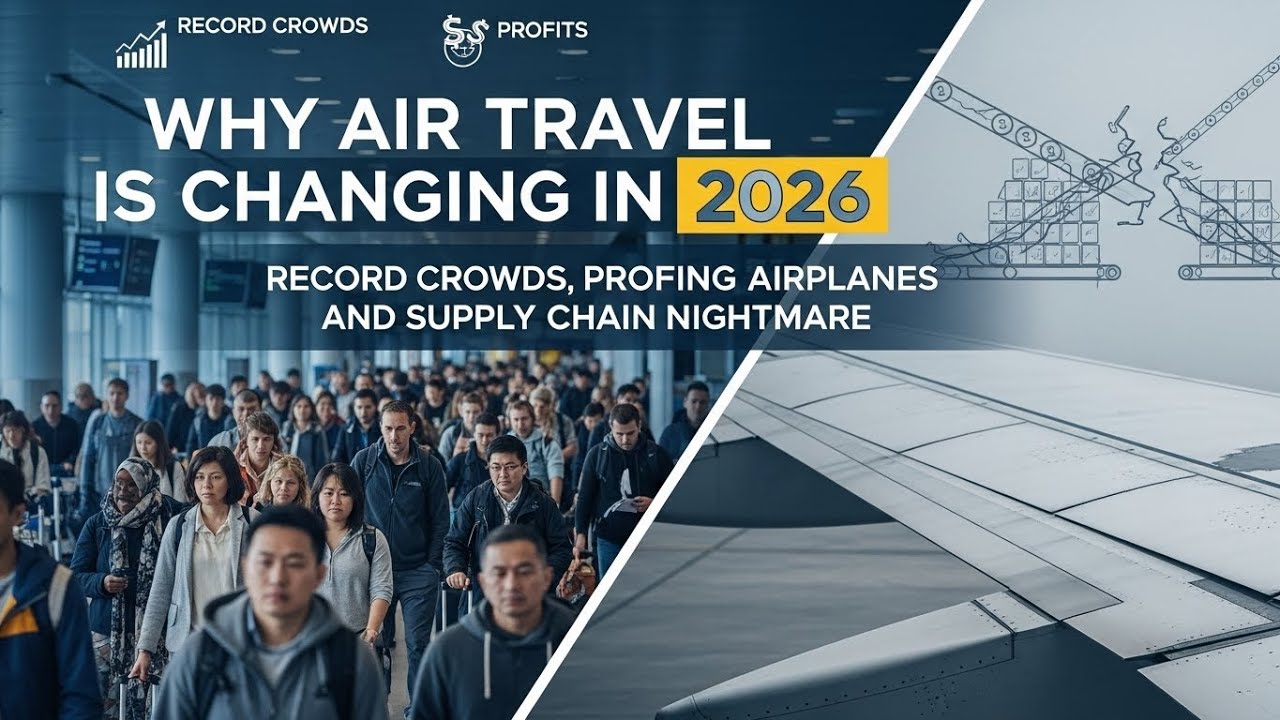
Why Air Travel is Changing in 2026 Record Crowds, Profits, Aging Planes, Bankruptcy & Supply Chain N

Global Aviation Outlook 2026: Record Profits, Aging Planes, Bankruptcy & Supply Chain Nightmare

Compagnies aériennes : bénéfices records en 2025, stabilisation prévue en 2026
Geneva, Switzerland – The global aviation industry is poised for an unprecedented year in 2026, with projections indicating a record-breaking 5.2 billion air travelers globally. This significant surge, representing a 4.4% increase from the 4.99 billion projected for 2025, underscores a robust recovery and expanding demand in the sector, despite ongoing challenges. The International Air Transport Association (IATA) released these optimistic forecasts during its Global Media Day in Geneva, highlighting a resilient industry successfully navigating various headwinds.
The anticipated 5.2 billion passengers are not just a recovery to pre-pandemic levels but a new all-time high, signaling a pivotal moment for airlines and the wider tourism ecosystem. This resurgence is expected to revitalize travel across continents, offering promising prospects for hospitality, cultural heritage, and local economies worldwide [travelandtourworld.com].
Strong Demand and Capacity Utilization Mark the Outlook
The impressive passenger growth is accompanied by an equally remarkable efficiency in airline operations. IATA projects that airlines will fill a record high of 83.8% of all seats in 2026. This high load factor is partly attributed to a persistent shortage of new aircraft, which, while posing a challenge, also ensures that available capacity is utilized to its maximum. This trend was already evident in late 2025, with November 2025 seeing an 83.7% load factor globally [airlines.iata.org].
Willie Walsh, IATA's Director General, emphasized the industry's resilience in the face of various obstacles. "Airlines have successfully built shock-absorbing resilience into their businesses that is delivering stable profitability," Walsh stated, acknowledging the headwinds such as rising costs from aerospace supply chain bottlenecks, geopolitical conflicts, sluggish global trade, and increasing regulatory burdens [rfi.fr]. Despite these challenges, the improved outlook for 2026 reflects an industry adapting and thriving.
Profitability on the Rise, Despite Capital Cost Concerns
Financially, the global airline industry is also looking healthier. Industry net profits are projected to reach US$41 billion in 2026, a positive forecast that surpasses previous expectations. This follows an anticipated US$39.5 billion profit in 2025. While these figures represent a significant rebound, Walsh noted that airlines' earnings still do not fully cover their capital costs. This indicates a need for sustained profitability and investment to ensure long-term stability and growth.
The improved financial performance is partly driven by a stronger-than-expected air freight sector, which has performed well despite ongoing trade disputes. This diversified revenue stream has contributed to the overall resilience of airlines, enabling them to absorb some of the cost pressures.
Asia-Pacific Leading the Charge in Demand and Load Factors
The Asia-Pacific region is expected to be a significant driver of this global growth. Forecasts indicate that passenger load factors in this region, the largest market globally, will reach an all-time high of 84.4% in 2026. This robust demand is expected despite a slower recovery in international traffic in some parts of the region. Eased visa rules in several countries are contributing to the increased appeal and accessibility of travel.
Countries like India, China, and Southeast Asian nations are gearing up for a sharp rise in visitors, benefiting from increased flight capacity and marketing efforts. Major tourism destinations such as Singapore, Bangkok, and Tokyo are particularly poised to gain from the sustained airline capacity and increased passenger flows, bolstering their hospitality sectors and local economies [travelandtourworld.com].
Addressing Capacity Constraints and Future Challenges
While the overall outlook is positive, the industry acknowledges existing and emerging challenges. The shortage of new aircraft remains a critical constraint, contributing to the high load factors but also limiting potential growth. IATA's Director General highlighted the need for manufacturing sectors to address the backlog of aircraft orders, which exceeded 17,000 in 2025, to meet the escalating demand from airlines [airlines.iata.org].
Furthermore, while average return airfares are expected to slightly increase to US$402 in 2026 from an estimated US$400 in 2025, they remain significantly lower—36.8% below 2015 levels [straitstimes.com]. This affordability, combined with robust demand, reinforces the notion of air travel becoming increasingly accessible to a wider demographic. However, the industry must continuously balance affordability with the need for sustainable profitability and investment in infrastructure, technology, and environmental initiatives.
A Promising Trajectory for Global Connectivity
The projections for 2026 paint a picture of an industry on a strong upward trajectory. The anticipated 5.2 billion air travelers represent not just numbers but a profound impact on global connectivity, economic growth, and cultural exchange. As airlines continue to adapt to a dynamic global landscape, the focus will remain on managing capacity effectively, addressing supply chain issues, and investing in sustainable practices to ensure continued growth and profitability in the years to come. The record passenger numbers expected in 2026 solidify air travel's vital role in a connected world.
Related Articles

R Madhavan and Ajith Kumar: Racing Legends Converge at Dubai Autodrome, Sparking Online Frenzy
Viral photos show actors R Madhavan and Ajith Kumar meeting at the Dubai Autodrome, highlighting Ajith's racing journey and a new docu-film.