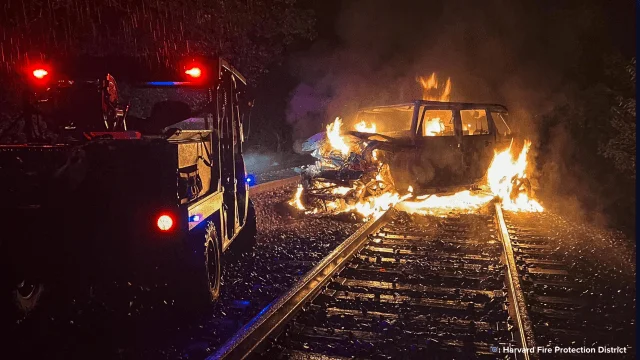
Train Lights Incident Ignites Fiery Debate on Public Conduct and Parental Responsibility
A viral video of children playing with train reading lights has sparked a widespread online discussion concerning civic sense, parenting standards, and public behavior.

A recent 14-second video clip, depicting two young boys repeatedly toggling reading lights on and off within a train coach, has ignited a fervent online discussion across social media platforms. The footage, circulated by the X handle 'Trains of India,' has fueled a broader debate concerning civic sense, the responsibilities of parenting, and acceptable conduct in shared public environments. What particularly amplified the reactions was the noticeable absence of any adult intervention to curb the children's actions, a detail many viewers pinpointed as indicative of a more significant societal concern.
The Viral Incident: A Glimpse into Public Etiquette
The short video, which quickly gained traction, succinctly captures the boys' continuous engagement with the reading lights throughout their journey. The accompanying caption from 'Trains of India' explicitly states, "Dear parents, please teach basic civic sense to your children before bringing them to public places. #IndianRailways." This direct appeal immediately resonated with a substantial portion of the online audience, prompting a flood of opinions and commentaries regarding decorum in public settings. The repeated switching of the lights by the children, without apparent supervision or correction, became the central point of contention, sparking widespread dismay and calls for greater accountability in fostering public manners according to The Indian Express.
Erosion of Values: A Societal Reflection?
As the video continued to spread, numerous users raised concerns about what they perceived as a systemic decline in essential values, traditionally imparted both at home and within educational institutions. One user expressed a sentiment shared by many, remarking, “I think wrong lessons were/are being talked in the schools these days. We used to have moral science classes in my school days. I think that needs restructuring.” This comment suggests a yearning for a return to foundational ethics education. Another observation offered a broader cultural interpretation, stating, “Stress-testing anything new is something many of us in India grow up learning. We poke, prod, and often break it—then declare it ‘not good.’ It’s a habit learned at home and one that tends to repeat throughout life.” This perspective hints at a deeper-rooted cultural tendency that might manifest in such public behaviors.
Parental Responsibility and the Public-Private Divide
The conversation invariably shifted towards the role of parents in instilling civic values. Several commentators underscored that the cultivation of civic sense should commence in early childhood. One user emphasized, “Our civic sense starts very young. As parents we should take responsibility to teach them.” A particularly incisive comment highlighted a perceived double standard concerning public and private property. This user observed, “The problem is that we teach our kids to respect only personal property and not public property. If this happened at home or a friend/relatives place most if not all parents would have corrected or atleast asked them to stop. But public spaces do not get the same treatment.” This observation suggests a cultural disconnect where the sanctity of public infrastructure is not afforded the same respect as private belongings or spaces, a critical point derived from the discussions reported by The Indian Express.
The Challenges of Modern Parenting: A Counterpoint
While a significant portion of the discourse focused on parental accountability, not all participants were quick to assign blame solely to parents. A minority of users defended parents, shedding light on the intricate challenges inherent in contemporary parenting. One empathic comment read, “Trust me most parents are helpless today and cannot handle their kids …this generation of kids are different and don’t listen to anyone easily. Parents often give up.” This viewpoint introduces a nuanced perspective, acknowledging the difficulties faced by parents in guiding and disciplining children in an evolving societal landscape, suggesting that the issue may not be as black and white as it initially appears.
Rethinking Education and Public Conduct
The online debate sparked by this seemingly minor incident on a train transcends the immediate act of children playing with lights. It has opened a wider dialogue about foundational education, the role of moral science in schools, and the fundamental lessons imparted (or not imparted) within family units regarding respect for shared spaces and public property. The varying perspectives — from calls for stricter moral education to understanding the pressures of modern parenting — collectively underscore a public grappling with how best to foster a stronger sense of collective responsibility and civic decorum among the younger generation, and indeed, within society at large.
Related Articles
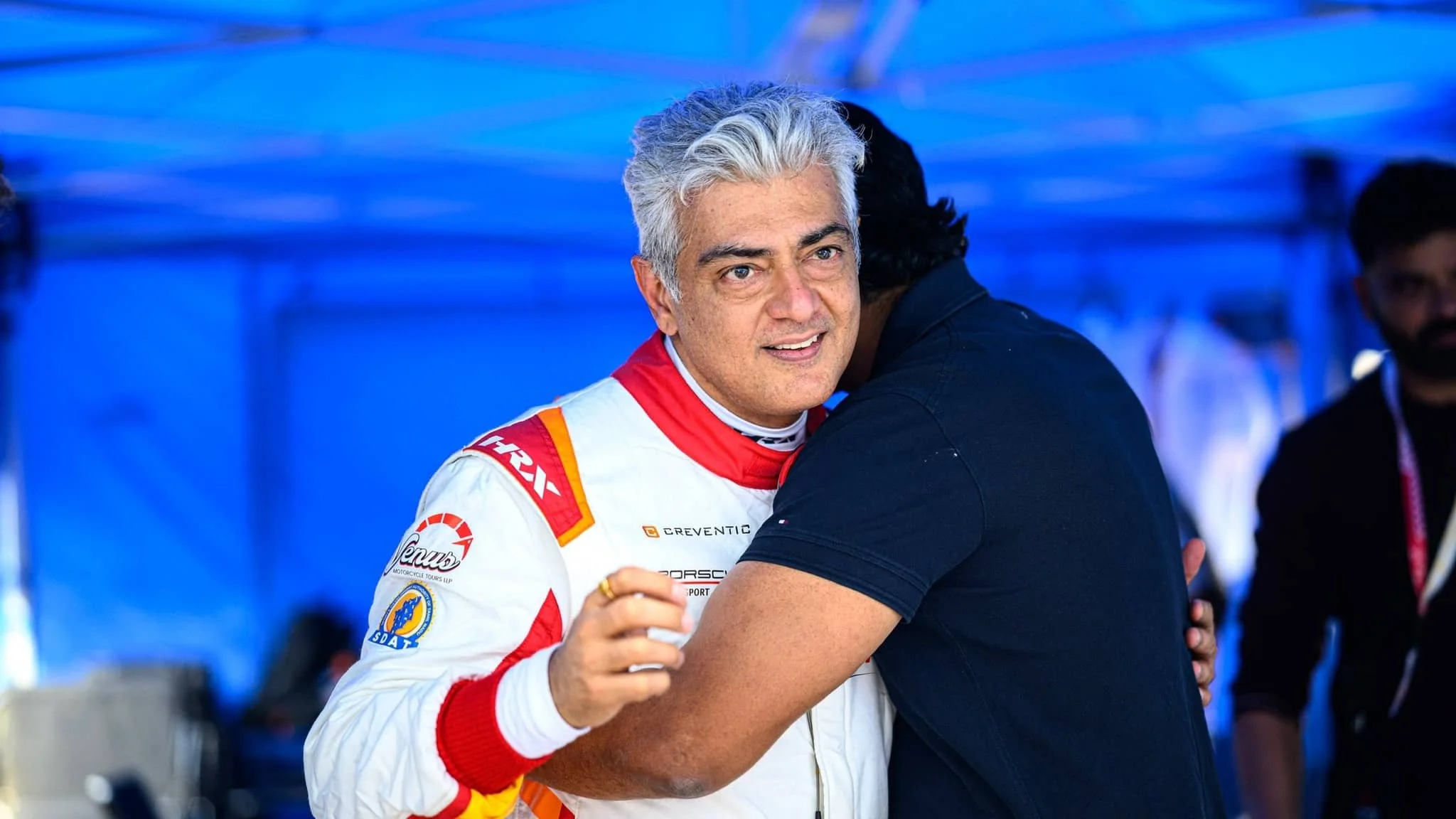
R Madhavan and Ajith Kumar: Racing Legends Converge at Dubai Autodrome, Sparking Online Frenzy
Viral photos show actors R Madhavan and Ajith Kumar meeting at the Dubai Autodrome, highlighting Ajith's racing journey and a new docu-film.