2026 World Cup: Boycott Concerns, Soaring Ticket Prices, and USMNT Play-off Hopes Emerge
Amidst 2026 World Cup preparations, boycott discussions linked to the US presidency, record-high ticket prices, and USMNT UCL success dominate headlines.


Nepal punch ICC World Cup Qualifiers ticket after beating UAE
World cup 2026 #ronaldo #football #worldcup
ARGENTINA PREDICTED STARTING LINEUP WORLD CUP 2022 QATAR #short #worldcup2022 #qatar2022 #argentina
As the football world gears up for the 2026 World Cup, set to be hosted across Mexico, Canada, and the United States, a confluence of significant developments is shaping the narrative surrounding the much-anticipated tournament. From the on-field heroics of USMNT players in the Champions League to unprecedented discussions of a political boycott, alongside contentious debates over ticket pricing and the economic projections, the run-up to the event is proving anything but quiet.
USMNT Talent Shines on European Stage
Even as attention begins to shift towards the 2026 World Cup, American talent is making its mark on the European club stage. A recent chaotic Champions League night saw midfielder Malik Tillman score two goals for Bayer Leverkusen, securing their place in the play-offs. This performance highlights a growing contingent of USMNT players extending their European campaigns. Johnny Cardoso (Atletico Madrid), Weston McKennie (Juventus), Folarin Balogun (Monaco), and Yunus Musah (Atalanta) are all set to continue in the play-offs, offering promising signs for the national team's depth. However, the night was not without disappointment for other American players, as Timothy Weah's Marseille and Sergino Dest's PSV were both eliminated from the competition, including a dramatic stoppage-time goal from a goalkeeper that sealed Marseille's fate, as reported by The New York Times.
Unprecedented Boycott Discussions Emerge
The specter of a World Cup boycott has historically been rare, with past instances primarily driven by logistical challenges or collective protests against FIFA's allocation of spots. Uruguay's absence from the 1934 World Cup and African nations' withdrawal from 1966 qualifiers are notable examples. However, current discussions surrounding the 2026 tournament introduce an entirely new dimension: the possibility of a boycott on purely political grounds. Such a move would be unprecedented, with the closest parallel being the U.S.-led boycott of the 1980 Moscow Olympics. The debate has been fueled by rhetoric related to U.S. President Donald Trump's actions and policies. While a full-scale boycott is deemed "extremely unlikely" by many, including Oke Göttlich, a vice president of the German soccer federation, the uncertainty surrounding future political developments leaves the door ajar for such a possibility. Experts caution that while it represents a "last tool in the toolbox," an escalation of geopolitical tensions could make a boycott discussion "very, very relevant," as noted by the The New York Times.
Controversy Over FIFA's "Dynamic" Ticket Pricing
FIFA President Gianni Infantino has found himself at the center of a storm regarding the record-high prices for 2026 World Cup tickets. Critics, particularly from Germany and England, have labeled FIFA's "dynamic" pricing system as a "cash grab," where costs escalate based on demand, potentially pushing sought-after games into the thousands of dollars. Infantino, however, has used the staggering demand for tickets—over 500 million requests during the month-long sales window—as justification. He pointed out that despite the criticism, the U.S., Germany, and England were the top three nations in terms of ticket requests, framing this as proof that the prices are acceptable given the immense global interest. This stance, however, is met with skepticism, with many arguing that the sheer demand reflects the World Cup's inherent prestige rather than an endorsement of FIFA's pricing strategy or Infantino's leadership, according to The New York Times.
Economic Projections and Global Impact
Amidst the debates, FIFA President Gianni Infantino has also been actively promoting the significant economic benefits projected for the 2026 World Cup. Speaking at the World Economic Forum in Davos, Infantino outlined ambitious figures, suggesting the tournament could generate a global economic impact of $80.1 billion. Furthermore, he claimed it could add up to $40.9 billion to the Gross Domestic Product (GDP) of the host nations—the U.S., Canada, and Mexico—and potentially create 824,000 jobs. These projections underscore FIFA's vision of the World Cup not just as a sporting spectacle but also as a powerful engine for economic growth and employment on a massive scale.
Future World Cup Host Decisions and Local Adaptations
While the focus remains on 2026, discussions are also underway regarding future tournaments. The decision for the 2030 World Cup host, for instance, is still some years away, with FIFA expected to finalize details closer to the tournament. Spanish Football Federation (RFEF) president Rafael Louzan has been actively lobbying for Spain to host the 2030 World Cup final, citing Spain's deep football heritage and experience, and pointing to issues at the recent AFCON in Morocco as justification for Spain's organizational superiority. Beyond the major hosting decisions, local adaptations are already being considered for the 2026 tournament. For example, pubs in England and Wales are set to receive extended licensing hours, allowing them to stay open until 2 am for home nation matches in the later stages of the World Cup. This move acknowledges the significant time difference with the North American hosts and aims to enhance the fan experience in the UK.
Related Articles
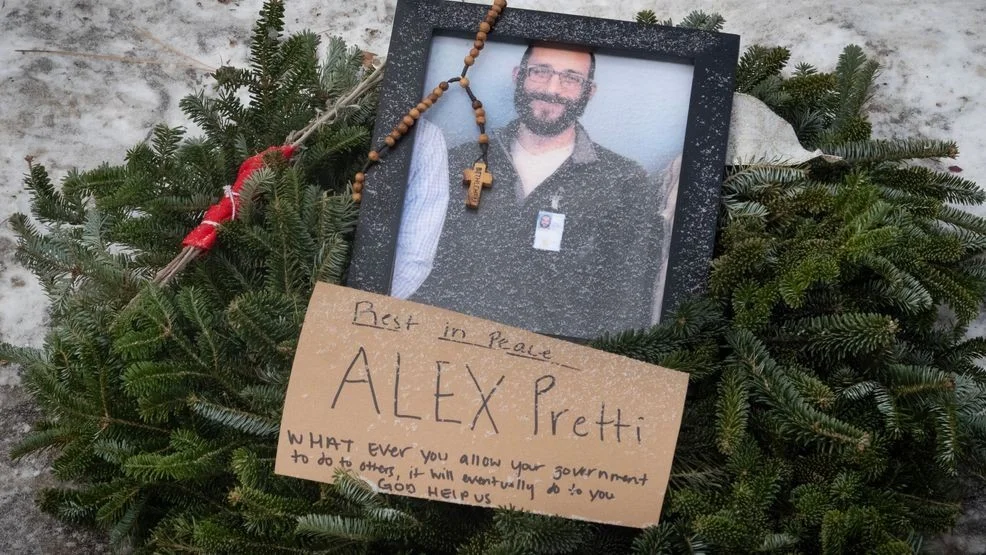
Hundreds Honor Alex Pretti in Minneapolis, Fueling National Debate on Federal Force
Hundreds gathered in Minneapolis to honor Alex Pretti, an intensive care nurse shot by federal agents, sparking widespread protests and debate on immigration enforcement practices across the U.S.