Soham Rockstar Locks Down 'Do Aur Do Paanch' Rights, Warns Against Unauthorized Adaptations
Soham Rockstar Entertainment asserts full rights over the 1980 film 'Do Aur Do Paanch', issuing a public notice against any unauthorized remake, sequel, or adaptation, stirring industry debate.

In a significant move poised to send ripples through the Indian film industry, Soham Rockstar Entertainment has publicly declared its absolute ownership of all rights pertaining to the classic 1980 Hindi film, 'Do Aur Do Paanch'. The production house issued a stringent public notice, published on February 14, 2026, in Atul Mohan’s Complete Cinema magazine, unequivocally staking its claim as the "sole and exclusive negative copyright holder," encompassing a vast array of intellectual property and derivative rights. This bold assertion comes as a direct warning to filmmakers, producers, broadcasters, and digital platforms alike, cautioning against any unauthorized exploitation, adaptation, or even inspiration drawn from the Amitabh Bachchan and Shashi Kapoor starrer, threatening severe legal repercussions for infringement. The announcement places the film's entire universe under Soham Rockstar's proprietary umbrella, emphasizing a new era of proactive copyright enforcement within Bollywood.
Background and Context: The Enduring Legacy of 'Do Aur Do Paanch'
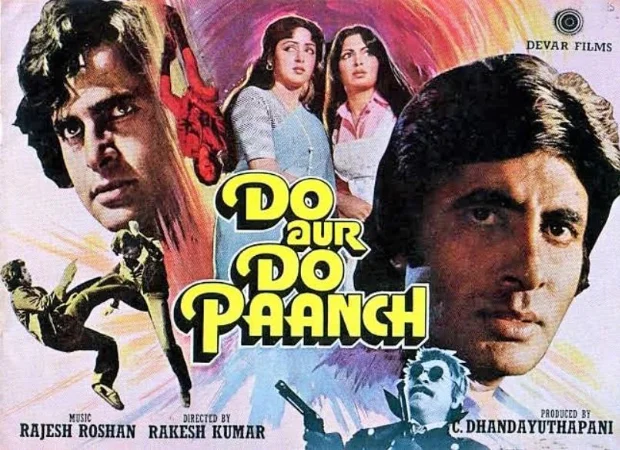
The 1980 action-comedy 'Do Aur Do Paanch', starring Bollywood stalwarts Amitabh Bachchan and Shashi Kapoor, alongside Hema Malini and Parveen Babi, has etched itself into the annals of Hindi cinema as a cult classic. Directed by Rakesh Kumar, the film presented a unique blend of humor, action, and camaraderie, centered around two con men inadvertently hired by different parties to steal from a wealthy businessman. Its memorable performances, catchy music, and engaging plot have ensured its enduring popularity over the decades, making it a recurring reference point in discussions about classic Bollywood entertainers.
The film's continued relevance is underscored by recent industry chatter, particularly a report from Bollywood Hungama, suggesting that acclaimed director Rohit Shetty was considering drawing inspiration from 'Do Aur Do Paanch' for his upcoming film, 'Golmaal 5'. Shetty, known for his penchant for remaking and reimagining older comedies – with 'Golmaal Returns' taking cues from 'Aaj Ki Taza Khabar' and 'Bol Bachchan' from the 1979 'Golmaal' – seemed to be following a familiar pattern. This speculation likely acted as a catalyst, prompting Soham Rockstar Entertainment to proactively safeguard its intellectual property and make its ownership unequivocally clear, long before any potential unauthorized project could gain significant traction. This pre-emptive strike by Soham Rockstar highlights an increasing trend in the industry to protect legacy content from unsanctioned adaptations, reflecting the growing value placed on intellectual property in a world of endless content creation.
Key Developments and Rights Assertions
The central development revolves around the comprehensive public notice issued by Soham Rockstar Entertainment. As reported by Bollywood Hungama and corroborated by News18, this notice, published on February 14, 2026, explicitly states the company's status as the “sole and exclusive negative copyright holder” of 'Do Aur Do Paanch'. This claim extends far beyond the original film itself, covering an exhaustive list of intellectual property rights and derivative works.
The scope of the asserted rights is remarkably broad. Soham Rockstar Entertainment claims the exclusive right to create prequels, sequels, and remakes of 'Do Aur Do Paanch' in all languages, both Indian and foreign. Furthermore, the company asserts control over adaptations into various formats, including comic books, television serials, stage plays, novelizations, and merchandise based on the film's script. The notice also encompasses the film’s underlying works and ancillary rights, such as reproduction rights, music and sound recording rights, dubbing rights, and any other rights that may emerge in the future, effectively encompassing the entire universe and potential exploitation formats of the film.
Crucially, the notice delivers a stark warning against any unauthorized use. It specifies that any copying, reproduction, distribution, public exhibition, broadcasting, communication to the public, digitization, adaptation, or exploitation of the film, whether in whole or in part, without explicit prior written consent from Soham Rockstar Entertainment, will be deemed a copyright infringement. Such infringement, the notice warns, will invite severe civil and/or criminal action under applicable copyright laws. This public declaration is a clear signal to individuals, entities, broadcasters, digital platforms, distributors, and exhibitors to exercise extreme caution when considering any project that might even remotely touch upon the intellectual property of 'Do Aur Do Paanch'.
The timing of this assertive claim is particularly noteworthy, following earlier reports by Bollywood Hungama that Rohit Shetty was reportedly exploring the "germ" of 'Do Aur Do Paanch' for his much-anticipated 'Golmaal 5'. However, these reports were swiftly countered by Rohit Shetty Picturez, which issued a statement unequivocally denying any inspiration or adaptation from 'Do Aur Do Paanch' for 'Golmaal 5'. Shetty's company branded such reports as "factually incorrect, misleading, and completely untrue," and warned media outlets against circulating unverified information, stating that strict legal action would be taken if clarification was not sought from official representatives.
Analysis: The Evolving Landscape of Intellectual Property in Bollywood
Soham Rockstar Entertainment's comprehensive claim over 'Do Aur Do Paanch' is more than just a typical rights assertion; it represents a significant marker in the evolving landscape of intellectual property (IP) protection within the Indian film industry. This aggressive, all-encompassing notice signals a growing awareness among production houses of the immense long-term value inherent in classic cinematic works, not just for direct remakes but for an expansive ecosystem of derivative content.
Historically, copyright enforcement in Bollywood, particularly for older films, could sometimes be less rigorously pursued than in Western industries. Often, elements of classic films might be "inspired by" or loosely adapted without formal rights acquisition, especially for films many decades old whose original rights holders or their successors might be less organized in their enforcement. However, with the explosion of digital platforms, the global reach of content, and the increasing value placed on streaming libraries, the stakes have risen dramatically. Content, particularly beloved and recognized content, is now a valuable asset that can be repackaged, reimagined, and monetized across multiple formats – from sequels and prequels to international remakes, animation, and even metaverse applications.
This move by Soham Rockstar reflects a proactive strategy to protect what they perceive as valuable IP from potential dilution or unauthorized exploitation in this lucrative new media environment. The explicit mention of rights across "all languages (Indian and foreign)," and adaptations like "comic books, television serial rights, stage play rights, novelisation and products based on the script," demonstrates a sophisticated understanding of modern IP monetization strategies. It also serves as a potent deterrent, forcing creators and producers to conduct more thorough due diligence when developing concepts that might even remotely resemble existing film premises. The industry implication is clear: the days of casual "inspiration" from older intellectual properties without proper acquisition might be drawing to a close, leading to a more formalized and legally robust content creation environment. This could, in turn, lead to increased investment in acquiring classic film catalogs, recognizing their potential as future franchises, similar to the Hollywood model where studios actively mine their archives for new content ideas.
Additional Details: The Breadth of the Claim and Industry Reactions
The meticulous detail with which Soham Rockstar Entertainment has laid out its rights claim underscores a strategic and forward-thinking approach to intellectual property management. The notice extends beyond typical film rights, delving into ancillary and futuristic rights explicitly. By including "any other rights that may exist in the future," the company is attempting to future-proof its ownership, anticipating new technological advancements and consumption formats that might emerge. This broad phrasing is a legal fortification against unforeseen avenues of exploitation, ensuring their claim remains comprehensive regardless of how media evolves. For instance, while VR/AR adaptations or interactive storytelling might seem nascent now, Soham Rockstar's notice aims to pre-emptively cover such possibilities.
The direct warning to "individuals, entities, broadcasters, digital platforms, distributors and exhibitors" is particularly significant in the current media landscape. With the proliferation of user-generated content, diverse streaming platforms, and global distribution channels, the potential for unauthorized use has expanded exponentially. Soham Rockstar's notice is a clear message that they will actively monitor and pursue any form of infringement across this vast ecosystem, from small-scale digital adaptations to large broadcast endeavors. This stance reflects a growing trend in copyright enforcement where original content owners are becoming more vigilant, especially given the ease with which content can be disseminated and adapted in the internet age.
The sequence of events surrounding Rohit Shetty's 'Golmaal 5' and 'Do Aur Do Paanch' is a prime example of why such preemptive notices are becoming crucial. While a Bollywood Hungama report initially linked Shetty's project to the 1980 film, Rohit Shetty Picturez swiftly and emphatically denied these claims. This rapid clarification, threatening legal action for unverified information, highlights the sensitivity surrounding intellectual property and source material in contemporary filmmaking. It suggests that even the mere suggestion of adaptation, without formal rights acquisition, can trigger a legal and public relations response from rights holders. This incident, therefore, serves as a real-time demonstration of the careful dance between creative inspiration and legal boundaries within the industry.
While the focus is on 'Do Aur Do Paanch', it's worth noting the broader context of Bollywood Hungama's reporting on February 14, 2026. Another article from the same day discusses Parvathy Thiruvothu's special appearance in 'Tu Yaa Main' Bollywood Hungama, highlighting varied news flow within the industry and the specific timing of the 'Do Aur Do Paanch' rights claim amidst other industry developments. This underlines the constant movement and competitive nature of content creation and intellectual property claims in Bollywood.
Looking Ahead: Implications for the Industry and Creators
The aggressive stance taken by Soham Rockstar Entertainment signals a significant shift in how intellectual property from classic films will be managed and protected in Bollywood. Moving forward, one can expect increased scrutiny on new projects that bear any resemblance, however faint, to older, established works. This could lead to a more formalized and potentially more expensive process for filmmakers looking to draw inspiration from the past. Rights acquisition will likely become an even more critical and upfront component of pre-production, reducing the scope for ambiguity or unacknowledged artistic references.
For independent filmmakers and smaller production houses, this might present a challenge, as securing rights to popular older films could become a competitive and costly affair. However, it also presents an opportunity for rights holders of less celebrated, but still valuable, content to actively market their property for potential development. We may see a burgeoning market for classic film catalogs, with companies specializing in acquiring and monetizing these heritage assets. The industry might also witness a rise in legal disputes over intellectual property as rights holders become more vigilant and willing to enforce their claims.
Ultimately, this development could foster a more organized and legally transparent environment for content creation within Bollywood, aligning it more closely with global standards of copyright enforcement. While potentially limiting spontaneous adaptation, it ensures that original creators and their successors are duly recognized and compensated for their intellectual legacy, encouraging a more respectful and structured approach to revisiting cinematic history.
Related Articles
Hollywood Fights Back: AI 'Bounty Hunters' Track Down Misuse of Studio IP
A new startup, LightBar, is crowdsourcing internet users to hunt down AI models misusing copyrighted Hollywood content, signaling an escalating battle over intellectual property.