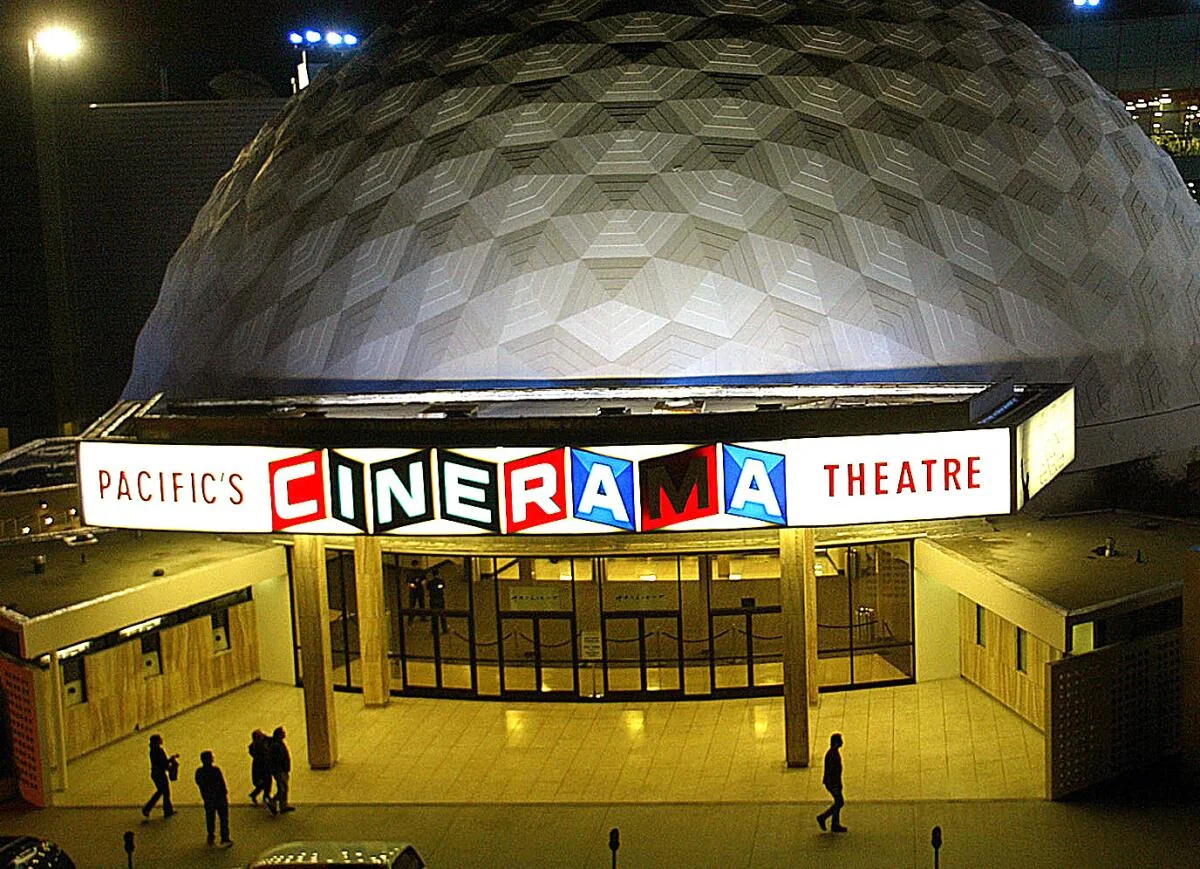
Cinerama Dome Activist Halts Campaign After Police Intervention, Citing Legal Fears
Benjamin Steinberg, the activist who tirelessly campaigned to reopen Hollywood's Cinerama Dome, has ceased his efforts after a projection-mapping protest drew police attention, fearing legal backlash.

For years, Benjamin Steinberg was the unwavering voice for Hollywood’s iconic Cinerama Dome, a tireless advocate battling for its revival since it shuttered its doors in 2020. His campaign, marked by social media rallies, a petition garnering over 30,000 signatures, and increasingly audacious protests, reached an unexpected and abrupt end this week. The 26-year-old actor-filmmaker has announced the cessation of his "movement" to "save the Cinerama Dome," a decision directly attributed to fear of legal reprisal after a unique, special effects-driven protest drew the attention of law enforcement. This dramatic conclusion leaves many wondering about the future of the beloved landmark and the impact of passionate, yet unsanctioned, activism in a city defined by its cinematic history.
A Landmark’s Lament: The Cinerama Dome's Closure and the Rise of an Activist
The Cinerama Dome, a distinctive geodesic structure on Sunset Boulevard, holds a significant place in Hollywood history. Opened in 1963, it was the first theater purpose-built for the Cinerama process, offering an immersive cinematic experience that captivated audiences. Its closure in March 2020, at the onset of the global pandemic, was a devastating blow to film enthusiasts and a symbol of the challenges facing traditional movie exhibition. While many theaters reopened, the Dome remained dark, fueling speculation and frustration among its dedicated fanbase. This vacuum was where Benjamin Steinberg found his calling. According to IMDb, Steinberg, an actor and filmmaker himself, took it upon himself to champion the Dome's reopening, believing it was essential to preserve a piece of Hollywood's past and future. His efforts quickly gained traction, tapping into a collective sentiment of loss and a desire for the theater to once again light up.
Escalating Activism and the Final Protest
Steinberg's campaign was multifaceted and increasingly visible. He leveraged social media effectively, creating a dedicated account that galvanized support. His online petition quickly amassed over 30,000 signatures, demonstrating the widespread public desire for the Dome’s return. He organized multiple rallies, drawing crowds to the closed theater's facade, all aimed at pressuring Decurion Corp., the property's owner, to act. However, the most audacious of his efforts came recently, culminating in a projection-mapped protest that illuminated the very subject of his advocacy. As reported by The Hollywood Reporter via IMDb, Steinberg hired an on-site lighting engineer to project a direct message onto the Cinerama Dome itself. The illumination explicitly called out Chris Forman, CEO of Decurion Corp., with the message: "Mr. Forman Reopen The Dome!" This bold move, intended as a vivid rebuke of what Steinberg perceived as civic abandonment, quickly escalated the situation beyond mere public outcry. While the message was potent, it also crossed a line, directly leading to a police response and, ultimately, the activist’s decision to halt his campaign. The incident underscores the fine line between passionate advocacy and actions that can be perceived as trespassing or vandalism, particularly when targeting private property.
Analysis: The Delicate Balance of Activism and Ownership
The saga of Benjamin Steinberg and the Cinerama Dome highlights a critical tension inherent in urban development and the preservation of cultural landmarks: the clash between private property rights and perceived public interest. While Decurion Corp. legally owns the Cinerama Dome, its iconic status imbues it with a significance that transcends simple ownership for many Angelenos and film enthusiasts worldwide. Steinberg's activism, though unsanctioned, tapped into this collective sentiment, arguing that the Dome is a vital piece of the city's identity, as important as any museum or public park. His method of projection mapping, while visually striking and engaging, crossed into a legally ambiguous territory. Unlike a picket line or an online petition, physically altering the appearance of a building, even with light, can be interpreted as a form of interference or even vandalism, depending on local ordinances and the owner's perspective. The immediate police response, as detailed in reports like the one from The Wrap and republished by IMDb, underscores the property owner's right to protect their assets. This incident raises questions about the efficacy and risks of escalating protest tactics, particularly when direct dialogue fails. While Steinberg’s passion was clear, the legal repercussions he now fears serve as a stark reminder that even well-intentioned activism can have unintended and personal costs, potentially silencing voices rather than amplifying them. This isn't just about one theater; it's about how communities can effectively advocate for the preservation of beloved cultural spaces when their ownership rests in private hands driven by different imperatives.
The Cinerama Legacy and Decurion Corp.'s Role
The Cinerama Dome is not merely an old movie theater; it represents a significant chapter in cinematic history. It was founded by William Forman, the father of the current CEO, Chris Forman. William Forman was a pioneering figure in Southern California entertainment, known for establishing drive-in theaters and the Pacific multiplex chain. His vision led to the creation of the Dome, a testament to his commitment to innovative film exhibition. This historical lineage, however, creates a complex dynamic. For Benjamin Steinberg and his supporters, the Dome's closure represents a betrayal of this legacy, a neglect of a historically significant asset by the very family entrusted with its stewardship. The call to "Reopen The Dome!" projected onto its facade was not just a plea but an implicit challenge to Decurion Corp. and Chris Forman to honor that heritage. The company has remained largely silent on its long-term plans for the Cinerama Dome, leaving a void that grassroots movements like Steinberg's eagerly filled. The lack of transparent communication from the owners only fueled the frustration and speculation that Steinberg skillfully channeled into his activism. While Decurion Corp. has not publicly commented on Steinberg's protests directly, their response to the projection mapping incident, involving law enforcement, signals a clear boundaries around their property rights. The hope for many remains that Decurion Corp. will eventually unveil a plan that not only reopens the Dome but also respects its unique place in Hollywood lore and the enduring passion of its fans.
Looking Ahead: The Future of the Dome and Activism
With Benjamin Steinberg’s campaign now on hiatus due to legal concerns, the immediate future of the Cinerama Dome remains as uncertain as ever. While Steinberg’s methods may have ceased, the public sentiment and desire for the Dome’s reopening are unlikely to dissipate. Film preservation societies, local historical groups, and other passionate individuals may yet take up the mantle, perhaps with more formalized or legally compliant approaches. The possibility of the Dome being repurposed or renovated also looms, potentially losing some of its original character, a fear that has long shadowed its closure. The impact of Steinberg's high-profile, if ultimately curtailed, activism might still resonate, serving as a powerful public reminder to Decurion Corp. of the high regard in which the Cinerama Dome is held. This incident also offers a cautionary tale for future activists, highlighting the need to understand specific legal boundaries when engaging in direct action, especially concerning private property. The larger conversation about preserving cultural landmarks in rapidly developing urban centers, and the role of corporate responsibility versus public demand, will undoubtedly continue in Los Angeles and beyond. Meanwhile, other cinematic events, like the Indian Film Festival of Los Angeles with its Industry Days, continue to showcase the vibrant and evolving landscape of film, bringing together creatives and executives from companies like Netflix, HBO, and Universal, as noted by Variety Film News and IMDb, even as older institutions face an uncertain path. While Hollywood continues to evolve and new festivals emerge, the fate of its cherished historical venues, like the Cinerama Dome, remains a poignant question for its future.
Related Articles

Oscars at a Crossroads: Prioritizing Cinematic Art Over Political Soapboxing
As the Academy Awards approach, a debate intensifies over whether the ceremony should highlight artistic achievement or serve as a platform for celebrity political statements, sparking public disinterest.