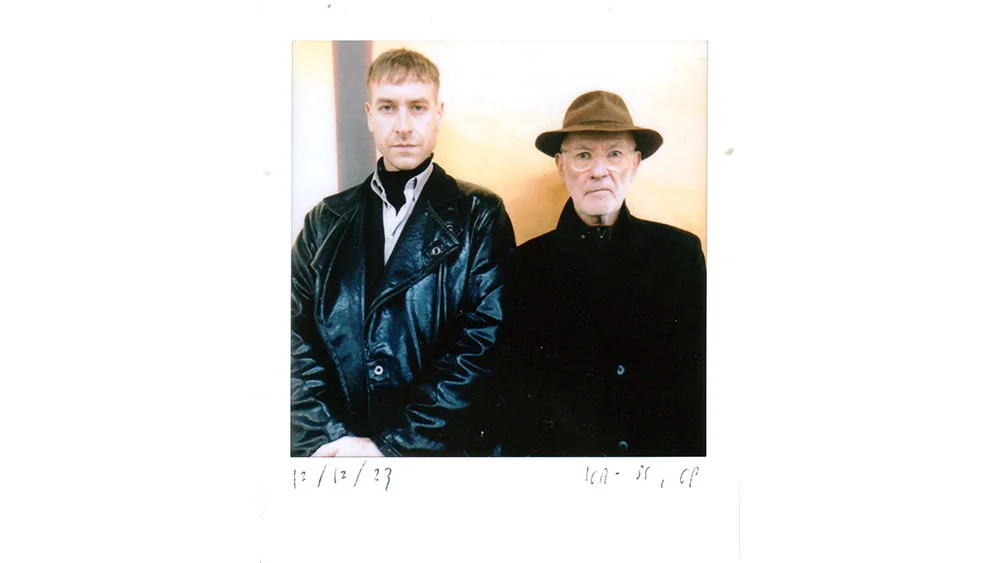
In an audacious and thought-provoking cinematic endeavor, British artist and filmmaker Stanley Schtinter is challenging conventional historical narratives with his new documentary, ‘Last Movies.’ The film, which recently premiered at the Copenhagen International Documentary Film Festival (CPH:DOX), delves into the seemingly bizarre, yet strangely compelling, premise of chronicling the final movies watched by iconic celebrities and cultural figures before their deaths. From Elvis Presley to Kurt Cobain, and even the enigmatic Olof Palme, Schtinter’s work presents an "alternative timeline" that aims to "remap" the 20th century, prompting audiences to reconsider how history is traditionally organized and understood. The documentary, narrated by Jeremy Irons and based on Schtinter’s book of the same title, is a deep dive into the minutiae of these final cinematic experiences, pushing the boundaries of what constitutes historical truth and challenging the authority of established accounts.
The Genesis of an Unconventional Historical Lens
The inspiration for ‘Last Movies’ emerged from a specific, almost accidental trigger for Stanley Schtinter, as he recounted in an interview with The Hollywood Reporter. It was the unsolved assassination of former Swedish Prime Minister Olof Palme in 1986, as he left a cinema in Stockholm, that sparked Schtinter’s curiosity. While the world focused on the identity of the assassin, Schtinter pondered a different, yet equally significant, detail: "What did Palme watch?" This seemingly trivial question became the cornerstone for a sprawling project. This led him to recall the well-known lore surrounding Joy Division frontman Ian Curtis, who reportedly watched Werner Herzog’s ‘Stroszek’ on the eve of his death. These isolated anecdotes coalesced into a profound question: Could the entire 20th century, an era defined by the rise of cinema, be re-evaluated and "remapped" by examining the terminal film experiences of those who shaped it? Schtinter suggests that this unorthodox methodology can nearly span the entire history of cinema, from figures like Kafka reportedly watching Charlie Chaplin’s ‘The Kid,’ to contemporary instances such as Jean-Luc Godard viewing his own ‘Phony Wars.’ The critical criterion for inclusion in Schtinter’s pantheon is that the individual "gave" themselves to the camera within their lifetime, essentially consenting to be filmed.
Remapping the 20th Century: A Darkly Humorous Alternative Timeline
Schtinter's methodology, as outlined on the CPH:DOX website, is described as offering "a darkly humorous, alternative timeline" where the humor is "pitch black" and the level of detail "completely overwhelming." The film, and its preceding book, takes a "simple concept to the point of absurdity, with entertaining and thought-provoking results." The core question it poses is profound: "What would film history look like if the timeline was determined by the more or less random movies celebrities and cultural figures watched before (and sometimes while) they died?" This imaginative re-ordering of history isn't just a quirky exercise; it's a deliberate challenge to the established order. Schtinter explains to The Hollywood Reporter that traditional historical narratives often suffer from "holes and biases." He critiques the foundational principle of history – "In the beginning was the word; the word is authority" – arguing that repetition, rather than verifiable truth, often solidifies historical accounts. He contends that even with eyewitness testimony, ambiguity persists, and the camera, far from being an objective arbiter, "lies." In a world where celebrity news and the intricacies of personal lives are dissected incessantly, ‘Last Movies’ capitalizes on the pervasive scrutiny afforded to public figures' last days. Schtinter notes that this intense interest often means details like what a celebrity watched before their death are available, particularly if their passing was public or heavily documented. The film, therefore, "parasitizes the predatory relationship the dominant screen culture encourages people to have with its stars," turning that very obsession into a tool for re-evaluation.
Analysis: Beyond the Screen, Towards a "Rewilding of Imagination"
Schtinter's project offers more than just a chronological curiosity; it proposes a radical re-evaluation of how we construct meaning from the past. By introducing a seemingly random, yet consistently applied, organizing principle – the last film – he effectively "sheds a satanic light," as historian Peter Linebaugh describes it, on what we accept as historical truth. This isn't about promoting anti-religious sentiment but rather about "necessarily questioning any power wielded by one person or institution over another," a particularly resonant theme in an era marked by "widespread failure of governments and their aggressive tactics to keep control." The film posits that if truth exists, it resides "on the street, or in the fields, not in the palace." This populist approach to history challenges the top-down narratives often favored by academia and institutions. Schtinter’s initial concept, predating both the book and the film, was to organize film screenings headlined by the individual who last watched them, such as Kurt Cobain headlining Jane Campion’s ‘The Piano.’ This innovative presentation was intended not to provide answers or explanations, but to "rewild the imagination" – to encourage viewers to actively engage with the narrative, to imagine the context, and to bridge the gap between their own experience and that of the deceased icon. It’s an implicit critique of passive consumption, even of history, urging a more imaginative and personal connection to the past. The approach aligns with a broader trend in arts and humanities to democratize historical discourse, moving away from singular, authoritative narratives towards a multiplicity of perspectives.
The Craft of ‘Last Movies’: From Book to Bizarre Cinematic Tapestry
The journey of ‘Last Movies’ from concept to cinematic reality involved a distinct evolution from its written counterpart. Schtinter highlights to The Hollywood Reporter that his approach to the film adaptation was remarkably stringent and creatively liberated. For the documentary, he limited all footage exclusively to clips "lifted from the films that were seen by the stars studied," as well as any other films they were known to have watched during their lives. This self-imposed constraint became a powerful creative engine. While the book was a process of meticulous research and "reduction" of facts, the film allowed for an almost alchemical transformation. Schtinter describes the most exciting part of filmmaking as witnessing "how an almost randomly selected scene from an unrelated film could replace in a parallel, perhaps indirect, and altogether more illuminating way what I had labored over the minutiae of in writing the book." This suggests a directorial philosophy where serendipity and associative meaning take precedence over strict linear explanation. The film, in his words, "seemed to make itself," implying a natural, organic process where the inherent connections between these disparate cinematic moments and the lives they touched emerged through the editing. This method underscores the film's central thesis: that meaning is often found in unexpected juxtapositions and that history can be reinterpreted through seemingly arbitrary, yet deeply personal, lenses. The film's self-contained visual language creates an immersive experience, inviting audiences to piece together the narrative alongside the director.
Implications for Celebrity Culture and Historical Interpretation
In an era obsessed with celebrity culture, where news outlets like UNILAD Celebrity and IMDb constantly feed the public a stream of "latest news, breaking stories and biggest headlines as they happen," Schtinter’s ‘Last Movies’ takes this fascination and elevates it into a critical tool. While outlets track the "Hollywood’s Biggest Earners" and the daily lives of stars like Scarlett Johansson or Jennifer Aniston – details that seem to dominate the cultural discourse today – Schtinter redirects this intense scrutiny towards a deeper, more philosophical inquiry. Rather than celebrating their ongoing successes or cataloging their current projects, he focuses on their ultimate, often overlooked, private moments. This shift in focus from the active, productive lives of celebrities to their final, reflective experiences, subtly critiques the incessant, often superficial, nature of modern celebrity reporting. It suggests that even in death, these figures continue to offer insights, not into their public personas, but into the broader human condition and the serendipitous tapestry of cultural consumption. The film challenges us to consider that perhaps the most telling details about a person, even a famous one, are not the grand achievements or public statements, but the quiet, intimate choices made in their last moments, such as the film they chose to watch. This could push the boundaries of biographical storytelling and historical documentation, suggesting new avenues for understanding the past through profoundly personal and often accidental connections to art.
Looking Ahead: A Sequel to Cinematic Mortality?
As ‘Last Movies’ embarks on its festival run, premiering at outlets like CPH:DOX, the logical question arises about the potential for a sequel. Schtinter acknowledges this possibility in his interview with The Hollywood Reporter. Given the seemingly endless supply of famous individuals and the ever-present practice of cinema viewing, the concept boasts considerable longevity. The film's unique framework – analyzing the "pig's trough" of culture, as Schtinter puts it, through the lens of human mortality – offers a perpetually regenerating wellspring of material. A sequel could continue to explore different eras, geographical locations, or categories of cultural figures, further refining and expanding this alternative "rewilding of imagination." It could also delve deeper into the philosophical implications of these final cinematic experiences, offering more explicit commentary on history, memory, and the power of popular culture to shape our perceptions. Ultimately, the success of 'Last Movies' in captivating audiences and prompting critical thought about historical frameworks will determine if Schtinter's unique vision will continue to remap our understanding of the past, one final film at a time.