AI Revolutionizes Travel Service: Acai Travel and Lumo Integrate Predictive Disruption Tech
Acai Travel and Lumo partner to integrate predictive disruption technology into AI-powered service platforms, streamlining rebooking and customer support for travel companies.

In a significant stride toward a more resilient and responsive travel industry, Acai Travel has announced a strategic partnership with Lumo, integrating predictive disruption technology directly into its AI-powered service platform. This collaboration, highlighted by PhocusWire, aims to fundamentally alter how travel companies manage the inevitable challenges of delays and cancellations. By enabling earlier identification of at-risk trips and proactive management of service surges, the partnership addresses a critical pain point that has long plagued airlines, travel management companies (TMCs), and online travel agencies (OTAs) – the chaotic aftermath of travel disruptions.
The core innovation lies in empowering AI-driven customer service functions with actionable intelligence. Acai Travel, a recognized PhocusWire Hot 25 Travel Startup for 2024, provides an "AI Travel Agent" designed to streamline workflows from schedule changes to rebooking. Lumo, a veteran in predictive disruption (and a PhocusWire Hot 25 Travel Startup for 2019), brings its forecasting capabilities to the forefront, allowing Acai's platform to rank cases by risk, present rebooking options aligned with airline policies, and even initiate communication with travelers before they reach out for support. This proactive approach not only enhances efficiency but also promises a significantly improved customer experience, positioning AI as a central pillar in modern travel management.
Background and Context: The AI Imperative in a Volatile Travel Landscape
The travel industry has always been susceptible to unforeseen events, from extreme weather to operational snags. However, the last few years have underscored the fragility of global travel networks, with disruptions becoming more frequent and severe. Service teams are under constant pressure, often overwhelmed by call volumes and complex rebooking scenarios. This environment has created an urgent demand for solutions that can offer both foresight and automation, setting the stage for AI to play a transformative role.
Historically, managing disruptions involved manual identification of affected passengers, tedious policy lookups, and hours spent on the phone. The introduction of AI into this equation is not merely an incremental improvement but a paradigm shift. Companies like Lumo recognized early on the power of data analytics and machine learning to predict potential disruptions. Bala Chandran, co-founder and CEO of Lumo, emphasized this, stating, "Disruption is not just about prediction. It is about what you do with it." This sentiment highlights the evolution from mere data collection to actionable intelligence – a journey that the integration with Acai Travel now fully realizes. The shift reflects a broader industry trend where technology is moving beyond simple automation to sophisticated, predictive, and proactive problem-solving, making AI an indispensable tool for maintaining operational stability and customer satisfaction in an increasingly complex world.
Key Developments: From Prediction to Proactive Execution
The partnership between Acai Travel and Lumo marks a crucial step in the maturation of AI applications within the travel sector. At its heart, the collaboration seamlessly merges Lumo's predictive capabilities with Acai's AI-powered service workflows, as detailed by PhocusWire. When Lumo's technology identifies a high-risk trip – meaning a flight likely to be delayed or canceled – this intelligence is immediately fed into Acai's AI Travel Agent. This allows for an unprecedented level of proactivity.
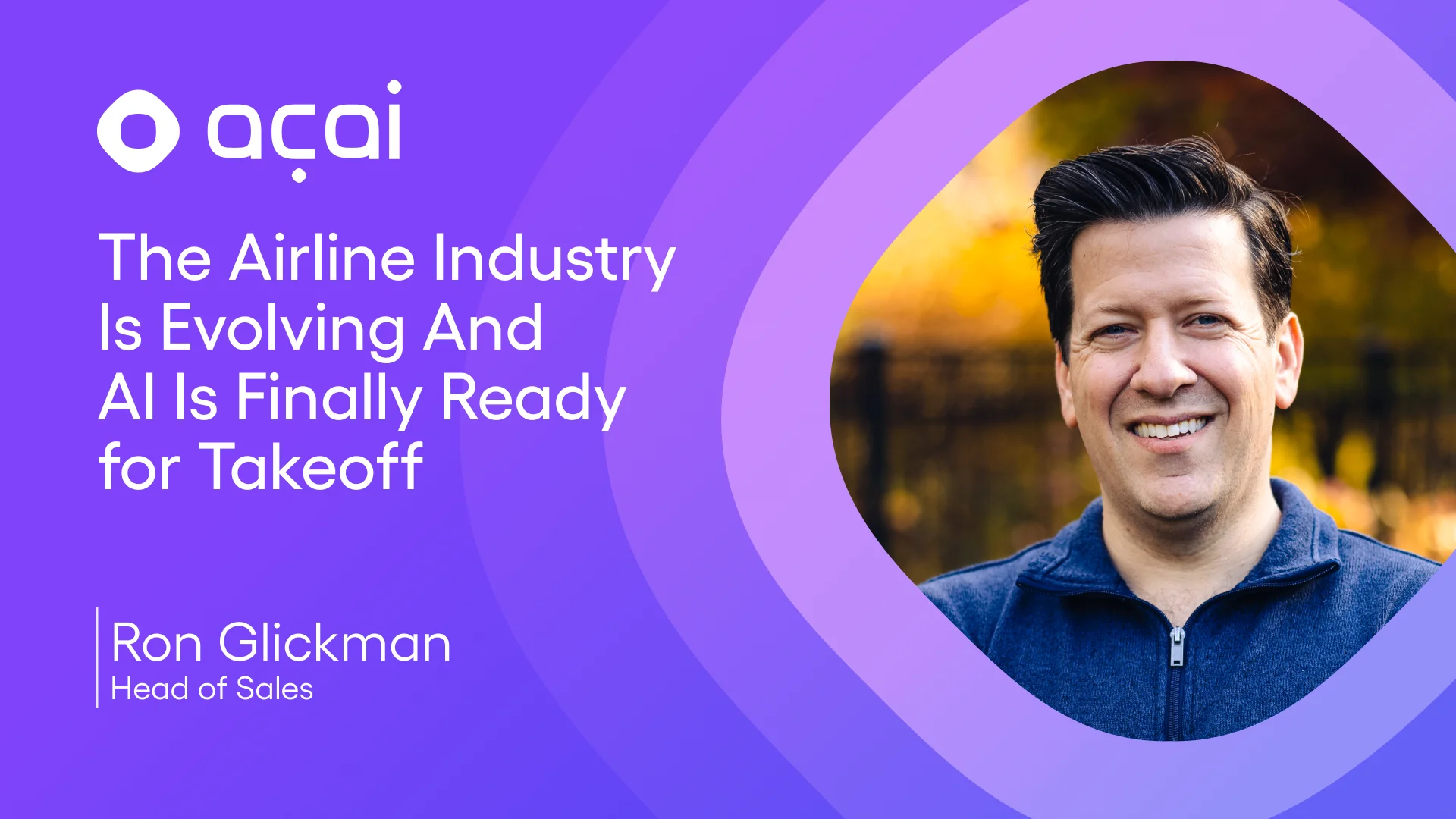
Instead of waiting for a traveler to report a problem, the integrated system can automatically flag the case, assess rebooking options that comply with specific airline policies and fare rules, apply waiver codes, and even initiate direct communication with the affected traveler. Whether it's through SMS, chat, or voice, the system operates within existing customer service infrastructures like Genesys and Dialpad, requiring no fundamental workflow changes for the support teams, according to PhocusWire. World Travel Inc. is the first shared customer to deploy this integration, providing a real-world testbed for the technology's efficacy. Ron Glickman, head of sales at Acai Travel, encapsulated the value proposition, noting, "What makes this powerful is that Acai’s AI travel agent can immediately act on that information. It can prioritize travelers, apply the right policies and communicate across channels in real time." This fusion of predictive insight and automated execution is poised to significantly reduce the operational burden on service agents and dramatically improve the traveler's experience during stressful disruptions.
This development is also indicative of a broader trend of leveraging AI for operational efficiency, even to the point of redefining traditional staffing models. The efficiency gains promised by Acai and Lumo echo the extraordinary success of companies like Medvi, a telehealth provider that leveraged AI for everything from coding software to handling customer service and generating ad content. As reported by The New York Times, Medvi, founded by Matthew Gallagher, generated $401 million in sales in its first year with a minimal human workforce, projecting $1.8 billion with just two employees this year. While the travel industry's operational complexity differs from Medvi's, the principle is similar: AI's ability to automate complex tasks, prioritize actions, and personalize interactions is enabling businesses to scale rapidly and operate with unprecedented efficiency. This reflects OpenAI CEO Sam Altman's prediction in 2024 of the rise of "superefficient companies," where a one-person business could be worth $1 billion, an idea becoming a reality as AI tools proliferate.
Analysis: The Broader Implications for AI and Industry Agility
The integration of Lumo's predictive disruption technology with Acai Travel's AI-powered service workflows represents more than just an operational upgrade for the travel industry; it's a microcosm of how AI is fundamentally reshaping business models across sectors. By moving from reactive problem-solving to proactive intervention, travel companies can not only mitigate financial losses associated with disruptions but also significantly enhance brand loyalty. In an industry where customer experience is paramount, the ability to inform and re-accommodate travelers even before they perceive a problem is a considerable competitive advantage.
This development also underscores a crucial dichotomy in the application and regulation of AI. While businesses like Acai Travel and Medvi are rapidly deploying AI to achieve unprecedented levels of efficiency and scale, other sectors, particularly healthcare, face significant regulatory hurdles that can impede even highly promising technologies. The recent shutdown of Kintsugi, an AI startup aiming to detect depression and anxiety from speech patterns, as reported by The Tech Buzz, serves as a stark reminder. After seven years and millions in funding, Kintsugi failed to secure FDA clearance, highlighting the gap between innovative AI capabilities and established regulatory frameworks, especially for nuanced applications like speech-based diagnostics. This contrast illustrates that while industries with clearer performance metrics and established operational frameworks, like travel logistics, can rapidly adopt and benefit from AI, fields requiring stringent validation and new regulatory paradigms will experience a slower, more arduous integration process. The success of Acai and Lumo lies in operating within a domain where the impact is tangible for customers and the regulatory path, while still evolving, is less nascent than in areas like medical diagnostics.
Additional Details: The Ecosystem of AI Investment and Operational Integration
The financial backing and technological partnerships behind Acai Travel and Lumo further illuminate the strategic importance placed on AI-driven solutions in the travel sector. Acai Travel's journey includes a minority investment from Amadeus Ventures, following a substantial $4 million seed funding round in 2024. This investment signals confidence from major industry players in Acai's vision for AI-powered customer service. Similarly, Lumo's investors, including JetBlue Technology Ventures, highlight the airline industry's active pursuit of advanced tools to manage operational complexities and enhance passenger satisfaction.
The practical integration of this technology into existing systems is also critical. Acai's platform is designed to operate seamlessly within popular customer service environments such as Genesys and Dialpad. This "in-workflow" approach is crucial, as it minimizes the burden on human agents and avoids disruptive overhauls of established operational procedures. Agents can continue to use their familiar interfaces while benefiting from the AI's predictive insights and automated actions. This frictionless adoption is key to the scalability and effectiveness of the solution across diverse travel companies, including TMCs, OTAs, and airlines. The ability to apply waiver codes and execute rebooking operations directly through the AI-powered system not only saves time but also reduces human error, ensuring policy adherence and potentially saving costs associated with manual processes and service recovery.
Looking Ahead: The Future of AI in Travel and Beyond
The partnership between Acai Travel and Lumo offers a glimpse into the future of the travel industry, one that is increasingly defined by AI-driven efficiency and customer-centricity. As predictive disruption technology becomes more sophisticated and integrated into AI service workflows, travelers can expect a more seamless and less stressful experience, even in the face of unforeseen events. The ability of AI to anticipate problems, offer solutions, and communicate proactively will empower travel companies to elevate their service standards and build stronger customer relationships.
However, the rapid advancements in AI also bring broader implications. The efficiency gains seen in travel, mirroring the successes of companies like Medvi in reducing human labor for complex tasks, will inevitably lead to ongoing debates about job displacement and the evolving role of human workers. Furthermore, the regulatory landscape, as evidenced by Kintsugi's fate, will need to adapt swiftly to keep pace with innovation, especially in sensitive areas like healthcare AI. The coming years will likely see continued investment in AI in travel, with a focus on deeper integration, personalization, and cross-platform capabilities, all while the industry navigates the ethical and societal challenges posed by increasingly intelligent machines.
Related Articles

Agentic AI Dominates Enterprise Infrastructure, Revolutionizing Customer Service
Agentic AI is transforming core enterprise infrastructure, generating 80% of databases, shifting companies to Large Action Models, and laying groundwork for an agent-first web.