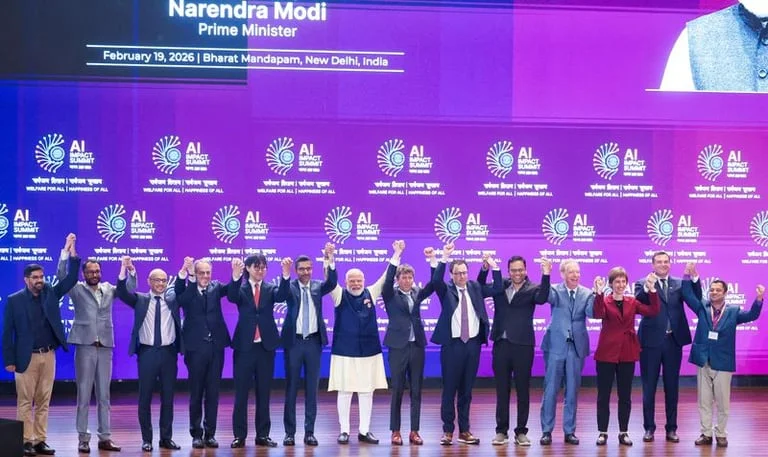
A viral video from a New Delhi AI summit captured OpenAI's Sam Altman and Anthropic's Dario Amodei refusing to hold hands, signaling deep-seated rivalry despite efforts for consensus.
In a moment that has swiftly gone viral across social media platforms, Sam Altman, CEO of OpenAI, and Dario Amodei, head of Anthropic, found themselves at the center of an unexpected display of their much-discussed rivalry during a global AI summit in New Delhi. The two titans of the artificial intelligence world, whose companies OpenAI and Anthropic are at the forefront of generative AI development, conspicuously broke a chain of hand-holding among tech leaders during a photo opportunity. Flanked by Indian Prime Minister Narendra Modi and other prominent figures including Google's Sundar Pichai, the scene offered a stark, if somewhat amusing, illustration of the deep-seated professional and philosophical differences that continue to divide these former colleagues.
The genesis of the palpable tension between Sam Altman and Dario Amodei can be traced back to a pivotal moment in the nascent history of OpenAI. Amodei, once a vice president of research at the high-profile AI startup, departed in early 2021 under circumstances that have since become integral to the narrative of their rivalry. He and a cadre of other senior OpenAI researchers subsequently co-founded Anthropic, a competing venture focused on developing "safe and steerable" AI. This mass exodus was reportedly driven by differing views on OpenAI's strategic direction, particularly concerning the commercialization of its research and the philosophical approach to AI safety. While OpenAI, under Altman, has aggressively pursued a path of rapid deployment and commercialization, Anthropic has often emphasized a more cautious, research-first approach, prioritizing the ethical implications and potential societal risks of advanced AI. This divergence in philosophy has not only shaped their respective company cultures but has also fueled public critiques of each other's business models and developmental methodologies, setting the stage for awkward public encounters like the one witnessed in New Delhi, as reported by The Audubon County Advocate Journal.
The incident unfolded on Thursday at the AI Impact Summit in New Delhi, an international gathering dedicated to forging a global consensus on AI governance and regulation. As is customary at such high-profile events, a photo opportunity was arranged, featuring a line-up of global tech leaders alongside host dignitaries. Indian Prime Minister Narendra Modi, Indian AI startup founder Pratyush Kumar, and Google CEO Sundar Pichai were among those present, creating a formidable tableau of influence. The intention was for all participants to raise their arms, hand-in-hand, symbolizing unity and collaborative spirit in addressing the complex challenges of artificial intelligence. However, as numerous cameras flashed, a noticeable breach occurred in this carefully orchestrated display. While the other leaders dutifully linked hands, Sam Altman and Dario Amodei, standing side-by-side, pointedly refused to participate in the gesture. Instead, as X user Yuchen Jin observed, "Nothing can make Sam and Dario hold hands, not even the Prime Minister of India!" The video clip of this moment quickly went viral, becoming a meme-worthy snapshot of the tech world's most prominent rivalry. Indian lawmaker Milind Deora humorously noted on X, "Everyone else locked hands. @ChatGPTapp and @claudeai kept it strictly professional," accompanied by a winking emoji, echoing the sentiment of many online observers. Madhav Chanchani, co-founder of The Arc, a tech media and research platform, further highlighted the visual dissonance, stating, "That awkward moment when Sam Altman and Dario Amodei refused to hold hands. Instead they raised their fists," an observation that aptly captured the underlying competitive tension documented by The Audubon County Advocate Journal. This incident served as a potent, albeit lighthearted, reminder that while global leaders strive for unity in AI governance, the foundational divisions within the industry itself remain deeply entrenched.
This seemingly trivial photo op, far from being just digital fodder, provides a critical lens into the current state of the global AI industry. The refusal of Altman and Amodei to bridge the physical gap, even for a moment of symbolic unity, underscores the deep ideological schisms that permeate the development and application of artificial intelligence. It's not merely a personal feud; it represents a fundamental disagreement on the very nature of AI's future. OpenAI, under Altman, advocates for an ambitious and accelerated deployment strategy, believing that broad access to powerful AI models like ChatGPT will drive innovation and societal benefit, despite acknowledged risks. Anthropic, championed by Amodei, often champions a more cautious approach, emphasizing robust AI safety research, ethical guardrails, and a gradual rollout to mitigate potential harms. This philosophical divide has profound implications for regulation, competition, and the eventual impact of AI on society. If the key players responsible for building these transformative technologies cannot find common ground on public displays of unity, the prospects of achieving a harmonized global regulatory framework become significantly more challenging. This public demonstration of rivalry also signifies the immense financial and intellectual capital at stake; each company believes its approach is superior, not just for business but for the future of humanity itself. The tension between these two leading startups, driving both innovation and competition, will undeniably shape the trajectory of AI development and its integration into our world.
The AI Impact Summit in New Delhi aimed to bring together world leaders, tech giants, and policymakers to address the pressing issues surrounding artificial intelligence. The event's core mission was to seek consensus on how to effectively manage and regulate the fast-evolving technology, a challenge that transcends national borders and requires international cooperation. Discussions at the summit likely delved into sensitive topics such as data privacy, algorithmic bias, the potential for job displacement, and the existential risks associated with advanced AI. The presence of influential figures like Indian Prime Minister Narendra Modi highlights the growing recognition among governments worldwide that AI is not just a technological phenomenon but a geopolitical and economic force that requires careful stewardship. Sundar Pichai's attendance further underscores the commitment of established tech behemoths like Google to engage in these critical conversations, even as they navigate their own competitive landscapes with emergent AI startups. However, the viral moment involving Altman and Amodei, as detailed by The Audubon County Advocate Journal, inadvertently became a symbol of the internal friction within the AI community itself. This incident, while humorous to many, subtly undermined the overarching message of unity and collaboration that such summits typically aim to project. It served as a stark reminder that even as external frameworks for AI governance are debated, deep-seated rivalries and differing philosophies among the technology's creators pose their own unique set of challenges to achieving harmonized progress.
The incident at the New Delhi summit, while seemingly minor, sets a precedent for how the rivalry between OpenAI and Anthropic might continue to play out on the global stage. Investors, policymakers, and the public will be keenly watching how these two companies, and their respective philosophies, influence the development of AI ethics and regulation. Will their open criticisms and competitive stances lead to a robust debate that ultimately benefits society, or will it create further fragmentation in an already complex regulatory landscape? The pursuit of consensus on AI governance, a primary goal of summits like the one in New Delhi, will undoubtedly be complicated by these internal industry divisions. Future interactions between Altman and Amodei, whether accidental or orchestrated, will likely be scrutinized for any signs of thawing relations or further entrenchment of their differences. Ultimately, the question remains whether the imperative for AI safety and responsible development can transcend the personal and corporate rivalries that are currently shaping the industry. The world watches keenly to see if these titans can eventually, figuratively speaking, hold hands for the greater good of humanity as AI continues its unprecedented ascent.
OpenAI acquires cybersecurity startup Promptfoo to enhance the safety, security, and governance of its AI agents, integrating tools into its Frontier platform.
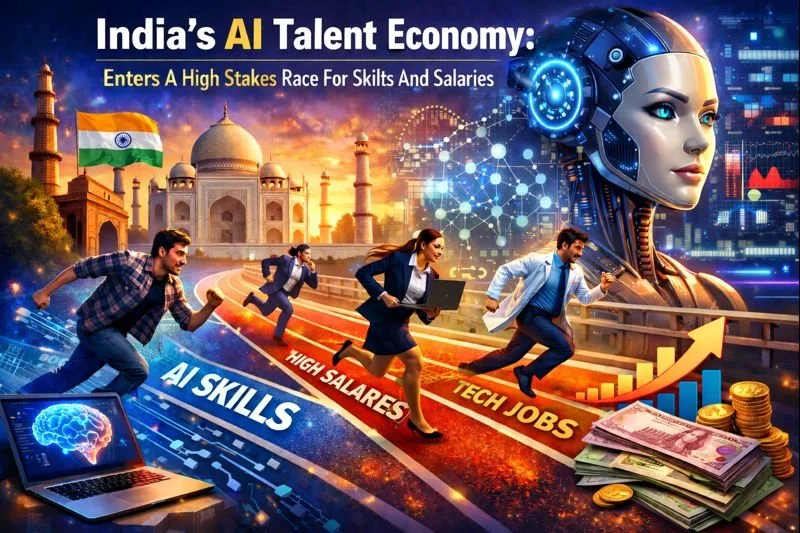
The AI boom is causing an unprecedented battle for top tech talent, with startups offering over $300,000 to new graduates and Big Tech spending billions to secure elite AI scientists, even as automation threatens traditional tech roles.
Amidst tech stock declines, AI and robotics ignite massive investment, with OpenAI eyeing an $850B+ valuation and Jeff Bezos backing key innovators.