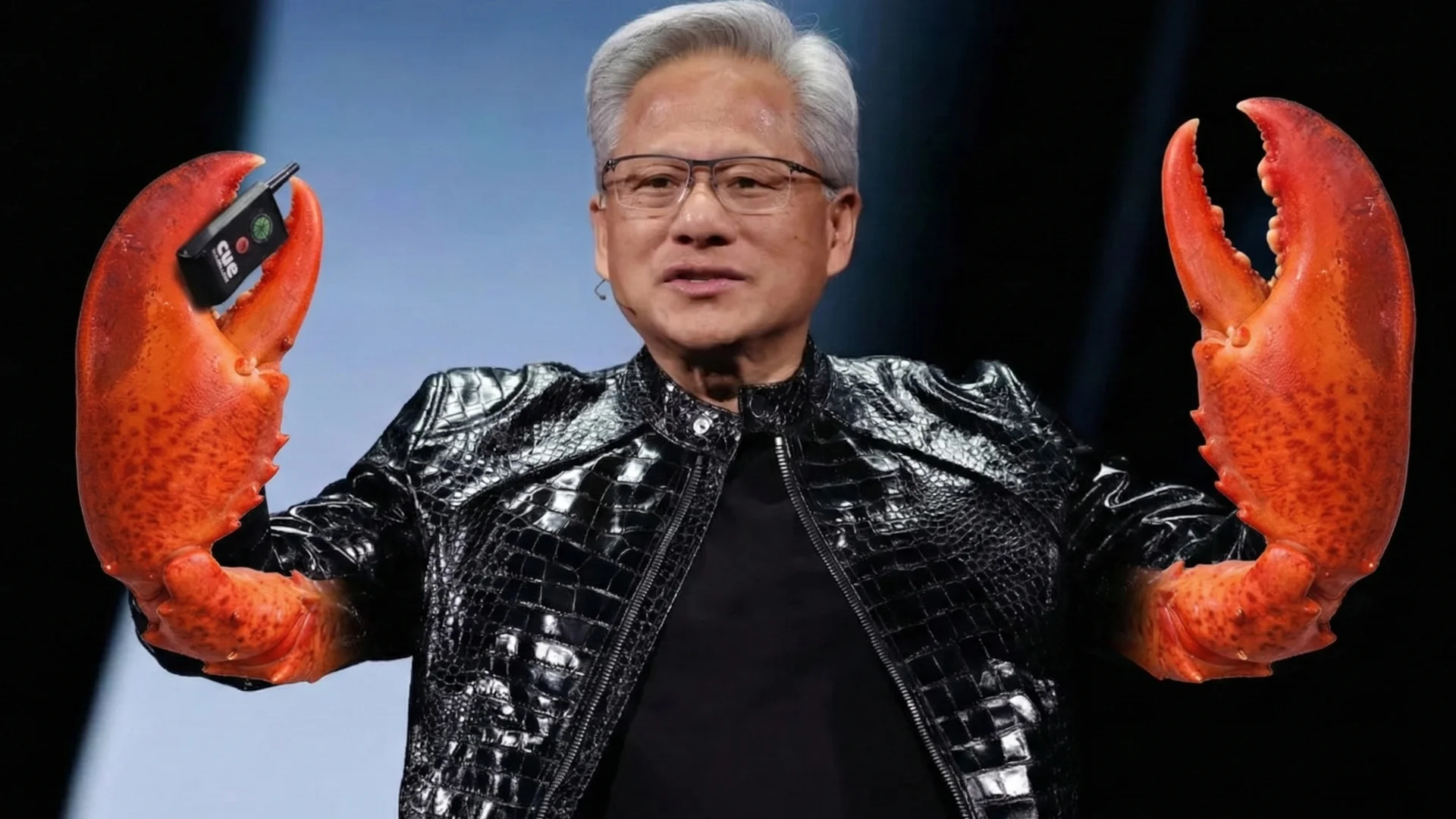
San Jose, CA – A monumental declaration from Nvidia CEO Jensen Huang at the company's 2026 GTC conference has underscored a pivotal shift in the artificial intelligence landscape. Huang proclaimed OpenClaw, an open-source AI agent, as the new standard for computing, drawing parallels to the revolutionary impact of Microsoft Windows on personal computing. This pronouncement signals a move towards a more distributed, customizable, and agentic AI future, prompting every enterprise to develop an "OpenClaw strategy." Nvidia, a leader in semiconductors and AI, is not just observing this trend but actively shaping it, introducing its own secure iteration, NemoClaw, aimed at addressing the critical concerns of privacy and security in this emerging paradigm, as reported by National Today.
The Genesis of a New Computing Era
The concept of intelligent agents has long been a holy grail in artificial intelligence, promising personalized, proactive assistance. OpenClaw, created by former OpenAI talent Peter Steinberger, appears to have cracked the code for widespread adoption, earning it comparisons to foundational technologies like Linux and Kubernetes. Its rapid ascent in Silicon Valley suggests a collective industry recognition of its potential to democratize AI. Historically, significant technological leaps often involve a shift from centralized, proprietary control to more open, accessible platforms. Just as personal computers transitioned from mainframe dependency to individual ownership via operating systems, OpenClaw aims to empower individuals and organizations to deploy custom, secure AI assistants. This echoes a broader industry push for open-source solutions, which are increasingly seen as crucial for fostering innovation and digital independence, a sentiment particularly strong in discussions around European digital sovereignty, according to IoT Now.
Nvidia's Strategic Embrace and Key Industry Movements
Nvidia’s GTC conference served as the primary stage for these announcements. CEO Jensen Huang highlighted that OpenClaw "gave the industry exactly what it needed at exactly the time," emphasizing its potential to usher in an agentic system strategy as the "new computer." To solidify its position in this evolving landscape, Nvidia unveiled NemoClaw, its proprietary version of OpenClaw, which integrates advanced privacy and security controls. This move by Nvidia underlines a dual strategy: endorsing the open-source movement while also providing enterprise-grade solutions that cater to the stringent requirements of businesses and individuals concerning data protection. Furthermore, Nvidia demonstrated its commitment to advanced AI processing by announcing a new inference system incorporating technology from AI chip startup Groq, which it recently acquired for a staggering $20 billion, details National Today.
Meanwhile, the AI race continues to intensify across various sectors. Elon Musk’s xAI, through its Grok chatbot, is notably making aggressive moves into the financial markets. According to a Bloomberg report cited by The Times of India, xAI is actively recruiting bankers, traders, and private credit lenders. The goal is to train Grok in complex financial modeling tasks, from leveraged loan syndication to distressed investing and structured products. This strategic hiring signals xAI's ambition to position Grok as a valuable tool for investment professionals, seeking to catch up with rivals like OpenAI and Anthropic who have already launched tools for market analysis.
Analysis: The Dawn of Distributed AI and the Sovereignty Imperative
The emergence of OpenClaw and Nvidia’s quick pivot to NemoClaw signifies more than just a new product launch; it heralds a foundational shift towards distributed artificial intelligence. This model, where AI agents are customized, controlled, and potentially hosted by individual users or companies, moves away from the massive, centralized models that have dominated the initial phase of AI development. The implications are profound, touching upon everything from data ownership and privacy to the very architecture of future computing. By empowering users to build "claws" with added privacy, Nvidia is acknowledging and proactively addressing the growing concern over AI's ethical and security dimensions. This approach could significantly accelerate AI adoption in sensitive sectors, but it also places a greater onus on users to manage and secure their agents effectively. The "build-a-claw" event at GTC further illustrates Nvidia’s strategy to embed this decentralized vision within its ecosystem, effectively turning users into co-creators of the AI future, rather than just consumers.
This trend toward open and distributed AI also intersects with critical geopolitical discussions surrounding digital sovereignty. As Europe increasingly emphasizes the need for local control over digital infrastructure and data, as detailed in a new whitepaper by GITEX AI EUROPE and LUE, the open-source nature of platforms like OpenClaw becomes doubly significant. The report, highlighted by IoT Now, posits that Europe's technological leadership hinges on scaling AI computing power, establishing sovereign cloud infrastructure, embedding open-source standards, and mobilizing capital. Open-source technologies, by their very nature, offer transparency, flexibility, and independence from proprietary vendor lock-in, aligning perfectly with the goals of digital sovereignty. NemoClaw, with its emphasis on privacy and security controls, could therefore become a crucial tool for entities seeking to implement agentic AI while adhering to strict jurisdictional and data governance requirements, providing a localized, controlled AI infrastructure.
Underlying Technologies and Global Competition
The technological backbone supporting this new era of AI is undergoing rapid evolution. Nvidia's acquisition of Groq for $20 billion and its subsequent integration into their inference systems speaks to the relentless demand for more powerful and efficient AI processing capabilities. Groq's specialized AI chip technology promises to enhance the speed and efficacy of inferencing, the process by which AI models use generalized knowledge to make predictions or decisions. This is crucial for real-time agentic AI systems that need to respond instantaneously and intelligently. The massive investments in compute power, such as the EU’s €200 billion InvestAI programme funding five AI gigafactories equipped with 100,000 or more specialized GPUs, underscore the global race to build the infrastructure for the AI-driven future, as detailed by IoT Now.
While Nvidia champions its open-source and secured-AI strategy, competitors are also making significant headway. xAI’s aggressive push into the financial sector with Grok illustrates another facet of AI's diverse application. By hiring finance professionals to train Grok in complex financial modeling, xAI seeks to build a specialized AI that can provide sophisticated investment insights. This reflects a broader industry trend where general-purpose AI is being fine-tuned for specific, high-value verticals. The Times of India notes that xAI has been aggressively recruiting top talent from other AI companies and even hiring accountants to train Grok for tax-related tasks. This targeted development underscores the strategic importance of specialized domain expertise in making AI truly useful and competitive across industries. The recent volatility in credit markets also suggests that xAI is focusing on areas where AI-driven analysis could provide a significant advantage, potentially offering solutions to highly complex and opaque financial instruments. This diversified approach to AI development, from open-source foundational agents to highly specialized financial chatbots, paints a picture of a rapidly expanding and competitive AI landscape.
Looking Ahead: The Interplay of Open Source, Security, and Sovereignty
The immediate aftermath of Nvidia's announcements will likely see an accelerated adoption of agentic AI systems, with businesses and developers exploring "OpenClaw strategies" and evaluating solutions like NemoClaw for their specific needs. The "build-a-claw" event at GTC itself suggests a strong community engagement focus, aiming to foster rapid development and customization. The interplay between open-source innovation, enhanced security features, and the global push for digital sovereignty will define the trajectory of AI development. As more data and sensitive operations migrate to agentic AI, the demand for robust privacy controls and auditable systems will only increase. Future developments will likely involve further integration of specialized AI chips and architectures to support these complex, distributed AI environments. The ongoing competition among AI giants like Nvidia, xAI, OpenAI, and Anthropic will undoubtedly drive further innovation, pushing the boundaries of what AI agents can achieve and how securely they can operate.