PIF-Backed Humain Launches Sports AI Division, Acquiring London's ai.io
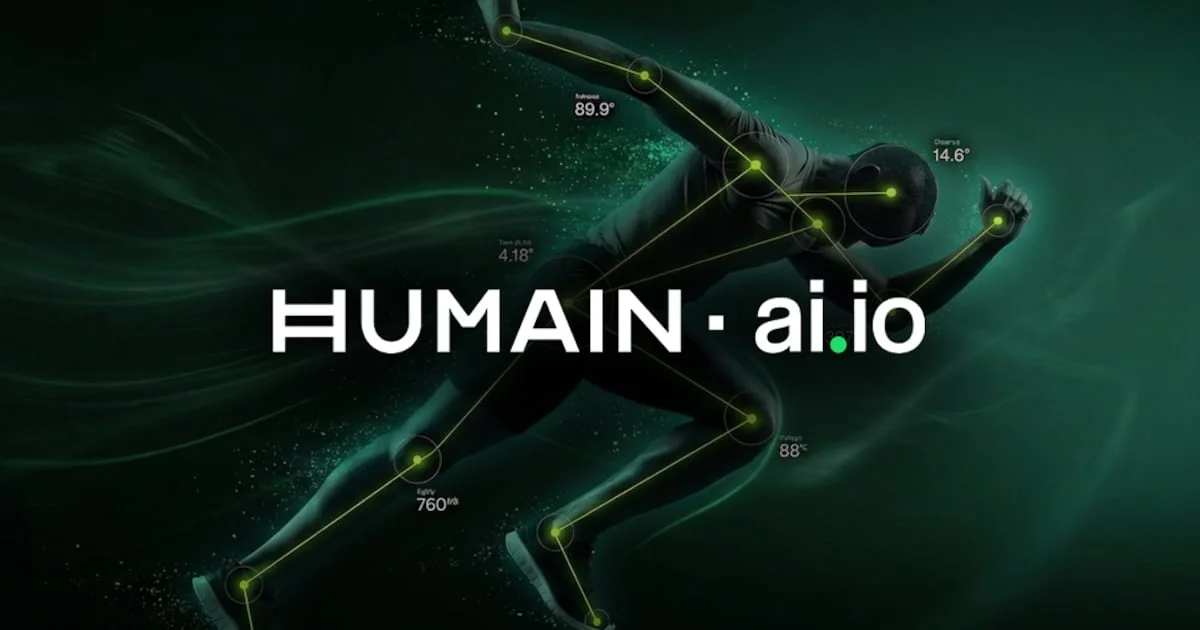
Saudi Arabia's PIF-backed AI startup, Humain, has launched Humain Sport after acquiring ai.io, signaling a major strategic shift towards AI in sports and technology.

In a significant move poised to reshape the intersection of artificial intelligence and professional athletics, Humain, an AI startup backed by Saudi Arabia’s influential Public Investment Fund (PIF), has officially unveiled its new sports division. The launch of Humain Sport follows the strategic acquisition of London-based sports tech innovator, ai.io. This development, first reported by SportsPro, signals a deeper, more sophisticated engagement by Saudi interests in the global sports ecosystem, moving beyond traditional team ownership and league sponsorships towards foundational technological integration. The new division aims to infuse AI innovations across all levels of sport, from grassroots development to elite performance analysis, leveraging ai.io's existing technology, expertise, and crucial industry relationships alongside Humain’s proprietary AI stack.
Strategic Intent: PIF's Shifting Sands
The establishment of Humain Sport is deeply rooted in Saudi Arabia's broader Vision 2030, a comprehensive plan to diversify its economy away from oil dependency and enhance its international influence. While PIF's involvement in sports, through investments in teams and high-profile events, has garnered significant public attention and debate, the focus on AI, as highlighted by SportsPro, represents a calculated evolution of this strategy. It suggests that technology, particularly AI, is now perceived as an equally, if not more, critical pillar for national modernization and global competitiveness. This shift is particularly telling in light of discussions that PIF might be recalibrating its direct sporting investments, positioning AI as a burgeoning priority. The acquisition of ai.io demonstrates an ambition to control and develop the underlying technological infrastructure of sport, rather than solely investing in its visible manifestations. This domestic investment emphasis, especially with Humain's advanced Arabic language large language models (LLMs), suggests a dual focus on global influence and localized technological leadership.
Key Developments in AI Integration Across Industries
The launch of Humain Sport underscores a powerful, cross-industry trend: the pervasive integration of AI. Humain CEO Tareq Amin articulated this mission, stating, "Sport is one of humanity’s strongest forces for connection, and at Humain we exist to bridge the gap between human potential and artificial intelligence." He added that the investment in ai.io and the subsequent launch of Humain Sport are designed to "unite people, empower athletes, and elevate participation and performance across the global sports ecosystem." This strategic move parallels how AI is making profound impacts in other sectors. For instance, the music industry is experiencing its own AI revolution. London-based music technology startup Mozart AI recently secured $6 million in seed funding, led by Balderton Capital, to launch its mobile app. As reported by Music Business Worldwide, Mozart AI offers a Generative Audio Workstation (GAW) to aid both amateur and seasoned musicians in creation, production, and distribution, with millions of songs already created on its platform. Balderton Capital General Partner Daniel Waterhouse emphasizes that "AI is impacting every industry, and music is no different. The companies that win will be those that work with and for musicians, not against them." This sentiment resonates strongly with Humain Sport’s approach, aiming to augment, rather than replace, human potential in athletics. Furthermore, the global race in AI development is intensifying, with companies like China's Zhipu AI releasing advanced models such as GLM-5, featuring enhanced coding capabilities and long-running agent tasks, as detailed by The Economic Times. Zhipu's rapid updates and ambitions to compete globally further illustrate the fierce competition and accelerated pace of AI innovation across various domains, from sports to creative arts and advanced computing.
The concerted efforts by national entities and private ventures in the Middle East further highlight this accelerated momentum. The region's startup landscape, particularly in hubs like Dubai and Riyadh, is exhibiting "strong momentum in areas such as AI, fintech, and digital infrastructure," according to Ray Dargham, co-founder and CEO of Step, a prominent regional tech festival, in an interview with Gulf Business. This growing appetite for technological advancement is attracting significant talent, investors, and partnerships, providing a fertile ground for initiatives like Humain Sport. The emphasis on AI in Step Dubai's 2026 edition, focusing on its role in various industries, underscores the strategic importance placed on this technology. The acquisition of ai.io by Humain, a PIF-backed entity, directly taps into this regional enthusiasm for AI, channeling substantial capital and strategic oversight into a sector ripe for disruption. The parallel developments across global markets, from India's burgeoning role as a decision-making hub for global enterprises to the massive infrastructure spending by tech giants to power AI, as highlighted by TICE News, paint a clear picture: AI is no longer a niche technology but a foundational layer for future economic and social development across the globe.
Analysis: The Geopolitics of AI and Sports
The launch of Humain Sport, backed by Saudi Arabia's sovereign wealth fund, is more than just a business transaction; it's a profound statement about the evolving geopolitics of technology and influence. For decades, sporting prowess and technological innovation have been indicators of national strength and soft power. Now, with AI, these two realms are converging in unprecedented ways. Saudi Arabia, through PIF, has been aggressively pursuing a strategy of diversification and global integration. Its earlier forays into sports, acquiring stakes in football clubs and hosting major events, were often perceived as "sportswashing" – an attempt to improve its international image. However, the shift towards investing in foundational AI technology within sports, as seen with Humain, suggests a more sophisticated and long-term vision. This isn't just about owning a piece of the game; it's about owning the technology that optimizes the game, enhances fan engagement, and potentially even identifies future talent.
This strategic move places Saudi Arabia firmly in the global race for AI dominance, aligning it with other nations that recognize AI as a critical component of national security and economic prosperity. The emphasis on developing advanced Arabic language LLMs by Humain indicates a domestic aspiration to become a regional leader in AI, not just a consumer of foreign technology. This blend of global ambition with localized innovation provides an interesting counterpoint to the traditional Silicon Valley narrative of tech leadership. Furthermore, the investment implicitly acknowledges that success in the future of sports will be inextricable from technological superiority. By integrating AI at the grassroots and elite levels, Humain Sport could potentially create a competitive advantage for Saudi athletes and foster a data-driven sports culture within the Kingdom, establishing a new model for national sports development powered by cutting-edge technology.
Additional Details and Broader Trends
The scope of Humain Sport’s ambition is broad, encompassing participation, fan engagement, intelligent facilities, and performance analysis. This comprehensive approach reflects a recognition that AI can optimize nearly every facet of the sports ecosystem. The integration of ai.io’s products and existing relationships with Humain’s AI stack creates a formidable combination, promising rapid advancements and market penetration. Humain’s CEO Tareq Amin has already indicated "strong commercial momentum," with partnership agreements underway and announcements expected in the coming months, signaling aggressive execution of their strategy. This echoes the broader trend of AI driving massive infrastructure and development investments globally. As TICE News reports, the AI boom is catalyzing an unprecedented spending cycle in infrastructure, with tech giants like Amazon, Alphabet, Microsoft, and Meta projected to invest over $600 billion combined in capital expenditure for the 2026 fiscal year alone. This monumental investment underscores the fundamental belief across the tech industry that AI is not just a passing fad but the core engine of future growth and competitive advantage.
Moreover, the acquisition of ai.io and the formation of Humain Sport can be seen in conjunction with other strategic investments by Saudi entities. For instance, PIF subsidiary SURJ Investment’s $1 billion stake in sports broadcaster DAZN, which included the creation of a dedicated Middle East and North Africa (MENA) unit, further solidifies the Kingdom’s multi-pronged approach to sports and media. These synergistic investments indicate an intention to control not only the technology and infrastructure but also the distribution and consumption channels of sports content within the region and beyond. This integrated strategy showcases a desire to build an end-to-end ecosystem where PIF-backed entities can influence every touchpoint from athlete development to fan experience and broadcast. The emphasis on nurturing domestic AI capabilities, combined with strategic international acquisitions, positions Saudi Arabia as a significant player in shaping the future of global sports technology and AI innovation.
Looking Ahead: The Future of AI in Sports and Beyond
The launch of Humain Sport marks a pivotal moment, signaling a future where AI will be deeply embedded in every aspect of sport. The integration of AI from grassroots to elite levels promises to revolutionize talent identification, training methodologies, injury prevention, and fan engagement. As SportsPro noted, conferences like SportsPro London are increasingly focusing on the tangible ROI delivered by AI in areas from fan personalization to ticketing revenue, highlighting the urgency for sports organizations to embrace these technologies. The challenges of implementing AI, particularly for organizations struggling with demonstrating return on investment, underscore the importance of ventures like Humain Sport, which aim to provide comprehensive, integrated solutions.
The success of Humain Sport will undoubtedly influence how other nations and sports organizations approach AI integration. Its progress in merging human potential with artificial intelligence, as articulated by CEO Tareq Amin, will serve as a case study for the industry. Moreover, the broader landscape suggests continued rapid expansion of AI into diverse sectors, from music creation with companies like Mozart AI to advanced computing models from "AI tigers" like Zhipu AI. The Middle East, with its growing startup ecosystem and significant investment in AI, will be a crucial region to watch for groundbreaking innovations. The competitive dynamics of AI development, coupled with its transformative potential across industries, ensures that the developments pioneered by Humain Sport will have far-reaching implications, extending well beyond the athletic arena and into the fundamental fabric of society and global economic competition.
Related Articles
Tech Leaders Pivot to AI, Physical Robots, and Defense Amid Smartsheet's C-Suite Shake-Up
Recent C-suite changes at Smartsheet, the emergence of AIQLinea, and the meteoric rise of defense tech startup Swarmer underscore a broader tech industry pivot towards artificial intelligence in its varied applications, from enterprise software to physical robotics and military hardware.