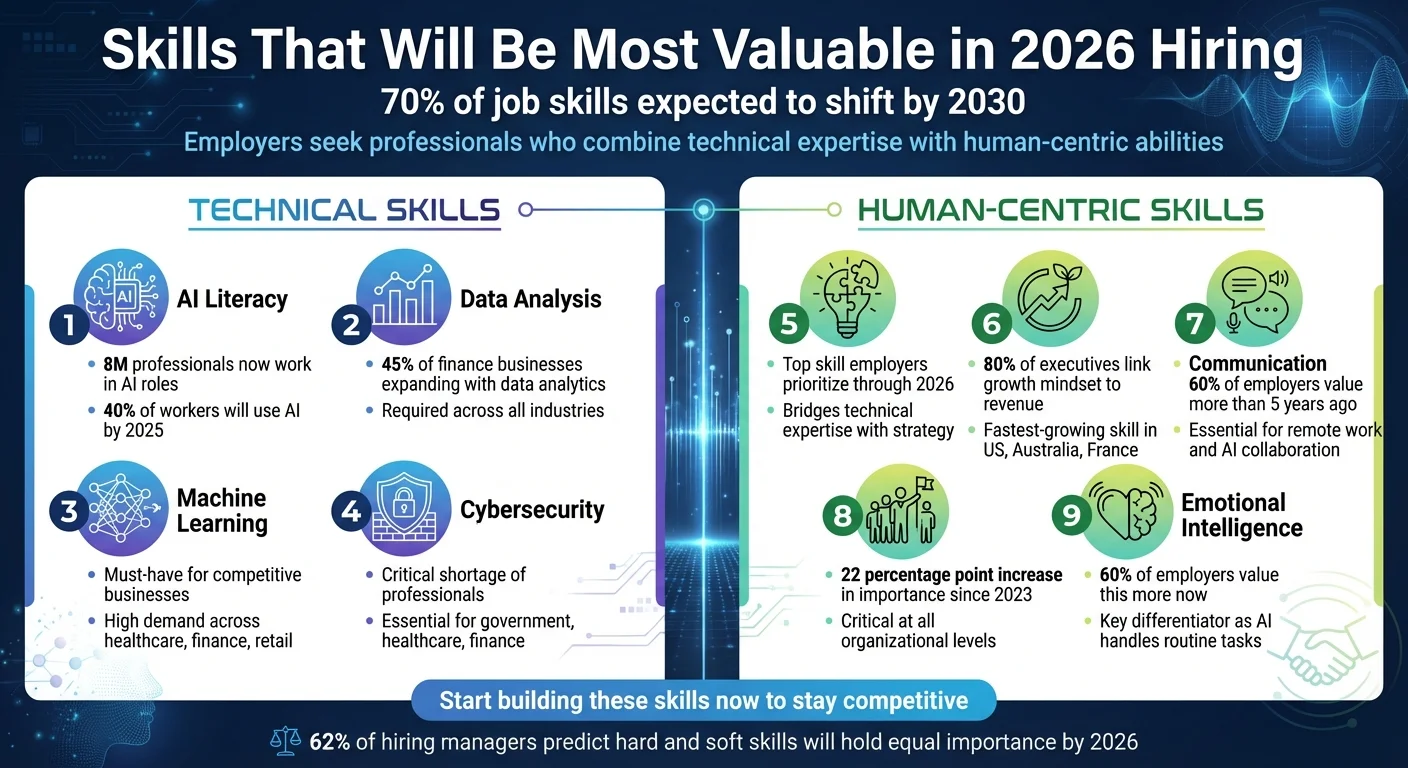
The dawn of 2026 ushers in a profound transformation in the global employment landscape, driven by the relentless advancement and widespread adoption of Artificial Intelligence across virtually every industry. No longer a niche domain, AI is fast becoming the foundational technology underpinning business operations, product development, and strategic decision-making. Consequently, employers are recalibrating their expectations, placing an unprecedented premium on professionals equipped with demonstrable AI-related capabilities. A recent report from Storyboard18 meticulously outlines the critical skills that will define success in this rapidly evolving market, highlighting that adding specific AI competencies to one's resume is no longer an advantage, but a necessity for securing better job opportunities and standing out amongst a competitive talent pool.
The Evolution of AI in the Workplace: A Historical Perspective
While the current surge in AI adoption, particularly with the advent of accessible generative AI tools, feels revolutionary, the integration of intelligent systems into the workplace is a trajectory spanning decades. From early expert systems in the 1980s that codified human knowledge, to the data mining boom of the late 1990s and early 2000s, and the subsequent rise of big data analytics, each era laid groundwork. The true explosion, however, has been fueled by several convergent factors: exponential increases in computational power, the availability of vast datasets, and breakthroughs in machine learning algorithms. This confluence has pushed AI from theoretical research into practical applications, enabling widespread automation, sophisticated data analysis, and unprecedented creative capabilities. Where early AI applications were often siloed, today's AI is deeply embedded, impacting everything from customer service chatbots to complex supply chain optimization. This historical progression underscores why, as Storyboard18 details, the demand for AI expertise is not a fleeting trend but a fundamental shift in professional requirements, necessitating specialized training and certification to keep pace with an increasingly automated and intelligent work environment.
The New AI Skill Imperatives for 2026
As businesses globally continue to integrate AI into their core operations, the demand for specific AI competencies is skyrocketing. The Storyboard18 report identifies several key areas where professionals must develop expertise to thrive in the 2026 job market. Foremost among these is proficiency in Generative AI and Prompt Engineering. Tools like ChatGPT are becoming ubiquitous for tasks ranging from report generation and code development to content creation. The ability to craft precise instructions, or "prompts," that guide AI systems to produce accurate and valuable outputs is increasingly seen as a critical professional skill. This translates business requirements into actionable AI directives, making individuals with this capability exceptionally valuable.
Another corner piece of the AI puzzle is Data Science and Analytics. AI systems are inherently data-driven, making professionals skilled in data collection, cleaning, and analysis indispensable. Expertise in programming languages such as Python, R, and SQL, coupled with familiarity with AI frameworks like TensorFlow and PyTorch, enables data scientists to extract meaningful insights that drive crucial business decisions. Countries like India, experiencing significant growth in AI adoption, are seeing a particularly high demand for these roles, underscoring their importance in leveraging data effectively.
Underpinning many AI applications is Machine Learning and Model Development. A deep understanding of various machine learning techniques—supervised, unsupervised, and reinforcement learning—is essential. Professionals in this domain are tasked with designing, training, and refining AI models to deliver measurable business outcomes. As companies increasingly seek customized AI solutions, expertise in model development becomes a competitive differentiator, enabling organizations to build bespoke intelligent systems tailored to their unique needs. Finally, the practical deployment and management of AI systems often rely on AI and Cloud Computing. Major cloud platforms like Amazon Web Services, Microsoft Azure, and Google Cloud are crucial for handling the massive datasets and computational demands of AI. Organisations are therefore actively seeking professionals who can build, maintain, and optimize AI applications within these cloud environments, ensuring efficient performance monitoring and continuous improvement of AI initiatives. As Storyboard18 reinforces, developing these foundational and advanced AI skills through specialized courses, certifications, or practical training is paramount for career resilience and growth.
Analysis: The Broader Implications for the Workforce
The emergence of these specific AI skill sets as non-negotiable requirements for 2026 signals more than just a technological shift; it marks a fundamental redefinition of what constitutes "skilled labor." The traditional divide between highly specialized technical roles and generalist positions is blurring, as even roles traditionally considered non-technical will increasingly require an understanding of how to interact with and leverage AI tools. This pervasive integration means that workers across all sectors, from marketing to finance to customer service, will need at least a foundational understanding of prompt engineering and data literacy. The imperative isn't just about becoming an AI developer, but about becoming an "AI-savvy professional" — someone who can augment their existing expertise with AI capabilities. This development necessitates not only individual upskilling but also a proactive approach from educational institutions and corporate training programs to bridge this growing skill gap. The success of national economies in the coming years will likely be tied to their ability to foster this widespread AI literacy, ensuring their workforce remains adaptive and competitive. The reports of other news, such as an actress getting an Oscar nomination, and others highlighting hygiene issues in London, while seemingly disparate from this topic, underscore the diverse and rapidly changing world we live in, reflecting how technology and global shifts touch all aspects of our lives, from entertainment to urban infrastructure, even if not directly linked to AI skills themselves, they signify a world in constant flux where adaptability is key for all professionals.
Upskilling Pathways and Strategic Investments
For professionals aiming to navigate this paradigm shift successfully, proactive engagement with learning opportunities is crucial. As highlighted by Storyboard18, enrolling in specialized training programs, certification courses, or undertaking practical projects are all viable avenues for building the necessary knowledge. These pathways offer practical exposure to AI technologies and prepare individuals for emerging job roles that demand a blend of traditional domain expertise augmented with AI proficiency. For instance, a marketing professional might benefit from a prompt engineering course to better leverage generative AI for content creation, while a financial analyst could pursue data science certifications to apply machine learning to market predictions. Beyond individual initiatives, corporate investment in reskilling and upskilling programs will be pivotal. Companies that proactively train their existing workforce in these AI competencies will not only foster employee loyalty but also gain a significant competitive advantage by cultivating an internal talent pool capable of driving AI initiatives. The rapid evolution of AI also means that continuous learning will be more critical than ever; skills acquired today may need refinement tomorrow. This dynamic environment necessitates a mindset of lifelong learning, where adaptability and a willingness to embrace new technologies become defining characteristics of a successful career.
Looking Ahead: The Ubiquitous AI-Enabled Future
The trajectory towards an AI-centric job market is undeniable. As we move beyond 2026, the distinction between "AI jobs" and "non-AI jobs" will likely diminish, with AI literacy becoming an expected baseline across almost all professional endeavors. The continued evolution of AI technologies, particularly in areas like responsible AI development and ethical considerations, will also introduce new skill requirements. Professionals will not only need to understand how to use AI but also how to implement it responsibly, considering bias, privacy, and societal impact. This holistic approach to AI proficiency will shape future hiring trends, demanding individuals who can combine technical acumen with critical thinking and ethical judgment. The next wave of innovation will not solely be about building AI, but about integrating it intelligently and ethically into complex human systems. Staying abreast of these developments, continuously refining one's skill set, and embracing the changing technological landscape will be paramount for sustained career growth in an increasingly AI-dominated world.