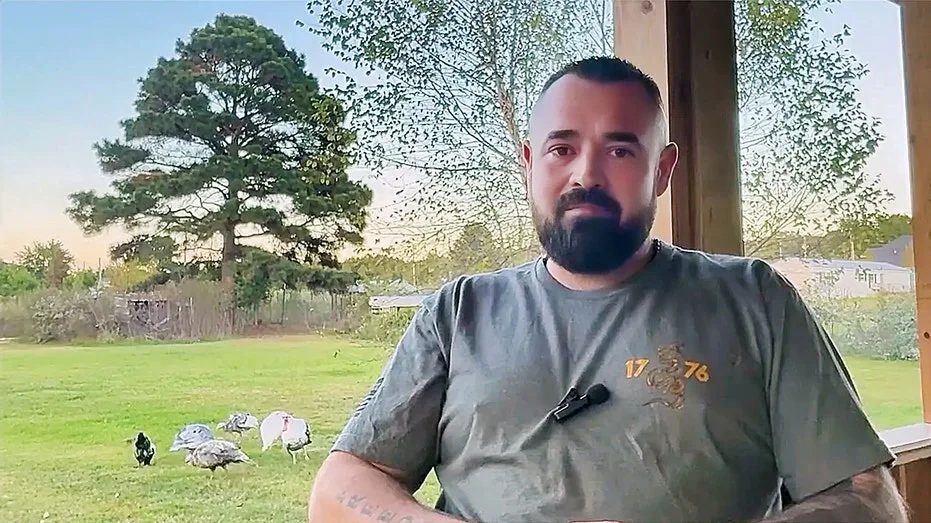
An Arkansas man awaiting trial for murder has secured the Republican nomination for sheriff in Lonoke County, raising significant questions about legality, public trust, and the election process.
In a stunning electoral development that has sent ripples through Arkansas and beyond, Aaron Spencer, a man currently awaiting trial on a murder charge, has successfully secured the Republican nomination for sheriff in Lonoke County. The unofficial results, as reported by the Arkansas Secretary of State, indicate that Spencer unseated incumbent Lonoke County Sheriff John Staley in Tuesday's primary, setting the stage for a contentious general election against Democrat Brian Mitchell Sr. in November. This unprecedented situation immediately begs critical questions regarding the ethics of candidacy, the legal feasibility of serving in office while facing severe charges, and the broader implications for public trust in electoral systems, all while Spencer's defense maintains his actions were legally justifiable to protect his child.
The narrative surrounding Aaron Spencer’s candidacy is deeply rooted in a personal tragedy and subsequent legal battle. Spencer stands accused of killing 67-year-old Michael Fosler. Crucially, at the time of his death, Fosler was out on bond, facing multiple sexual offense charges against Spencer’s then-13-year-old daughter. This deeply emotional and volatile context forms the bedrock of Spencer’s legal defense, with his attorneys asserting that his actions were within the bounds of the law, undertaken to protect his child from a perceived predator. Despite the gravity of the murder charge, Spencer decided to run for the highest law enforcement position in Lonoke County, a move that undoubtedly resonated with a segment of the electorate familiar with the circumstances. The primary election saw him triumph over the sitting sheriff, John Staley, demonstrating a significant level of public support or at least a strong protest vote against the incumbent. This victory, while unofficial, immediately thrusts the small Arkansas county into a national spotlight, challenging conventional notions of political eligibility and public service, as highlighted by WKTV, which first reported on the specifics of this unusual election outcome on March 6th.
Spencer's nomination introduces a convoluted and legally uncharted path for Lonoke County. The most immediate and pressing concern is the critical caveat that Spencer would be legally prohibited from serving as sheriff if he is convicted of murder. His pending trial, therefore, casts a long shadow over the entire electoral process. The legal proceedings themselves are complex; Spencer’s attorneys do not dispute that he shot and killed Fosler but argue that his actions were justified within the law, aiming to protect his daughter. This “justification defense” will be central to his upcoming trial, the timing of which remains critical concerning the November general election. Should Spencer win the general election but be convicted before taking office, or even while in office, the state would face a constitutional crisis regarding leadership in local law enforcement. According to the reporting by WKTV, the unofficial nature of the primary results underscores the preliminary stage of this political drama, but the implications are already profound. The public’s decision to nominate a candidate facing such serious charges reflects a complex interplay of community sentiment, personal stories, and perhaps a deep-seated frustration with the justice system perceived to have failed victims. This situation also stands in contrast to other trending news, such as the stock market's fluctuations, which, while impacting financial wellbeing, do not typically intersect with the very fabric of local governance in such a stark and immediate way, as noted in the market updates by Investor's Business Daily, which focused on other pressing national issues like oil prices and the U.S.-Iran conflict.
The victory of Aaron Spencer in the Republican primary for Lonoke County Sheriff represents far more than a local election result; it's a profound commentary on the intersection of personal tragedy, public justice, and political will. For Lonoke County residents, this situation creates an unprecedented level of uncertainty regarding the future of their top law enforcement office. It pits the raw emotions of personal perceived justice against the procedural rigor of the legal system and the foundational principles of elected public service. What message does it send when a community nominates someone accused of murder to lead its police force, even with a strong claim of justification? This raises questions about public trust in traditional legal processes and potentially signals a desire for more direct, even vigilante-style, responses to perceived failures of justice. Moreover, the case sets a potential precedent for other jurisdictions. If Spencer were to be elected and subsequently acquitted, it could inspire other individuals facing serious charges, particularly those with compelling personal narratives, to seek public office. Conversely, a conviction post-election would create a chaotic scenario, forcing a special election or appointment and potentially disillusioning voters who supported Spencer. This controversial development forces a national conversation about the qualifications for holding public office, the relationship between personal legal battles and public service, and the electorate's willingness to look beyond conventional political considerations in favor of a candidate whose story resonates deeply with frustrations about the legal system. It is a stark reminder that elections are not always about policy or experience but can sometimes be a referendum on complex moral and ethical dilemmas.
Details emerging from the case highlight the emotional core driving Spencer’s defense and, arguably, his electoral support. Michael Fosler, the deceased, was facing numerous sexual offense charges involving Spencer’s then-13-year-old daughter, and was out on bond at the time of the shooting. This background paints a picture of a father acting under immense duress and a perceived failure of the judicial system to adequately protect his child. The "stand your ground" or self-defense laws, which vary by state, will likely be a crucial aspect of Spencer's murder trial. Arkansas law, like that in many other states, allows for the use of deadly force in certain circumstances, particularly when protecting oneself or others from serious harm. Spencer’s legal team will undoubtedly attempt to frame his actions within this legal framework, arguing that his daughter remained at risk despite Fosler's arrest. The general election campaign will undoubtedly be heavily influenced by the ongoing legal proceedings. Both Spencer and his opponent, Democrat Brian Mitchell Sr., will have to navigate a political landscape where a murder trial hangs over one candidate’s head. This is a unique challenge for voters, who must weigh Spencer’s legal fate against his suitability for office, even as the local UFC events attract widespread attention for entirely different reasons, as detailed on UFC.com with news about weigh-ins and fighter interviews, which while trending, offer a stark contrast to the serious civic issues at play in Lonoke County. The case tests the boundaries of democratic processes and the very definition of who is "qualified" to serve in public office, particularly one tasked with upholding the law. The outcome of Spencer’s trial, regardless of the election results, will have lasting effects on how voters and legal scholars view the candidacy of individuals facing serious criminal charges.
The path forward for Lonoke County and Aaron Spencer remains highly unpredictable. The most significant factor is the timing and outcome of Spencer’s murder trial. If the trial concludes before the November general election, and Spencer is acquitted, it could solidify his position with voters and remove the major legal cloud over his candidacy. However, a conviction would immediately disqualify him from serving, regardless of the election results. If the trial extends beyond the election, and Spencer wins, the county could face a period of extreme instability, potentially with a sheriff-elect who might be incarcerated. This could lead to legal challenges regarding his eligibility, a special election, or an interim appointment. The political implications are also vast; beyond Lonoke County, this case could influence how candidates with controversial legal backgrounds are perceived and how party nominations are handled across the country. It promises to be a situation intensely watched by legal experts, political analysts, and concerned citizens alike, as it probes the fundamental principles of justice, representation, and public order in American democracy.

Arkansas freshman Darius Acuff Jr. earns First Team All-America honors from The Sporting News, making history as SEC Player of the Year with elite scoring and assist numbers, drawing comparisons to college basketball legends.