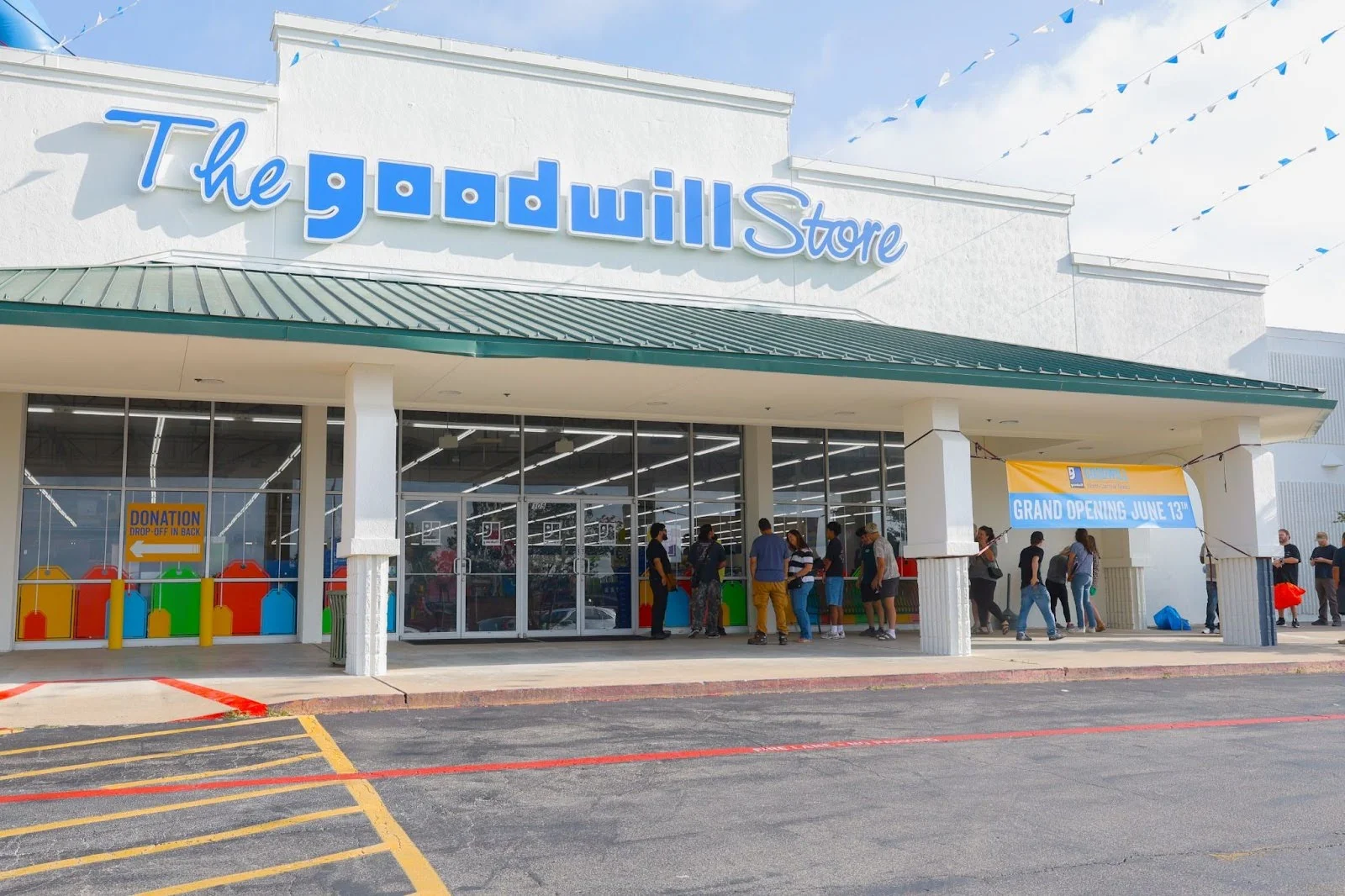
Goodwill Defies Retail Downturn, Thrives on Bargains and Social Mission
Goodwill stores are experiencing record growth, driven by inflation-conscious consumers seeking value and a strong social purpose, bucking wider retail trends.

In a retail landscape increasingly characterized by store closures and consumer caution, one name stands out for its unexpected and robust growth: Goodwill. Far from being relegated to a niche market, these familiar thrift stores are experiencing a significant resurgence, driven by a confluence of economic pressures, shifting consumer values, and a deeply embedded social mission. With published reports indicating that 2025 revenues across its 3,400-plus North American stores exceeded an astonishing $7 billion, Goodwill is not merely surviving but thriving. This phenomenal growth, highlighted by sources like the NKyTribune citing the New York Times, signifies a profound consumer shift towards second-hand shopping, motivated by value, sustainability, and a growing embrace of conscious consumption, particularly among younger demographics.
Background and Context
The perception of Goodwill has undergone a significant transformation over the decades, a change epitomized by the experience of Mark Hiemstra, president and CEO of Ohio Valley Goodwill. He candidly shares his childhood memories from Sandusky, Ohio, where the Goodwill trailer was once seen as "a bad representation of the organization," and his parents advised against shopping there, deeming it "for poor people." This sentiment, once prevalent, underscores the historical challenge Goodwill faced in shedding a stigmatized image. Yet, as Hiemstra observes in the NKyTribune, "Times certainly have changed." The organization's commitment to providing quality merchandise and an inclusive shopping experience has been pivotal in reshaping public perception. Today, Goodwill aims to be "for everybody," offering a dignified retail environment even as it continues its vital work supporting those in need. This evolution reflects not just a change within Goodwill, but a broader societal shift towards de-stigmatizing second-hand goods and recognizing the multifaceted benefits of thrift shopping.
Key Developments Fueling Growth
The current economic climate, marked by high inflation and rising costs for essentials like groceries and rent, is a primary driver behind Goodwill's boom. Mainstream retailers like Macy’s are struggling and closing stores, while discount operators such as Ollie’s and Dollar General are expanding. Goodwill, however, offers a unique value proposition. According to Hiemstra, "Thrift stores... are some of the only places that can offer a five dollar T-shirt and jeans for around $15," a compelling offer when consumers are "becoming far more value-conscious," as noted by Michelle Meyer, chief economist of the MasterCard Economics Institute, in comments cited by the NKyTribune. Furthermore, Goodwill benefits from its unique supply chain: "We don’t import goods manufactured abroad," Hiemstra explains, "We are protected from tariff-related price increases."
Beyond economics, a cultural shift towards sustainability and unique fashion finds among younger generations, particularly Gen Z, is propelling thrifting into the mainstream. Platforms like TikTok are awash with content showcasing second-hand treasures, transforming what was once considered a necessity for the less affluent into a trendy, environmentally conscious lifestyle choice. This appeal to both budget-conscious consumers and trend-seeking youth broadens Goodwill's reach significantly. The NKyTribune also highlights that Goodwill's customer demographics now mirror those of retail giants like Walmart and Target, underscoring its broad appeal. This surge in demand is not going unnoticed; the San Francisco Examiner, as reported by NKyTribune, indicates plans for Goodwill to add 50-100 new stores this year, with the Ohio Valley operation alone planning its 22nd store and exploring further expansion into Northern Kentucky by 2027. This aggressive expansion signals strong confidence in the sustained upward trajectory of the second-hand market and Goodwill's pivotal role within it.
Analysis: What This Means for Consumers and Retail
Goodwill's remarkable success in today's economy offers several key insights into evolving consumer behavior and the broader retail landscape. Firstly, it underscores the enduring power of value in purchasing decisions, especially during periods of economic uncertainty. While inflation may squeeze disposable incomes, consumers are not necessarily stopping spending; rather, they are becoming "more strategic and cautious with their money," as noted by the NKyTribune. This means a shift away from full-price, brand-new items towards more affordable, often pre-owned alternatives that still meet their needs for quality and style.
Secondly, the rise of thrifting into a mainstream trend, actively embraced and promoted by Gen Z on social media platforms like TikTok, points to a significant cultural shift. Younger consumers are not just seeking bargains; they are also driven by environmental consciousness and a desire for unique, distinctive items that combat fast fashion's uniformity. This intersection of affordability, sustainability, and individuality creates a powerful draw that traditional retailers often struggle to replicate. Goodwill, by its very nature, fulfills all three criteria. Its business model, which relies on donations, inherently supports circular economy principles, and its ever-changing inventory offers a treasure hunt experience. This trend suggests that even as technological advancements like AI reshape industries, as seen in the enterprise AI developments highlighted by Forbes, fundamental consumer needs for value and purpose continue to drive certain sectors of the economy, proving resilient against purely digital or high-tech disruptions. The human element of community, charity, and sustainable living is proving to be a powerful differentiator in the modern market.
Additional Details: The Social Enterprise Model
Beyond its retail prowess, Goodwill’s enduring success is intrinsically linked to its identity as a non-profit social enterprise. As highlighted in the NKyTribune, all revenues generated from its retail stores and donations are reinvested into funding crucial community programs. These initiatives include career skills training, educational opportunities, and support services for those facing significant barriers to employment, such as individuals with disabilities or formerly incarcerated people seeking to re-enter the workforce. Mark Hiemstra emphasizes this core mission, stating, "We have filled in where government hasn’t supported people with disabilities." The Ohio Valley Goodwill, for instance, has been a cornerstone in community support for over 107 years, serving individuals with disabilities and socioeconomic obstacles since 1916 within the Greater Cincinnati and Northern Kentucky regions.
The Woodlawn location alone, a major operation spanning 16 acres, employs 20 workers in its manufacturing division and 35 in its retail store, with 20 of those individuals actively participating in job training programs. Hiemstra proudly notes that they even provide transportation, picking up and dropping off workers daily, illustrating the comprehensive support Goodwill offers. This integrated approach, where retail operations directly fuel societal good, resonates deeply with an increasingly socially conscious consumer base. It transforms a simple purchase into a contribution to a larger cause, adding another layer of appeal beyond mere financial savings. The organization processes an astonishing six billion pounds of goods nationally per year, illustrating the vast scale of its operation and its critical role in both consumer goods circulation and community development.
Looking Ahead: Sustained Growth and Evolving Trends
The trajectory for Goodwill appears poised for continued expansion, with plans for 50-100 new stores this year nationally, and regional growth evident in the Ohio Valley's proposed 22nd store and Northern Kentucky expansion by 2027, as reported by the NKyTribune. Furthermore, their online auction site experienced its biggest year in 2025, indicating a strong digital presence complementing their physical footprint. This dual approach ensures accessibility for a wide range of consumers. As the economy continues to fluctuate, the value proposition of second-hand goods will likely remain strong. The "treasure hunt" aspect of thrifting, combined with its eco-friendly credentials, aligns with several long-term consumer trends beyond just frugality. The growing interest in unique items and sustainable consumption, as evidenced by exploding topics like "Permanent Jewelry" and "Boucle Bed Frame" in a recent Exploding Topics report, suggests a broader appetite for distinctive, often upcycled or unconventional goods. Goodwill is uniquely positioned to capitalize on these evolving preferences, maintaining its relevance and appeal. The success of enterprises like Goodwill is a powerful reminder that purpose-driven business models can yield significant economic returns while simultaneously addressing societal needs, creating a resilient and impactful operational framework for the future.
Related Articles
Goodwill Defies Retail Downturn, Sees Billions in Revenue Amid Thrifting Surge
Goodwill stores are experiencing record growth, exceeding $7 billion in revenue in 2025, driven by economic uncertainty, sustainability trends, and a shift in consumer perception.