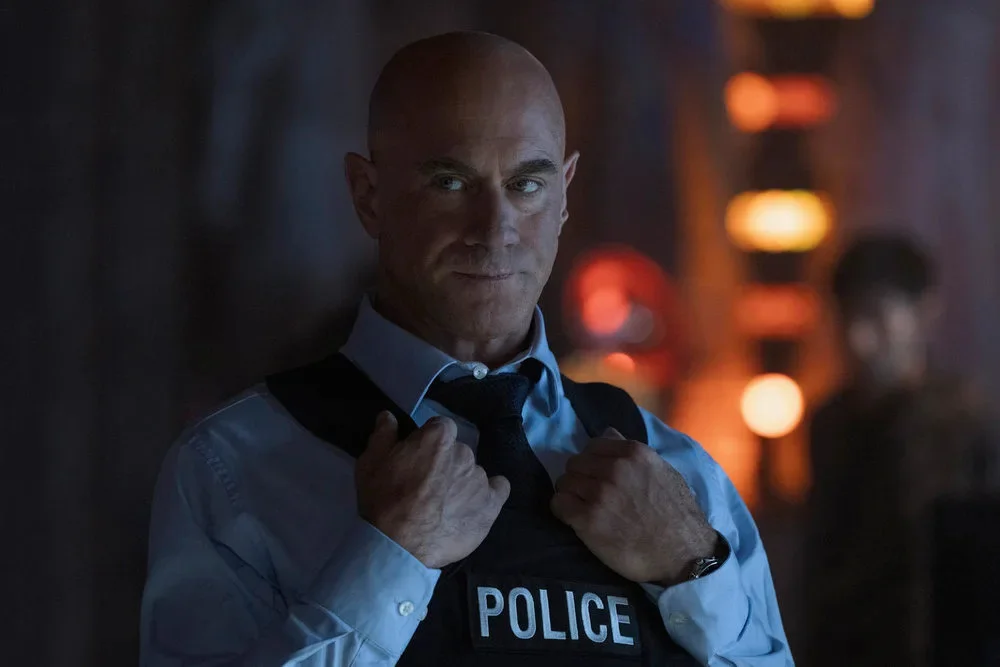
‘Law & Order: Organized Crime’ Concludes Run After Five Seasons, Stabler’s Journey Ends
Christopher Meloni's 'Law & Order: Organized Crime' has been canceled after five seasons, marking the end of Elliot Stabler's standalone saga in the L&O universe.

In a significant development for long-time fans of the iconic "Law & Order" franchise, "Law & Order: Organized Crime," the spinoff series spotlighting Christopher Meloni's beloved detective Elliot Stabler, will not be returning for a sixth season. The news, confirmed by TODAY.com, brings an end to Stabler's dedicated journey within the Organized Crime Task Force, a narrative arc that captivated viewers since its premiere in April 2021. The series, which saw Meloni reprise his role from "Law & Order: Special Victims Unit" after more than a decade, concluded its five-season run with its final episode released in June 2025. This cancellation marks a notable shift in the sprawling "Law & Order" universe, prompting discussions among its dedicated fanbase about the future of its interconnected storylines and character appearances.
Background and Context of Stabler's Return
The return of Christopher Meloni as Detective Elliot Stabler was one of the most anticipated moments in television history for legions of "Law & Order: Special Victims Unit" devotees. Stabler, a fan-favorite, had abruptly departed "SVU" at the end of its 12th season in 2011, leaving a significant void and an unaddressed narrative alongside his partner, Captain Olivia Benson (Mariska Hargitay). His return in "Law & Order: Organized Crime" was designed to mend this decade-long gap, providing closure for his character's personal life and re-integrating him into the present-day "L&O" universe. The spinoff leveraged this built-in anticipation, launching in 2021 with a focus on Stabler's deeply personal mission to dismantle organized crime syndicates in New York City, particularly after the murder of his wife. This deeply emotional premise, combined with the allure of Meloni's return, was initially met with considerable excitement, breathing new life into a franchise that has consistently adapted and expanded over the decades, as detailed by TODAY.com.
Key Developments in 'Organized Crime's' Run and Cancellation
"Law & Order: Organized Crime" embarked on its journey with an eight-episode first season on NBC in April 2021, instantly drawing attention due to Christopher Meloni's highly anticipated comeback. The initial success paved the way for more extensive second and third seasons, both consisting of a traditional 22 episodes, broadcast on the same network. However, a noticeable shift began with its fourth season, which saw a reduced order of 13 episodes, still airing on NBC. The most significant change, signaling a potential new direction or a re-evaluation of its broadcast strategy, came with the fifth and now-final season, which moved entirely to NBC's streaming platform, Peacock, comprising just 10 episodes. This transition to streaming-only for its concluding season, coupled with the shortened order, often indicates a declining linear viewership or a strategic decision by the network to manage costs and maximize streaming subscribers, even for established franchises. TODAY.com confirmed that the last episode of this final season aired in June 2025, bringing Stabler's latest chapter to a definitive close. Throughout its run, the series delved into Stabler’s personal life, introducing viewers to his children, brothers, grandchildren, and in-laws, enriching his character beyond his police work. It also maintained vital connections to its parent show, "SVU," through frequent crossover events. Characters like Mariska Hargitay’s Captain Olivia Benson, Peter Scanavino, Ice-T, and Kelli Giddish all made appearances, reinforcing the interconnectedness of Dick Wolf's television universe. Conversely, Meloni himself appeared in "SVU" from time to time, including its Season 27 premiere, ensuring the bond between Stabler and Benson remained a compelling draw for viewers across both series.
Analysis: What This Means for the "Law & Order" Universe and Television Landscape
The cancellation of "Law & Order: Organized Crime" is more than just the end of a single television show; it reflects broader trends in network television, streaming dynamics, and the longevity of established franchises. For the "Law & Order" universe, Specially, it prompts questions about the future of its interconnected narratives and character appearances. While Meloni has a history of popping up on "SVU," the consistent, dedicated space for Stabler's character development within his own series is now gone. This could mean a more limited capacity for the highly anticipated "Benson and Stabler" reunion storylines, which have been a significant draw for both "Organized Crime" and "SVU" in recent years. The move from broadcast network to streaming-only for its final season, and the subsequent cancellation, highlights the challenges even beloved franchises face in maintaining large enough audiences to warrant expensive productions in a fragmented media landscape. It suggests that even iconic characters and established fan bases are not immune to the pressures of ratings and streaming subscription targets. Networks and studios are increasingly scrutinizing viewership versus production costs, and a series moving to pure streaming often indicates a last-ditch effort to keep it alive for a niche audience, which, in this case, ultimately proved insufficient to secure renewal.
Furthermore, this development underscores the evolving nature of television consumption. The initial hype around Meloni’s return was massive, demonstrating the power of nostalgia and character attachment. However, maintaining that momentum over several seasons, especially with a shifting broadcast strategy, proved difficult. The "Law & Order" brand, helmed by Dick Wolf, has always been a cornerstone of procedural drama, known for its longevity and ability to adapt. While "Organized Crime" had a distinct tone and explored deeper character arcs than traditional "L&O" fare, its particular blend of serialized storytelling within a procedural framework may have struggled to find a consistent mass audience across both linear TV and streaming. This decision could also signal a strategic consolidation by NBC and Peacock, focusing resources on more broadly appealing or higher-performing titles within their expansive content libraries, or perhaps even paving the way for a different interpretation or continuation of a beloved character’s story in another format down the line.
Additional Details from the Series' Run
Beyond its core focus on Stabler’s pursuit of various organized crime syndicates, "Law & Order: Organized Crime" distinguished itself by offering a deeper dive into the protagonist's personal sphere. Viewers were introduced not only to his children, whom fans had glimpses of during his "SVU" tenure, but also to his brothers, providing a richer, more nuanced understanding of Stabler's family background and the influences that shaped him. The series also explored his relationships with his grandchildren and in-laws, painting a complete picture of a man grappling with both professional dangers and complex personal responsibilities, especially in the wake of his wife's murder. This personal expansion allowed for narrative complexity that went beyond typical police procedural tropes, giving Meloni ample material to explore the emotional weight of his character's journey. The ensemble cast that joined Meloni in this endeavor included Danielle Moné Truitt, who played Sergeant Ayanna Bell, Stabler's capable and strong-willed supervisor, Ainsley Seiger as Jet Slootmaekers, the tech-savvy hacker of the task force, Rick Gonzalez, and Dean Norris, both of whom added significant weight to the series' various plotlines and character dynamics. These actors contributed to the intricate web of characters that supported Stabler's mission, each bringing their own distinct presence to the show. The interconnectedness with "Law & Order: SVU" was a critical element of "Organized Crime's" appeal, fostering a sense of continuity for long-time fans who cherished the dynamic between Stabler and Benson. These crossover episodes were not merely cameos but often propelled significant plot developments in both series, ensuring that the wider "L&O" universe remained cohesive and engaging. This strategic cross-pollination was a testament to the enduring appeal of these characters and the franchise's ability to evolve while retaining its core identity, as highlighted in reports from TODAY.com.
Looking Ahead for Christopher Meloni and the "Law & Order" Brand
With "Law & Order: Organized Crime" having concluded its run, the immediate future for Christopher Meloni's portrayal of Elliot Stabler within the "L&O" universe becomes a topic of speculation. Given his historical willingness to make guest appearances on "Law & Order: Special Victims Unit" even after his initial departure, it is plausible that fans may still see Stabler resurface occasionally to aid his former partner, Olivia Benson, or in significant crossover events. However, a sustained, dedicated storyline focusing on his character is unlikely in the immediate term. For the broader "Law & Order" brand, helmed by executive producer Dick Wolf, adaptability has always been its strength. The franchise continues to thrive with "SVU" and the original "Law & Order" series, suggesting that the universe itself is far from exhausted. Future spin-offs or limited series focused on other characters or new aspects of the legal and criminal justice system remain a possibility, adhering to Wolf's prolific output. The entertainment industry is constantly evolving, with streaming services continually searching for established intellectual property to draw subscribers. While one chapter closes, the interconnected nature of the "Law & Order" world ensures that beloved characters like Stabler might never truly disappear, merely transition into different roles or appear in unexpected places within the ever-expanding narrative. Fans will undoubtedly be watching closely for any news regarding future appearances or new ventures for Meloni and the enduring "Law & Order" saga.