Gestala Unveils Groundbreaking Ultrasound Brain Interface, Challenging Invasive BCI Dominance
Chinese startup Gestala launches a noninvasive ultrasound brain interface, targeting chronic pain and mental health, in a significant shift for the BCI industry.


Chinese Startup Gestala Unveils Noninvasive Brain-Computer Interface Technology
In a significant development for the burgeoning field of brain-computer interfaces (BCIs), Chinese startup Gestala has emerged, introducing a noninvasive ultrasound-based technology designed to access the brain. Launched from Chengdu with additional offices in Shanghai and Hong Kong, Gestala aims to revolutionize how neural activity is both stimulated and potentially read, offering a surgical-free alternative to traditional BCI methods. This move arrives amidst growing excitement and investment in noninvasive BCI solutions, signaling a potential paradigm shift in an industry historically dominated by implantable devices.
A New Contender in the BCI Race
Gestala's entry into the BCI arena is strategically timed, following closely on the heels of OpenAI's backing of Merge Labs, another ultrasound-focused BCI venture led by Sam Altman. This parallel emergence of technologically similar startups underscores a burgeoning industry consensus: ultrasound could be the next frontier in brain access, moving beyond the limitations and invasiveness of electrodes and surgical implants. The Tech Buzz reports that Gestala's co-founder, Phoenix Peng, previously helmed Shanghai-based NeuroXess, a company dedicated to developing traditional brain implants. Peng's pivot to ultrasound technology reflects a belief in its potential to offer more comprehensive brain access, stating that while electrical BCIs record from specific areas like the motor cortex, ultrasound holds the promise to "access the whole brain."
Initial Focus: Chronic Pain Treatment and Medical Expansion
Gestala's immediate strategy involves a pragmatic approach to market entry. The company's first product will be a stationary benchtop device designed for the clinical treatment of chronic pain. This initial application is grounded in validated science, with pilot studies demonstrating that focused ultrasound specifically targeting the anterior cingulate cortex can effectively reduce pain intensity for up to a week. Gestala is reportedly already engaging with Chinese hospitals interested in piloting this technology, as noted by The Tech Buzz. This staged approach allows the company to build a foundation of clinical efficacy and generate revenue before tackling more ambitious applications.
Looking ahead, Gestala plans to introduce a second-generation product: a wearable helmet for at-home use under medical supervision. This device aims to expand the treatment scope beyond pain management, addressing conditions such as depression, mental illness, stroke rehabilitation, Alzheimer's disease, and sleep disorders. The ultimate vision is a closed-loop system capable of detecting abnormal brain states and autonomously delivering therapeutic stimulation. This progression from clinical hardware to a more portable, user-friendly device mirrors a common trajectory in medical technology development.
Navigating Technical Hurdles: Reading Brain Activity
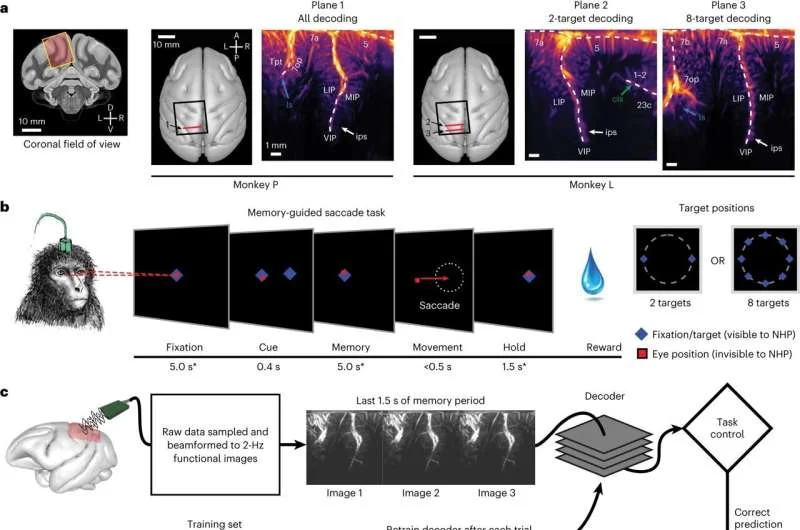
While the application of focused ultrasound for brain stimulation has demonstrated clinical utility—with the FDA having approved it for conditions like Parkinson's tremors and certain tumors—the challenge of reading neural information back through the skull remains a significant technical hurdle. Unlike electrical BCIs that directly capture neuronal electrical signals, ultrasound-based interfaces measure changes in blood flow, which are inherently slower and more diffuse. Maximilian Riesenhuber, co-director of Georgetown University's Center for Neuroengineering, highlighted this difficulty, explaining that the skull significantly weakens and distorts ultrasound signals. Current successful demonstrations of interpreting neural activity via ultrasound have often required the removal of a portion of the skull to create an "acoustic window."
This "skull interference issue" means that Gestala, much like Merge Labs, faces a considerable engineering challenge. Even the most advanced demonstrations currently necessitate cranial implants made of materials more transparent to ultrasound than bone. Furthermore, the lag between neural firing and blood flow changes, which can be several seconds, complicates real-time applications such as synthesized speech or immediate thought-to-action interfaces. Peng, however, emphasizes that Gestala's immediate focus is on "healthier neural functions" rather than speculative sci-fi enhancements, creating a distinction from Merge Labs' more ambitious, AI-driven applications.
Founding Vision and China's BCI Ambitions
Gestala is co-founded by Tianqiao Chen, a prominent figure known for establishing the online gaming giant Shanda Interactive Entertainment. Chen now directs the California-based Tianqiao and Chrissy Chen Institute, a leading funder of neuroscience research, bringing substantial resources and credibility to the venture. The company's name, Gestala, draws inspiration from Gestalt psychology, aptly symbolizing its goal of accessing entire brain networks—where "the whole is greater than the sum of its parts"—rather than isolated regions.
Gestala's emergence also reflects China's accelerating interest and investment in the BCI sector, supported by government backing and increasing private capital. While China may currently trail the US in invasive BCI development, the noninvasive ultrasound approach presents an opportunity for Chinese companies to potentially bypass the surgical dependency of existing technologies. This strategic shift could allow China to secure a leading position in a burgeoning segment of the BCI industry, challenging the established dominance of US innovators. The Tech Buzz underscores that the ongoing competition and rapid advancements in both China and the US are poised to determine whether this noninvasive BCI revolution is a genuine technological breakthrough or a temporary surge of hype.
Related Articles

Apple Bolsters AI Prowess with Acquisition of Stealthy Israeli Startup Q.ai
Apple confirms the acquisition of Q.ai, an Israeli AI startup focusing on whispered speech and advanced audio, founded by PrimeSense co-founder Aviad Maizels.