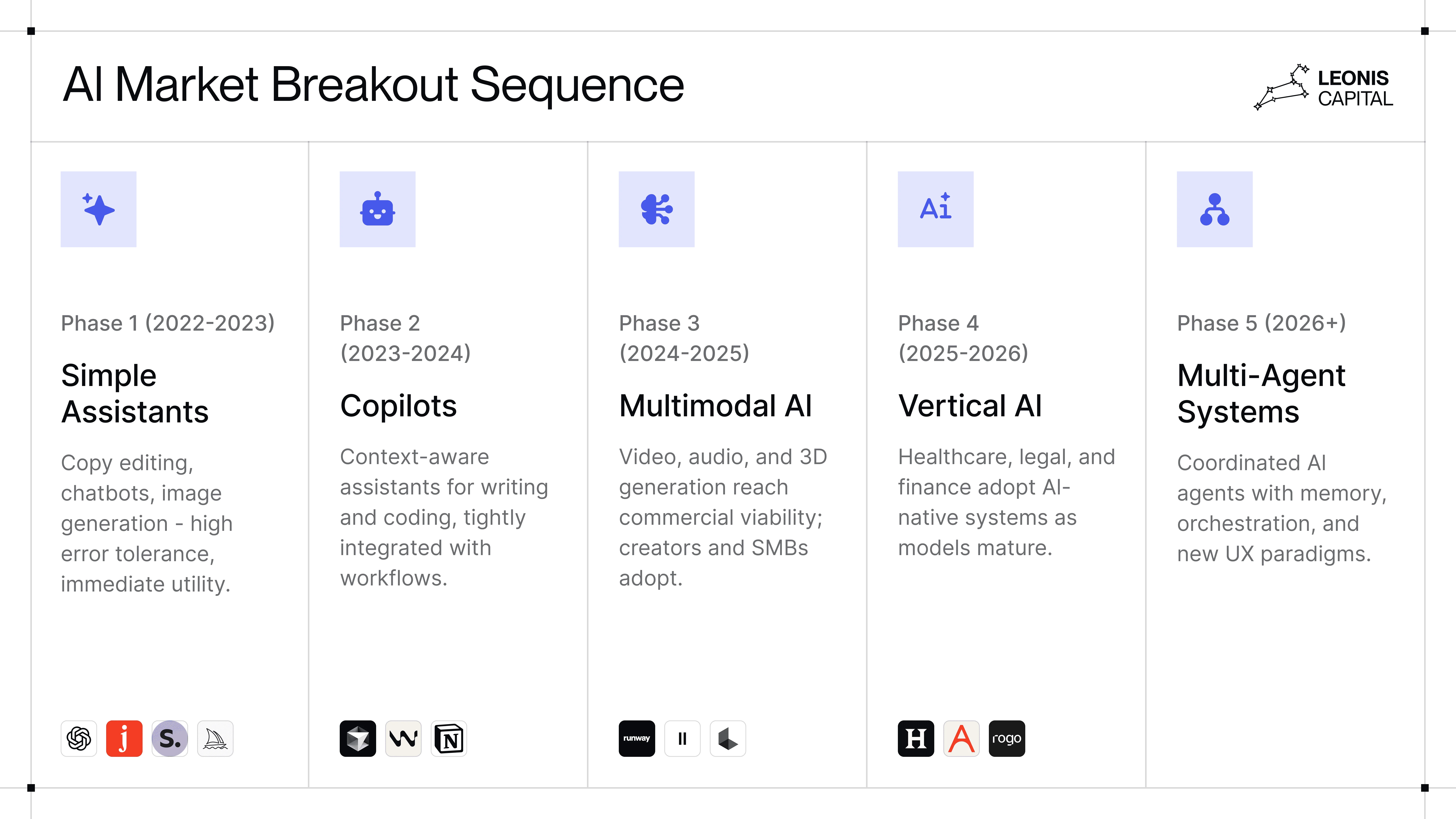
Beyond the Hype: How Leonis Capital Vets AI Startups for True Technical Potential
Leonis Capital's founders Jenny Xiao and Jay Zhao reveal their top questions for evaluating AI startups, focusing on technical depth, defensibility, and founder insight.

In the burgeoning landscape of artificial intelligence, where new startups emerge daily, discerning genuine technical potential from fleeting trends poses a significant challenge for investors. Leading venture capital firm Leonis Capital, established in 2021 and now deploying its second $40 million fund, specializes in identifying and backing next-generation AI companies. To navigate this complex environment, co-founders Jenny Xiao and Jay Zhao have developed a rigorous set of questions designed to probe the core strengths and vulnerabilities of AI startups seeking investment. Their insights offer a valuable framework for understanding what truly differentiates a promising AI venture from one likely to dissolve into obscurity.
Evaluating Technical Potential and Market Adaptation
Leonis Capital’s inquiries often begin by testing a founder's foresight regarding AI’s rapid evolution. Jenny Xiao emphasizes a crucial question: "What becomes possible if models improve by 10-20%?" This isn't about incremental features, but rather about anticipating how non-linear progress in AI could fundamentally reshape or even disrupt a product. A strong response details entirely new workflows unlocked by advanced capabilities, demonstrating a clear understanding of how the company would adapt or pivot as the technology evolves. This proactive stance contrasts sharply with approaches focused solely on marginal efficiency gains, reflecting Leonis Capital's belief that the most successful AI founders build just ahead of the next technical breakthrough, a pattern observed in their "Leonis AI 100" benchmark of important AI startups, as reported by Business Insider.
Identifying True Moats Against Tech Giants
A persistent concern for AI startups is the potential for large foundation model labs—like OpenAI, Anthropic, or Google—to replicate their offerings "for free" as a feature. Xiao addresses this directly with the question: "Is what you're building already on the road map of a foundation model lab?" Leonis Capital dismisses answers rooted in mere "focus" or "culture," pushing founders to articulate the internal constraints that would genuinely prevent a tech giant from pursuing the same path. Robust answers acknowledge the technical feasibility for larger entities but highlight how such a move would dismantle their incentive structures, pricing models, or distribution networks. Alternatively, some founders can credibly claim a 12-to-18-month head start. Weak responses, however, often rely on claims of being "more vertical," possessing "more niche data," or superior customer understanding – justifications that Leonis Capital views as insufficient moats, as shared with Business Insider.
The Value of Proprietary Data and Defensibility
The conversation around data often misses the mark, according to Xiao. Instead of asking about the volume of proprietary data, which early-stage companies rarely possess in meaningful amounts, Leonis Capital asks: "What data exists only because your product exists?" This probes whether a product inherently generates valuable, unique data over time, such as industrial systems embedding software into workflows or products where switching costs accumulate through rich contextual information. Furthermore, to assess true defensibility once code becomes commoditized, founders are asked: "What would happen if a competitor cloned your product in 30 days?" This question aims to uncover structural advantages—like being a system of record or embedding into compliance processes—rather than easily replicable cosmetic aspects like UI or code. Strong founders candidly discuss vulnerabilities, while weaker ones become defensive, Business Insider notes.
Founder Mindset and Adaptability
Jay Zhao's questions delve deeply into the founders' intellectual flexibility and strategic foresight. "What did you have to unlearn to see this opportunity?" seeks to distinguish founders who genuinely arrived at novel insights from those who merely stumbled into the AI space. Zhao also tests a founder's ability to anticipate external challenges: "What has to go right in the world—not just inside your company—for this to work?" This question assesses their probabilistic thinking regarding market timing, regulatory shifts, and platform dependencies, which frequently prove fatal to startups. A blank stare or an answer of "nothing" signals a lack of critical foresight; successful founders can articulate concrete external risks and their hedging strategies.
Embracing Change and Contrarian Thinking
Zhao further probes for epistemic humility and learning capacity with the question: "When was the last time you changed your mind about something important?" In the rapidly evolving AI landscape, founders unable to point to instances of changing their minds likely lack the adaptability crucial for sustained success. This isn't about constant pivoting but about genuine truth-seeking rather than confirmation bias. Lastly, Zhao looks for founders capable of holding unpopular but ultimately correct positions: "Tell me about a decision you made that the people around you disagreed with. How did you sit with that?" The best founders are not contrarian for its own sake but can confidently maintain an unpopular stance until the market catches up, demonstrating conviction grounded in deep understanding.
Leonis Capital's systematic approach to vetting AI startups underscores the importance of technical depth combined with strategic foresight and intellectual humility. By asking these pointed questions, Xiao and Zhao seek to uncover ventures with fundamental strength and founders capable of navigating the complex, fast-paced world of artificial intelligence.
Related Articles
Apple Bolsters AI Prowess with Acquisition of Stealthy Israeli Startup Q.ai
Apple confirms the acquisition of Q.ai, an Israeli AI startup focusing on whispered speech and advanced audio, founded by PrimeSense co-founder Aviad Maizels.