The Rise of the 'Nihilist Penguin': Dissecting 2026's Viral Existential Meme
A lone penguin's journey into the Antarctic wilderness has become 2026's 'Nihilist Penguin' meme, sparking online introspection about meaning, burnout, and human projection.

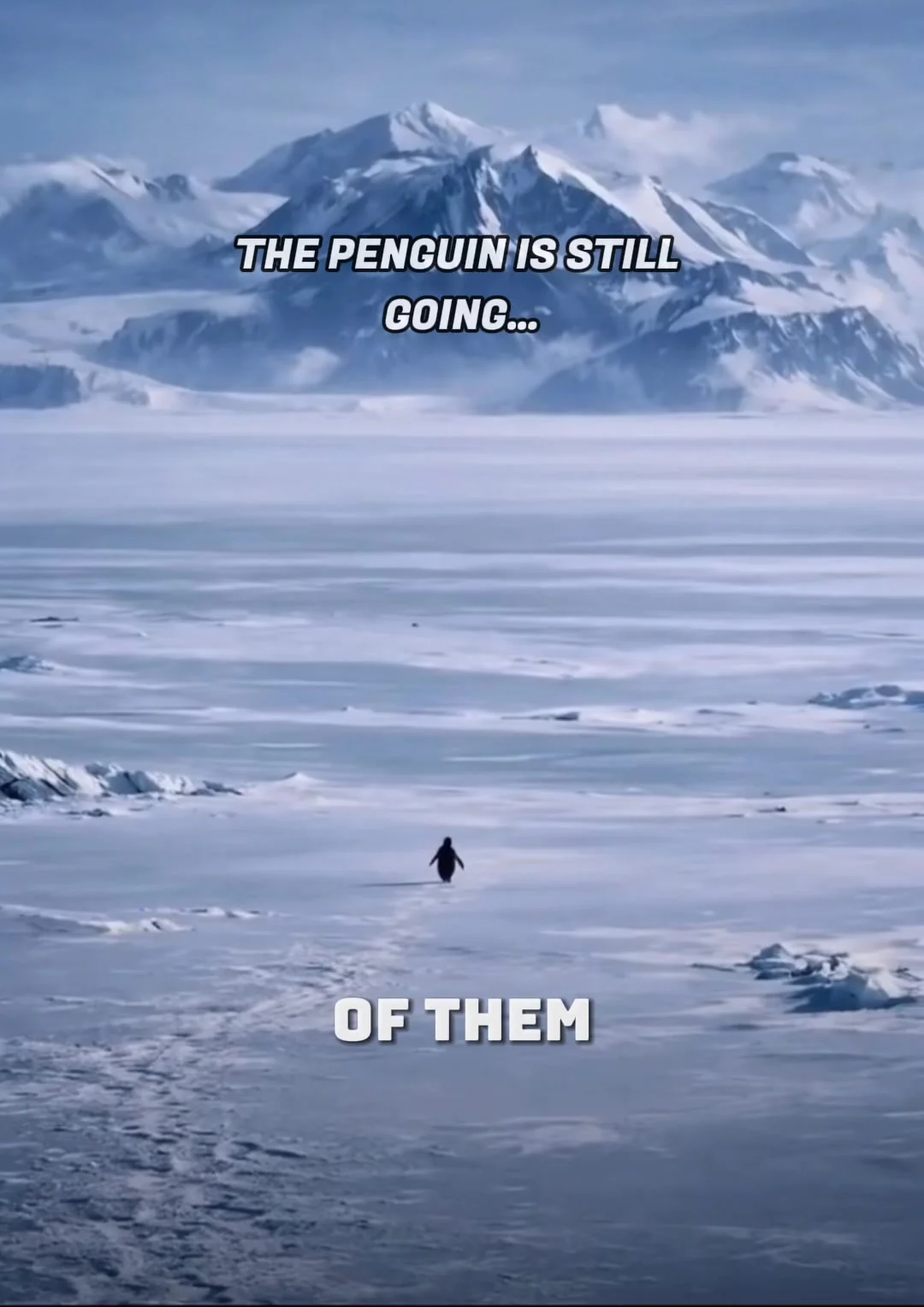
In 2026, a brief yet profound clip of a lone penguin embarking on a solitary journey away from its colony has captured the internet's imagination, morphing into what social media users have dubbed the “Nihilist Penguin.” This viral phenomenon has emerged as a potent symbol for deep contemplation, quiet acts of defiance, and the pervasive feeling of emotional exhaustion that characterizes modern life. But beyond the digital captions and shared sentiments, what truly lies at the heart of this captivating footage?
Origins of the Viral Footage
The compelling video segment traces its origins back to Werner Herzog's 2007 documentary, "Encounters at the End of the World." The scene depicts an Adélie penguin, distinctly unlike its peers, diverging from its colony to trek inland towards a distant mountain range, an estimated 70 kilometers away. While most penguins instinctively remain near the ocean, a vital source of food and survival, this particular individual appears to be on a journey into an unforgiving expanse of ice, snow, and mountains, devoid of the sea. This bleak destination, lacking sustenance, is precisely what imbues the clip with its unsettling and surprisingly relatable quality, sparking widespread discussion online about its deeper meaning The Economic Times.
The Internet's Interpretation: Why "Nihilist Penguin"?
The internet, with its penchant for symbolism, quickly adopted the isolated penguin as a blank canvas for collective thought. The term “Nihilist Penguin” resonated profoundly because the creature's deliberate and calm walk, seemingly towards an inevitable end, strikes many as an act of philosophical surrender to a world devoid of inherent meaning. Captions like “When you’re done with everything,” “He knows something we don’t,” and “Me walking away from my problems” proliferated across platforms. In an era marked by heightened stress, pervasive burnout, and incessant overthinking, countless viewers found a reflection of their own internal struggles in the penguin's slow, solitary march, transforming a natural phenomenon into a mirror of human emotion The Economic Times.
Scientific Explanations for the Peculiar Behavior
While the internet crafts elaborate narratives, scientific inquiry offers a more grounded perspective. Researchers and wildlife experts acknowledge that such behavior, though uncommon, is not unheard of among penguins. There are several potential reasons for this deviation from typical migratory patterns:
- Disorientation: Penguins rely heavily on environmental cues. A disruption to these cues can cause them to lose their sense of direction.
- Neurological Issues or Illness: Health afflictions or neurological problems can impair a penguin's judgment and lead to wandering.
- Stress or Confusion: The intensely competitive breeding season can induce stress or confusion, potentially leading to anomalous behavior.
- Instinctual Error: It's a fundamental aspect of animal behavior that not all choices made are optimally geared towards survival.
Werner Herzog himself, observing the penguin, famously characterized its actions as a “death march,” implying the unlikelihood of its survival during such an extensive inland journey.
Meme vs. Reality: The Deeper Human Connection
The chasm between scientific explanation and internet interpretation highlights a unique facet of human interaction with digital content. While science meticulously explains the "how" of the penguin's actions, the internet, through the "Nihilist Penguin" meme, articulates the "why" on an emotional plane. The penguin has transcended biology to become a symbol for profound human experiences:
- Feeling adrift in life's complexities.
- The act of consciously stepping away from societal expectations.
- Engaging in a quiet, personal form of rebellion.
- Experiencing a deep, existential exhaustion.
Fundamentally, the meme is less about the animal's biological imperatives and more about human projection. Viewers imbue the penguin with meaning because, inherently, humans seek meaning in their surroundings and experiences. This capacity for projection is precisely what makes the meme so effective and widely shared.
The Unforgettable Mood of the ‘Nihilist Penguin’
In a curious turn of events, the "Nihilist Penguin" has become an unexpected reflection of contemporary life. Amidst a world that constantly demands speed and adherence to routine, the lone figure of the penguin, calmly walking away, resonates deeply. It’s not necessarily an act of bravery or wisdom. Instead, it speaks to moments when logic dissipates, and life, in its bewildering complexity, ceases to make discernible sense. This profound, shared sentiment is what cements the penguin's unforgettable status in the annals of internet culture.
Ultimately, the "Nihilist Penguin" is not a philosopher, nor is it a conscious rebel; it is simply an animal acting on confused instincts. Yet, the internet's collective consciousness has transformed it into a potent emblem of modern emotional states. Perhaps, in its viral spread, this meme tells us more about ourselves, our anxieties, and our search for meaning in an often-unpredictable world, than it does about the penguin itself. Sometimes, as The Economic Times succinctly puts it, "a penguin walking into the mountains is just a penguin. And sometimes, it’s a mood."
Related Articles

Train Lights Incident Ignites Fiery Debate on Public Conduct and Parental Responsibility
A viral video of children playing with train reading lights has sparked a widespread online discussion concerning civic sense, parenting standards, and public behavior.