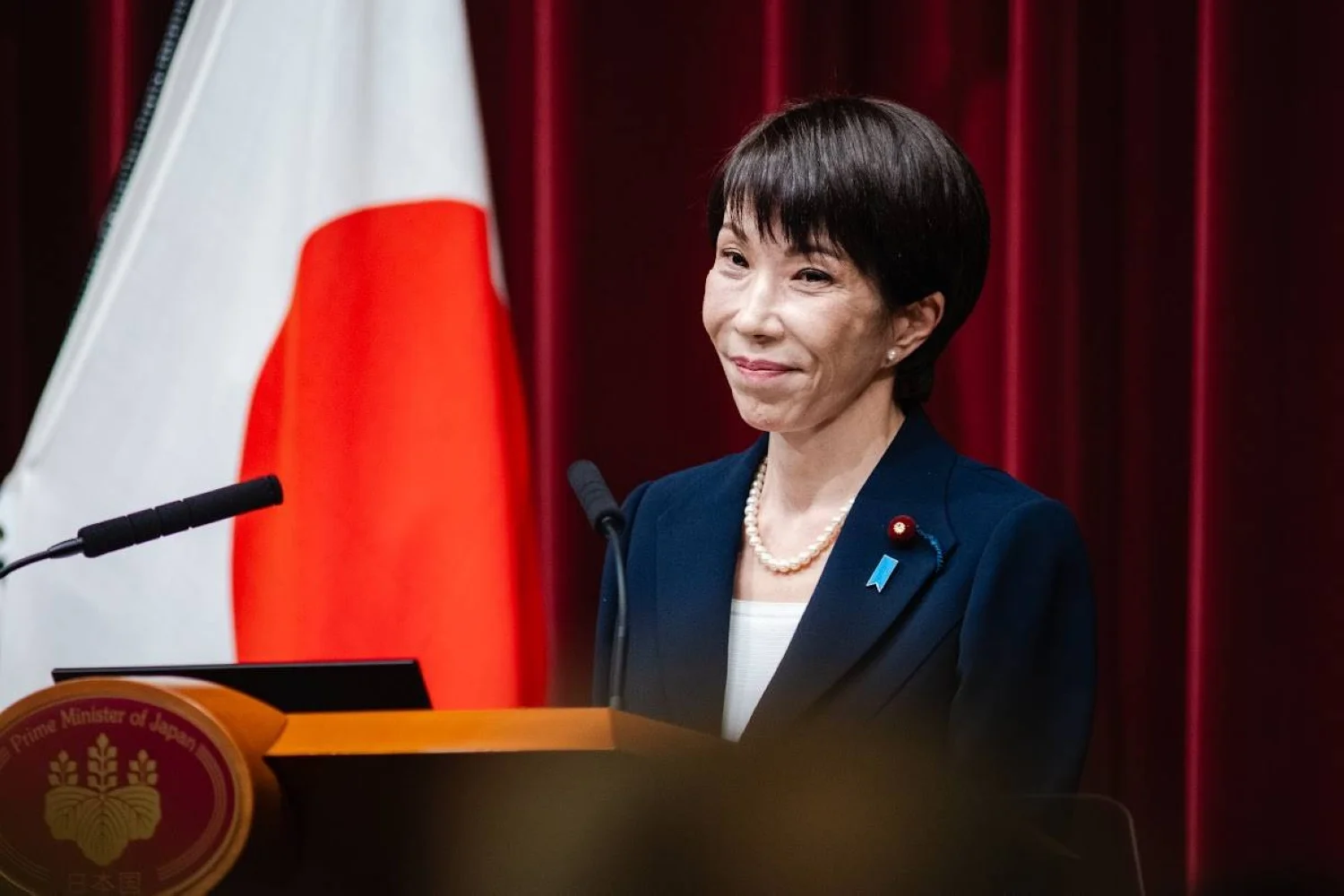
Japan PM Takaichi Dissolves Parliament Ahead of February 8 Snap Election
Japan's PM Sanae Takaichi dissolves parliament and calls snap election for Feb 8, seeking voter mandate on spending, tax cuts and defense buildup.

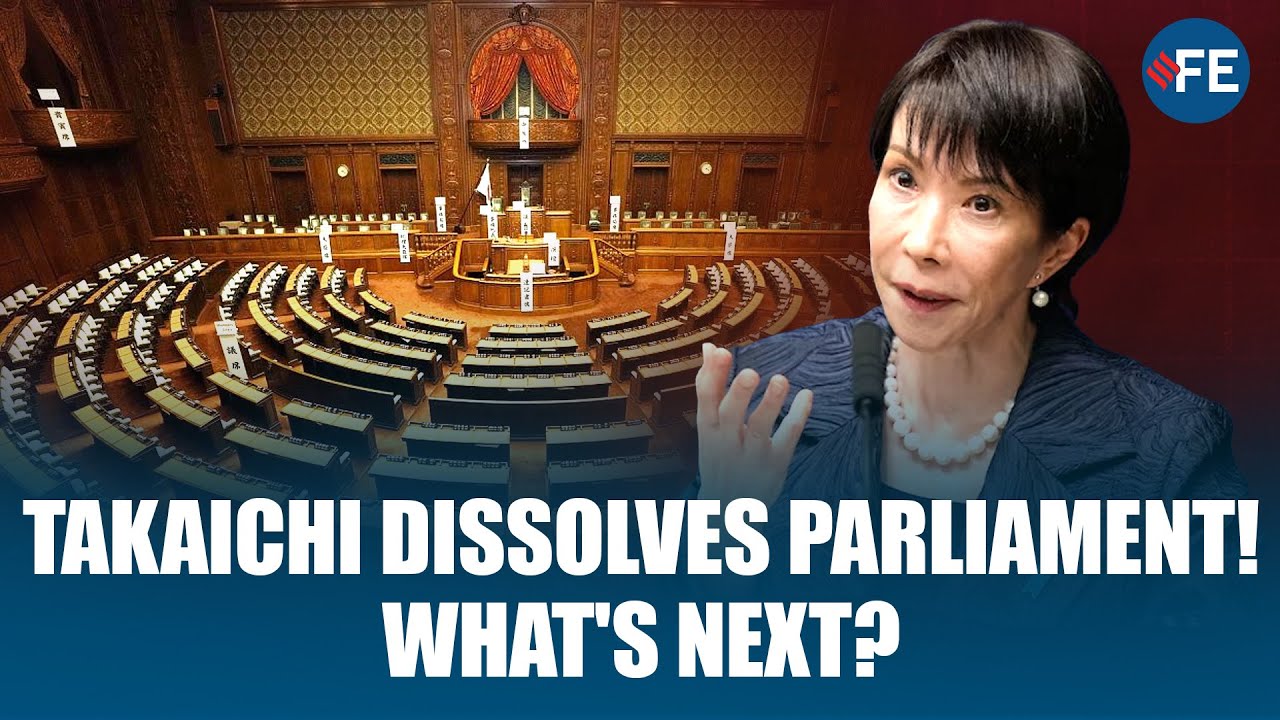
Japan PM Sanae Takaichi Dissolves Parliament, Calls Snap Election for Feb 8
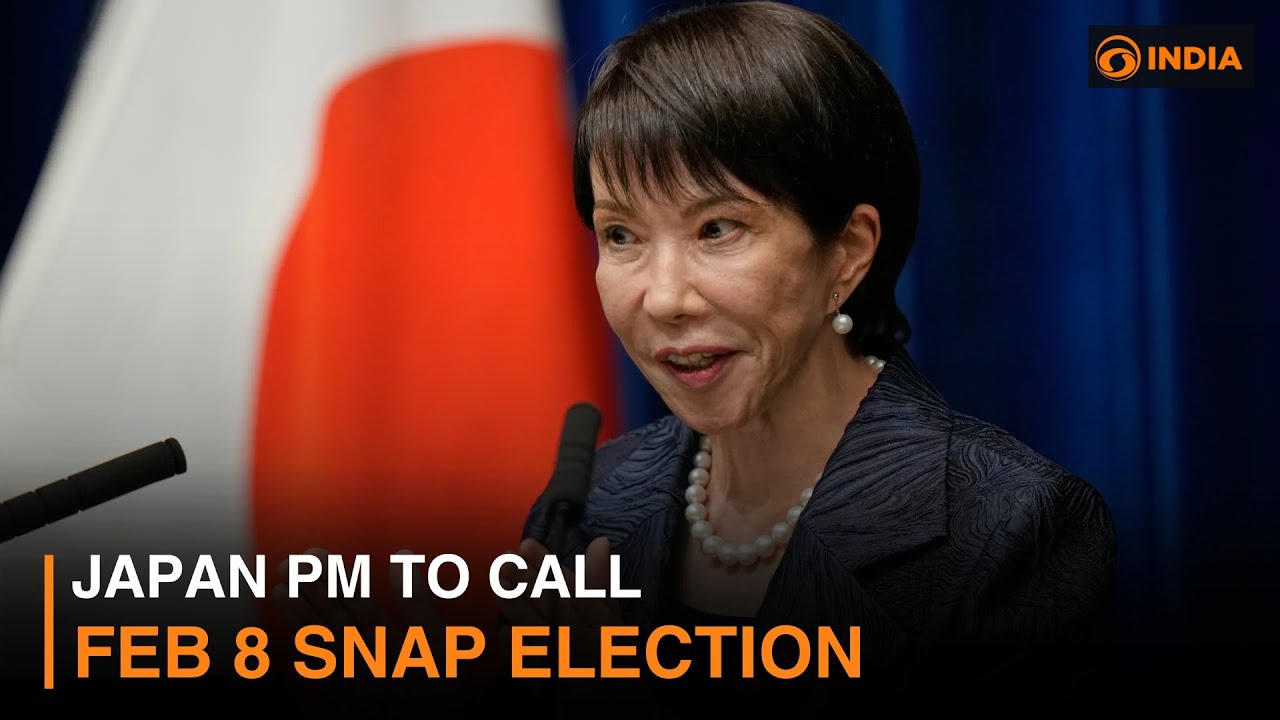
Japan PM Calls Snap Election, Dissolves Lower House Ahead of February 8 Vote
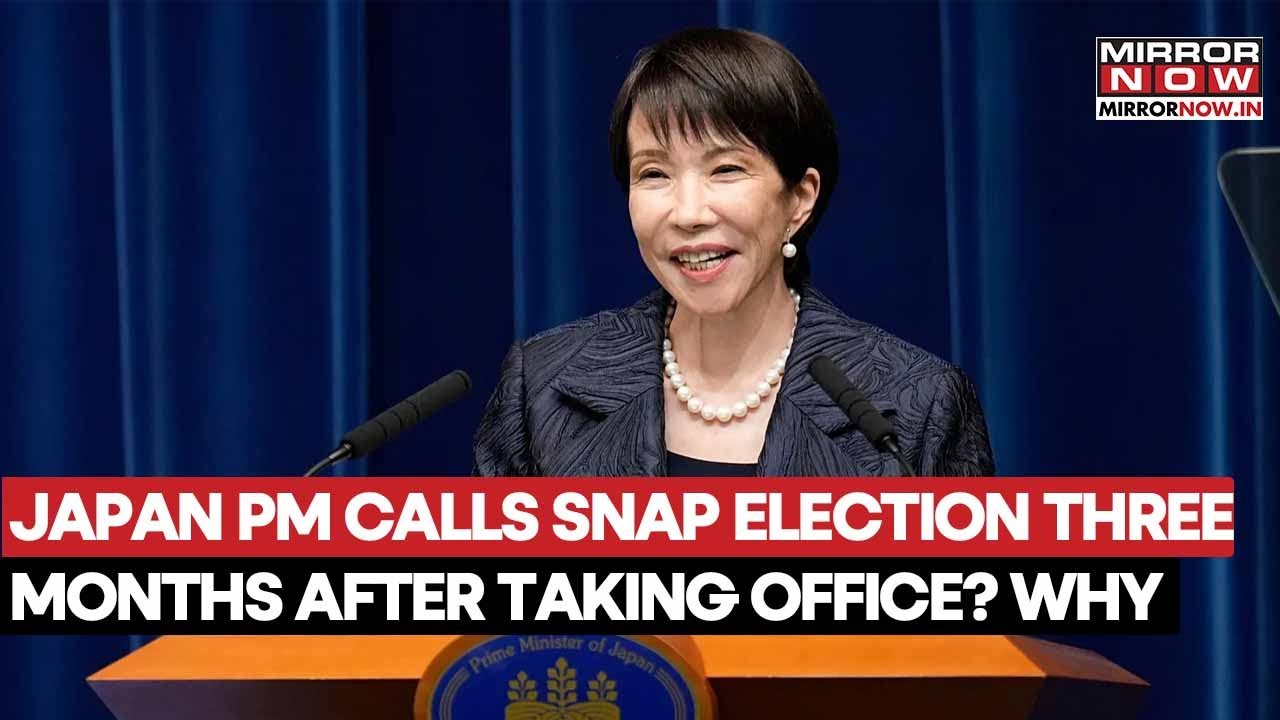
Japan PM Takaichi Calls Snap Election Just 3 Months After Taking Office? Here's Why | Watch
Japan's first female prime minister announces early parliamentary dissolution to capitalize on high approval ratings and secure a stronger governing mandate.
Japan's Prime Minister Sanae Takaichi announced a national election on February 8 to seek voter backing for increased spending, tax cuts and a new security strategy that is expected to accelerate a defence build-up. Takaichi plans to dissolve parliament on Friday ahead of the snap vote for all 465 seats in the lower house of parliament, in her first electoral test since becoming Japan's first female premier in October.
"I am staking my own political future as prime minister on this election," Takaichi told a press conference on Monday. "I want the public to judge directly whether they will entrust me with the management of the nation." The move comes as Takaichi seeks to solidify her position and push through an ambitious policy agenda in the face of economic headwinds and geopolitical tensions.
## Capitalizing on Strong Poll NumbersA snap election is seen as an attempt to capitalize on her still strong approval ratings of around 70% to help her beleaguered governing party gain more seats. This popularity surge presents a strategic window for Takaichi to strengthen her coalition's parliamentary position. Tokyo shares jumped more than 3 percent on Tuesday on speculation that Takaichi would call snap elections to capitalise on strong poll numbers.
"Now may be the best chance she has at taking advantage of this extraordinary popularity," said Jeffrey Hall, a lecturer in Japanese studies at Kanda University of International Studies. However, with opposition parties joining forces to oppose her, victory might not be straightforward.
## Policy Platform: Spending, Tax Relief and DefenseTakaichi promised a two-year halt to a consumption tax of 8% on food, adding that her spending plans would create jobs, boost household spending and increase other tax revenues. Takaichi's cabinet approved a record 122.3-trillion-yen ($768 billion) budget for the fiscal year from April 2026, and she has vowed to get parliamentary approval as soon as possible to address inflation and shore up the world's fourth-largest economy.
On the security front, Takaichi's agenda represents a significant shift in Japan's defense posture. Takaichi's administration plans a new national security strategy this year after deciding to hasten a military build-up that will lift defence spending to 2% of GDP, a sharp break from decades in which Japan capped such outlays at around 1%. Takaichi has not set a new spending target beyond that level, but rising tension with China over Taiwan and disputed islands in the East China Sea, coupled with U.S. pressure for allies to spend more, are likely to push defence outlays higher.
## Tensions with China EscalateThe timing of the election occurs against the backdrop of deteriorating relations with Beijing. Ties have deteriorated severely since Takaichi suggested in November that Japan could intervene militarily if China ever launched an attack on Taiwan, the self-ruled island it claims. In response, China banned exports of items destined for Japan's military that have civilian and military uses, including some critical minerals.
A snap election may also help Takaichi break the deadlock in a spat with China, increasing her leverage by showing she has strong support at home, analysts said. However, Mikitaka Masuyama, dean of the National Graduate Institute for Policy Studies, warned that if she wins, China could further intensify pressure on Takaichi. Beijing may want to send voters "the message that supporting a hawkish leader could lead to pain" through more trade controls or other means.
## Coalition Dynamics and Opposition ChallengeThe LDP and Ishin go into the Feb 8 election with a combined 233 seats. Takaichi said her target was for the coalition to retain its majority in the lower chamber. Her main challenger will be the Centrist Reform Alliance, a new political group combining the largest opposition group, the Constitutional Democratic Party of Japan and Komeito, which ended its 26-year coalition with the LDP after Takaichi, a right-wing lawmaker, took over at the LDP. Together the parties hold 172 seats.
Opposition parties say Takaichi's plan to dissolve the lower house risks delaying its passage, with Jun Azumi of the main opposition Constitutional Democratic Party of Japan (CDP) saying it would "sacrifice livelihoods". Opposition lawmakers criticized the plan as a selfish move that would delay parliamentary discussion on the budget, which needs to be approved as soon as possible.
## Economic Pressures and Public ConcernsTakaichi assumes leadership during challenging economic times. Since taking office, Takaichi has had to contend with a weakening yen, above target inflation, and a weak economy. The yen is currently at its weakest level against the dollar in a year, hitting a low of 158.19 against the greenback on Monday. Inflation in Japan has ran above the Bank of Japan's target for a 44th straight month.
The campaign unfolds amid mounting public concern over living costs. A recent NHK poll found that 45 per cent of respondents cited rising prices as their primary worry, followed by diplomacy and national security at 16 per cent. The promise of tax relief on food consumption directly addresses this primary voter concern.
## Historical SignificanceThe snap vote will mark Takaichi's first electoral test since becoming Japan's first female premier in October. Her election as prime minister followed decades of political advancement within the conservative Liberal Democratic Party ranks. The February 8 election will test whether Japanese voters endorse her policy direction and consolidate her mandate to lead the nation.
As Japan faces mounting economic pressures, geopolitical tensions, and demographic challenges, the outcome of this election will shape not only parliamentary composition but also the trajectory of the nation's economic and defense policies in the years ahead.
## Sources- CNBC: Japan PM Takaichi calls Feb 8 election
- Al Jazeera: Japan's PM Takaichi will dissolve parliament, call snap election
- U.S. News: Japan PM Takaichi to Call Feb 8 Snap Election
- France24: Japan PM calls snap election on Feb 8 to seek stronger mandate
- ABC News: Japan's Takaichi plans to dissolve lower house to set up an early snap election
Related Articles

Hundreds Honor Alex Pretti in Minneapolis, Fueling National Debate on Federal Force
Hundreds gathered in Minneapolis to honor Alex Pretti, an intensive care nurse shot by federal agents, sparking widespread protests and debate on immigration enforcement practices across the U.S.