Spain's Deadliest Rail Disaster: 43+ Dead in Adamuz Train Collision
Spain's worst train accident in over a decade kills 43, injures 292 when two high-speed trains collide near Adamuz in Córdoba on January 18.

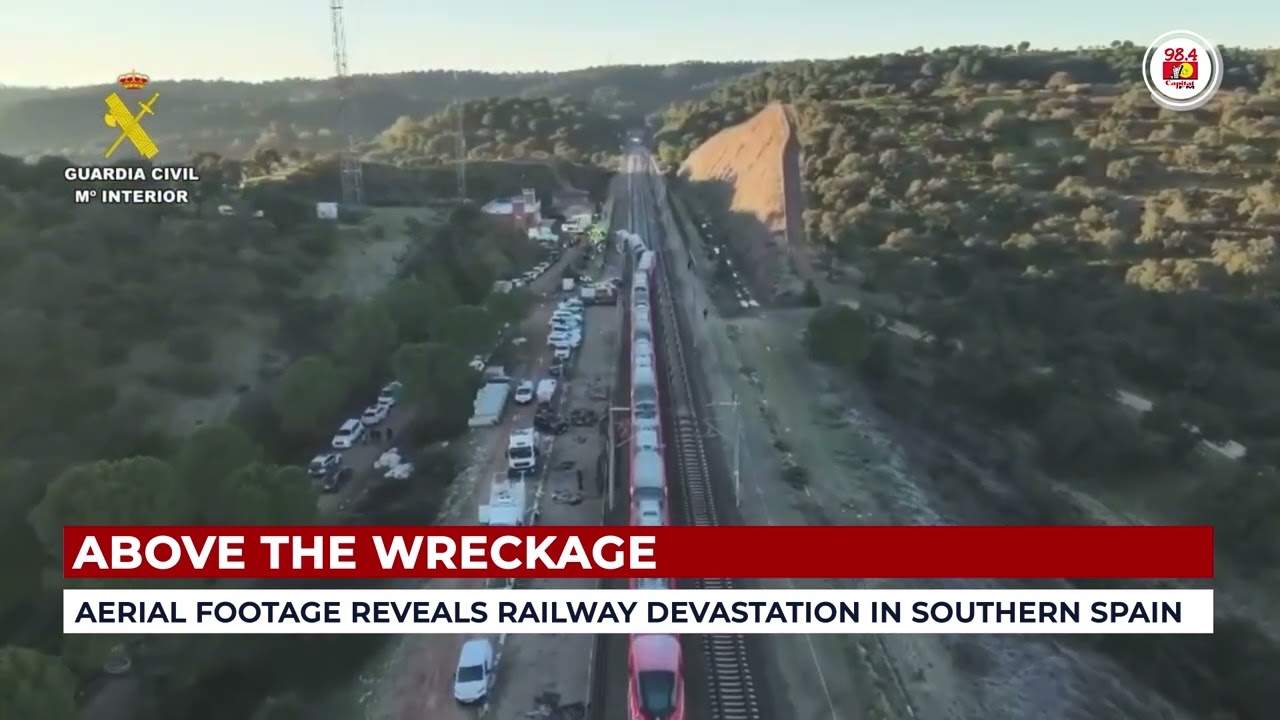
Aerial footage reveals railway devastation in southern Spain after train collision claimed 39 lives
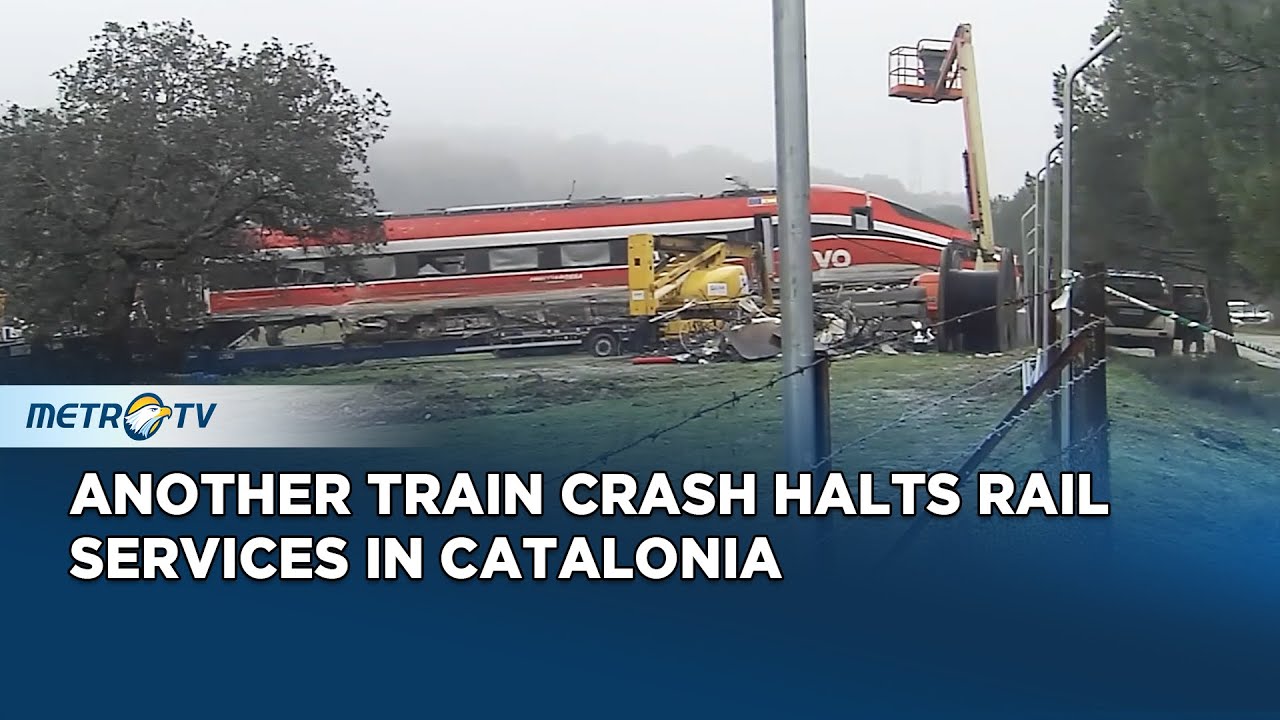
Rail Network Suspended After Back-to-Back Train Accidents
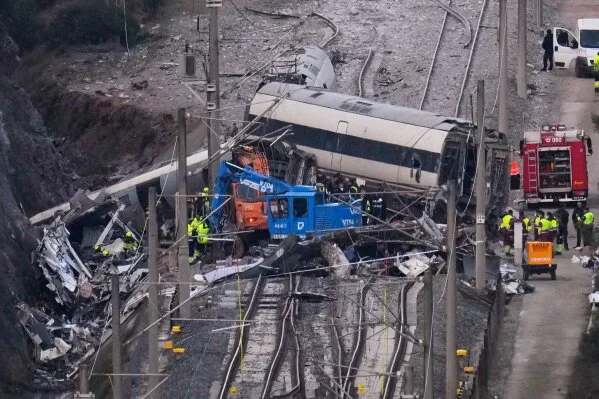
ADAMUZ, Spain — On January 18, 2026, a high-speed passenger train derailed near Adamuz in the province of Córdoba, Spain, and a second train crashed into it, also derailing. The catastrophic collision has left the nation reeling, marking Spain's worst railway disaster since the Santiago de Compostela derailment in 2013.
Tragedy Unfolds: The Collision Details
The crash occurred at 7:45pm local time when the tail end of a train carrying 289 passengers on the route from Malaga to Madrid derailed and crashed into an incoming train traveling from Madrid to Huelva. The Iryo train, traveling northbound with at least 317 passengers on board, left its scheduled stop at Córdoba-Julio Anguita station at approximately 19:39 CET. At 19:43, its three rear carriages switched onto the opposite (southbound) track, while the front of the train continued on the original (northbound) track, therefore derailing.
The Renfe train, traveling southbound on the parallel track with around 100 passengers, collided with the derailed Iryo train about 20 seconds later and also derailed. The Renfe train sustained more severe damage, its first two carriages falling down a 4 m (13 ft) embankment. Bodies were found hundreds of meters from the crash site, underscoring the violent force of the impact.
Death Toll and Casualties Mount
The incident killed at least 43 people and injured 292 others, including 15 in critical condition. The head of the regional government in Andalusia, Juanma Moreno, confirmed the initial death toll of 39 in a radio interview Monday, but said he expected the number to rise as cranes began removing the carriages. Authorities found a 43rd victim during rescue efforts Wednesday.
Of the injured, 170 were treated for minor injuries and 122 others, including 15 in critical condition, were transported to hospital. Health authorities reported 37 people remained in hospitals, while 86 people were treated and discharged. The driver of the second train, an Alvia service traveling from Madrid to Huelva, was among the dead.
The Mystery: "Extremely Unusual" Circumstances
What makes this disaster particularly perplexing is the location and conditions surrounding the derailment. Spain's Transport Minister Óscar Puente said the cause of the crash remains unknown, but added it was "extremely unusual" as it happened on a straight stretch of track which had been recently renovated as part of a €700 million investment project and the train was relatively new.
The Iryo train that derailed was described as "relatively new", having been manufactured in 2022 and passing its last safety inspection on 15 January 2026. Both trains were traveling within the 250 km/h (160 mph) speed limit on the track. Alvaro Fernandez Heredia, the president of the state-owned rail operator Renfe, said that human error has been "practically ruled out" as a cause.
Investigators are focusing on infrastructure failures as the most likely explanation. Investigators found a broken joint on the rails, which likely created a gap that widened as trains passed over it. Additionally, train drivers' union SEMAF warned railway operator Adif in August 2025 of heavy wear and tear on tracks, including where the derailments happened. This included potholes, bumps, and imbalances in overhead power lines that were causing frequent breakdowns and damaging the trains. Allegedly, no action had been taken despite the warnings.
A Nation in Mourning and Crisis
Prime Minister Pedro Sánchez called it a "night of deep pain" for the country. Flags flew at half-mast on public buildings, television anchors wore black, and cabinet ministers curtailed public appearances as Spain observed the first of three days of national mourning. Five mobile intensive care units, four emergency critical care units and numerous ambulances were deployed to the site of the crash. On-site services were focused on stabilizing the injured before transferring them to hospitals.
Access to the site of the derailments was through a single-lane road, complicating rescue and recovery operations. A makeshift hospital was set up at a sports centre in Adamuz to treat the victims. Authorities opened offices in Córdoba, Madrid, Malaga, Huelva and Seville for relatives of the missing and unidentified deceased to deliver DNA samples for identification.
Safety Concerns Trigger Strike Calls
The disaster has sparked urgent calls for accountability across Spain's rail system. The largest train drivers' union in Spain called for a nationwide strike to demand safety assurances. Train operators' union SEMAF said it would "demand criminal liability from those responsible for ensuring safety in the railway infrastructure".
High-speed trains between Madrid and Andalusia have experienced frequent delays since 2022. Sky News found at least 18 incidents on the tracks over the past three years, from signalling failures to issues with overhead lines. High-speed rail service between Madrid and Andalusia was suspended for 19 January, which was subsequently extended until 23 January.
Historical Context: Spain's Worst Rail Disasters
The crash was Spain's worst railway disaster since the Santiago de Compostela derailment in 2013 and the fourth deadliest railway accident ever recorded in the country. The 2013 Santiago de Compostela disaster killed 79 people under starkly different circumstances—that train was traveling at excessive speed on a curved section of track. The Adamuz collision, by contrast, occurred on a modernized straight section with trains traveling at appropriate speeds, heightening questions about infrastructure maintenance and oversight.
Spain's high-speed rail network is the second longest in the world, behind China's. Fatal derailments have occurred on the network, most notably the Santiago de Compostela derailment in July 2013 that killed 79 people. Despite Spain's investment in one of Europe's most modern rail networks, this tragedy serves as a stark reminder that vigilance and maintenance are essential to prevent catastrophe.
As rescue operations conclude and identification processes continue, Spain faces difficult questions about rail safety, infrastructure investment priorities, and systemic oversight. Three days of national mourning are underway while the cause is being investigated.
Related Articles
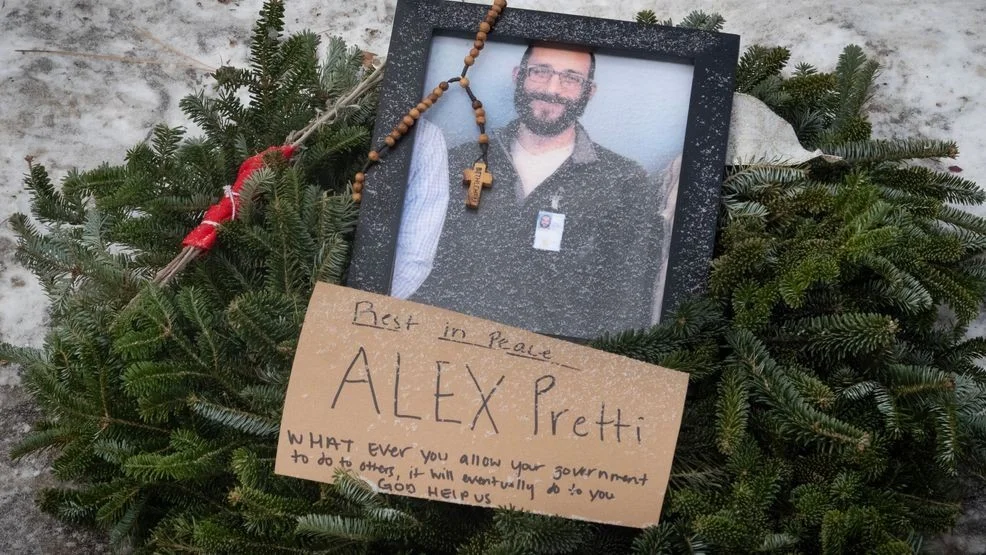
Hundreds Honor Alex Pretti in Minneapolis, Fueling National Debate on Federal Force
Hundreds gathered in Minneapolis to honor Alex Pretti, an intensive care nurse shot by federal agents, sparking widespread protests and debate on immigration enforcement practices across the U.S.