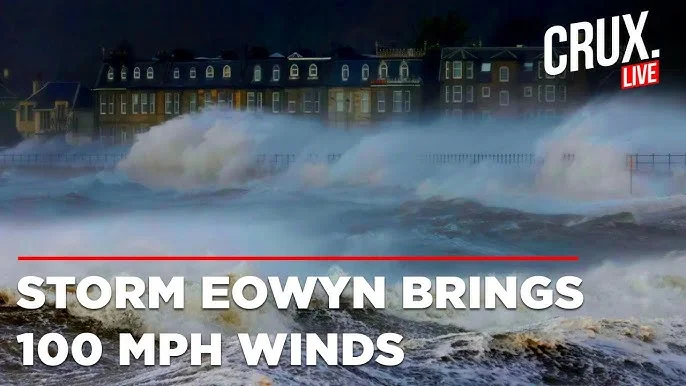
Storm Eowyn Batters UK and Ireland with Record Winds, Thousands Without Power
Storm Eowyn left a trail of destruction across the UK and Ireland, bringing record-breaking winds, widespread power outages, and one fatality.

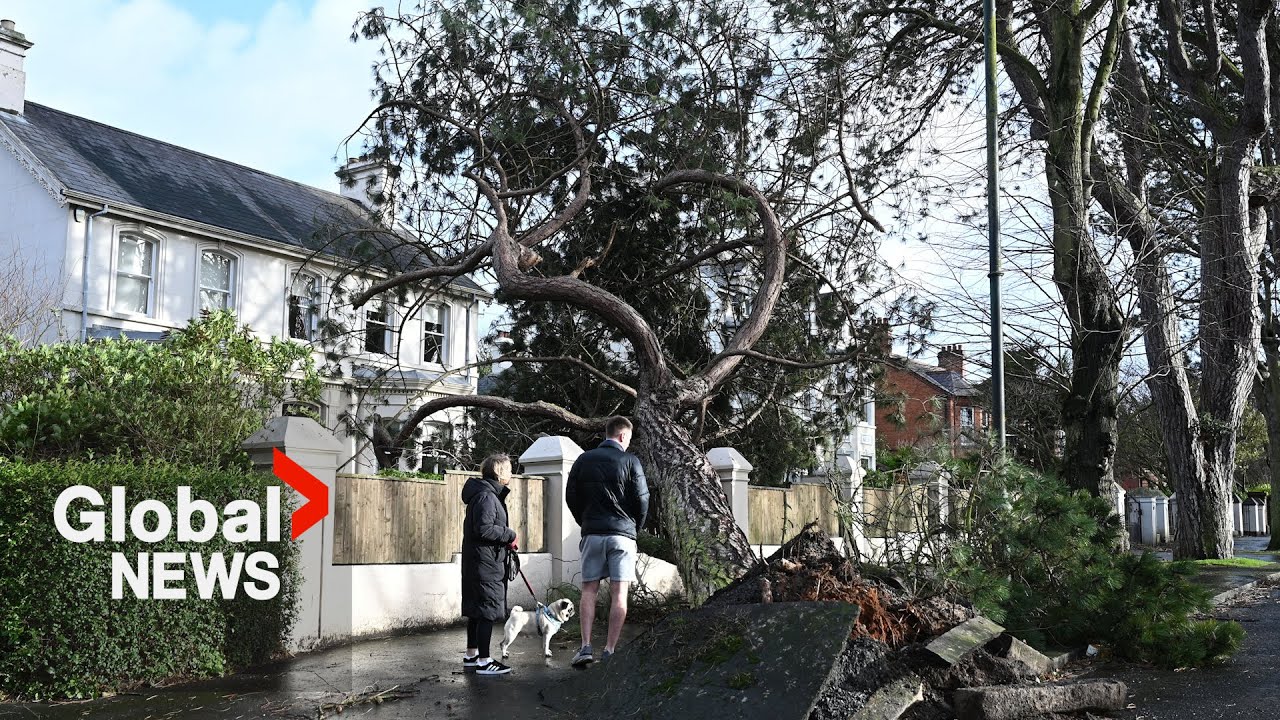
Storm Eowyn: Record high-intensity winds batter UK, Ireland prompting weather alerts
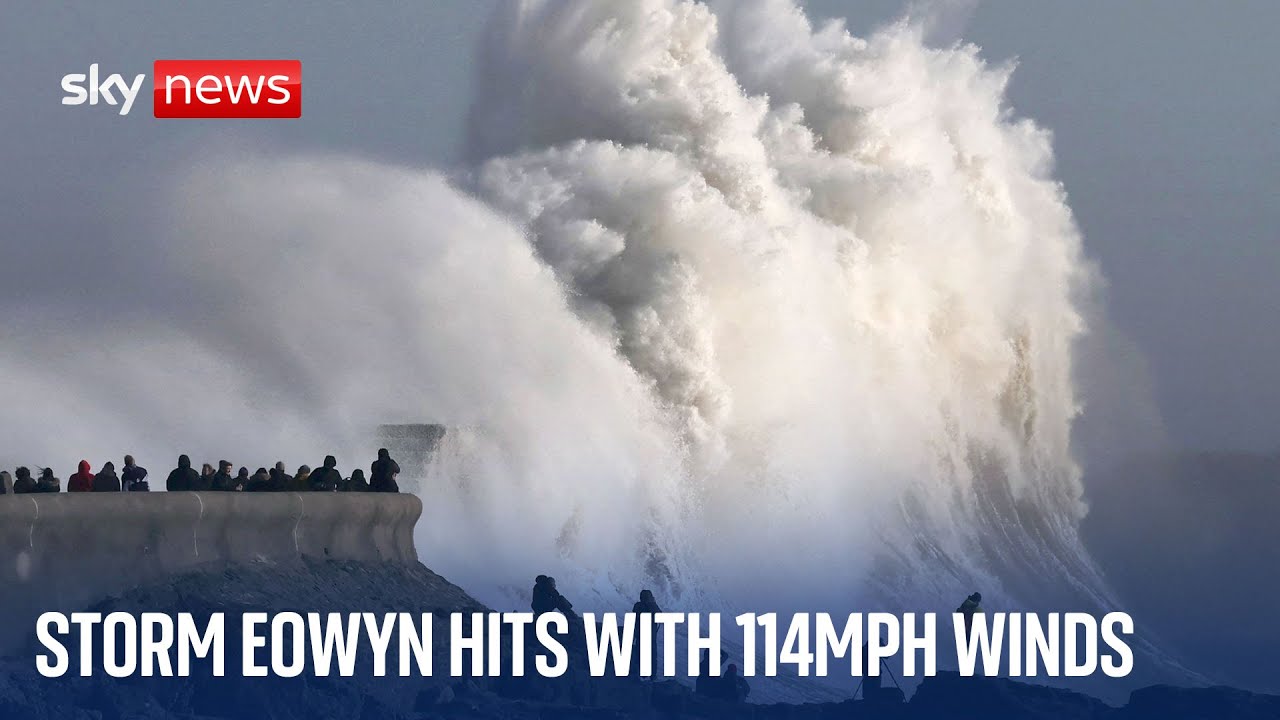
Storm Eowyn: Man dies after Ireland & UK battered with winds up to 114mph

Storm Eowyn's strong winds hit Ireland, Northern Ireland and the UK #Shorts
A ferocious Storm Eowyn swept across the United Kingdom and Ireland on Friday, January 24, 2025, unleashing record-breaking wind gusts that claimed one life, grounded flights, shut down public transport, and plunged nearly a million homes and businesses into darkness. The severe weather prompted the highest-level "red" warnings in parts of both nations, urging residents to stay indoors amidst dangerous conditions.
Devastation in Ireland: Record Winds and Widespread Blackouts
Ireland bore the initial brunt of Storm Eowyn, experiencing what officials described as one of the most dangerous storms in recent memory. A gust of 114 mph (183 kph) was recorded at Mace Head, County Galway, setting a new national record, surpassing an 80-year-old benchmark. Met Éireann, the Irish meteorological service, issued "Red Warnings" across the country, indicating "extremely destructive and dangerous" conditions. Reuters reported that it was the first time a red warning had been in place for the entire country since Storm Ophelia in 2017.
The storm's intensity led to immediate and severe consequences. Tragically, one man died in County Donegal when a tree fell on his car. ESB Networks, Ireland's primary electricity provider, reported "unprecedented" damage to its infrastructure, leaving approximately 725,000 homes, farms, and businesses without power across the Republic of Ireland. This figure represented nearly a third of the utility's 2.4 million total customers. The widespread power outages also impacted critical services, with around 138,000 people losing water supply due to disruptions at treatment plants and pumping stations, according to Irish Water. The New York Times highlighted the struggles of crews attempting to restore power, with some customers expected to remain without electricity for up to a week.
Public life in Ireland came to a standstill. All schools were closed, and public transport was suspended. Dublin Airport saw over 230 flights canceled, leading to significant travel chaos. Streets in Dublin, usually bustling during morning rush hour, remained deserted as residents heeded warnings to stay indoors.
UK Battered: Northern Ireland and Scotland Face Onslaught
As Storm Eowyn tracked eastward, it unleashed its fury on Northern Ireland and Scotland. The UK's Met Office issued its own "red" warnings for parts of both regions, signifying a "real threat to life and property." Gusts exceeding 100 mph (160 km/h) were recorded in exposed locations, with warnings of winds over 80 mph (128 km/h) continuing along coastal and hilly areas into Friday evening. BBC News reported that the strongest winds were the country's most intense in 27 years.
In Northern Ireland, First Minister Michelle O'Neill described the region as being in "the eye of the storm." Every school in Northern Ireland was closed, and NIE Networks reported that approximately 250,000 customers were without power, a figure that initially exceeded 240,000. Infrastructure suffered significant damage, with buildings damaged and trees torn down across the region. Power restoration efforts were hampered by the ongoing severe conditions, with NIE Networks estimating it could take up to 10 days for everywhere to be reconnected.
Scotland also faced widespread disruption. With around 117,000 homes and businesses losing power, Scottish First Minister John Swinney called Storm Eowyn an "exceptional weather event," urging continued "high level of vigilance." All trains in Scotland were halted, and significant damage to infrastructure made power restoration challenging. Scottish and Southern Electricity Networks, a regional energy supplier, noted that prevailing winds made it "simply not safe" for their teams to carry out repairs to damaged poles and overhead lines. To support affected communities, the company offered hot meals. The New York Times detailed the challenges faced by engineers as they worked to restore power to roughly 48,000 homes.
Travel Chaos Across the Isles
The storm brought unprecedented disruption to air travel across the UK and Ireland. Aviation analytics firm Cirium reported that a staggering 1,124 flights were canceled, affecting approximately 150,000 passengers. Dublin, Edinburgh, Heathrow, and Glasgow were identified as the worst-affected airports. One notable incident involved a Ryanair flight from Stansted Airport to Edinburgh, which, despite reaching the skies above the Scottish capital, was unable to land due to the extreme winds and was forced to divert.
Beyond air travel, land transport was also severely impacted. All public transport in Ireland was suspended, and many train services in the northern UK were locked down. Roads were blocked by fallen trees, and authorities urged residents in affected areas to avoid non-essential travel.
Aftermath and Recovery Efforts
As the immediate threat of the strongest winds subsided on Friday evening, yellow warnings for wind, rain, snow, and ice remained in place across various parts of the UK for the following days. Power companies in both Ireland and the UK warned of prolonged outages, with some residents expected to be without electricity for more than a week due to the extensive damage to infrastructure. Engineers faced daunting tasks of repairing downed power lines and damaged equipment amidst challenging conditions.
The profound impact of Storm Eowyn, coming just months after other significant weather events, reignited discussions about the increasing frequency and intensity of violent storms, with climate scientists drawing links between such extreme weather and climate change. As communities begin the long process of recovery and repair, Storm Eowyn serves as a stark reminder of the destructive power of nature and the ongoing challenges posed by a changing climate.
Related Articles

Hundreds Honor Alex Pretti in Minneapolis, Fueling National Debate on Federal Force
Hundreds gathered in Minneapolis to honor Alex Pretti, an intensive care nurse shot by federal agents, sparking widespread protests and debate on immigration enforcement practices across the U.S.