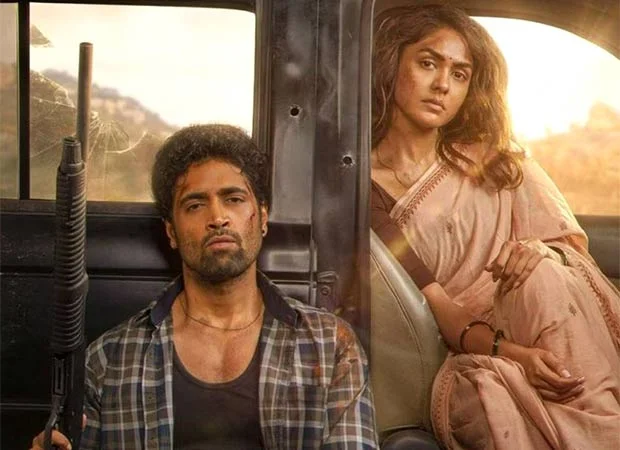
Adivi Sesh claims his upcoming film 'Dacoit' portrays love not as fading, but transforming, drawing parallels to a modern Romeo and Juliet, amidst the backdrop of enduring legacies like Asha Bhosle's.
Actor Adivi Sesh is generating significant buzz with his upcoming film, "Dacoit," which he describes as a profound exploration of love that defies conventional narrative arcs. Sesh posits that the movie is a modern-day echo of Shakespeare's "Romeo and Juliet," not in its plot specifics, but in its intense and complicated portrayal of enduring love. His commentary comes at a poignant time for the entertainment industry, which is grappling with the recent passing of legendary playback singer Asha Bhosle, whose own family legacy is continuing through her granddaughter, Zanai Bhosle, making her acting debut. This juxtaposition highlights how art, much like life and love, continually transforms and endures, leaving an indelible mark across generations and genres.
Adivi Sesh’s vision for "Dacoit" transcends the usual confines of action and revenge thrillers. He emphasizes that at its core, the film is a deeply emotional love story, reinterpreting the intensity of a classic like "Romeo and Juliet" for a contemporary audience. Speaking to Bollywood Hungama, Sesh articulated his belief that "Dacoit" is about love that "transforms, not fades." He explained, “For me, Dacoit is not just about conflict or revenge. At its core, it’s a love story. It’s our modern-day Romeo and Juliet, but set in a world that feels very real and grounded. These are two people who were once deeply in love, and life took them in different directions. When they meet again, it’s not just about rekindling feelings, it’s about confronting everything that love has turned into over time.” This approach suggests a narrative depth that aims to explore the multifaceted nature of human relationships, where past affections can morph into pain, strength, or even a driving force for vengeance.
Sesh further clarified that the comparison to Shakespeare is not a literal retelling but an evocation of the "essence of that kind of love that is intense, complicated, and enduring." He aims to present a love story that is "raw, it’s imperfect, and that’s what makes it real," resonating with audiences who can connect with the complexities of long-term emotional bonds. The actor's insights underscore a deliberate artistic choice to move beyond simplistic romantic tropes, instead delving into the psychological and emotional landscapes of characters whose past love continues to shape their present and future. This exploration of love's transformative power positions "Dacoit" as a film seeking to offer a more nuanced and mature perspective on human connection within the often-eventful framework of a rural Indian setting.
While Adivi Sesh is redefining cinematic love, another significant development in the Indian entertainment landscape involves the enduring legacy of the Bhosle family. Zanai Bhosle, granddaughter of the late legendary playback singer Asha Bhosle, is poised to make her acting debut in the historical epic, "The Pride of Bharat – Chhatrapati Shivaji Maharaj." This announcement, reported by Gulf News, comes at a particularly poignant moment, following the recent passing of her iconic grandmother. Zanai is set to portray Rani Sai Bhonsale, the first wife of the Maratha ruler, opposite Rishab Shetty, marking a new chapter for a family steeped in artistic traditions.
Born in Mumbai in 2002, Zanai has grown up immersed in a rich musical and acting environment. Her father, Anand Bhosle, also has an acting background, ensuring her exposure to the arts from a young age. Before stepping into cinema, Zanai explored her musical talents, releasing singles such as 'Main Heer Teri' and 'Kehndi Hai,' building a social media presence and demonstrating versatility. Her debut, directed by Sandeep Singh, is an ambitious multi-language project slated for a January 21, 2027 release across several Indian languages. This significant career step coincides with a period of national mourning for Asha Bhosle, who passed away on April 12, 2026, at the age of 92, due to multi-organ failure. Tributes to the veteran singer have poured in from across the globe, including from political leaders like Prime Minister Narendra Modi, musical maestros like A.R. Rahman, and international figures, highlighting the immense influence and global reach of her artistry, a testament to a career that transformed Indian music.
The passing of Asha Bhosle has not only left a void in the Indian music industry but has also resonated internationally, demonstrating the far-reaching impact of her legendary voice. In a surprising yet touching tribute, WWE Superstar and Hollywood actor John Cena shared a photograph of Asha Bhosle on his official Instagram account as a mark of respect following her death. This gesture, as reported by Bollywood Hungama, garnered significant attention from fans worldwide, underscoring Bhosle's universal appeal.
Adding to the international acknowledgment, Indian actor Priyanka Chopra Jonas also reacted to Cena’s post, simply commenting “Queen,” echoing the sentiments of millions who revered Bhosle. The outpouring of grief and tribute extended beyond international celebrities to encompass figures from various spheres within India. Sachin Tendulkar, with his wife Anjali Tendulkar, veteran actors Tabu and Asha Parekh, Riteish Deshmukh, and A. R. Rahman were among the many prominent personalities from the film, music, and sports fraternities who attended her funeral. The last rites, conducted with full state honours at Shivaji Park crematorium, held additional emotional significance as it was also the cremation site for her equally iconic sister, Lata Mangeshkar. These widespread tributes—from a Hollywood action star to Bollywood's elite and sports legends—collectively paint a picture of an artist whose contribution transcended cultural and geographical boundaries, proving that true artistry, much like love in Adivi Sesh's vision, transforms and endures beyond the individual.
The emerging narratives surrounding Adivi Sesh's "Dacoit" and Zanai Bhosle's debut highlight a fascinating interplay between artistic evolution and the enduring power of legacy in the entertainment industry. Sesh's interpretation of love as a force that transforms rather than fades speaks to a growing maturity in storytelling, where creators are increasingly seeking to portray human relationships with greater nuance and realism. This move away from simplistic narratives towards complex emotional landscapes reflects a broader trend in cinema globally, acknowledging that love, pain, and revenge are often intertwined. By framing "Dacoit" as a modern "Romeo and Juliet," Sesh is tapping into a universally understood archetype of intense, complicated love, but recontextualizing it for a contemporary audience that demands authenticity and emotional depth.
Simultaneously, Zanai Bhosle's entry into acting underscores the pervasive influence of artistic lineages. While she embarks on her own journey, her path is inevitably shaped by the colossal shadow of her grandmother, Asha Bhosle. This generational transfer of talent, coupled with the pressure of upholding a renowned family name, is a double-edged sword. It provides immediate recognition and a platform, but also intensifies scrutiny and expectations. The public's keen interest in Zanai, especially in the wake of her grandmother's passing, exemplifies how deeply woven these legacies are into the fabric of public consciousness. This situation reflects a constant tension in the arts: the desire for individual artistic expression against the background of a familial heritage that both inspires and challenges, much like the transformative yet enduring nature of love that Sesh describes.
Mrunal Thakur, who also stars in "Dacoit," has already expressed her gratitude for the early positive reception of the film, indicating the project has a strong emotional core resonating with its audience even before its full release. She remarked, "It’s the karma of my past life that I am getting this love and appreciation," as reported by Bollywood Hungama, suggesting that the film's exploration of complex emotions is already making an impact. This feedback further supports Sesh's assertion that "Dacoit" is more than just an action film; it’s a narrative rich with emotional resonance, driven by the transformed dynamics of love and conflict.
Regarding Asha Bhosle's final moments, additional details shed light on the circumstances of her passing. She was admitted to Breach Candy Hospital on April 11, 2026, after suffering from a chest infection and extreme exhaustion. The subsequent reports confirmed her death on April 12 due to multi-organ failure, as detailed by Bollywood Hungama. Her mortal remains were held at her residence, Casa Grande in Lower Parel, before the state funeral, illustrating the profound respect and love she commanded from both the industry and the public. These details provide crucial context to the tributes paid globally and locally, emphasizing the immense loss felt by many at the departure of a musical giant. The timing of both Sesh's philosophical insights on love and Zanai's anticipated debut underscores a period of reflection on continuity, change, and legacy within the Indian entertainment sphere.
As Adivi Sesh's "Dacoit" prepares for its release, the anticipation surrounding its unique take on love and conflict will undoubtedly set a new benchmark for character-driven narratives in Indian cinema. The film's success, both critically and commercially, will indicate the audience's appetite for stories that delve deeper than superficial romance, exploring the enduring and transformative nature of human connection. Simultaneously, Zanai Bhosle’s debut in "The Pride of Bharat – Chhatrapati Shivaji Maharaj" will be closely watched, not just as a new talent entering the industry, but as a continuation of a legendary artistic bloodline. Her performance will be a critical test of how new generations navigate and reinterpret formidable legacies, proving that while individuals may pass, the spirit of artistry and the capacity for profound emotion, as Sesh suggests, merely transforms rather than ever truly fades. The convergence of these narratives signals an exciting period for Indian cinema, marked by both innovative storytelling and the steadfast recognition of historical figures and artistic dynasties, promising a rich tapestry of cinematic experiences for years to come.

Actor Adivi Sesh reveals the "creatively demanding" process of simultaneously filming two vastly different projects, Dacoit and G2. This article explores his innovative approach to balancing instinct-driven and strategic roles.
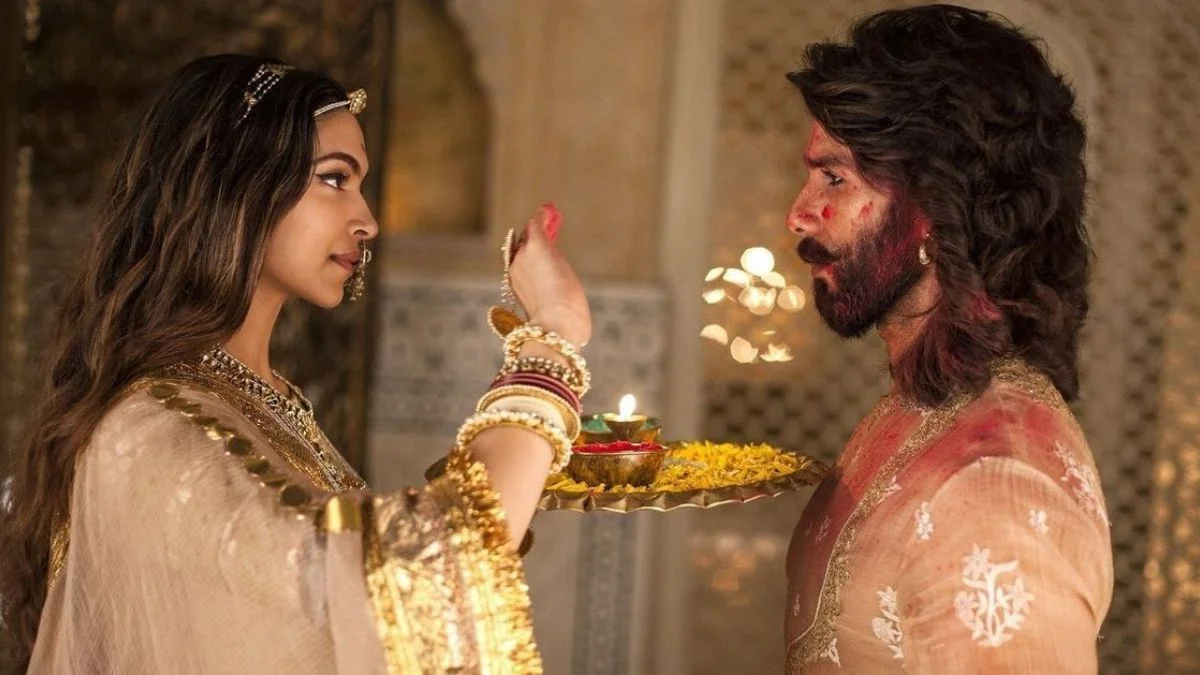
Hollywood films like 'Eat, Pray, Love,' 'Bride and Prejudice,' and 'Outsourced' increasingly feature the Hindu festival of Holi, using its vibrant colors to symbolize transformation, romance, and cultural immersion.

Ranbir Kapoor praises Ranveer Singh's Dhurandhar as his current favorite film, fueling industry buzz. The movie's success intertwines with Kapoor's upcoming releases.