
Director Sriram Raghavan breaks silence on the controversial "Pakistan is not trustworthy" disclaimer in his war drama 'Ikkis', stating he was "personally NOT happy with it," citing producer insistence.
Filmmaker Sriram Raghavan, known for his nuanced storytelling in thrillers like Andhadhun and Badlapur, has finally addressed the controversial disclaimer inserted at the end of his recently released war drama Ikkis. The movie, which debuted on New Year's Day 2026, garnered praise for its performances and emotional depth but also ignited a significant debate over its narrative approach to India-Pakistan relations. Raghavan openly expressed his personal dissatisfaction with the disclaimer, which asserted that while the humane portrayal of a Pakistani brigadier in the film was exceptional, Pakistan, as a nation, is "not at all trustworthy." His remarks shed light on the often-complex dynamics between a director's artistic vision and external pressures, particularly from producers, in the commercial landscape of Bollywood.
Ikkis unfolds across two distinct timelines, offering a dual perspective on the India-Pakistan conflict. One narrative thread is set in 1971, chronicling the valiant final moments of Arun Khetarpal, a young Indian soldier portrayed by Agastya Nanda, as he confronts Pakistani forces. The parallel track fast-forwards to 2001, where Arun's father, retired Brigadier Madan Lal Khetarpal (played by Dharmendra), travels to Lahore for a poignant college reunion. There, he is hosted by Brigadier Jaan Mohammad Nisar (Jaideep Ahlawat), the very officer responsible for Arun’s death decades prior during the 1971 war. This humanitarian portrayal of a Pakistani officer, particularly the scenes depicting a degree of mutual respect and shared history, drew both praise and criticism from audiences. While some lauded the film's attempt at a nuanced, human-centric approach, others viewed it as potentially "pro-Pakistan," a sentiment that was seemingly countered by the abrupt and stark disclaimer appearing at the film's conclusion.
The disclaimer itself was exceptionally explicit, asserting: “The humane treatment of Pakistani Brigadier K.M. Nisar is an exceptional case. Otherwise, our neighbouring country is not at all trustworthy. Pakistani forces have treated our soldiers and civilians with extreme cruelty and inhumanity, both in war and peacetime. They have blatantly violated the Geneva Conventions by torturing them on numerous occasions. Given the terrorist activities sponsored by Pakistan, as concerned citizens, we need to remain vigilant and prepared.” This strong, politically charged statement starkly contrasted with the film's more empathetic portrayal of Nisar, leaving many viewers, including those who appreciated the film's humanitarian aspects, in a state of shock and confusion, as reported by Bollywood Hungama.
In a recent interview, Sriram Raghavan broke his silence on the contentious disclaimer. Initially evasive, stating he had "decided not to talk about it" and suggesting viewers "wonder, ‘Whether we put it or not?’" akin to the open ending of his acclaimed film Andhadhun, he eventually offered a more direct, albeit nuanced, explanation. Raghavan unequivocally declared, "But the disclaimer was not something I was happy with personally." This candid admission confirms that the final, politically charged message was not aligned with his artistic intent or personal sentiments regarding the film's narrative. His frustration, though subtly expressed, underscores a significant creative divergence from the film's ultimate presentation.
Further elaborating on the situation, Raghavan drew a parallel to a previous experience with the same producer, Dinesh Vijan, during the making of his 2015 film Badlapur. He recalled a music video inserted at the end of Badlapur, which he felt "completely negates what the film is doing" and "screwed up the mood of the film!" He explicitly stated that this previous insertion was "at the insistence of my producer (Dinesh Vijan)." Applying this context to Ikkis, Raghavan acknowledged Vijan as a "superb guy" who allowed him to make the film and provided immense support. However, he clearly indicated that the disclaimer in Ikkis was another instance where producer insistence led to a creative compromise with which he was not personally satisfied. This echoes a common challenge faced by filmmakers in balancing creative integrity with commercial and political pressures, particularly in an industry as sensitive as Indian cinema. His commentary, as detailed by Bollywood Hungama, provides a rare glimpse into the behind-the-scenes struggles that shape a film's final cut.
Sriram Raghavan's disclosure about the Ikkis disclaimer highlights a persistent tension in filmmaking: the battle between a director's artistic vision and the commercial or political considerations of producers and studios. While an ideal scenario sees both parties aligned, the reality, particularly in an industry like Bollywood often scrutinized for its narratives on geopolitics and national identity, can be vastly different. Raghavan's past experience with Badlapur, where a producer-insisted music video reportedly "screwed up the mood of the film," suggests a recurring pattern with his collaborator, Dinesh Vijan. This isn't merely an isolated incident; it speaks to a broader industry trend where creative control can be diluted by those holding the financial reins. Raghavan's decision to break his initial silence, despite his earlier playful evasiveness, indicates the discomfort and internal conflict he likely experienced over the disclaimer's inclusion. For a director whose work is celebrated for its intricate plots and character development, an overt, politically charged statement at the end of a film can feel like a direct contradiction to the nuanced storytelling he strives for.
The situation in Ikkis is particularly acute because the disclaimer doesn't just alter the tone; it actively works against the film's more empathetic portrayal of a Pakistani character. This creates a cognitive dissonance for the audience and, more importantly, undermines the film's potential for fostering understanding, however limited. It transforms a potentially complex narrative into a simplistic political statement, perhaps aimed at appeasing a segment of the audience or avoiding potential backlash for a perceived "soft" stance on a sensitive geopolitical issue. This compromise, born out of what Raghavan suggests was producer insistence, raises important questions about creative freedom and the often-unseen negotiations that shape the final product viewers consume. It's a reminder that even critically acclaimed directors must sometimes navigate a landscape where external pressures can significantly impact artistic output, turning a potentially thought-provoking film into one that delivers a mixed message.
The influence of producers in shaping the final cut, and sometimes even the script, of a film is a well-documented phenomenon in global cinema, and Bollywood is no exception. Aamir Khan, a prominent actor and producer in his own right, recently shared a similar anecdote regarding his blockbuster film PK. Khan revealed that he and director Rajkumar Hirani were "not really fully happy with the film" because its second half was significantly altered. This change was necessitated by the release of another film, Oh My God!, whose themes were perceived as too similar to PK's original script. "Raju was very adamant that we must change our second half, and we did," Khan stated in an interview with Mid-day, detailing the extent of the alterations despite the original plot being fundamentally different due to the presence of an alien protagonist in PK. This instance, though different in nature from the Ikkis disclaimer, underscores how external factors, commercial viability, and the desire to differentiate narratives can lead to significant changes from a film's original conception, even for established filmmakers and major stars.
While the PK example illustrates a script being tweaked for commercial and thematic differentiation, Raghavan's case with Ikkis highlights a political dimension. The disclaimer in Ikkis appears to be a direct response to potential criticism of the film's humanitarian portrayal of a Pakistani character, possibly to safeguard against accusations of a "pro-Pakistan" narrative in a politically charged environment. This form of intervention is more overtly political and less about creative fine-tuning. It demonstrates that producers, in their role to protect the commercial interests and public reception of a film, might push for inclusions that contradict a director's artistic and thematic goals. Such instances add layers of complexity to understanding a film's true message, often requiring viewers to consider the various forces at play beyond the director's singular vision, thereby leading to debates that extend beyond mere cinematic critique and delve into socio-political commentary.
Sriram Raghavan's frank admission regarding the Ikkis disclaimer is likely to fuel further discussions within the Indian film industry about creative autonomy, particularly when dealing with sensitive geopolitical themes. It opens the door for greater transparency and could potentially empower other filmmakers to speak out against similar compromises. While the controversial disclaimer has already been part of the film's initial run, Raghavan's statement might influence future promotional materials or even lead to calls for its removal in subsequent releases or on streaming platforms. However, given the political sensitivities, any such move would likely be met with its own set of challenges. This incident also serves as a critical point of reflection for audiences, encouraging them to view films with a more discerning eye, understanding that the final product can be a mosaic of different voices and intentions. It highlights the ongoing struggle to balance artistic integrity with commercial and nationalistic pressures, a struggle that will undoubtedly continue to shape the landscape of Indian cinema.
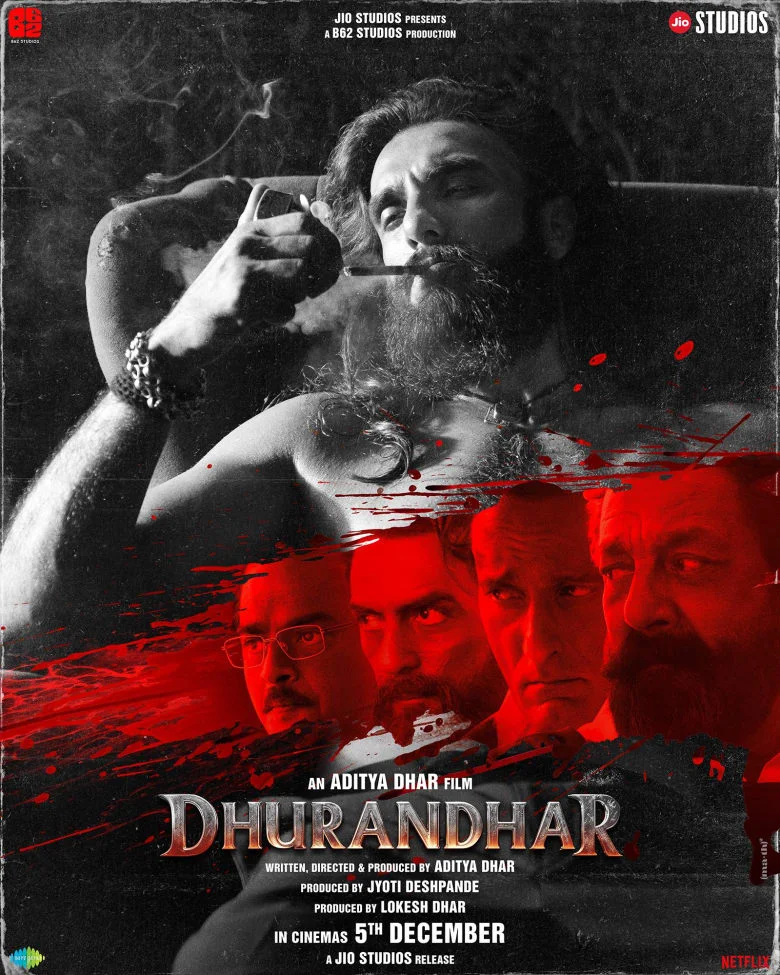
Despite a theatrical ban, the Ranveer Singh-starrer Dhurandhar has soared to #1 on Netflix in Pakistan, captivating audiences and earning widespread acclaim.

Bollywood star Kartik Aaryan has filed an intellectual property suit in the Bombay High Court to protect his name, image, and likeness from unauthorized commercial use online, including AI-generated content. This move highlights growing celebrity efforts to safeguard personality rights amid rising digital exploitation.

Veteran film producer Boney Kapoor acquires a high-end Mercedes-Benz V-Class, signaling a growing trend among Bollywood celebrities for luxury MPVs as mobile offices and comfort zones, costing up to Rs 1.7 crore.