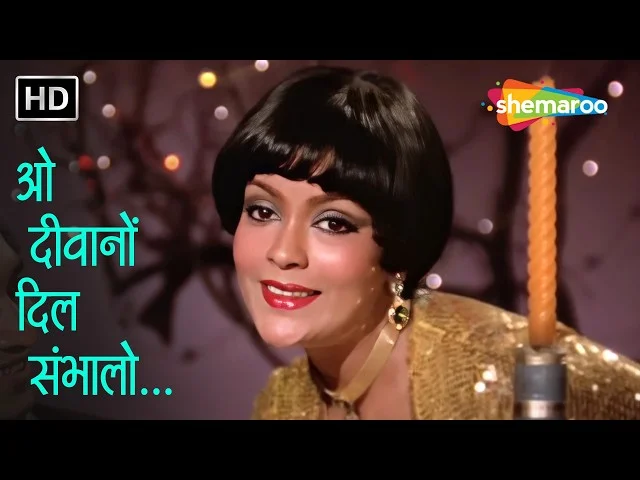
Veteran Bollywood actress Zeenat Aman continues to captivate audiences with her thoughtful and candid reflections on social media, reigniting discussions around iconic moments from her illustrious career. In her latest Instagram dispatch, Aman transported fans back to 1979, revisiting her role as Shabnam in the action-thriller, 'The Great Gambler,' opposite Amitabh Bachchan. While the melancholic duet 'Do Lafzon Ki' has long been synonymous with the film, Aman recently championed a different track, 'O Deewano Dil Sambhalo,' as her personal favourite, lauding its portrayal of "confidence and sass" and offering a rare glimpse into her behind-the-scenes experiences with choreography and memorable costumes. This deliberate spotlight on a less-celebrated song underscores a broader trend of Aman curating her legacy on her own terms, offering nuanced perspectives that resonate deeply with both long-time admirers and new generations discovering her work.
Background and Context: A New Era of Celebrity Connection
Zeenat Aman's foray into Instagram in February 2023 marked a significant shift in how veteran celebrities engage with their public image and past works. Unlike many contemporaries whose feeds are often dominated by promotional material or fleeting trends, Aman’s platform has become a repository of long-form, reflective essays accompanied by evocative throwbacks. This approach, as noted by Bollywood Hungama, has allowed her to carve out a unique niche, bridging the gap between nostalgic fandom and contemporary digital engagement. Her posts are not merely picture dumps but carefully crafted narratives that blend personal anecdotes with historical context, offering unparalleled insights into the golden era of Hindi cinema. This strategy has proven immensely successful, fostering a deeper connection with her audience and allowing her to redefine her public persona in her own voice, free from the sanitisation often imposed by traditional media.
Key Developments: Reclaiming the Narrative of 'The Great Gambler'
In her most recent and widely discussed post, Zeenat Aman turned her attention to 'The Great Gambler,' a film perhaps best known for its scenic Venetian setting and, primarily, the romantic ballad 'Do Lafzon Ki.' However, Aman’s post deliberately shifted this focus, advocating for 'O Deewano Dil Sambhalo' as having a more personal resonance. Sharing a short clip from the song, she wrote, "Another hit from The Great Gambler! Do Lafzon Ki was the movie’s most loved song by popular consensus, but this one is my personal favourite. None of that drippy romance stuff here. Just the confidence and sass of a woman who knows her desirability!" This comment, highlighted by Bollywood Hungama, directly contrasts the film's most popular offering with a song that, for Aman, embodied a different kind of female agency and self-assurance. She further elaborated on the memorable costume changes within the sequence, particularly recalling a "shimmering gold track-pant set" and a "short pageboy wig," combined with "high kicks" choreographed for good measure, illustrating the playful and often experimental nature of Bollywood filmmaking of that era. This deep dive into a specific song and its aesthetic choices not only provides fascinating behind-the-scenes detail but also consciously celebrates a facet of her performance that she values more profoundly than the industry's widely accepted favourites.
Moreover, Aman used the opportunity to address an aspect of her performance often discussed by fans and critics alike: her dancing prowess. She openly admitted, "As I’ve mentioned before, I wasn’t a very confident dancer as I never had formal training unlike most of the actresses of the time." This candid revelation stands in stark contrast to the often-polished narratives presented by public figures. However, she quickly added a pragmatic and self-aware perspective: "Still, I could ‘groove’ and many a director realised it’s better to leave me to my own swaying device than frustrate themselves trying to coax complicated choreography out of me!" This honest assessment, again reported by Bollywood Hungama, not only demystifies the perceived perfection of screen performances but also showcases her adaptability and the collaborative spirit that often defined filmmaking. By sharing these personal truths, Aman not only offers a rare vulnerability but also empowers her followers to embrace their own unique strengths, even in areas where they might feel less traditionally skilled. Her engagement on Instagram has fundamentally shifted from passive memory-keeping to an active, insightful curatorial process that continually re-contextualizes her celebrated career for modern audiences.
Analysis: The Enduring Power of Authentic Storytelling
Zeenat Aman's continued success on Instagram, stemming from posts like her 'Great Gambler' reflection, highlights a significant cultural shift in how audiences consume celebrity content and, more broadly, history. In an age saturated with carefully curated, often inauthentic influencer narratives and promotional churn, Aman’s long-form, unvarnished reflections offer a refreshing counter-narrative. Her ability to connect personal anecdotes with professional milestones, injecting humour and self-awareness, creates a sense of intimacy and authenticity that traditional media outlets often struggle to achieve. This approach allows her to transcend mere nostalgia and instead offers a living history lesson, providing context and behind-the-scenes truths that deepen appreciation for her work and the era it represents. This trend resonates with a broader desire for genuine storytelling, distinguishing her from fleeting trends or event coverage like the Power Creator Awards 2026, which, while celebrating modern creators, often lack the historical depth Aman brings to her narratives about an evolving industry, as seen on Social News XYZ. The public craves substance and connection, and Aman delivers precisely that, positioning herself not just as an iconic actress but as a thoughtful commentator on her own legacy and the evolution of Indian cinema.
Furthermore, Aman’s choice to champion 'O Deewano Dil Sambhalo' over the more popular 'Do Lafzon Ki' is a deliberate act of re-evaluation and empowerment. It subtly challenges the patriarchal gaze often inherent in film history, where a romantic song featuring a male lead might historically garner more recognition. By highlighting a song that she feels embodies "confidence and sass" and showcases a woman's "desirability" through an active, self-assured lens, Aman subtly reclaims a narrative about female presentation and agency in Hindi cinema. This isn't just about a song; it's about shifting the spotlight to performances where women are not merely objects of desire but possess an internal sense of power and allure. This self-curation ensures that her legacy is viewed through her own experienced perspective, rather than solely through the lens of critics or popular memory, which itself is often shaped by mainstream commercial success. Her Instagram narrative becomes an ongoing personal archival project, challenging conventions and inviting a more nuanced appreciation of her multifaceted contributions to Indian cinema.
Additional Details: The Human Touch in a Digital Age
Zeenat Aman’s distinctive presence on Instagram thrives precisely because it stands apart from the typical celebrity content. While many public figures use social media as a direct extension of their professional PR machinery, Aman treats her page as a more personal memoir. Her reflections often touch upon the challenges and realities of filmmaking, including practical aspects like costume experiments, or her confessed lack of formal dance training, which add a layer of relatability and humility often missing from celebrity narratives. This detailed approach provides rich context for her roles, transforming screen moments into multi-dimensional stories. For instance, her anecdote about allowing directors to let her "groove" rather than attempting complex choreography sheds light on her pragmatic approach to her craft and the collaborative spirit of that era's film sets, as detailed in the Bollywood Hungama report. Such insights are a refreshing change from the often-controlled public images, making her content feel more genuine and less performative.
Her posts also serve as a stark contrast to the fleeting nature of much online content, including news surrounding celebrity personal lives. For example, recent reports regarding Sorab Bedi clarifying his friendship with Malaika Arora after viral party pictures, as reported by Bollywood Hungama, showcase the quick-fire cycles of speculation and clarification that define much of modern celebrity news. Aman, however, intentionally slows down this rapid pace, inviting her audience to pause, reflect, and delve deeper into her experiences. This deliberate slower pace fosters a more meaningful engagement, distinguishing her presence from the fast-moving, often ephemeral content that dominates social media. Her strategy successfully cultivates a space for contemplative discourse around her career, highlighting the intellectual and artistic contributions she made, rather than merely focusing on external perceptions or transient gossip.
Looking Ahead: The Power of Legacy Management in the Digital Sphere
Zeenat Aman's successful cultivation of her Instagram presence offers a compelling blueprint for other veteran actors and public figures seeking to manage their legacies in the digital age. By prioritising authenticity, depth, and personal reflection over rapid-fire marketing or reactive commentary, she has forged a unique and enduring connection with a diverse audience. We can anticipate more veteran stars adopting similar strategies, leveraging direct-to-audience platforms to share their stories, correct historical misinterpretations, and offer their own nuanced perspectives on their careers, thus enriching the collective memory of cinematic history. This personal curatorial approach not only preserves individual legacies but also provides invaluable first-hand accounts for film historians and enthusiasts. The longevity and impact of her posts, especially those that encourage revisiting and re-evaluating cinematic moments, suggest a powerful shift towards celebrity-driven archival work that goes far beyond traditional interviews or biographies. Her ongoing narrative ensures that her contributions are appreciated not just as static historical facts, but as living, evolving stories, shaped and interpreted by the very artist who created them.