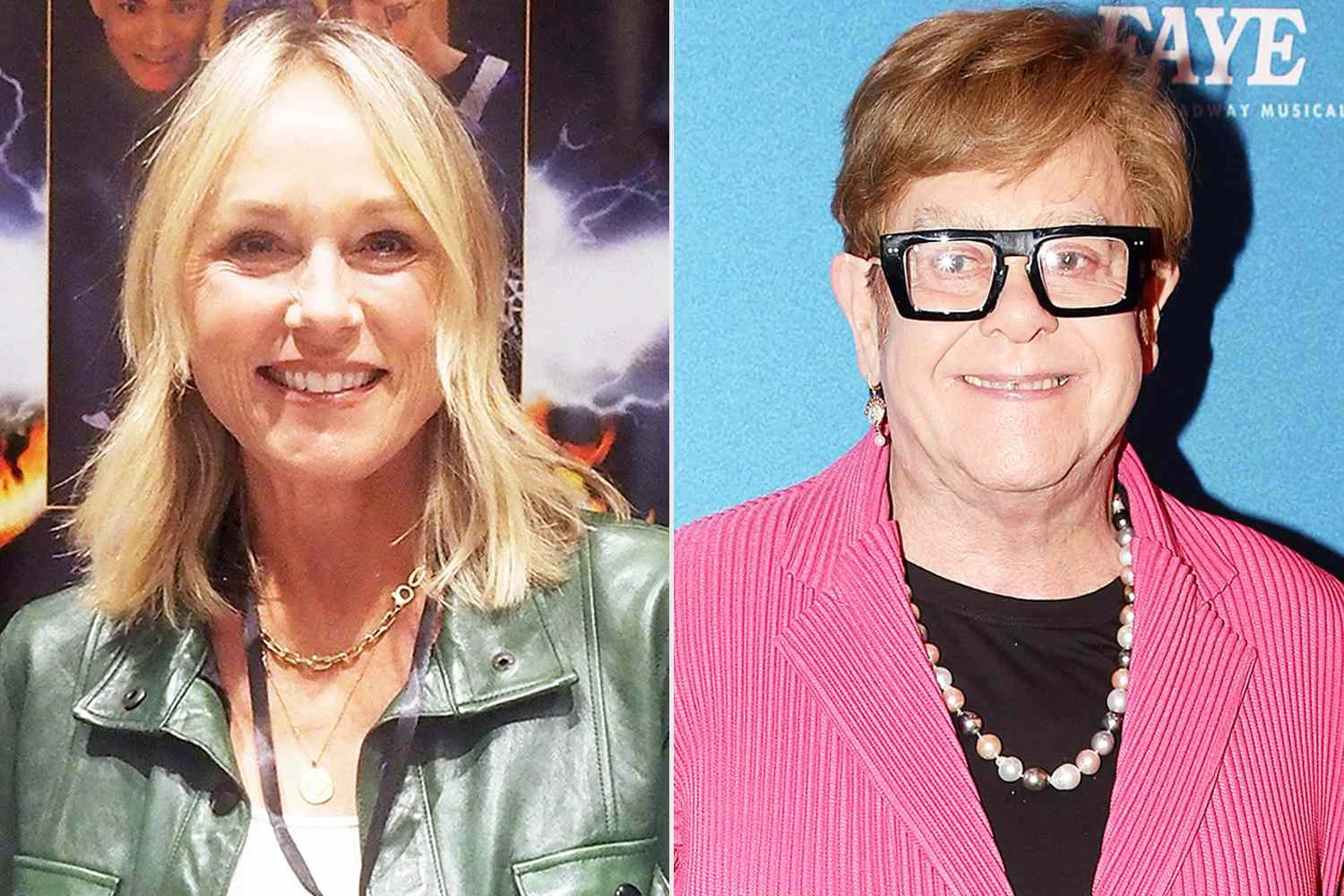
In a fascinating revelation that offers a glimpse into the hidden dynamics of celebrity life in the late 1980s, actress Darlene Vogel, known for her role as "Spike" in the iconic 1989 film “Back to the Future Part II,” has disclosed a memorable night spent clubbing with music legend Elton John. Vogel recounted the experience on a recent podcast, detailing how she inadvertently served as John's "beard" during an outing designed to maintain a particular public image. This anecdote not only adds a new layer to the already rich tapestry of Hollywood lore but also underscores the complex pressures faced by public figures navigating their personal lives in an era less open about LGBTQ+ identities. Her candid sharing provides a unique, behind-the-scenes perspective on a period of significant social transition for many stars.
An Unforgettable Night with the Rocketman
Darlene Vogel's recollection of her evening with Elton John stems from an appearance on the The Patrick LabyorSheaux podcast where she was a guest with actor Patrick Labyorteaux. The encounter, which took place around 1989, began when a friend of Vogel's had a mutual connection to John. This led to an impromptu meet-up at the then-popular celebrity spot, Le Dome. Vogel, who was 63 at the time of the podcast recording, vividly recalled the organic progression of the night. After their initial gathering, it was John himself who posed the question about where they should head next. Vogel’s suggestion of the China Club in Hollywood was met with enthusiasm, setting the stage for an unforgettable evening. This casual suggestion transformed into a night of unexpected thrills, highlighting the spontaneous nature of celebrity interactions that often went undocumented in the pre-social media age. The ease with which these plans formed paints a picture of a more laid-back celebrity circuit, albeit one still governed by certain public image considerations.
The China Club Performance and the 'Beard' Confession
The night truly kicked into high gear when Vogel, Elton John, and their companions piled into John's limo en route to the China Club. Vogel described an exhilarating scene where John, without much fanfare, took to the stage. Her memory includes the striking detail that he "blows Michael Bolton off the stage, and starts performing," showcasing the Rocketman's undeniable stage presence even in an informal setting. This impromptu performance created a buzzing atmosphere, with Vogel feeling like she was simply "hanging out with a buddy," seemingly unfazed by the global superstar status of her companion. The true significance of the evening, however, came as they were leaving. As John walked with his arm around Vogel, he leaned in and stated, "Got to keep up the image, darling." Vogel's response, "Use me," cemented her role as his temporary 'beard.' She recounted the lack of paparazzi and iPhones at the time, leading her to humorously express regret that "there was no paparazzi, no iPhones at the time, and I was like, dang," acknowledging the lack of tangible proof of such an extraordinary night, as reported by AOL.com. Her candid sharing offers a window into the unspoken agreements and casual arrangements that often facilitated privacy for celebrities before the ubiquity of smartphone cameras.
Analysis: The Shifting Sands of Celebrity Identity
Vogel’s anecdote, while lighthearted in its retelling, offers a poignant reflection on the historical landscape of celebrity and sexuality, particularly for LGBTQ+ figures. In 1989, when this event took place, Elton John had already come out as bisexual in a 1976 Rolling Stone cover story, a decision he later described as a "compromise" in his 2019 memoir, Me, to avoid alienating fans. It wasn't until 1992 that he would publicly declare his homosexuality, becoming one of the first major male pop stars to do so. This timeline highlights the immense pressure celebrities like John faced to manage their public image and personal truth. The concept of a "beard" was a common tactic in Hollywood, a silent agreement to present a heterosexual front for public consumption, often to protect careers and maintain relevance in a less accepting society. Vogel's willingness to participate, even jokingly, underscores a broader societal understanding and complicity in these performative aspects of fame. Her comment about the absence of cameras also speaks volumes about a lost era of celebrity interactions, where moments could exist purely as personal experiences rather than immediate public content. This period serves as a crucial bridge between the intensely closeted Hollywood of previous decades and the more (though still imperfectly) open environment of today, illustrating the slow and arduous journey towards greater authenticity for public figures.
A Glimmer of the Past: Celebrity Culture Before Digital Scrutiny
The story also serves as a fascinating contrast to the relentless scrutiny faced by celebrities today. Vogel's lament about the absence of paparazzi and iPhones in 1989 is a powerful reminder of how profoundly digital technology has transformed the nature of fame. In that pre-internet, pre-smartphone era, an evening like hers with Elton John could remain largely private, a personal memory shared only with close circles. Today, every public outing of a star is a potential viral moment, dissected and analyzed by millions within minutes. This shift has arguably eroded the line between public and private life for celebrities, making the kind of casual "beard" arrangement, while still existing in some forms, much harder to execute discreetly. The anecdote captures a moment when stars could still, to some extent, control their narratives and personal encounters without the constant threat of instant public documentation. Vogel's experience with John, where she found him to be "so nice" and genuinely felt like she was "just hanging out with a buddy," suggests a level of human connection that might be more challenging to foster in a world where every interaction is potentially performative for an unseen audience. It highlights a certain freedom, even within the constraints of image management, that is largely absent in modern celebrity culture.
The Enduring Legacy of Image Management
While Darlene Vogel's story is a lighthearted look back at a particular night, it touches on deeper truths about the entertainment industry and the intricate dance between personal authenticity and public perception. The need for image management, though evolving, remains a constant in Hollywood. Even today, despite greater acceptance, celebrities often meticulously curate their public personas. The context of LGBTQ+ identity for public figures has shifted dramatically since the 1980s, largely due to the courage of individuals like Elton John and an increasingly aware society. However, the pressure to conform, to project an ideal, or to strategically reveal aspects of one's life continues. Vogel's casual role as a "beard" demonstrates a micro-level example of larger practices that have shaped celebrity narratives for decades. The story reminds us that what we see of famous personalities is often a carefully constructed facade, and the real stories often unfold far from the flashing lights. As we continue to see discussions around authenticity and transparency from public figures, Vogel's recollection serves as a historical benchmark, illustrating how far we've come and perhaps, how much remains the same in the demanding world of celebrity.