Billy Corgan Labels AI Music a "Deal With the Devil" as Debate Rages On
Smashing Pumpkins frontman Billy Corgan vehemently rejects AI in music creation, calling it a "deal with the devil," sparking intense debate within the industry.

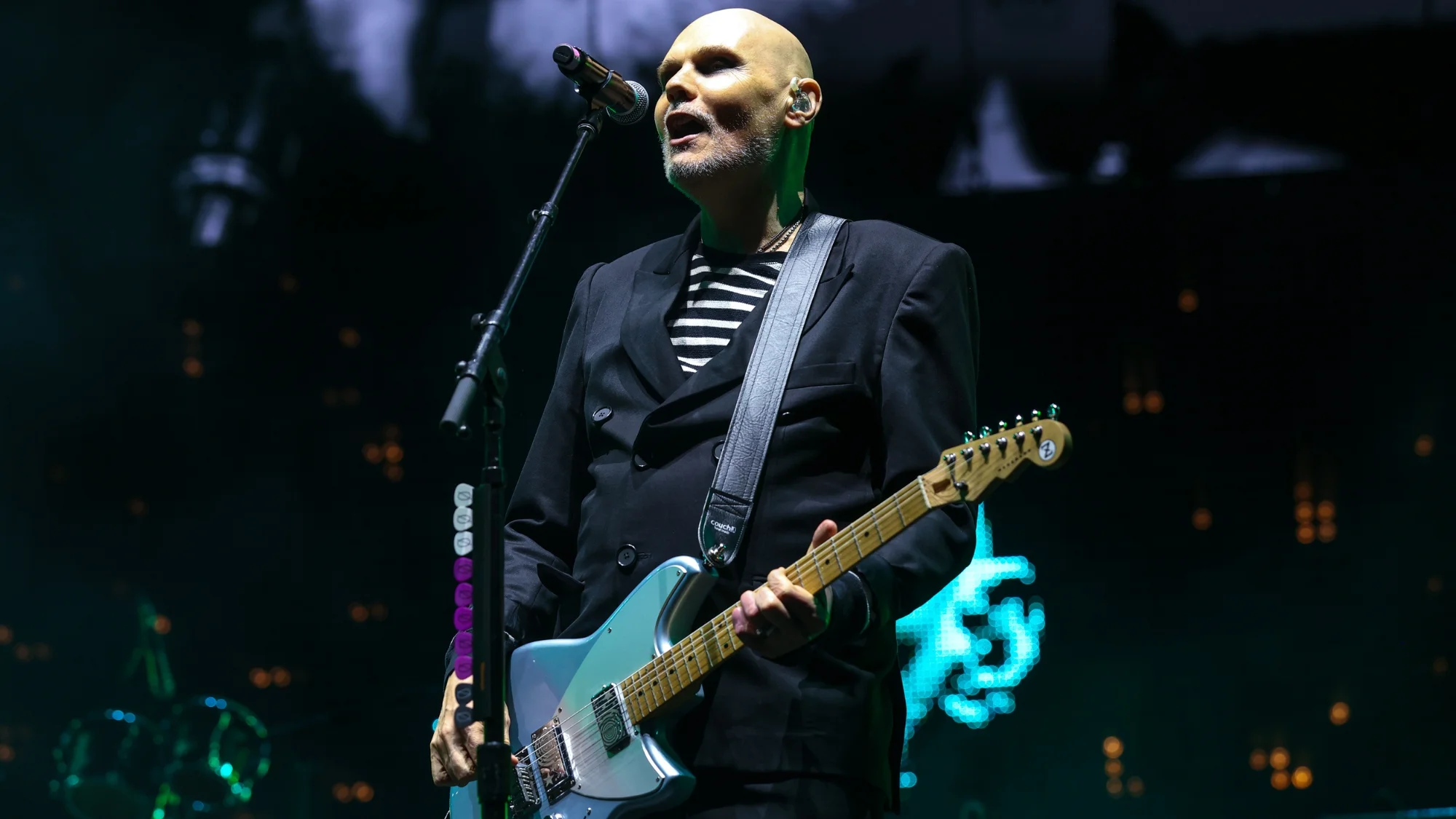
In a stark declaration reverberating through the music industry, iconic Smashing Pumpkins frontman Billy Corgan has unequivocally denounced the use of artificial intelligence in music creation, comparing it to "making a deal with the devil." Speaking on the "And the Writer Is" podcast, Corgan drew a clear line in the sand, stating, "I refuse, refuse, patently refuse to use AI in my music creation." This forceful stance, reported by American Songwriter, ignites a fiery debate about technology's role in artistry, posing critical questions about authenticity, inspiration, and the very soul of songwriting in an increasingly automated world. While proponents like Diplo champion AI as an indispensable creative tool, Corgan sees it not just as a shortcut, but as an existential threat to the creative process and ultimately, to human endeavor itself.
The Genesis of a Technological Rift in Music
The introduction of AI into creative industries, particularly music, marks a pivotal moment, forcing artists and industry stalwarts to grapple with its ethical, artistic, and economic implications. Historically, technological advancements have always been a double-edged sword for music; from the advent of synthesizers challenging traditional instrumentation to digital audio workstations democratizing recording, each leap forward brought both opportunity and resistance. However, AI, with its capacity to generate and manipulate content with unprecedented autonomy, presents a qualitatively different challenge. Unlike previous tools that augmented human creativity, AI now threatens to mimic or even surpass it, raising fundamental questions about the definition of authorship and the value of human struggle in art. The current discourse around AI in music is not merely about adopting new technology; it's about safeguarding the essence of what makes music profound—the human experience, vulnerability, and the arduous journey of creation.
Corgan's "deal with the devil" analogy taps into a deep-seated fear that shortcuts offered by AI could eradicate the very pressures and soul-searching he believes are vital to a songwriter's journey, potentially leading to a sterile, soulless output. This sentiment reflects a broader anxiety present in various artistic fields where the perceived efficiency of AI clashes with the intrinsic value of human imperfection and the struggle for genuine expression. The debate isn't just about whether AI can "make good music," but whether "good music" can exist without the human imprint of effort, emotion, and personal narrative.
Core Arguments: Corgan's Resistance vs. Diplo's Embrace
The contemporary music landscape is sharply divided on the question of AI integration, with figures like Billy Corgan and Diplo serving as vocal representatives of opposing viewpoints. Corgan's unwavering stance is rooted in a romanticized, almost spiritual, view of artistic creation. According to American Songwriter, he believes that the "pressure, the inspiration, the soul searching, the ‘I’m not sure I got anything else to say’” are not obstacles to be overcome by technology, but rather indispensable components of a songwriter's growth and the ultimate authenticity of their work. For Corgan, embracing AI is akin to "leaning into the thing that will destroy you," a Promethean bargain that risks eradicating the very human element from creation. He extends this warning beyond just music, cautioning that AI could ultimately devastate "us as an economy, as a business, as a movement."
Conversely, DJ and music producer Diplo champions AI as a potent and inevitable tool. As quoted in the same American Songwriter piece, Diplo sees practical advantages, stating, "I’ve had some voices that I’ve made with AI, and I’m like, ‘d**n, I couldn’t even get this take out of the best singer.’” He frames resistance to AI as futile and a waste of time, arguing, "You’re not going to win, there’s no fighting AI…You’re wasting your time [because] everybody else is going to just use it and not give a f**k what you think." This pragmatic perspective views AI as another evolutionary step in music technology, offering new avenues for sonic exploration and production efficiency, rather than a threat to artistic integrity. The divergence highlights a growing chasm between those who prioritize the traditional, human-centric narrative of arduous creation and those who embrace any innovation that enhances output and meets the demands of a rapidly evolving digital consumption landscape.
Analysis: The Soul of Art in the Age of Algorithms
The polarizing views of Corgan and Diplo underscore a deeper philosophical conflict: what constitutes the "soul" of artistic creation in the digital age? Corgan's perspective is deeply rooted in the romantic tradition of art, where suffering, struggle, and personal introspection are not just pathways to creativity but are intrinsically woven into the fabric of the art itself. The idea that a machine could bypass this human journey, however adeptly it might simulate emotion or technical proficiency, fundamentally undermines the value he places on the artist's lived experience. This isn't merely about protecting jobs, but about preserving the very narrative of human achievement and emotional resonance that defines art for many.
Diplo, representing a more technocentric view, implicitly argues that the end product—the compelling sound, the perfect vocal—justifies the means. If AI can deliver a superior sonic output that would be otherwise unattainable, does the method of its creation matter as much? This perspective is common in industries where efficiency and optimization are paramount. However, music, like other art forms, often serves a purpose beyond mere auditory pleasure; it reflects the human condition, tells stories, and connects on an emotional level that often derives its power from the knowledge of a human hand, mind, and heart behind it. The concern isn't that AI can't generate pleasing sounds, but whether these sounds can carry the same emotional weight and narrative depth as human-generated art, which inherently carries the trace of its creator's struggles and triumphs. The debate forces us to confront whether the allure of effortless creation risks sacrificing the very qualities that make art profoundly human and meaningful.
Beyond the Studio: Industry Implications and the Human Element
The impact of AI in music extends far beyond individual artists' creative processes, posing significant challenges and opportunities for the broader music industry. The economic implications are vast; if AI can generate entire songs or even replicate artists' voices, questions arise about intellectual property, royalties, and the livelihoods of songwriters, session musicians, and producers. This technological shift could lead to a highly consolidated industry where a few AI models or companies dominate content creation, leaving traditional artists struggling to compete. On the other hand, AI could also democratize music creation, lowering barriers to entry for aspiring artists by providing sophisticated tools without the need for expensive studio time or specialized skills, thus fostering new forms of independent creativity.
Beyond the tech debate, the music industry is constantly evolving, driven by passion and innovation. For instance, artists like Kehlani exemplify the deeply personal, arduous journey of creation that Corgan champions. In a Billboard Women in Music feature, Kehlani candidly shared her creative process behind her hit "Folded" and her self-titled album. She described recording deeply emotional and "darker" material alone in her bedroom with her engineer, processing personal struggles she was "completely silent about" externally. This raw, intimate process of translating internal turmoil into art stands in stark contrast to the idea of AI-generated content. Her journey through "external chaos," a "redemption tour," and the eventual breakthrough with "Folded" highlights the profound connection between an artist's life experiences and their creative output. This human narrative, deeply embedded in Kehlani's work, is precisely what Corgan fears would be lost if AI were to become the primary engine of music. The personal narrative, the "soul-searching," as Corgan puts it, forms the basis of authentic connection with fans and the enduring power of music.
While the debate surrounding AI in creative fields rages, its presence is increasingly felt across diverse sectors, underlining the broad societal shift towards automation and algorithmic decision-making. From streamlining complex vehicle maintenance tasks, as described in an article by The Detroit Bureau concerning resetting oil maintenance lights in a Lexus, to potentially revolutionizing drug discovery, AI’s practical applications are expansive. However, the discussion within music is unique due to the art form's profound cultural and emotional significance. Unlike a purely functional task, artistic creation is often seen as an expression of the human spirit. The core question is whether sophisticated algorithms, however advanced, can replicate or even replace the subjective, nuanced, and often irrational wellsprings of human creativity that give art its meaning and impact.
Looking Ahead: An Evolving Landscape of Art and Technology
The discourse ignited by Billy Corgan's strong condemnation of AI in music is far from over; it reflects the nascent stages of a fundamental societal reckoning with advanced technology. As AI continues to evolve at an exponential rate, its capabilities will undoubtedly become more sophisticated, blurring the lines between human and machine creativity further. The music industry will likely see a continued bifurcation: some artists, producers, and labels will fully embrace AI as an indispensable tool for efficiency, innovation, and reaching new artistic frontiers, seeking to leverage its power for competitive advantage and novel sounds. Others, like Corgan, will form a bulwark against what they perceive as an encroaching soullessness, perhaps even fostering a new wave of "authentic," "human-made" music as a counter-movement. This could lead to a premium placed on art explicitly created without AI, much like hand-crafted goods retain a special value today.
Future implications will also touch upon legal and ethical frameworks, particularly regarding intellectual property and "deepfake" audio. The question of who owns the rights to AI-generated music, or music composed using AI tools, will become critically important. Regulation and industry standards will need to catch up rapidly to prevent widespread exploitation and to define what constitutes original work. Ultimately, the future of music might not be a complete takeover by AI, but rather a complex symbiosis, where human creativity is challenged, redefined, and perhaps even elevated by interacting with intelligent machines, leading to entirely new genres and modes of artistic expression navigating a landscape where the "Promethean fire" is a tool, not just a metaphor. The ongoing debate will shape not just how music is made, but how we define artistry itself in the 21st century.
Related Articles

Jamie Hansen Navigates Grief and Industry Shifts with New Single "The End," Ahead of Album Release
Laramie-based musician Jamie Hansen delves into vulnerability with her new single "The End," exploring themes of grief while embracing the dual life of artist and backcountry guide. She also reflects on the evolving music industry and plans for her upcoming album.