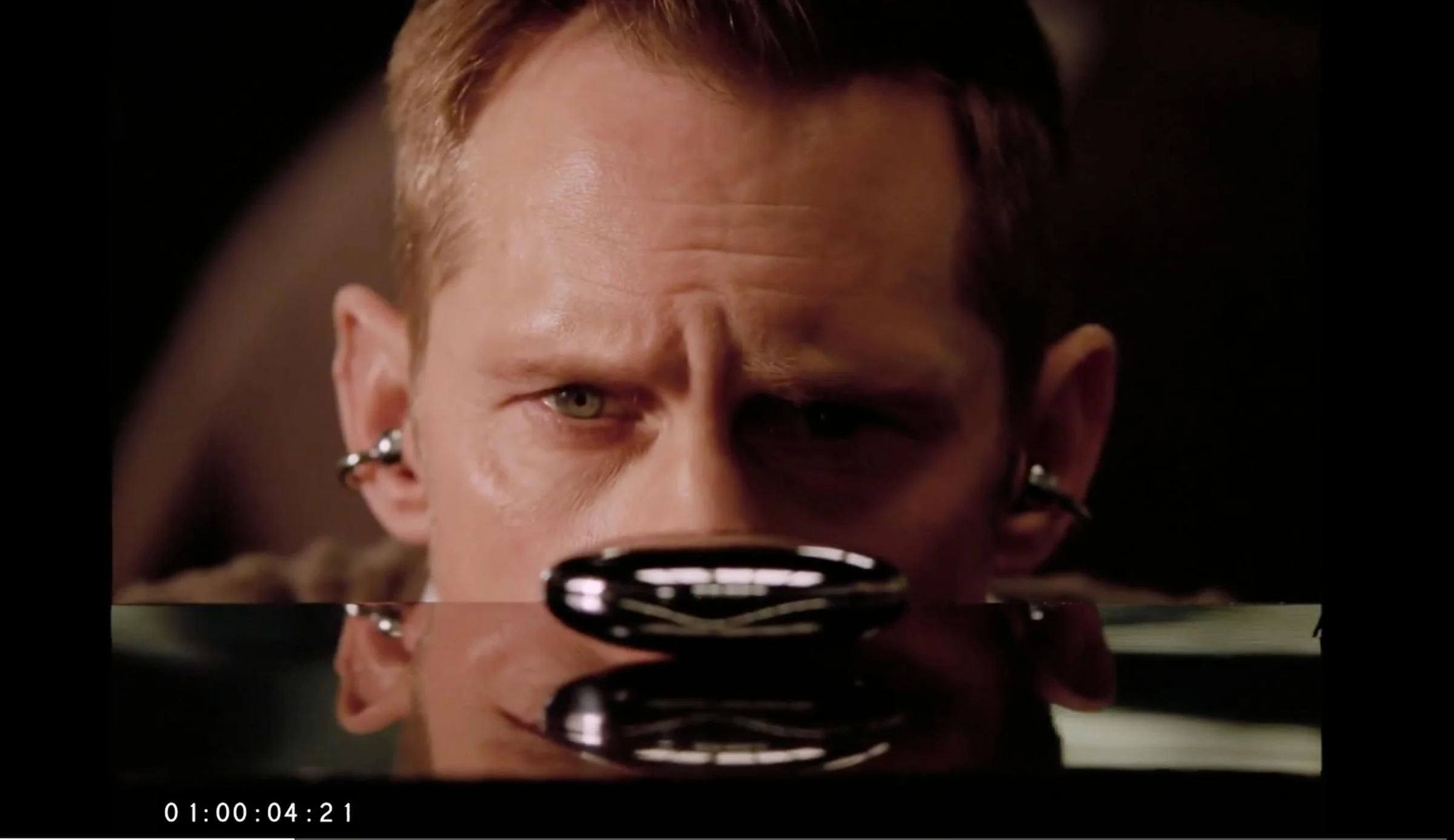
Peter Gabriel Drops Third 'o/i' Single, 'What Lies Ahead', Echoing AI Trepidations
Peter Gabriel releases "What Lies Ahead," the third single from his upcoming album 'o/i', continuing his full moon release strategy. The track, a decade in the making, touches on themes of invention and skepticism toward AI, aligning with new industry discussions on synthetic content.

In a significant development for long-time fans and the broader music industry, legendary artist Peter Gabriel has unveiled "What Lies Ahead," the third single from his highly anticipated album, 'o/i'. This release marks another carefully orchestrated step in Gabriel's unique strategy of presenting new music coinciding with lunar cycles, a method that not only builds anticipation but also deepens the conceptual layers of his work. Arriving during the full moon, "What Lies Ahead" follows previous singles "Been Undone" and "Put Down the Bucket," each accompanied by distinct "Dark-Side" and "Bright-Side" mixes to be revealed with the new moon. This methodical approach ensures a prolonged engagement with the album's themes, which, as Gabriel himself reveals, delve into the creative process, invention, and a profound trepidation about the rapid expansion of artificial intelligence, a topic increasingly relevant to the evolving music landscape.
A Decade in Development: The Genesis of "What Lies Ahead"
The journey of "What Lies Ahead" is as intricate and thoughtful as Gabriel's career itself, stretching back over a decade. According to a message shared with fans and detailed by AOL.com, the song made its initial live appearance during Gabriel's "Back to Front" tour in 2014. At that time, it was presented as a wordless work-in-progress, much like another song from the album, "Playing for Time." Gabriel traces the song's origin to a melody his son, Isaac, was experimenting with, which he found inspiring enough to build upon. This familial spark evolved into a profound reflection on inventors and the arduous creative process. Gabriel recounts how his father, an electrical engineer and inventor, faced numerous frustrations, not only in realizing an idea through countless iterations but also in the crucial, often difficult, task of "selling it" – both scientifically to investors and practically to the wider public. This personal connection to invention and the struggles inherent in bringing new ideas to fruition forms the core thematic foundation of "What Lies Ahead," offering a deeply personal lens through which Gabriel explores innovation.
Conceptual Depth: Art, AI, and the Human Creative Process
Gabriel's new single is not merely a musical offering but a multi-faceted artistic statement, weaving together sonic artistry, visual art, and philosophical inquiry. Each track from 'o/i' is paired with a unique piece of cover art, and for "What Lies Ahead," he selected American feminist artist Judy Chicago’s 1982 work, “Birth Tear / Tear.” Gabriel notes the profound connection between Chicago's art and the song's themes: “‘Birth Tear / Tear’ shows the pain of birth and, clearly, no man will ever have an understanding of what that really is, but giving birth to an idea has many (less painful) parallels,” he wrote, as reported by AOL.com. This juxtaposition of physical birth with the metaphorical birth of an idea underscores the intrinsic human element in creation. Furthermore, Gabriel explicitly links Chicago’s work to his growing apprehension about the rapid advancements in artificial intelligence. He cites Chicago’s quote, “truth can be found in the ignored, the forgotten, and the left out,” drawing parallels to a Gaetano Pesce quote that suggests "beauty in the future will lie in the imperfection," especially "in this robotic AI world in which we are now entering." This thoughtful integration of diverse artistic expressions and philosophical viewpoints positions Gabriel's current work at the nexus of contemporary cultural debate, highlighting his concern that society might be "backing away from open-minded thinking" as AI proliferates.
Analysis: Gabriel's Timely Critique Amidst Industry Shifts
Peter Gabriel's explicit trepidation regarding artificial intelligence, articulated through the release of "What Lies Ahead," arrives at a particularly poignant moment for the global music industry. His concerns about the dehumanizing potential of AI and the closing off of "open-minded thinking" within creative arts and academia resonate deeply with ongoing discussions and anxieties pervading the entertainment sector. As detailed by Engadget, major platforms like Apple Music are just beginning to grapple with the implications of AI-generated content. Apple's introduction of "Transparency Tags" to identify AI-infused elements in music, artwork, and videos, while a "concrete first step," places the onus largely on labels and distributors to opt-in and manually flag such content. This voluntary system, mirroring Spotify's approach, lacks robust enforcement mechanisms, leading to valid concerns about its effectiveness. Gabriel's artistic statement stands as a powerful counterpoint to this nascent, and perhaps insufficient, industry response, implicitly arguing for a more proactive and ethically robust approach to managing AI in creative fields. His call to value imperfection and "what lies ahead" for human creativity serves as an essential artistic commentary on a rapidly changing technological landscape, urging a deeper consideration of what constitutes truly human artistic endeavor.
The Music Industry's Uneasy Dance with AI
The concerns raised by Peter Gabriel are far from isolated. The music industry is in the nascent stages of an unprecedented reckoning with artificial intelligence, grappling with both its potential and its pitfalls. While Gabriel expresses philosophical unease, platforms are confronting a deluge of AI-generated content. Engadget highlights the burgeoning challenge posed by "AI slop," with Deezer reporting a staggering 60,000 fully AI-generated tracks uploaded daily as of January 2026, a doubling of figures from just a few months prior in September 2025. This influx has contributed to 13.4 million synthetic tracks on its platform alone. The contrast between platforms is stark: while Apple Music and Spotify rely on an opt-in tagging system for labels and distributors to disclose AI use, others like Deezer and Bandcamp are developing in-house AI-detection tools to flag content regardless of disclosure. This disparity underscores the fragmented and reactive nature of the industry's response, creating a scenario where artists like Gabriel, who champion human creativity and intentionality, may find their work coexisting with vast quantities of algorithmically generated material, some of which may be intentionally obscured. The "Transparency Tags" are a start, but the lack of mandatory enforcement or independent verification leaves a significant loophole, allowing for the widespread dissemination of AI content without clear consumer knowledge or ethical accountability. Gabriel's decision to specifically highlight this issue alongside his art, rather than merely releasing music, signals a broader commentary on the need for genuine, human-driven artistic expression in an increasingly automated world.
Looking Ahead: The Future of 'o/i' and the AI Debate
As Peter Gabriel continues his distinctive lunar release schedule, unveiling the remaining tracks from 'o/i' and their "Dark-Side" and "Bright-Side" mixes by the end of the year, his album is poised to be more than just a collection of songs. It is shaping up to be a profound artistic statement reflecting on human ingenuity, the creative struggle, and the future of art in an age dominated by artificial intelligence. The deliberate pacing of these releases, each accompanied by evocative artwork and Gabriel’s personal reflections, invites listeners into a deeper engagement with the themes of the album. Beyond the musical impact, 'o/i' could serve as a significant cultural touchstone, echoing concerns that are only just beginning to be addressed systematically by the music industry and technology giants. The ongoing debate around AI content identification, the development of robust detection tools, and the ethical responsibilities of creators and platforms will undoubtedly gain further momentum. Gabriel's commitment to exploring these complex issues through his art provides a valuable, high-profile voice in a discourse that affects not only artists and consumers today but also the very definition of creativity in the future.
Related Articles
Billy Corgan Labels AI Music a "Deal With the Devil" as Debate Rages On
Smashing Pumpkins frontman Billy Corgan vehemently rejects AI in music creation, calling it a "deal with the devil," sparking intense debate within the industry.