Summit League Semifinals Heat Up as College Sports Future Debated Amidst Trump Roundtable
As Summit League basketball semi-finals take center stage, President Trump's "Saving College Sports Roundtable" highlights NIL and governance challenges.

March 7, 2026, marks a pivotal Saturday in college athletics, characterized by high-stakes basketball playoffs in the Summit League and a significant gathering in Washington D.C. aimed at reshaping the very foundation of collegiate sports. While the University of South Dakota (USD) women's basketball team triumphs into the Summit League semifinals to face perennial rival South Dakota State, and the Coyote men's season concludes, a national dialogue is unfolding that could drastically alter the landscape for these very athletes. President Donald Trump convened a "Saving College Sports Roundtable" on Friday, bringing together an unprecedented assembly of power players to tackle the most pressing issues facing collegiate athletics, particularly the complexities introduced by Name, Image, and Likeness (NIL) legislation. This juxtaposition of on-court drama and off-court policy-making underscores a critical moment for collegiate sports, caught between traditional competition and an evolving professionalized model.
Summit League Showdowns Define Saturday Athletics
For fans across South Dakota and beyond, Saturday, March 7, 2026, is dominated by the intensity of the Summit League Basketball Tournament semifinals. The University of South Dakota women’s team, fresh off a decisive 61-50 victory against Denver on Friday, is poised for a high-stakes rematch against South Dakota State. This crucial game, scheduled for 2:30 PM CST, promises to be a thrilling continuation of their rivalry, with the winner advancing to the championship. Angelina Robles' impressive 21-point performance and Patience Williams' double-double of 16 points and eight rebounds were instrumental in the Coyotes' strong defensive showing against Denver, holding them to just 29 points through three quarters. Meanwhile, the USD men's basketball season concluded with a 76-62 loss to No. 5 seed Omaha in their quarterfinal matchup, despite Vince Buzelis leading with 16 points and 12 rebounds, ending their year with a 16-16 record. The men's semifinals will see No. 1 North Dakota State take on No. 5 Omaha at 7 p.m., followed by No. 2 St. Thomas facing No. 3 North Dakota at 9:30 p.m., both broadcast on CBS Sports Network. The women’s game between No. 2 South Dakota State and No. 3 South Dakota will be broadcast on KORN News Radio, highlighting the local significance of these matchups, as reported by KORN News Radio.
The National Conversation: Saving College Sports Roundtable
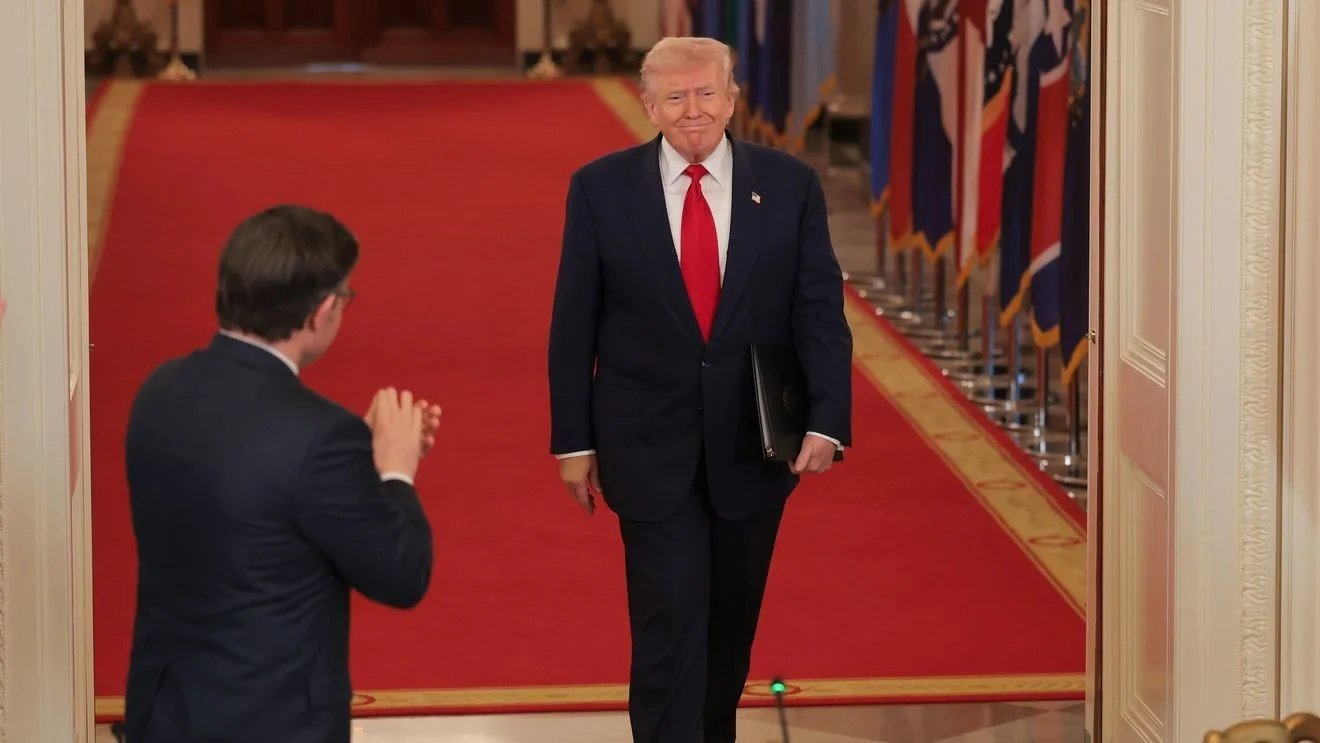
While the hardcourts of the Summit League buzz with athletic fervor, a much broader and perhaps more impactful discussion unfolded on Friday, March 6, with President Donald Trump hosting a "Saving College Sports Roundtable." This assembly was not merely a ceremonial gathering; it featured an extraordinary convergence of influence, including the commissioners of the Power Four conferences, NCAA President Charlie Baker, numerous current and former college athletic directors, and titans from professional sports like NBA Commissioner Adam Silver and legendary coach Nick Saban. The stated purpose of this high-profile event was to deliberate on solutions for the myriad challenges facing college athletics, particularly in the wake of the transformative Name, Image, and Likeness (NIL) era. Chaired by Trump himself, with Florida Governor Ron DeSantis and New York Yankees president Randy Levine serving as vice chairs, the roundtable aimed to address the "professionalization" of student-athletes and its legislative implications. Notable invitees such as Tiger Woods, Bryson DeChambeau, Tim Tebow, Tony Dungy, and Mack Brown were unable to attend, underscoring the exclusivity and gravity of the event, as detailed by USA Today. This event signals a concerted effort at the highest levels of government and sport to define the future regulatory framework for collegiate athletics amidst its rapid evolution.
Analysis: The Crossroads of Amateurism and Professionalism
The convergence of intense intercollegiate competition, like the Summit League semifinals, with a presidential roundtable addressing the future of college sports, speaks to a critical juncture in American athletics. For decades, the NCAA propagated a narrative of amateurism, even as college sports evolved into a billion-dollar industry. The introduction of NIL policies, while providing long-overdue financial opportunities for student-athletes, has shattered the fragile illusion of amateurism, pushing colleges to openly contend with a semi-professionalized model. This shift has unleashed a cascade of complex issues: recruiting inducements, competitive balance, transfer portal chaos, and the ethical management of athlete compensation. The very act of a former U.S. President convening such a high-powered discussion underscores the national significance and systemic challenges of these developments. It suggests that self-regulation by the NCAA, perceived by many as insufficient or too slow-moving, has necessitated federal intervention or, at the very least, a concerted national dialogue involving legislative and executive branches. The presence of figures like Nick Saban and Adam Silver further legitimizes the commercial concerns and the impact of these changes on athletes, many of whom will pursue professional careers. This roundtable isn't just about policy; it's about defining the philosophical core of college sports for the next generation, determining whether it remains an educational endeavor with athletic components or fundamentally transforms into a minor league system.
Additional Sports Highlights and Collegiate Developments
Beyond the Summit League and the political discourse, the broader sports landscape is active. The Mitchell Marlins girls hockey team concluded its season with a 7-16 record after a 3-1 loss to Rushmore in the consolation semifinals of the state tournament. Moving to high school basketball, the Class AA Girls Basketball SoDAK 16 saw several dominant performances, including No. 1 Brandon Valley defeating Sturgis 52-24, and No. 2 O’Gorman triumphing over Pierre 77-44. These victories set the stage for the Class AA Girls Basketball State Tournament on March 12-14 at Summit Arena in Rapid City, promising fierce competition. Similarly, the Class A Boys SoDAK 16 matchups are slated for Tuesday, March 10, with undefeated No. 1 West Central facing No. 16 Webster Area, and No. 2 Sioux Falls Christian battling No. 15 Wagner. These games are qualifiers for the State Tournament on March 19-21 in Rapid City. On the diamond, South Dakota State baseball secured a 5-4 win against Northwestern, showcasing a late-game rally, and will face Minnesota on Saturday. Dakota Wesleyan's softball team split their games in Arizona, defeating William Penn after a loss to Indiana Wesleyan, and are scheduled for more action against Arizona Christian and Indiana Tech. Meanwhile, Dakota Wesleyan baseball fell to Southwest Minnesota State, with a rematch scheduled for Saturday. These statewide results, as reported by KORN News Radio, underscore the vibrant and diverse athletic activity taking place concurrently with the high-level policy discussions about the future of all college sports.
Beyond the Headlines: A Game of Connections
In a fascinating parallel to the interconnectedness of policy and performance in college sports, enthusiasts are also testing their mental agility with "Connections: Sports Edition." The Athletic’s daily puzzle, designed to uncover hidden links between 16 sports-related words, provides a different kind of challenge for sports fans. Today’s puzzle, No. 530, carries a difficulty rating of 2.5 out of 5. For those seeking a mental workout, the categories for March 7, 2026, required players to identify groups such as "Arizona teams" (CARDINALS, MERCURY, SUN DEVILS, SUNS), "Baseball stats, abbreviated" (ERA, IP, OPS, WAR), "Mid-major college conferences" (HORIZON, OHIO VALLEY, SUMMIT, SUN BELT), and "NFL WR nicknames" (HOLLYWOOD, JSN, NUK, SUN GOD). This highly engaging puzzle, created by Mark Cooper, managing editor for college sports at The Athletic, offers a unique way for fans to engage with sports terminology and trivia. It highlights how sports, in all its forms, from intense competition and high-level strategy meetings to daily intellectual exercises, continues to capture our collective attention and stimulate our minds, as detailed in The New York Times.
Looking Ahead: The Unfolding Narrative of College Athletics
The events of March 7, 2026, serve as a microcosm of the dynamic state of college athletics. The immediate future will see the culmination of hotly contested basketball tournaments, with teams like USD and SDSU battling for conference supremacy and a shot at the NCAA tournament. These athletes, performing at the peak of their abilities, are simultaneously at the heart of a national debate on their rights, compensation, and general welfare. The outcomes of the "Saving College Sports Roundtable" are particularly critical, as any legislative recommendations or policy shifts stemming from this high-level discussion could redefine recruiting, athlete eligibility, revenue distribution, and the very structure of collegiate sports governance. Stakeholders, from university presidents and athletic directors to coaches, student-athletes, and fans, will be closely watching for proposals that aim to stabilize an increasingly turbulent landscape. The discussion around NIL is far from over, and how it is ultimately regulated will determine the long-term viability and integrity of college sports as we know it. The interplay between on-court drama and off-court policy will continue to shape the narrative of college athletics, pushing it towards an uncertain, yet undoubtedly transformative, future.
Related Articles
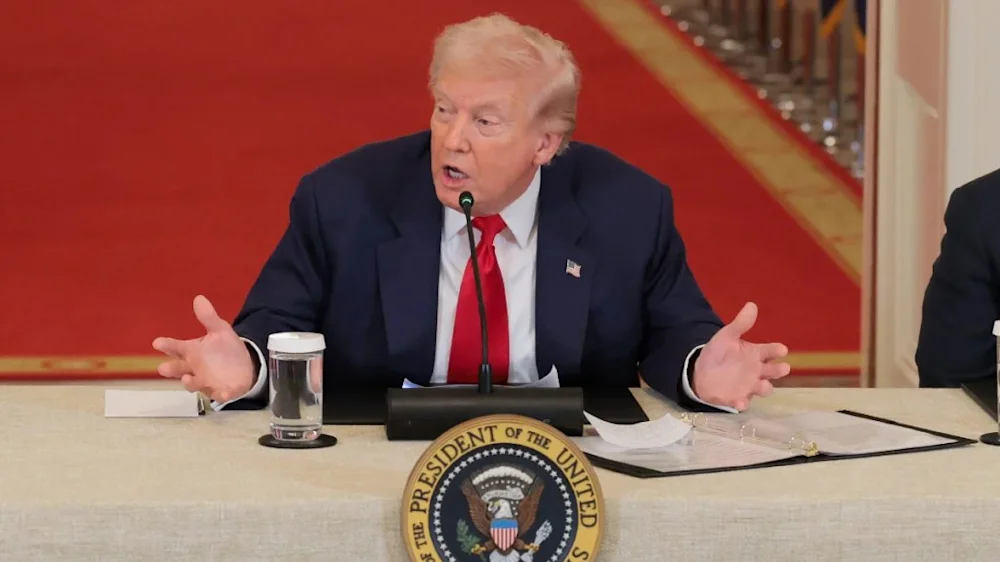
Trump Threatens "Whole Educational System" Could Collapse, Vows Executive Order on College Sports
President Trump warns the U.S. collegiate system is at risk without urgent fixes to college sports, promising an executive order to address NIL reforms and spiraling costs.