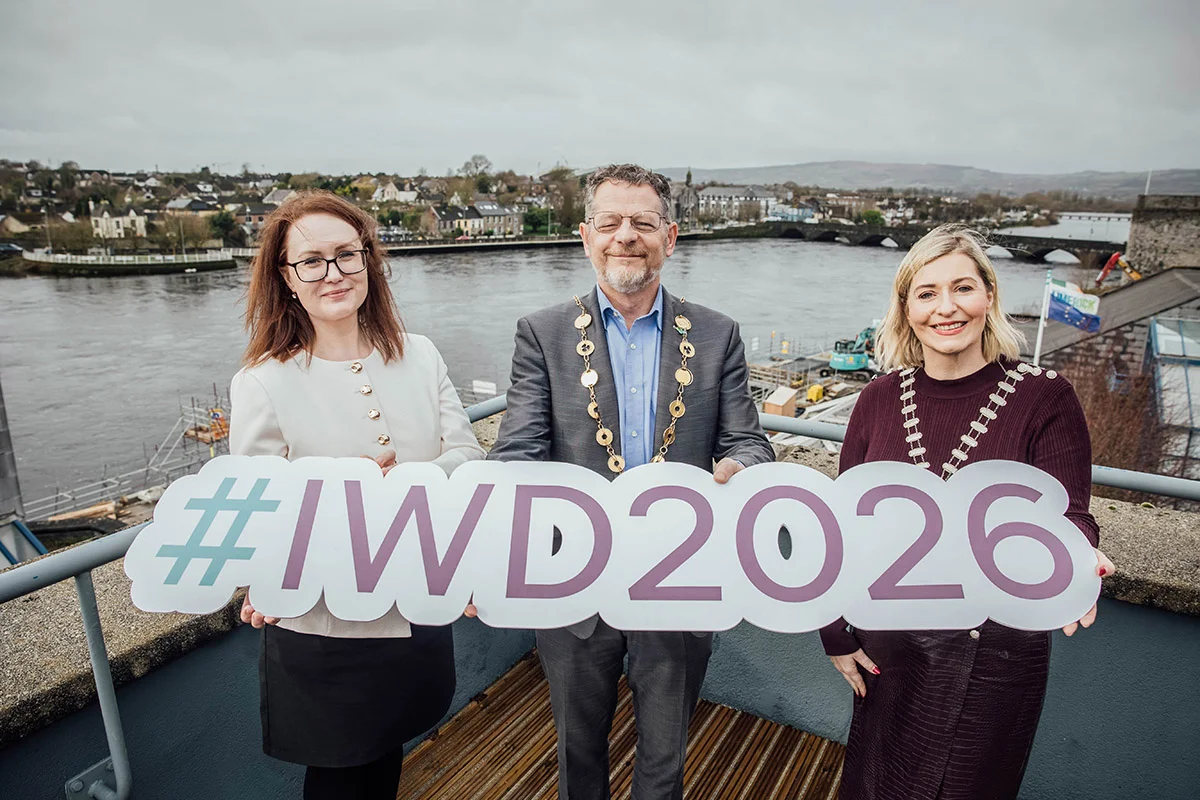
Artificial intelligence is fundamentally altering the landscape of tech entrepreneurship, dramatically reducing the time and technical expertise traditionally required to launch scalable digital products. This transformative shift is not only democratising access to tech innovation but is also notably empowering a new generation of women founders. In response to this paradigm shift and strong demand, applications have officially reopened for the second cohort of WeBuild, a pioneering all-island programme delivered by TechFoundHer. This initiative aims to equip women across the island of Ireland to lead and build technology-driven solutions, with its inaugural intake in January already showcasing rapid product development and a focus on international markets, as reported by News By Wire.
The Democratisation of Tech: AI's Impact on Startup Creation
The traditional barriers to entry in the tech startup world have long been high, demanding significant coding expertise, substantial investment, and extended development cycles. However, the advent of sophisticated AI and no-code tools is dismantling these hurdles at an unprecedented pace. Building a scalable digital product is now faster, cheaper, and less reliant on deep technical coding knowledge. This technological evolution is fostering a more inclusive environment, directly enabling more women to step into leadership roles within the tech sector and to launch their own ventures. The WeBuild programme, initially founded in Dublin and launched in Belfast in 2024, directly addresses this evolving landscape, offering training, community, and crucial cross-border networks specifically tailored for women developing technology businesses. Its first cohort attracted over 90 applications, underscoring the keen appetite among women entrepreneurs to leverage these new capabilities, according to News By Wire.
WeBuild's Strategic Approach to Fostering Women-Led Innovation
The WeBuild programme, a four-month intensive initiative, is designed for ambitious women founders who are past the initial "idea stage" and are actively prototyping, testing, or building technology-centric products with global potential. It operates through a blended learning approach, combining a 16-week core online schedule with in-person labs across the island and a concentrated two-day Residential Build Lab. A key focus of the programme is on expeditious product development, seamless AI integration, achieving customer traction, and securing funding. Participants are trained to harness generative AI (GenAI) and no-code tools to dramatically accelerate product validation and iteration. An integral Investor Readiness Clinic also provides bespoke support, helping founders refine their pitch, strategise their funding approach, and connect with a network of investors across Ireland. The diverse ventures supported span various sectors, from digital health and medtech to education technology, creative tech, AI-driven B2B platforms, and social impact technologies, demonstrating the broad applicability of the programme's innovative approach. This structure is a testament to the belief that enabling ecosystems, rather than just raw talent, are critical for success, a point reinforced by programme creator Máirín Murray. News By Wire highlights the transformative experiences of participants like Deirdre McCarthy of FLIT.ie, who praised the programme as a "place of safety" with "really good humans with strong tech brains," and Gemma Kingston of The Family Edit, who stated the programme's access to experts was "unmatched" and propelled her business development far beyond expectations in a short timeframe.
The Broader Implications: AI's Role in a Changing Global Tech Landscape
The initiatives seen with WeBuild are not isolated but reflect a global trend where AI is increasingly becoming a critical component across various sectors, even in highly sensitive areas like national security. For instance, Fujitsu's recent launch of Japan's first Defense Tech Open Innovation Program underscores AI's growing strategic importance. Through a research commission from Japan's Acquisition, Technology & Logistics Agency (ATLA), Fujitsu aims to develop agentic AI that functions as support staff through defense multi-AI agents. This project seeks to accelerate decision-making, enhance information gathering, reduce personnel workload, and achieve labor savings by leveraging AI technologies alongside innovative ideas from non-defense startups. As detailed by TradingView, Fujitsu's approach emphasizes "dual-use" technology – applications for both civilian and military purposes – showcasing how AI's capabilities transcend traditional industry boundaries. The acceleration of AI-driven innovation creates not only new opportunities but also new challenges, particularly concerning intellectual property and talent acquisition. A recent US court ruling involving Palantir Technologies and its former employees highlights the growing friction. A judge blocked former Palantir employees from poaching staff and using confidential data for their AI startup, Percepta AI, citing "irreparable harm" to Palantir. While the judge acknowledged the "non-compete" clauses were too broad, the ruling underscores the critical importance of data and talent in the highly competitive AI startup ecosystem, as reported by The Times of India. These diverse examples – from empowering women founders to national defense and intellectual property disputes – paint a vivid picture of AI's pervasive and often disruptive influence across the global startup and tech landscape.
The Crucial Role of Ecosystems and Mentorship in AI-Driven Entrepreneurship
The success of programmes like WeBuild hinges significantly on building robust support ecosystems and providing access to expert mentorship. The programme’s structure, which includes peer networks and experienced technical mentors, has proven instrumental in accelerating product development for participants. Founders like Gemma Kingston explicitly stated that the "access to experts is unmatched" and was vital for her business's rapid advancement. This highlights a critical, often understated aspect of entrepreneurial success: while AI and no-code tools lower technical barriers, navigation through the complex startup journey still requires human guidance and strategic frameworks. Programme creator Máirín Murray articulated this perfectly, noting that "AI and no-code tools are lowering barriers, but access to the right frameworks and expertise remains uneven." The demand for WeBuild reflects a generation of women founders ready to build serious tech companies, but who often lack early access to technical support that enhances credibility with investors and the wider ecosystem. WeBuild aims to fill this gap, providing tailored support that strengthens credibility and increases the likelihood of success. This blend of cutting-edge technology access with human-centric support systems creates an optimal environment for innovation, ensuring that talent can flourish unhindered by traditional systemic deficiencies. News By Wire shows how this holistic approach is essential for scaling tech ventures in today's rapidly evolving market.
WeBuild's Expansion and Future Outlook for Women in Tech
The reopening of applications for WeBuild's second cohort marks a significant expansion of its reach and impact. The programme is a collaborative effort, led by InterTradeIreland in partnership with Invest Northern Ireland and Enterprise Ireland, as part of the Shared Island Enterprise Scheme, funded by the Government of Ireland through the Shared Island Fund, with TechFoundHer as the delivery partner. This robust collaborative backing underscores the strategic importance placed on fostering women-led tech innovation across the entire island. Prospective applicants, who must be women-led or women-founded businesses based on the island of Ireland, need to be developing innovative products or services with clear commercial potential, at an early or growth stage, and demonstrate market validation or proof of concept. Crucially, they must also show ambition for significant growth, including export and investment potential. An information session on March 11, hosted by Máirín Murray, aims to provide a detailed overview of the programme, including its support, structure, outcomes, and a walkthrough of the application process. This session will explicitly detail how the programme supports founders in leveraging data and GenAI to bootstrap faster, automate smarter, and build scalable tech ventures. Applications for the second cohort close on Monday, March 23, signalling a tight window for ambitious women entrepreneurs to seize this opportunity. The continued success and expansion of WeBuild are pivotal for creating a more equitable and dynamic tech ecosystem across Ireland, actively challenging historical underrepresentation and empowering a new wave of female tech leaders. This forward momentum is key to realizing the full potential of AI-driven innovation on the island, as stated in News By Wire.
Looking Ahead: The Continued Evolution of AI and Inclusive Entrepreneurship
The rapid integration of AI and no-code tools into startup development, epitomized by programmes like WeBuild, signals a fundamental and enduring shift in the entrepreneurial landscape. The coming years will likely see even greater accessibility to advanced technological capabilities, further blurring the lines between technical and non-technical founders. This democratisation, however, will also intensify competition and raise new questions about intellectual property, data security, and ethical AI development, as evidenced by the high-stakes legal battles involving companies like Palantir. For Ireland, the success of WeBuild could serve as a blueprint for other regions seeking to cultivate inclusive tech ecosystems. The continued focus on cross-border collaboration, government-backed funding, and dedicated mentorship for underrepresented groups will be vital. The challenge moving forward will be to ensure that as technology rapidly advances, the supporting frameworks and educational opportunities keep pace, ensuring that the benefits of AI-driven innovation are broadly distributed and that talent, regardless of background, has the opportunity to thrive. The next generation of tech leaders will undoubtedly be defined by their ability to harness AI effectively, not just as a tool, but as a catalyst for creative problem-solving and inclusive growth.