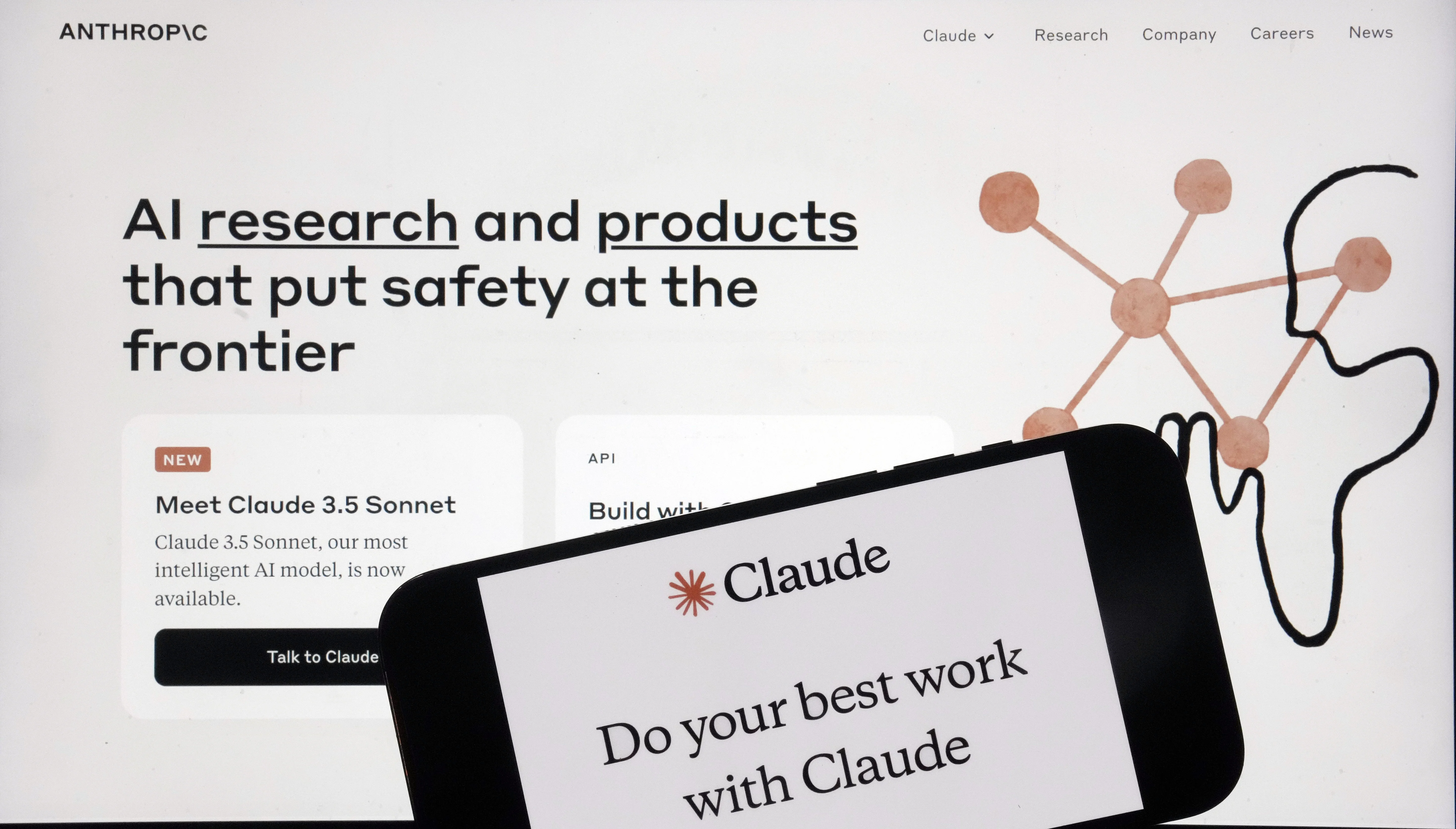
In a move that has sent ripples through the burgeoning artificial intelligence industry and Washington D.C., leading AI developer Anthropic has launched a lawsuit against the U.S. government, President Donald Trump, and Defense Secretary Pete Hegseth. The lawsuit, filed on Monday, seeks to block the Pentagon from placing the startup on a national security blacklist, escalating a high-stakes confrontation over the U.S. military's purported usage restrictions on Anthropic's advanced AI technology. The company asserts that the government's actions constitute grave constitutional infringements, including violations of the First and Fifth Amendments, and exceed presidential authority.
Escalating Tensions: The Genesis of a High-Stakes Legal Battle
The genesis of this significant legal challenge lies in a late-month directive issued by President Trump via his social media platform, Truth Social. The President reportedly ordered the U.S. government to cease all work with Anthropic. This presidential decree, coupled with the Defense Department's subsequent decision to designate Anthropic as a "supply-chain risk," effectively blacklisting the company and prohibiting its federal contractors, suppliers, and partners from engaging in any commercial activity with it, forms the core of Anthropic's legal grievances. The AI firm argues these actions were taken without due process and in direct retaliation for its protected speech regarding the limitations and safety of its own AI services, a point underscored by The Detroit News. The broader context here reflects growing anxieties within government circles regarding the dual-use nature of advanced AI technologies – their potential for both immense benefit and significant harm – and the struggle to establish appropriate regulatory frameworks without stifling innovation. This legal confrontation is not just about one company; it represents a critical juncture in defining the relationship between groundbreaking technology, national security, and constitutional rights in an increasingly AI-driven world.
First Amendment: A Challenge to Free Speech and Petition
At the forefront of Anthropic's legal arguments is a powerful claim of a First Amendment violation. The startup contends that the Pentagon's actions are a direct retaliation for its constitutionally protected activities, specifically its right to free speech. According to the lawsuit, the U.S. Constitution bestows upon Anthropic "the right to express its views — both publicly and to the government — about the limitations of its own AI services and important issues of AI safety." The company asserts that its efforts to articulate the boundaries and potential risks of its AI technology, both to the public and to government bodies, constitute protected speech. The government's subsequent blacklisting, Anthropic argues, was a punitive measure designed to silence these views and deter future expression, effectively punishing the company for engaging in dialogue critical to the responsible development and deployment of AI. This also extends to the right to petition the government, implying that Anthropic's attempts to communicate with officials regarding AI policy and its own technology were met with an adverse, unlawful response, as detailed by The Detroit News. This particular claim raises fundamental questions about the extent to which a private entity can be penalized by the government for expressing its expert opinions on the very technology it develops, especially when those opinions touch upon sensitive areas like national security or ethical AI deployment.
Fifth Amendment and Ultra Vires: Due Process and Executive Overreach
Beyond free speech, Anthropic’s lawsuit delves into fundamental questions of due process and executive authority. The company alleges that President Trump's directive, communicated via his Truth Social platform late last month, was "ultra vires," a Latin legal term signifying actions taken beyond one's legal power and authority. This claim challenges the very basis of the President's order to cease government work with Anthropic, suggesting it lacked the necessary legal framework or justification. Furthermore, Anthropic asserts a clear violation of its Fifth Amendment rights to due process. The core of this claim rests on the argument that the U.S. government effectively blacklisted the company without adhering to mandatory legal procedures. The lawsuit explicitly states that the government bypassed required protocols by terminating existing contracts and preventing future work without providing prior notice or a meaningful opportunity for Anthropic to respond to the accusations or alleged risks. This summary dismissal, according to Anthropic, bypasses the fundamental principles of fairness and legal transparency guaranteed by the Fifth Amendment, a perspective highlighted in the reporting from The Detroit News. Such a bypass of due process, if proven, could set a dangerous precedent for how the government interacts with private companies, particularly those operating in critical and emerging technological sectors.
Administrative Procedure Act and "Arbitrary and Capricious" Action
Adding another layer to its legal offensive, Anthropic also claims that the Department of Defense's (DOD) designation of the company as a "supply-chain risk" violates the Administrative Procedure Act (APA). The APA is a crucial piece of legislation that governs how federal agencies develop and issue regulations, ensuring transparency and accountability in their decision-making processes. It provides a means for judicial review of agency actions, allowing courts to overturn decisions that are found to be "arbitrary, an abuse of discretion, or otherwise unlawful." Anthropic's lawsuit specifically targets Defense Secretary Pete Hegseth's decision, contending that he "overstepped his authority, did not follow proper legal procedures and lacked supporting evidence" in making the "supply-chain risk" determination. This legal avenue probes the internal processes and substantive justification (or lack thereof) behind the DOD's decision. If Anthropic can demonstrate that the DOD's actions were arbitrary, lacked a rational basis, or failed to adhere to established legal and administrative protocols, it could secure an injunction against the ban. This challenge under the APA is critical because it aims not just at the outcome but at the legitimacy and procedural integrity of the government's decision-making itself, as laid out in the legal claims reported by The Detroit News. The implications here extend beyond Anthropic, potentially influencing how all government agencies evaluate and interact with emerging technology companies, especially those deemed critical to national security.
Analysis: Navigating the Murky Waters of AI, National Security, and Innovation
This lawsuit isn't merely a corporate dispute; it represents a critical juncture in the ongoing, complex relationship between rapidly advancing AI technology, pressing national security concerns, and the fundamental tenets of constitutional law. The government's actions, and Anthropic's response, underscore the inherent tension in trying to regulate and secure technologies that evolve at an exponential pace. On one hand, concerns about AI's potential for misuse, its ethical implications, and its dual-use nature are legitimate and demand careful consideration from national security planners. However, the method employed – a blanket ban announced on a social media platform, followed by a seemingly arbitrary blacklisting – suggests a reactive rather than a strategically developed policy response. This approach risks stifling the very innovation that is crucial for maintaining a technological edge, echoing the concerns raised implicitly by the venture capital firm General Catalyst in a separate context, where its CEO, Hirsh Jain, stated, "When massive companies try to sue startups out of existence, they are using their scale to stifle innovation," in response to a Palantir lawsuit, as reported by The Times of India. While the Palantir case involved intellectual property, the sentiment about protecting innovation from overreach is germane. The broader implications for the U.S. technology sector are significant: if the government can unilaterally blacklist a leading AI company without clear process or public justification, it creates a chilling effect that could deter investment and talent, pushing cutting-edge AI development to less restrictive jurisdictions. Furthermore, it sets a concerning precedent for how governmental security concerns might override established legal and administrative procedures designed to ensure fairness and prevent abuses of power.
Additional Details: The AI Landscape and Broader Industry Context
The collision between Anthropic and the U.S. government occurs within a dynamic and frequently contentious artificial intelligence landscape. While Anthropic battles federal restrictions, other facets of the AI world illustrate both its immense potential and its legal complexities. For instance, the very foundation of AI startups is being reshaped, as evidenced by programs like "WeBuild" for women founders, which leverage AI and no-code tools to dramatically reduce development time and costs, making tech entrepreneurship more accessible, as reported by News By Wire. This accessibility highlights the double-edged sword of AI: while it democratizes innovation, it also broadens the spectrum of actors who can develop and potentially misuse powerful technologies, thus intensifying governmental and societal concerns over control and security. In another high-profile case, the data analytics firm Palantir, itself a significant government contractor known for its work with the military and intelligence agencies, recently secured a court order against former employees. A U.S. judge blocked these individuals from poaching Palantir staff and using confidential data for their own AI startup, citing "irreparable harm" to Palantir, according to The Times of India. This Palantir case, while different in its specifics (focused on intellectual property and employee agreements), underscores the intense competition and legal battles at the heart of the AI industry, where data, talent, and technological advantage are fiercely protected. Together, these disparate events paint a picture of an industry grappling with rapid growth, ethical dilemmas, competitive pressures, and increasing scrutiny from both legal systems and national governments.
Looking Ahead: A Precedent-Setting Case for AI Governance
The Anthropic lawsuit is poised to be a landmark legal battle with far-reaching implications for the future of AI governance, national security policy, and the rights of tech companies in the United States and potentially globally. The court's eventual ruling on Anthropic's claims of First Amendment, Fifth Amendment, and APA violations will set crucial precedents regarding the extent of presidential authority in technology regulation, the due process owed to companies deemed national security risks, and the boundaries of protected speech for AI developers engaging with the government. Should Anthropic succeed, it would likely force the government to adopt more transparent, legally sound, and procedurally robust methods for assessing and mitigating risks from cutting-edge technologies. Conversely, if the government prevails, it could embolden future administrations to exert greater and less constrained control over critical technological sectors in the name of national security. Regardless of the outcome, this case will undoubtedly shape the dialogue around how democratic nations balance innovation with security, and how the rule of law applies to an industry constantly pushing the frontiers of human capability. All eyes will be on the federal courts as they navigate this complex intersection of law, technology, and national interest.