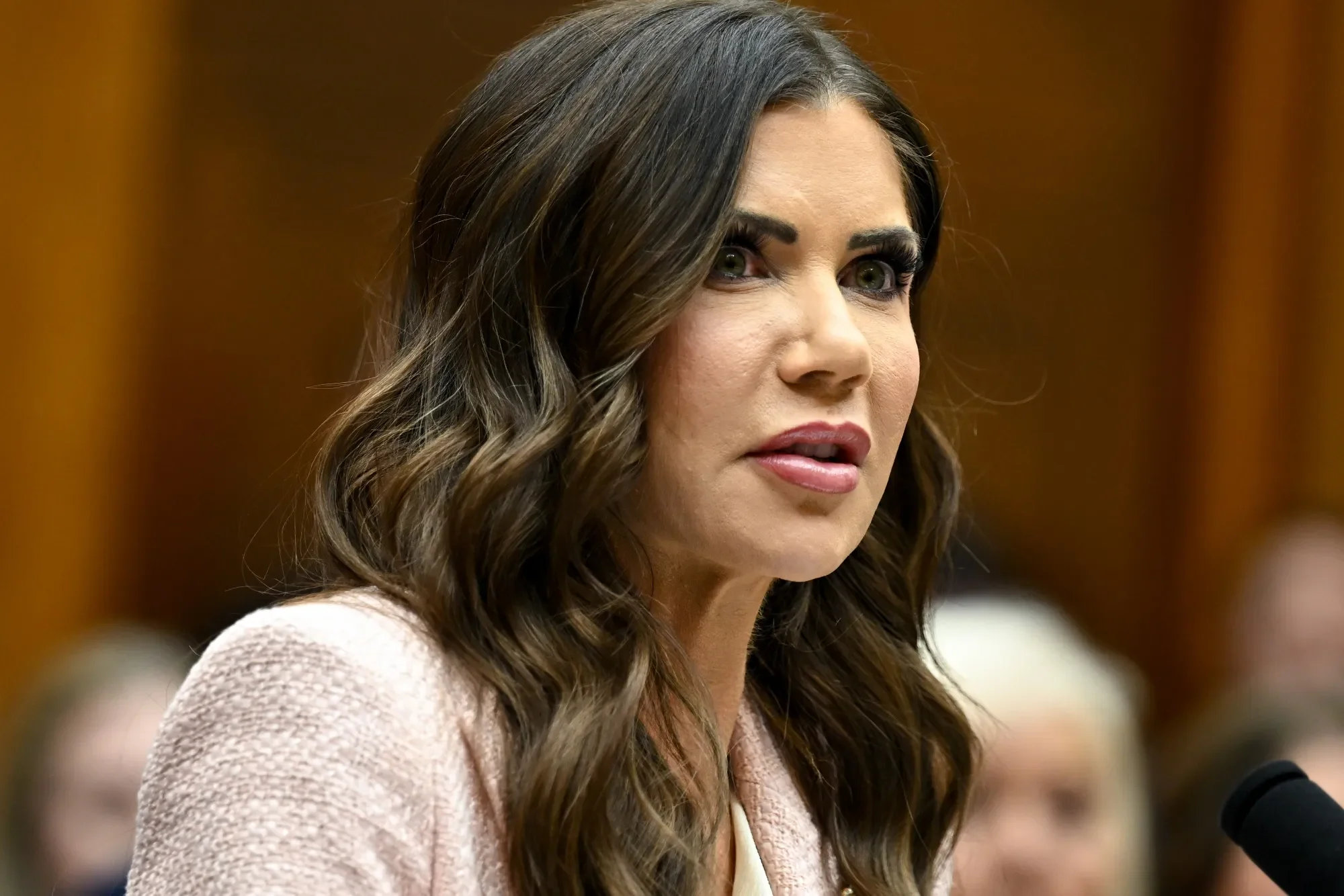
President Trump announced the dismissal of Homeland Security Secretary Kristi Noem, citing "leadership failures" and controversial policies, and named Sen. Markwayne Mullin as her replacement, effective March 31, 2026.
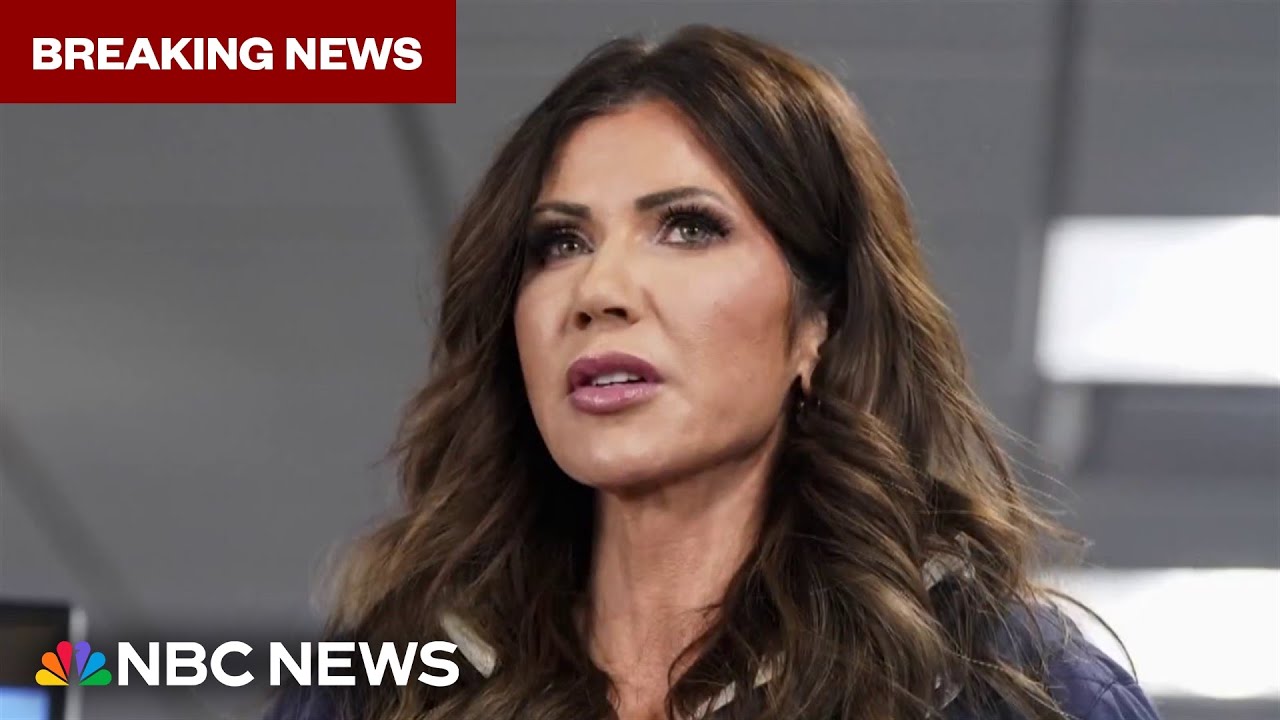
BREAKING: Trump fires Kristi Noem as Homeland Security Secretary
President Donald Trump, in a surprise move announced via Truth Social, has removed Kristi Noem as Secretary of Homeland Security (DHS), effective March 31, 2026, and designated Senator Markwayne Mullin of Oklahoma as her replacement. This significant Cabinet reshuffle, confirmed by multiple sources, marks the first departure of a Cabinet secretary in Trump’s second term and comes amidst growing scrutiny over Noem’s leadership, controversial immigration policies, and internal disputes. Trump lauded Mullin, a former mixed martial arts fighter who served a decade in the House before his Senate election, as "Highly Respected," while assigning Noem to a newly created role, "Envoy for The Shield of the Americas," tasked with leading a "new Security Initiative in the Western Hemisphere."
Kristi Noem’s tenure as Secretary of Homeland Security has been a tumultuous one, marked by her prominent role in advancing President Trump’s most stringent immigration agendas, including aggressive deportation efforts and border restrictions. However, an administration official, speaking to NBC News, revealed that the decision to remove her was a "culmination of her many unfortunate leadership failures." These failures reportedly included a controversial ad campaign, allegations of infidelity, extensive staff mismanagement, and persistent conflicts with the heads of other crucial agencies such as Customs and Border Protection (CBP) and Immigration and Customs Enforcement (ICE). The official underscored that "Kristi’s drama sadly overshadowed and distracted from the Administration’s extremely popular immigration agenda, which will continue full force." This statement suggests a calculated move by the administration to stabilize its public image and ensure its core policy objectives remain in focus, free from the distractions created by Noem's controversies. The challenges faced by Noem extended beyond internal friction, impacting public perception and political support, ultimately leading to her ouster from a critical cabinet position. Her prior role as the Governor of South Dakota had positioned her as a rising star within the Republican party, making her dismissal all the more impactful.
The immediate catalysts for Noem's removal appear to stem from a series of high-profile incidents and her recent testimony before Congress. Most critically, Noem's department faced intense bipartisan criticism following the fatal shootings of two U.S. citizens by federal agents during immigration operations in Minneapolis. Her refusal to apologize for labeling the deceased, Renee Good and Alex Pretti, as “domestic terrorists,” despite ongoing investigations, further fueled public and political outrage. This incident, along with her increasingly strained relationship with the U.S. Coast Guard, the only military branch under DHS command, significantly destabilized her position, as reported by NBC News. During congressional hearings earlier this week, lawmakers grilled Noem over a $200 million ad campaign she oversaw, which encouraged undocumented immigrants to voluntarily deport. The campaign, which predominantly featured Noem and was largely in English, drew questions regarding its effectiveness and cost. AdImpact reported that nearly $80 million had been spent on airing these ads since early 2025, excluding production costs. Noem’s assertion to the Senate Judiciary Committee that President Trump had approved the massive ad spending was swiftly denied by a White House official, who unequivocally stated, “POTUS did not sign off on a $220 MILLION dollar ad campaign. Absolutely not.” This direct contradiction from the White House, coupled with calls for her resignation from Republican Senators Thom Tillis and Lisa Murkowski as early as January, highlighted the severe erosion of trust and confidence in Noem’s leadership within the administration and Congress. Senator Tillis remarked that he couldn't "think of any point of pride over the last year" of her tenure, underscoring the deep dissatisfaction with her performance.
The swift replacement of Kristi Noem with Senator Markwayne Mullin speaks volumes about the Trump administration's strategic priorities and its intolerance for internal dissent or perceived operational instability. This reshuffle is not merely a change of personnel but a clear signal of the administration's intent to consolidate power and reaffirm its control over key policy narratives, particularly immigration. By framing Noem's departure around "leadership failures" and "drama," the White House aims to distance itself from controversies while maintaining public support for its overarching immigration agenda. The appointment of Mullin, an individual with a non-traditional political background as a former mixed martial arts fighter but extensive legislative experience, could be interpreted as a move to inject fresh energy and a more disciplined approach into DHS. His initial surprise at the announcement, conveyed to NBC News, suggests that this decision was highly centralized and executed with limited prior consultation, a characteristic often seen in Trump’s executive actions. The creation of the "Envoy for The Shield of the Americas" role for Noem, while seemingly a demotion, also serves a dual purpose: it removes her from a high-profile domestic role while still leveraging her visible profile for a new, international security initiative, potentially allowing the administration to save face and project a unified front on foreign policy. This strategic placement might also be a tactic to channel Noem’s strong personality and policy alignment into an arena less prone to daily domestic scrutiny, thereby preventing her from becoming an outright critic of the administration.
Kristi Noem’s reaction to the announcement provides further insight into the evolving situation. Speaking at the Sergeant Benevolent Association Major Cities Conference in Nashville shortly after Trump’s Truth Social post, Noem conspicuously avoided any mention of her impending departure. Instead, she focused on her commitment to improving inter-agency cooperation, stating, “I appreciate your wisdom and your advice as we continue to develop trainings and insight into how leadership can work together to make good decisions and to break down the silos between agencies so that we can work together in better ways than we have in the past,” as reported by NBC News. This suggests either a delayed public acknowledgment or an attempt to maintain normalcy during a high-stakes transition. Her new role as "Envoy for The Shield of the Americas" signifies a continued, albeit altered, involvement in the administration's broader security objectives, pivoting her focus to regional security initiatives in the Western Hemisphere rather than domestic immigration enforcement. This move could also be interpreted as an attempt to utilize her hawkish stance on border security and her established reputation within a new diplomatic framework. Meanwhile, Senator Mullin, upon learning of his nomination, expressed surprise but indicated he would discuss the role further with President Trump later that day. His background as a disciplined former mixed martial artist and his legislative experience could bring a different management style to DHS, potentially emphasizing operational efficiency and a less confrontational approach than his predecessor. The challenge for Mullin will be to navigate the complex landscape of immigration policy, departmental morale, and external criticism, all while maintaining the administration’s aggressive stance on border security, but with greater political finesse.
The appointment of Markwayne Mullin is poised to usher in a new chapter for the Department of Homeland Security, but it is unlikely to signal a fundamental shift in the administration's aggressive immigration agenda. The White House has explicitly stated that its "extremely popular immigration agenda... will continue full force." Mullin’s principal challenge will be to execute the current administration policies more effectively and with less internal and external "drama" than Noem, whose tenure was plagued by controversies and public feuds. His experience in the House and Senate, while not directly tied to Homeland Security, may provide him with a better understanding of political navigation and consensus-building, which could potentially smooth over some of the agency's strained relationships with Congress and other federal departments. However, the core policies of enhanced border security, restrictions on immigration, and increased deportations are expected to remain intact. The "Envoy for The Shield of the Americas" role for Noem, while a clear departure from her previous authority, could signify a strategic move to project American security interests more broadly across the continent, allowing her to retain a high-profile platform. For the Trump administration, this reshuffle represents an effort to recalibrate and optimize its executive team, demonstrating a readiness to make decisive changes when key cabinet members are perceived as undermining the administration's broader objectives. The coming months will reveal whether Mullin can successfully restore stability and operational effectiveness to DHS while upholding the administration's demanding immigration framework, potentially setting a precedent for other cabinet appointments in the remainder of President Trump's second term.
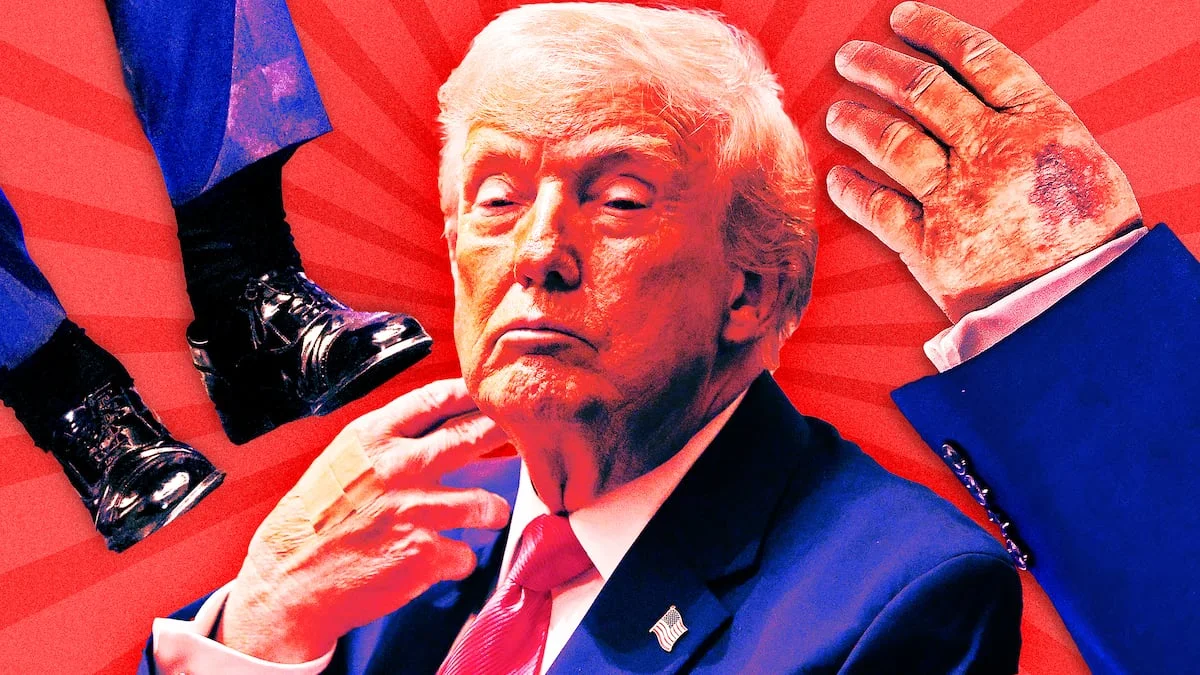
Social media erupted with "Trump is dead" rumors after a White House "press lid," prompting a swift rebuke from officials who blamed "deranged liberals."
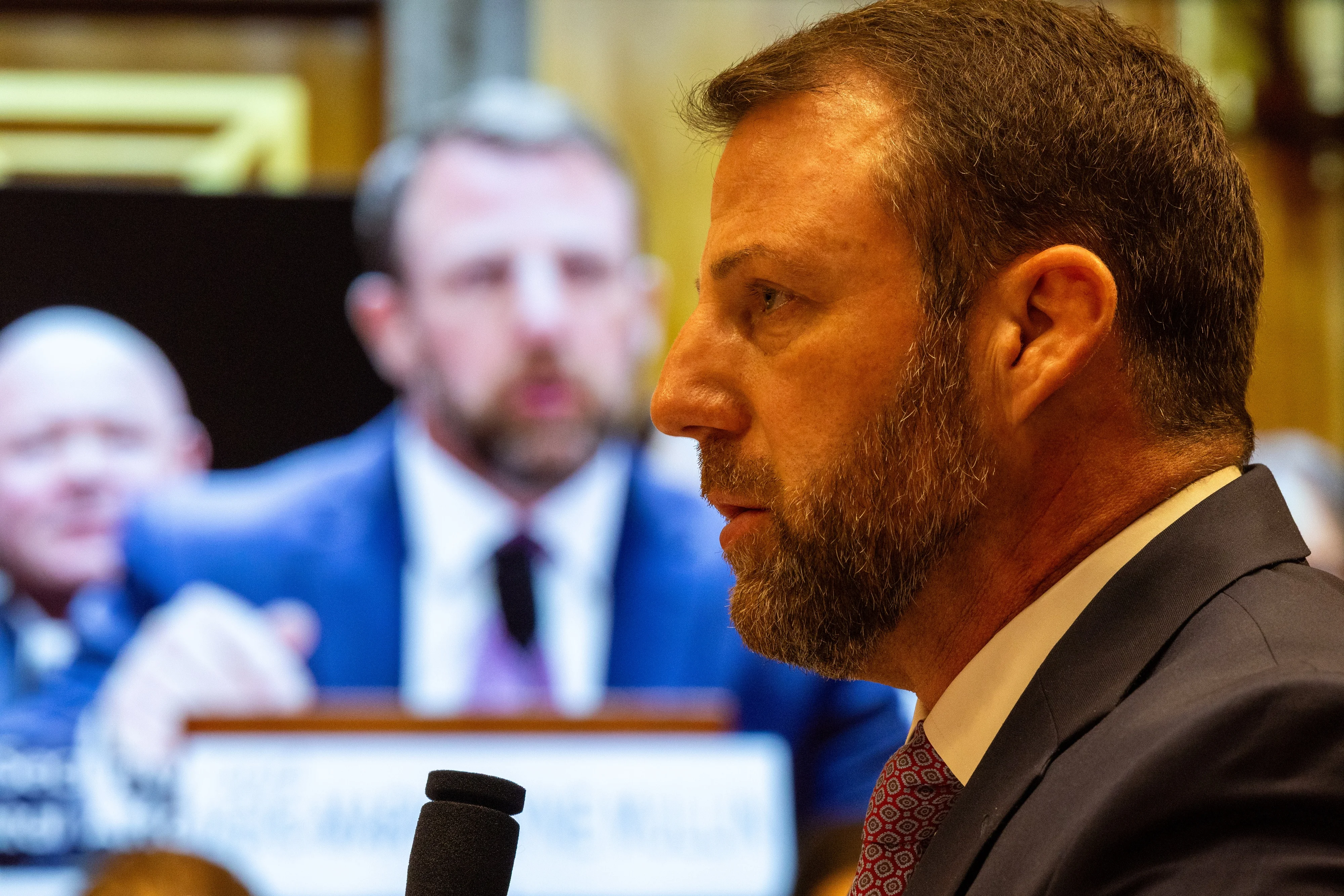
The U.S. Congress faces a looming Homeland Security shutdown and a contentious battle over Trump's DHS pick, Markwayne Mullin, while navigating rising tensions in the Middle East.

A cryptic AI-generated image of President Trump with a penguin, labeled "Embrace the penguin," has gone viral, fueling controversy over Greenland and White House "meme diplomacy."