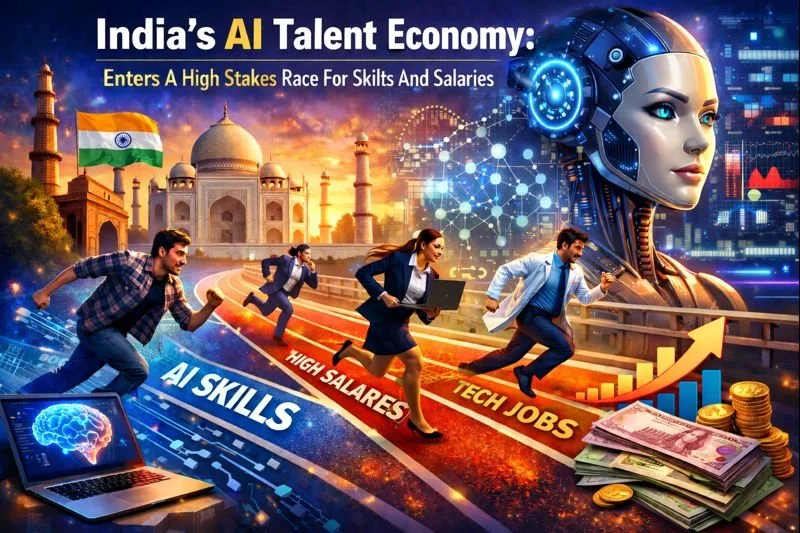
Google VP Warns AI Startup Models Face Extinction Amidst Global AI Surge
Google Cloud VP Darren Mowry forecasts doom for LLM wrapper and AI aggregator startups, coinciding with India's aggressive push into AI development.

In a significant shake-up for the burgeoning artificial intelligence industry, a senior Google executive has issued a stark warning that two prevalent AI startup business models are teetering on the brink of extinction. Darren Mowry, VP at Google Cloud, recently stated on TechCrunch's Equity podcast that companies built on LLM wrappers and AI aggregation are facing mounting viability challenges due to shrinking margins and a fundamental lack of differentiation. This pronouncement comes at a critical juncture, as venture capital has deluged the AI sector, often funding precisely these types of ventures. The warning signals a tough recalibration for a segment of the AI ecosystem, demanding strategic pivots from founders and investors alike, even as nations like India accelerate their drive to become global AI powerhouses, spotlighting uniquely tailored AI innovations.
Background and Context of AI Startup Evolution
The rapid advancements in large language models (LLMs) over the past few years have fueled an unprecedented explosion of AI startups. Initially, the novelty and complexity of foundation models from giants like OpenAI, Google, and Anthropic created fertile ground for companies to build "wrappers" – essentially thin application layers that packaged these powerful models for specific use cases or added a user-friendly interface. These LLM wrapper companies found early success by making advanced AI accessible and specialized, often without the immense investment required to develop their own foundational models. Similarly, AI aggregators emerged, promising a unified interface to access multiple cutting-edge AI models, appealing to users seeking flexibility and choice across different providers. Both models capitalized on the early stage of AI adoption, where the core technology was impressive but often required additional layers for practical application. However, as The Tech Buzz highlights, this initial advantage is rapidly eroding, setting the stage for the current predicaments these startups now face.
Key Developments: Google's Warning and Global AI Landscape Shifts
Darren Mowry's recent comments have sent ripples through the AI startup world. The Google Cloud VP delivered a blunt assessment on TechCrunch's Equity podcast, declaring that LLM wrapper companies and AI aggregators are on a path toward extinction. Mowry's core argument against LLM wrappers is straightforward: as the underlying foundation models become more sophisticated and feature-rich, the value proposition of a thin, overlying application diminishes. What once required a specialized wrapper might now be a standard feature in the next iteration of GPT or Gemini. This constant improvement from the foundational model providers erodes the differentiation and deflates the margins for wrapper-centric startups. For AI aggregators, the challenge is one of commoditization. These platforms initially offered a compelling service by consolidating access to multiple distinct AI models. However, as major cloud providers like Microsoft (via Azure AI) and Amazon (via Bedrock) increasingly offer multi-model access as an integrated service, the aggregators' unique selling point becomes table stakes rather than a competitive edge. This bundling by tech giants effectively commoditizes the aggregators' core offering, squeezing their margins and undermining their business model, as detailed by The Tech Buzz.
The timing of this warning is particularly noteworthy, given the immense venture capital investment directed towards AI startups in recent years. Many of these investments have flowed into the very business models Google now deems unsustainable. Mowry's insight is particularly powerful as it comes from within Google Cloud, a division that both competes with and supports many AI startups through its Vertex AI platform. His perspective is likely informed by real-time observations of rising customer acquisition costs, falling switching costs, and the struggle of these startups to establish defensible moats. This internal view lends significant credibility to his forecast, suggesting that cracks are already appearing within the AI startup landscape, with some high-profile wrapper companies having already pivoted or ceased operations due to their easily replicable products.
Against this backdrop of impending consolidation and increased scrutiny, other regions are forging ahead with distinct AI strategies. India, for instance, is making aggressive strides to establish itself as a global AI leader. The country's commitment was underscored by Prime Minister Narendra Modi's declaration of the current decade as "India's Techade" and his emphasis on technological self-reliance, particularly in critical sectors like semiconductors, as reported by www.malaysiasun.com. This national focus on building foundational capabilities, rather than merely wrapping existing ones, resonates with Mowry's implicit call for proprietary technology. A prime example of this strategy is the Indian AI startup Sarvam. Praised by Google CEO Sundar Pichai himself, Sarvam recently launched its Indus AI chatbot app, tailored specifically for Indian languages and contexts, according to The Times of India. Sarvam's approach, which involves developing proprietary 105B and 30B models, stands in stark contrast to the at-risk wrapper model, demonstrating a direct investment in core AI technology and unique data — precisely the characteristics Mowry suggests will breed survival.
Analysis: What This Means for the AI Ecosystem
Google VP Darren Mowry's stark warning is more than just a pessimistic outlook; it's a critical inflection point for the AI startup funding and development landscape. His comments signal a maturing market where novelty alone is no longer enough to secure long-term viability. The initial gold rush mentality that saw vast sums poured into AI startups, based on superficial differentiation or clever packaging, is giving way to a demand for genuine technological depth and defensible competitive advantages. This means investors are becoming increasingly discerning, shifting their focus from "what can you do with an LLM?" to "what unique technology or data do you own that an LLM can't replicate or overshadow?"
For entrepreneurs, this represents a significant challenge but also an opportunity. The implicit message is clear: survival dictates a pivot towards proprietary datasets, robust vertical integration, and the development of truly innovative, foundational technology. A startup merely building a slightly better UI around a generic large language model will struggle to compete with the feature creep of the core model providers and the integrated offerings of tech giants. On the other hand, a company like India's Sarvam AI, which is building its own large language models specifically for Indian languages and contexts, exemplifies the "moat" that Mowry speaks of. By focusing on deep domain expertise and localized data, Sarvam creates a value proposition that is difficult for general-purpose LLMs or basic wrappers to replicate.
This re-evaluation of AI startup models could lead to a wave of consolidation, acquisitions, and unfortunately, closures within the sector. Those startups that can demonstrate genuine innovation, unique intellectual property, or deep vertical expertise will be highly sought after, either as standalone successes or attractive acquisition targets. Conversely, those without such differentiation will find their funding drying up and their user bases dwindling as cheaper, more integrated solutions emerge from larger players. Ultimately, this market correction will force the industry to move beyond superficial applications of AI towards a more fundamental and strategically sound approach to development, benefiting end-users with more robust and truly innovative solutions.
Additional Details on Survival Strategies and India's AI Push
To navigate the treacherous waters Mowry describes, surviving AI startups will need to exhibit strategic agility. The Tech Buzz article suggests that the path to survival lies in proprietary technology and deep vertical integration. This means acquiring or developing unique datasets, building models tailored to specific industries with specialized knowledge, or innovating at a foundational level. For example, a successful AI startup might focus exclusively on healthcare, leveraging unique access to medical imaging data and developing highly specialized algorithms that general-purpose AI cannot easily mimic. This creates a "moat" that protects against commoditization, unlike a generic chatbot wrapper that offers little unique value once underlying models advance.
The broader venture capital landscape is already reflecting this shift, with investors scrutinizing pitch decks for evidence of defensibility beyond merely leveraging the latest GPT model. While a "we use GPT-4 better than anyone else" pitch might have garnered attention in 2023, it now signals potential commoditization. This forces founders to either pivot rapidly towards more proprietary avenues, acquire unique data assets, or narrow their focus to become the definitive solution for a niche vertical. Aggregators, however, face a more challenging dilemma, as their fundamental value proposition — multi-model access — is increasingly being absorbed by larger platforms, potentially rendering their core business model obsolete.
Concurrently, India's proactive stance in the AI domain offers a compelling counter-narrative to the struggles of generic AI startups. The country's leadership, particularly Prime Minister Narendra Modi, envisions the current decade as "India's Techade," emphasizing self-reliance and foundational technological development. The groundbreaking ceremony for the HCL-Foxconn Semiconductor Unit in Uttar Pradesh, highlighted by www.malaysiasun.com, signifies a strategic push into hardware, which is crucial for sovereign AI capabilities. This extends to software development, exemplified by Sarvam AI. The company's launch of the Indus chat app, powered by its proprietary 105B model designed for Indian languages, is a direct embodiment of building indigenous, differentiated AI. As The Times of India reports, Sarvam has attracted significant investor interest, raising $41 million from prominent firms, reflecting confidence in its strategy to address a specific, underserved market with tailored technology rather than simply wrapping existing solutions. Its early limitations, such as restricted compute capacity, also underscore the intensive resource requirements of building proprietary foundational models, a barrier that protects genuine moats.
Looking Ahead: A More Mature and Differentiated AI Landscape
The implications of Google’s warning are profound, pointing towards a necessary maturing of the AI startup ecosystem. We are likely to see a significant shake-up in the coming months and years, with increased market consolidation, pivots away from generic wrapper models, and a renewed emphasis on fundamental innovation. This shift will force startups to develop stronger, more defensible positions, whether through proprietary data, niche domain expertise, or genuine breakthroughs in model architecture. The future of AI will not belong to those who merely integrate, but to those who truly innovate and own core components of the value chain.
Concurrently, the global AI race will intensify, with nations like India continuing to invest heavily in building localized, foundational AI capabilities, rather than just relying on global models. This dual trend – consolidation and differentiation in established markets, and aggressive, localized foundational development in emerging tech hubs – will shape a more diverse, yet competitive, AI landscape. Investors will increasingly favor ventures with clear intellectual property and sustainable business models. For consumers, this could translate into more specialized and effective AI solutions, as companies are compelled to offer deeper value than mere repackaging. The "easy money" era of AI startups is likely over, paving the way for a more discerning and impactful phase of AI development.
Related Articles
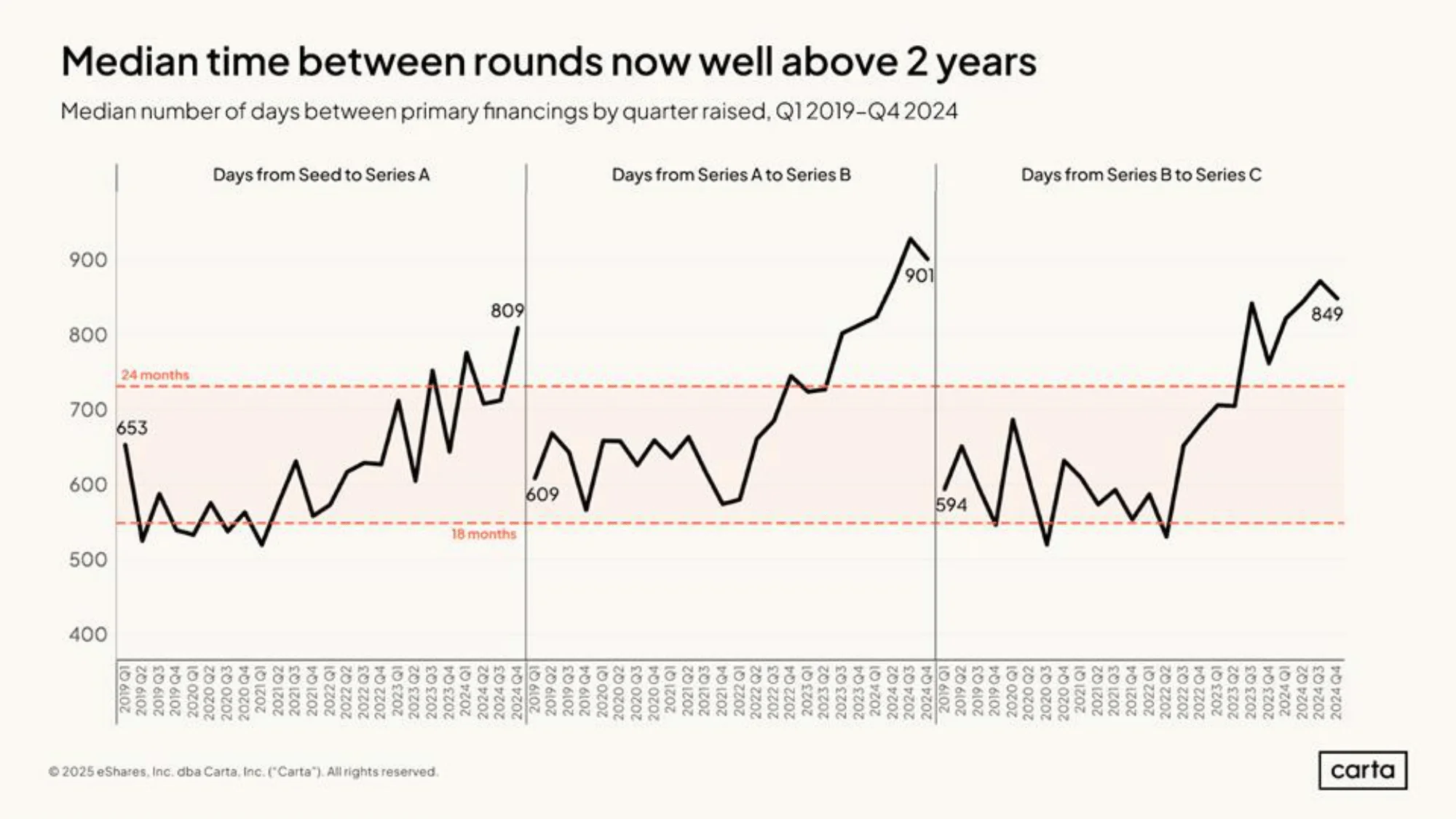
Google and Accel Reject 70% of AI Startups as 'Wrappers,' Signaling Major VC Shift
Google and Accel's Atoms accelerator rejected 70% of AI startups as 'wrappers,' highlighting a venture capital pivot towards deep tech and proprietary models over superficial integrations.