
PM Modi addresses the India AI Impact Summit 2026, highlighting AI's role as a force-multiplier, addressing job disruption fears, and advocating for a global AI governance compact with human oversight and safety-by-design.
NEW DELHI – At the highly anticipated India AI Impact Summit 2026, Prime Minister Narendra Modi declared Artificial Intelligence as standing at a "civilisational inflection point," underscoring its transformative potential while simultaneously emphasizing the critical need for global collaboration on ethical governance. Speaking to ANI, the Prime Minister articulated a future where AI acts as a force-multiplier for human capabilities, driving innovation across sectors while addressing pervasive concerns about job displacement. Modi's address, a central focus of the summit hosted at Bharat Mandapam, detailed India's comprehensive strategy encompassing skilling initiatives, robust regulatory frameworks like the IndiaAI Safety Institute, and ambitious plans to position the nation as a leader in AI product development, not just service delivery. This vision for an "AI for All" future, balancing technological advancement with stringent safeguards, resonates profoundly as the world grapples with the rapid evolution of this powerful technology.
The concept of an "inflection point" signals a pivotal moment where fundamental shifts occur, and PM Modi's use of the term for AI is deliberately chosen to convey the profound societal changes anticipated. His remarks articulate a duality: AI as an unprecedented engine for progress and as a challenging force requiring careful navigation. Historically, technological revolutions—from the agricultural to the industrial and information ages—have always brought about significant societal restructuring. The Prime Minister, drawing on this historical perspective, reassured audiences that "whenever innovation happens, new opportunities emerge," directly addressing anxieties about AI-driven disruption in the job market. This proactive stance is mirrored in India's substantial investments in skilling and reskilling programs, which he described as "one of the most ambitious skilling initiatives in the world," treating the challenge as a "present imperative," not a future problem, according to Times of India. The underlying message is one of preparedness and adaptation, fostering a workforce ready for the AI-driven future.
Prime Minister Modi outlined three key pillars of India's robust AI strategy. Firstly, he addressed the challenge of AI's impact on employment, acknowledging "concern of our youth about AI-driven disruptions." He countered this by stating that "history has shown that work does not disappear due to technology. Its nature changes and new types of jobs are created," emphasizing that India's strong performance in the Stanford Global AI Vibrancy Index 2025 (ranking 3rd) positions it well for this transition. Secondly, Modi articulated a comprehensive approach to AI governance. Recognizing AI as a "force-multiplier for human intent," he stressed that "ultimate responsibility for decision-making must always remain with human beings." India is now "moving toward a more structured governance approach in AI regulation" with the establishment of the IndiaAI Safety Institute in January 2025. This institute, along with new rules for watermarking AI-generated content and the Digital Personal Data Protection Act, aims to balance innovation with safeguards against deepfakes, national security threats, and harms to vulnerable groups. Globally, India advocates for a "global compact on AI" based on principles such as human oversight, safety-by-design, transparency, and strict prohibitions on malicious use, consistent with its role in the 2023 GPAI declaration and Paris AI discussions, as reported by Times of India. Thirdly, the Prime Minister revealed an ambitious economic vision for AI. He projected India's IT sector to reach $400 billion by 2030, driven by AI. To achieve this, the government, through the IndiaAI Mission, is investing in world-class AI infrastructure, including exceeding initial GPU targets, and establishing four Centres of Excellence in crucial sectors like Healthcare, Agriculture, Education, and Sustainable Cities, alongside five National Centres of Excellence for Skilling. Modi declared, "We want our IT sector to lead not just in service delivery but in building AI products, platforms, and solutions that work for India and the world." This aligns with the broader national aspiration captured by Kris Gopalakrishnan, co-founder of Infosys, who noted the critical need for India to "translate research into products and technology" to build a robust deep tech ecosystem and achieve its goal of becoming a developed nation by 2047, as told to ANI and cited by The Economic Times. Gopalakrishnan emphasized that "economic superiority will come after technological and scientific superiority," highlighting deep tech as foundational to India's future.
The pronouncements from the India AI Impact Summit, particularly PM Modi's vision and the insights from industry leaders, converge on a critical juncture for the global technology landscape: the accelerated evolution of talent requirements and the redefinition of "trust" in the tech sector. Venture capitalist Vinod Khosla's stark assertion that 15-20 year veterans at legacy tech firms are becoming 'unemployable' due to AI advancements, as reported by Whalesbook, resonates deeply with PM Modi's emphasis on skilling and reskilling. Khosla’s view underscores a seismic shift where continuous learning in emerging technologies, characteristic of agile startups, now commands greater credibility than traditional experience within large, established companies. This isn't just about job losses, but a fundamental retooling of the entire workforce and a re-evaluation of what constitutes valuable expertise. For countries like India, with a vast demographic dividend and a strong IT services backbone, this presents both an immense challenge and an unparalleled opportunity. If India can successfully re-skill its workforce and foster an ecosystem of AI-first startups, as Modi envisions through initiatives like the IndiaAI Mission and Centres of Excellence, it stands to not only mitigate job disruptions but also leapfrog into a leadership position in the global AI economy. However, the market signals, such as the struggles of legacy giants like Cisco and IBM to adapt their traditional business models and talent pools, as noted by Khosla, serve as a potent warning. The shift isn't merely technological; it's cultural, requiring established players to embrace startup-like agility or risk obsolescence. The trust factor, once tied to corporate longevity, is now increasingly linked to innovative capacity and rapid iteration. The implications for individuals, corporations, and national economies are profound, necessitating proactive adaptation and strategic investment in human capital.
India’s comprehensive AI strategy extends beyond policy rhetoric into concrete ecosystem building. Prime Minister Modi highlighted the government’s commitment to providing affordable access to "world-class AI infrastructure for startups and enterprises," which includes exceeding initial targets for GPUs. This reflects an understanding that cutting-edge AI development requires significant computational power, often a barrier for smaller players. The establishment of specialized Centres of Excellence in Healthcare, Agriculture, Education, and Sustainable Cities, coupled with National Centres of Excellence for Skilling, are designed to address sector-specific applications of AI and ensure a skilled workforce precisely where it's needed most. This granular approach underscores India's intent to build AI solutions tailored for its unique challenges and opportunities, whether for farmers, MSMEs, women entrepreneurs, or grassroots innovators, as PM Modi articulated. Complementing this, Kris Gopalakrishnan of Infosys emphasized the critical nature of translating "research into tangible products and technology" to build a "robust deep tech ecosystem," according to The Economic Times. He advocated for stronger collaboration between industry and academia, pointing to successful models like the research park at IIT Madras and industry-connect programs piloted by the Confederation of Indian Industry (CII). These initiatives aim to bridge the gap between foundational research and market-ready products, fostering an environment where deep tech startups can thrive and attract capital globally. The urgency for these measures is further underscored by the "seismic shift" in the tech industry, where the agility and continuous learning prevalent in startups are gaining ground over established legacy firms, as articulated by Vinod Khosla of Axilor Ventures and reported by Whalesbook. India's commitment to both domestic innovation and global AI governance, advocating for common principles and standards, positions it as a significant voice in shaping the future of AI responsibly and inclusively.
As the "civilisational inflection point" described by PM Modi approaches with accelerating speed, the coming years will be crucial for observing how India's multi-pronged AI strategy unfolds. The success of its ambitious skilling initiatives, the effectiveness of the IndiaAI Safety Institute in mitigating risks like deepfakes, and the ability of its IT sector to transition from service delivery to leading in AI product development will be key indicators. The global push for a compact on AI governance, with India at the forefront, will also be a critical area of focus. The international community will keenly watch how a balance is struck between fostering innovation and implementing robust safeguards. Furthermore, the ability of India's deep tech ecosystem to translate cutting-edge research into market-viable products, attracting both domestic and foreign capital, will determine its trajectory towards becoming an "AI powerhouse" and a developed nation by 2047. The ongoing dynamism between legacy tech firms and agile startups, in a rapidly evolving technological landscape, will continue to define the talent market. The India AI Impact Summit 2026 clearly signals that proactive measures, continuous adaptation, and global cooperation are not merely desirable but essential for responsibly harnessing AI's immense potential.

Google Cloud VP Darren Mowry forecasts doom for LLM wrapper and AI aggregator startups, coinciding with India's aggressive push into AI development.
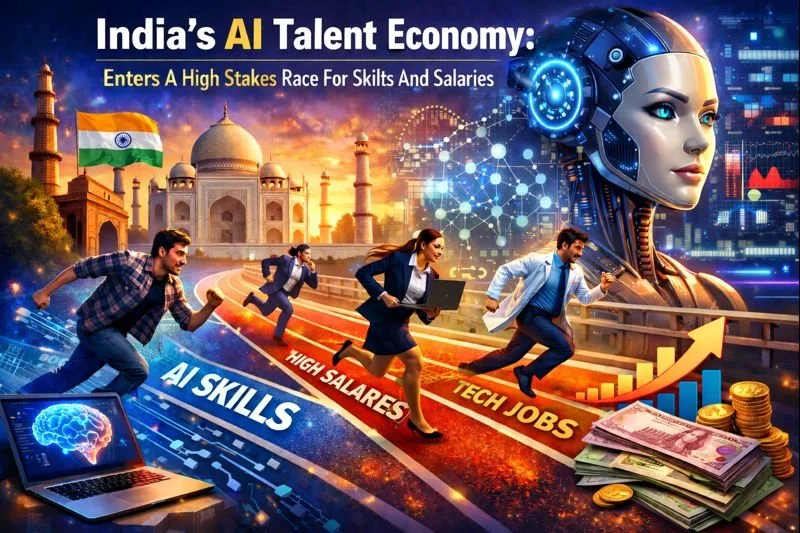
The AI boom is causing an unprecedented battle for top tech talent, with startups offering over $300,000 to new graduates and Big Tech spending billions to secure elite AI scientists, even as automation threatens traditional tech roles.
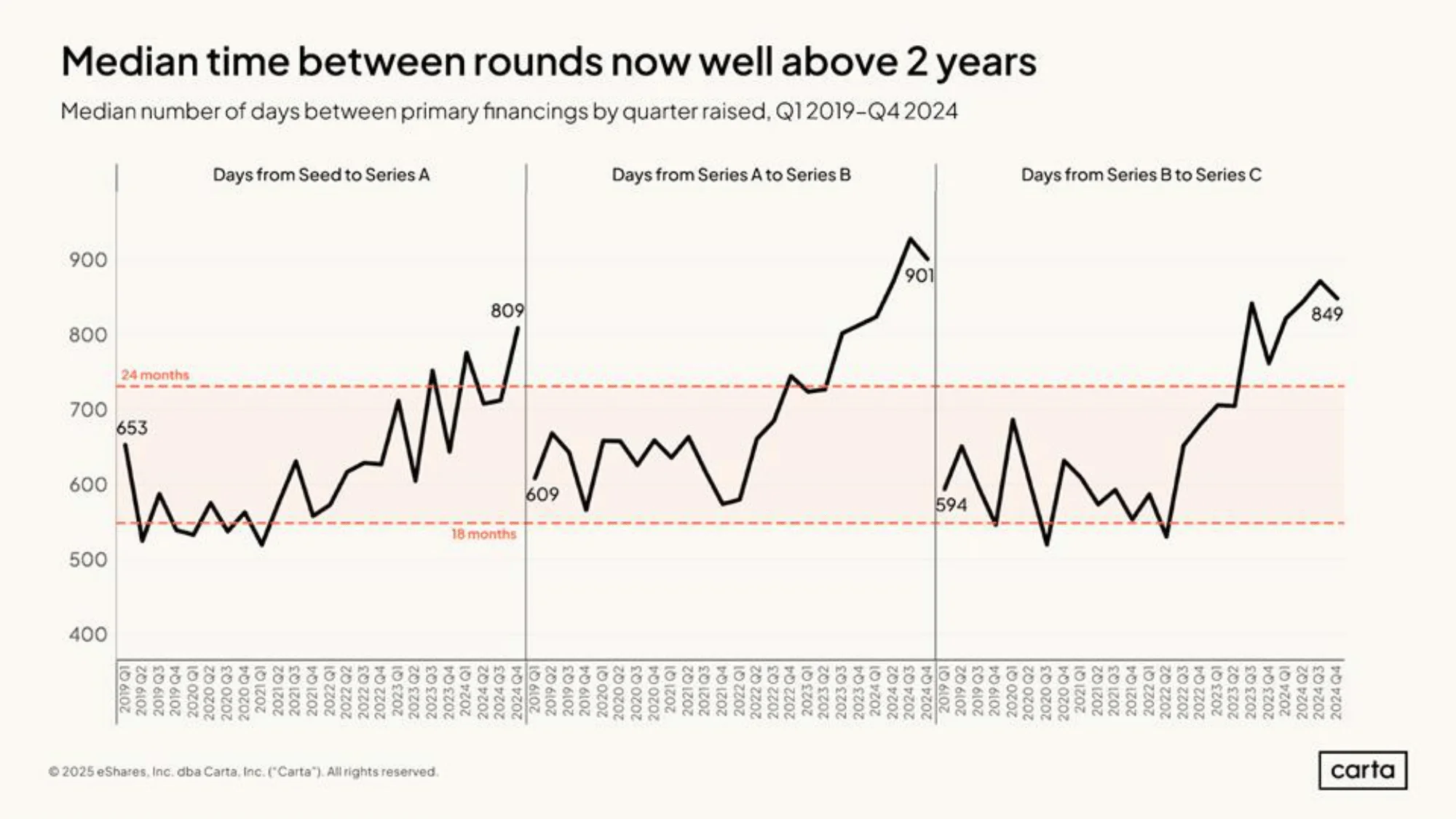
Google and Accel's Atoms accelerator rejected 70% of AI startups as 'wrappers,' highlighting a venture capital pivot towards deep tech and proprietary models over superficial integrations.