South Korea is set to become a global hub for artificial intelligence infrastructure following a landmark agreement between retail conglomerate Shinsegae Group and U.S. startup Reflection AI. The deal, valued at an staggering $6.7 billion, will see the construction of the "Sovereign AI Factory," poised to become the nation’s largest AI data center. This ambitious undertaking, as reported by The Korea Economic Daily Global Edition, underscores Shinsegae’s strategic pivot towards becoming a technology-driven platform business and aligns with broader geopolitical and economic ambitions to bolster AI capabilities.
Background and Context of South Korea's AI Ambitions
The construction of the Sovereign AI Factory is not an isolated event but rather a significant culmination of several ongoing initiatives aimed at supercharging South Korea's technological prowess, particularly in AI. The move has strong ties to the Trump administration’s overarching policy to export the U.S. AI tech stack, positioning key allies at the forefront of this next-generation technological revolution. This strategic alignment is evident in the burgeoning relationships between major South Korean conglomerates and U.S. tech powerhouses.
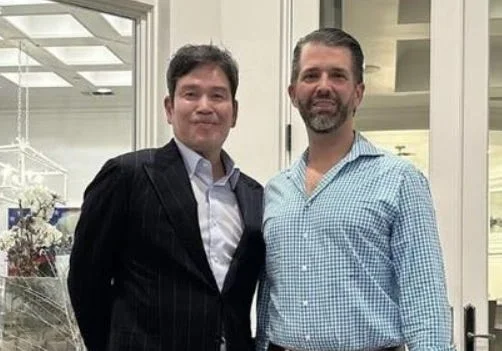
For Shinsegae, a household name in South Korean retail, this investment represents a bold departure from its traditional brick-and-mortar and e-commerce ventures into the high-stakes world of advanced technology. The conglomerate's Chairman, Chung Yong-jin, has been actively cultivating these strategic international ties, notably being observed strengthening connections with Donald Trump Jr. and Omeed Malik of 1789 Capital, as highlighted by The Korea Economic Daily Global Edition. This personal diplomacy underscores the high-level commitment driving such colossal projects. Furthermore, a broader trend of foreign investment into South Korea’s digital infrastructure has been apparent, with giants like Amazon Web Services (AWS) and others pledging a combined $9 billion in investments, as reported by The Korea Economic Daily Global Edition, signaling a concerted effort to establish the country as a major tech hub.
Key Developments in AI Infrastructure and Alliances
The core of this monumental development rests on the collaboration between Shinsegae and Reflection AI, a U.S. startup benefitting from Nvidia’s backing. Reflection AI is positioned to play a critical role in the deployment of advanced AI infrastructure, leveraging Nvidia’s cutting-edge graphics processing units (GPUs). This alliance is further bolstered by Nvidia's broader commitment to South Korea, with a pledge to supply 260,000 high-end GPUs to the South Korean government and its largest conglomerates by 2030, a deal valued at $9.8 billion, according to The Korea Economic Daily Global Edition. Such a massive injection of processing power is indispensable for developing and running sophisticated AI models, underpinning the "Sovereign AI Factory's" capabilities.
Beyond Shinsegae’s direct involvement, other global tech leaders are also solidifying their presence and partnerships in South Korea. Microsoft CEO Satya Nadella has actively pursued AI alliances with major South Korean companies including Hyundai, POSCO, and Shinhan, showcasing a widespread interest in integrating advanced AI across various industrial sectors, as noted by The Korea Economic Daily Global Edition. These collaborations are crucial for fostering a robust AI ecosystem that extends beyond data centers to practical applications in manufacturing, finance, and other industries. The growing dominance of foreign cloud service providers like AWS and Microsoft in Korea’s serverless computing market also highlights the rapid adoption of international cloud infrastructure, creating a fertile ground for large-scale AI data center operations.
Parallel to these commercial and governmental collaborations, the global landscape reflects a surge in AI integration, particularly in critical infrastructure and defense. For instance, Dutch startup Waving recently secured €2.6 million to trial AI-based Wi-Fi security technology at Amsterdam Airport Schiphol and with the Dutch Ministry of Justice and Security. This system uses Wi-Fi signals and AI to detect human presence through walls, enhancing security without the limitations of traditional surveillance, as reported by Passenger Terminal Today. This demonstrates AI's broader application in safeguarding critical areas, an aspect that future large-scale AI data centers in South Korea might also consider for their own security paradigms. Similarly, in the defense sector, Gecko Robotics has landed a significant deal with the U.S. Navy to deploy AI-powered robotic inspection platforms to accelerate ship repairs. Their wall-climbing robots utilize ultrasonic sensors to identify structural weaknesses, drastically reducing inspection times and bolstering fleet readiness, a crucial development highlighted by The Tech Buzz. These diverse applications of AI underline the strategic importance of robust data processing capabilities, which the Sovereign AI Factory will provide for South Korea.
Analysis: What This Means
The Shinsegae-Reflection AI partnership represents more than just a massive financial investment; it signals South Korea’s clear intent to transition from a manufacturing and export-driven economy to a leading force in the global digital and AI landscape. For Shinsegae, this move is transformative, indicative of a strategic pivot from traditional retail into a diversified, technology-centric enterprise. By investing in foundational AI infrastructure, the conglomerate is not just adopting technology but explicitly positioning itself as a provider of critical technological backbone, which could open up significant new revenue streams and influence across various industries. This aligns with a broader trend of traditional businesses recognizing the imperative to integrate AI at a fundamental level to remain competitive and relevant in the future economy.
The geopolitical implications are also profound. With the U.S. actively promoting the export of its AI tech stack, South Korea's willingness to host such a significant facility, particularly with Nvidia's involvement, solidifies its position as a key strategic ally in the technological rivalry unfolding between global powers. It ensures access to cutting-edge U.S. technology and capabilities, which are increasingly vital for national security and economic competitiveness. This reciprocal relationship offers the U.S. an expanded market and a secure location for its AI infrastructure, while providing South Korea with the tools to innovate and potentially lead in specialized AI applications globally. Moreover, the scale of investment, bolstered by direct government and corporate commitments, suggests a long-term vision where AI infrastructure is seen as much a strategic national asset as conventional military or industrial capabilities.
This development also foreshadows increased competition and collaboration within the South Korean tech ecosystem. While the influx of foreign investment and technology is beneficial, it also challenges domestic cloud service providers and tech companies to innovate rapidly or risk being outpaced. Conversely, it creates opportunities for partnerships, talent development, and the emergence of new AI-driven startups that can leverage the advanced infrastructure. The Sovereign AI Factory is not merely a data storage facility; it is a catalyst for an entire ecosystem, promising to stimulate economic growth, attract top-tier talent, and foster a new generation of AI-enabled services and products across various sectors, from smart retail to advanced manufacturing and cybersecurity.
Additional Details and Broader Investments
The $6.7 billion Sovereign AI Factory is poised to significantly impact South Korea's digital economy, offering unparalleled computing power necessary for large-scale AI model training, big data analytics, and the deployment of complex AI applications. Reflection AI, with its Nvidia backing, brings specialized expertise in building and operating such advanced facilities, leveraging Nvidia's dominant position in the GPU market. The commitment of 260,000 GPUs from Nvidia by 2030, as detailed by The Korea Economic Daily Global Edition, will ensure that the Sovereign AI Factory, and other key players in South Korea, have access to the hardware necessary to remain at the forefront of AI development.
This initiative complements other significant investments and collaborations in South Korea. The $9 billion pledge from global giants including AWS, as reported by The Korea Economic Daily Global Edition, illustrates a broader appetite for investing in the country's digital future. These investments are not confined to core infrastructure but extend to various applications. For instance, the growing prominence of foreign cloud service providers underscores the increasing demand for scalable and robust computing solutions, which the new data center will only amplify. Meanwhile, Shinsegae's strategic moves also include commercial partnerships beyond AI infrastructure, such as its joint venture with China’s Alibaba to bolster its e-commerce presence, demonstrating a multi-faceted approach to digital transformation.
The wider adoption of AI in critical infrastructure and defense, as evidenced by Waving's security trials at Amsterdam Schiphol Airport and Gecko Robotics' Navy contract, highlights the expansive and diverse applications of this technology. These examples, from Passenger Terminal Today and The Tech Buzz, respectively, showcase how AI is becoming indispensable for enhancing operational efficiency, security, and strategic readiness across different sectors. The Sovereign AI Factory will be well-positioned to support such diverse AI workloads, contributing to both commercial innovation and national capabilities.
Looking Ahead: Future Implications and What to Watch
The launch of the Sovereign AI Factory will inevitably reshape South Korea's technological landscape. We can expect an acceleration of AI adoption across various industries, from smart city initiatives and autonomous driving to advanced healthcare and personalized retail experiences, all leveraging the immense computing power and data analytics capabilities of this new facility. This investment is likely to attract further foreign direct investment in related fields, including AI research and development, software development, and specialized hardware manufacturing.
What remains to be seen is how this massive infrastructure project will influence the domestic competition and innovation among South Korean enterprises. While it creates opportunities, it also presents a challenge for local firms to integrate these advanced AI capabilities effectively into their operations. Additionally, the ethical and regulatory frameworks governing such a powerful AI infrastructure will be critical areas to watch, as governments grapple with data privacy, algorithmic bias, and the responsible deployment of AI on a national scale. This partnership heralds a new era for South Korea, cementing its role as a significant player in the global AI race, with profound implications for its economy, national security, and technological sovereignty.