Recent C-suite changes at Smartsheet, the emergence of AIQLinea, and the meteoric rise of defense tech startup Swarmer underscore a broader tech industry pivot towards artificial intelligence in its varied applications, from enterprise software to physical robotics and military hardware.
The technology sector is undergoing a profound transformation, marked by significant leadership shifts in established enterprise giants, the rapid emergence of AI-focused startups, and an undeniable pivot toward artificial intelligence in its most ambitious forms – from physical robotics to military defense systems. This week alone, enterprise software leader Smartsheet announced a major C-suite overhaul, while former Microsoft director Javier Páramo launched AIQLinea, a new venture dedicated to AI strategy. Concurrently, the stunning IPO debut of Ukrainian defense tech startup Swarmer has signaled a burgeoning investor confidence in AI-driven military applications, echoing a broader Silicon Valley trend towards "physical AI" spearheaded by figures like Elon Musk. These seemingly disparate developments collectively paint a picture of an industry aggressively restrategizing and reallocating resources to harness the immense, and often disruptive, potential of artificial intelligence across diverse verticals.
The current landscape of tech innovation is deeply rooted in a period of intense technological acceleration, particularly in artificial intelligence. For years, AI was largely confined to academic research and niche applications, but breakthroughs in machine learning and computational power have propelled it into the mainstream. This evolution has led to a re-evaluation of established business models and a fervent pursuit of new frontiers. Companies like Smartsheet, which specialize in enterprise work management, must constantly adapt to integrate cutting-edge technologies to maintain their competitive edge. Their recent C-suite appointments, as reported by GeekWire, reflect an effort to inject new leadership with deep industry ties and a proven track record, particularly under the guidance of CEO Rajeev Singh, who has a history of recruiting from his former professional circles. This strategic move is crucial for a company that has experienced recent layoffs and is striving to capitalize on new market opportunities in an increasingly complex and AI-driven business environment.
Meanwhile, the broader tech ecosystem sees a significant shift towards "physical AI" and defense applications, a trend that underscores a growing confidence in AI's ability to transcend purely digital realms. The origins of this shift can be traced to advancements in robotics, computer vision, and autonomous systems, which are now mature enough to be deployed in real-world scenarios. The enthusiasm from tech magnates like Elon Musk, who has famously pivoted Tesla to prioritize robotics, highlights a belief that AI's ultimate impact lies in its corporeal manifestation. This sentiment is further amplified by the geopolitical climate, where rapid innovation in defense technology, particularly in autonomous drone systems, has become a strategic imperative, as evidenced by the dramatic market entry of companies like Swarmer. The confluence of these factors creates a dynamic environment where traditional tech leadership, nascent AI ventures, and defense innovators are all pushing the boundaries of what's possible with artificial intelligence.
In a significant wave of leadership changes, Bellevue, Wash.-based enterprise software giant Smartsheet has announced four C-suite appointments, signaling a strategic realignment under CEO Rajeev Singh. As detailed by GeekWire, these include two hires and two promotions. Robson Grieve joins as Chief Marketing Officer, bringing experience from Motive and a past overlap with Singh at Concur Technologies. Toyan Espeut, formerly of Apptio where Singh was a board member, takes on the role of Chief Customer Officer. Internally, Pratima Arora, previously the Chief Product Officer, expands her role to Chief Product and Technology Officer, while Kelsi McDonald Harris, Singh’s former chief of staff at Smartsheet and previously Chief People Officer at Accolade (another company Singh led), is promoted to Chief Business Officer. These moves align with Singh's pattern of recruiting talent from his previous organizations, aiming to assemble a high-performing team to seize what he views as significant opportunities following recent layoffs.
Parallel to these enterprise shifts, the AI landscape is bustling with new ventures and strategic pivots. Longtime tech leader Javier Páramo, a former senior director at Microsoft, has launched AIQLinea, a Redmond-based startup dedicated to helping companies navigate the complexities of AI adoption. On LinkedIn, Páramo articulated AIQLinea's mission: to transform "fragmented AI experimentation into clarity, aligned strategy, governed execution, and decision-ready roadmaps." This emergence of specialized AI consultancy firms underscores the growing need for expertise in integrating AI effectively into business operations. In another notable move, Barry Padgett, former CEO of Seattle-based consumer data startup Amperity and a Concur veteran, ascended to President and COO at SentinelOne, a cybersecurity platform, reflecting a continued movement of seasoned tech executives into critical leadership roles across diverse tech sectors. Even smaller startups are making waves, with Tin Can, a Seattle-based company selling Wi-Fi-enabled telephones for kids, hiring Jake Silsby as head of industrial design after viral success and significant investment, as reported by GeekWire. These movements highlight the dynamic talent market and the strategic redeployment of experienced leaders within the rapidly evolving tech industry, with a clear emphasis on leveraging AI and technology for growth and innovation.
Perhaps the most compelling signal of the tech industry's current trajectory comes from the dramatic performance of Ukrainian tech startup Swarmer. As reported by AOL.com, Swarmer Inc. priced its initial public offering at $5 per share, raising $15 million, but saw its shares soar by 520% in its market debut, closing at $31 after briefly jumping as much as 700%. This extraordinary IPO, one of the strongest in recent U.S. market history, reflects significant investor interest in AI-driven defense systems and autonomous software for drones. Swarmer's technology was first deployed in combat operations in Ukraine in April 2024, completing over 100,000 missions and generating vast amounts of proprietary data. This success, coupled with the Pentagon's push for mass-produced, cost-efficient "kamikaze" drones like Lucas, as noted by AOL.com, underscores a broader shift towards software, autonomy, and affordability in modern warfare. The "physical AI" movement, championed by figures like Elon Musk who has pivoted Tesla to prioritize robotics, further amplifies this trend. A report from The Washington Post details Musk's vision of a robot army creating "amazing abundance" and describes "physical AI" as the "largest total addressable market in mankind's history," with tech giants like Amazon, Nvidia, and Atoms (from Uber co-founder Travis Kalanick) also making new forays into advanced robotics. This convergence of enterprise leadership, AI entrepreneurship, and defense innovation underscores a tech sector rapidly reorienting toward AI's tangible applications.
These developments signify a critical juncture for the tech industry, moving beyond purely digital innovations to embrace the physical manifestation of artificial intelligence. The aggressive C-suite restructuring at Smartsheet, under Singh's leadership and his consistent recruitment from past associations like Concur and Apptio, suggests a move to instill deeply familiar trust and synergy within a team, especially in economically challenging times. This strategy, while potentially limiting external diverse perspectives, prioritizes established relationships and shared operational philosophies, which can be crucial for rapid decision-making and execution. For Smartsheet, a company that has undergone recent layoffs, this renewed leadership focus is about stability and leveraging known quantities to navigate a competitive enterprise software market increasingly influenced by AI integration.
The emergence of AIQLinea and the dramatic success of Swarmer, against the backdrop of Elon Musk's "physical AI" ambitions, underscore a palpable shift in investor and entrepreneurial focus. Venture capital and market interest are clearly gravitating towards AI that can interact with the physical world, whether through humanoid robots designed to alleviate labor-intensive work or autonomous drones reshaping military strategies. The term "physical AI" is not merely a buzzword; it represents a paradigm shift where AI is no longer confined to data centers but is embedded into machinery and systems that perform tangible actions, promising to "transform industry and move the world," as Travis Kalanick's new startup Atoms aims to do. This profound reorientation carries significant implications for labor markets, national defense, and industrial automation, signaling a future where AI's impact will be felt far beyond our screens.
Perhaps most importantly, these trends highlight the dual-use nature of advanced AI technologies. Innovations in autonomous systems and physical robotics, perfected in commercial settings or even in conflict zones like Ukraine, rapidly transfer knowledge and capabilities across seemingly disparate sectors. Swarmer's IPO success is not just about defense spending; it's a validation of the underlying AI, machine learning, and autonomy software that could, with modifications, find applications in logistics, disaster response, or advanced industrial automation. The "physical AI is the largest [total addressable market] in mankind’s history," as stated by Shay Boloor of Futurum, suggests that companies and nations failing to invest in these capabilities risk falling behind. This translates into a competitive imperative for industries to aggressively pursue AI integration, not just for efficiency but for foundational shifts in how work is done, how economies operate, and how security is maintained on a global scale. The ongoing "AI race" is thus moving from an abstract concept into a physical reality, promising both unprecedented opportunities and significant societal challenges.
Beyond the C-suite appointments at Smartsheet, other key leadership movements within the tech ecosystem further underscore the industry’s dynamic nature and its increasing focus on AI. Armoire, a Seattle-based fashion rental startup, has appointed Morgan Cundiff as head of product and machine learning. Cundiff brings significant experience from LTK, a shopping app where she scaled data science and machine learning capabilities, and previously from e-commerce tech company ShopRunner. Her recruitment highlights the growing importance of AI and machine learning for personalized services and operational efficiency even in consumer-facing industries like fashion rental, indicating a strategic move for a company ranked among the Pacific Northwest's top startups on the GeekWire 200, as detailed by GeekWire.
The flow of talent out of major tech companies into specialized AI roles is another notable trend. Jonathan Hunt, formerly a corporate VP in AI business solutions at Microsoft, has joined Anthropic as global head of commercial operations and strategy. This move, discussed in the GeekWire report, reflects the intense demand for top-tier talent in leading AI research and development firms. Similarly, Ian Haydon, director of communications and AI policy at the University of Washington Institute for Protein Design, announced his departure, noting the astonishing speed at which deep learning tools have reinvented his field. His comments underline the disruptive pace of AI innovation even in highly specialized scientific domains, implying that established roles and methodologies are constantly being challenged and transformed.
The broader implications of "physical AI" are attracting significant attention from industry heavyweights. As The Washington Post elaborates, Elon Musk's vision for a robot army at Tesla, including the Optimus humanoids, is not an isolated endeavor. Amazon, Nvidia, and Atoms (Travis Kalanick’s new venture) are all making substantial new forays into advanced robotics. Nvidia CEO Jensen Huang explicitly stated, "Physical AI has arrived — every industrial company will become a robotics company." This aggressive push into corporeal AI points to an anticipated massive opportunity in sectors that have historically been less susceptible to software automation, such as manufacturing, logistics, and even healthcare, as exemplified by Figure's humanoid robot demonstrating capabilities at the White House. This broad activity across startups, established tech firms, and even scientific institutions highlights the pervasive and transformative nature of current AI advancements.
The coming months and years will likely see an intensification of these trends. We can anticipate further aggressive recruitment in AI-related roles across industries, from defense to fashion, as companies race to integrate machine learning and automation into their core operations. The strategic talent acquisitions by Smartsheet indicate a defensive and offensive posture for established enterprise software firms, focusing on proven leadership to navigate an increasingly AI-driven market. Their ability to deliver on new product integrations and client solutions will be a key determinant of their sustained growth.
The "physical AI" movement, fueled by pioneers like Elon Musk and validated by the capital markets' enthusiastic reception of companies like Swarmer, will undoubtedly accelerate. Expect to see more startups emerging with specialized solutions for robotics, autonomous systems, and AI-enabled hardware. Regulatory bodies and policymakers, particularly in Washington, will face increasing pressure to address the ethical and societal implications of widespread physical AI deployment, including its impact on labor, privacy, and national security. The dual-use nature of AI-driven defense technologies will remain a prominent and contentious issue, with global geopolitical dynamics continuing to shape investment and development priorities. The tech world is not just building software; it is building a new physical reality powered by artificial intelligence.
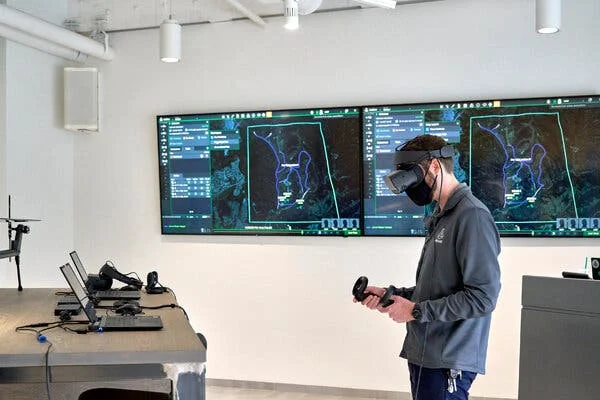
Anduril Industries seeks $8 billion at a $60 billion valuation, highlighting investor confidence in autonomous defense and the evolving landscape of military AI.

Amidst tech stock declines, AI and robotics ignite massive investment, with OpenAI eyeing an $850B+ valuation and Jeff Bezos backing key innovators.
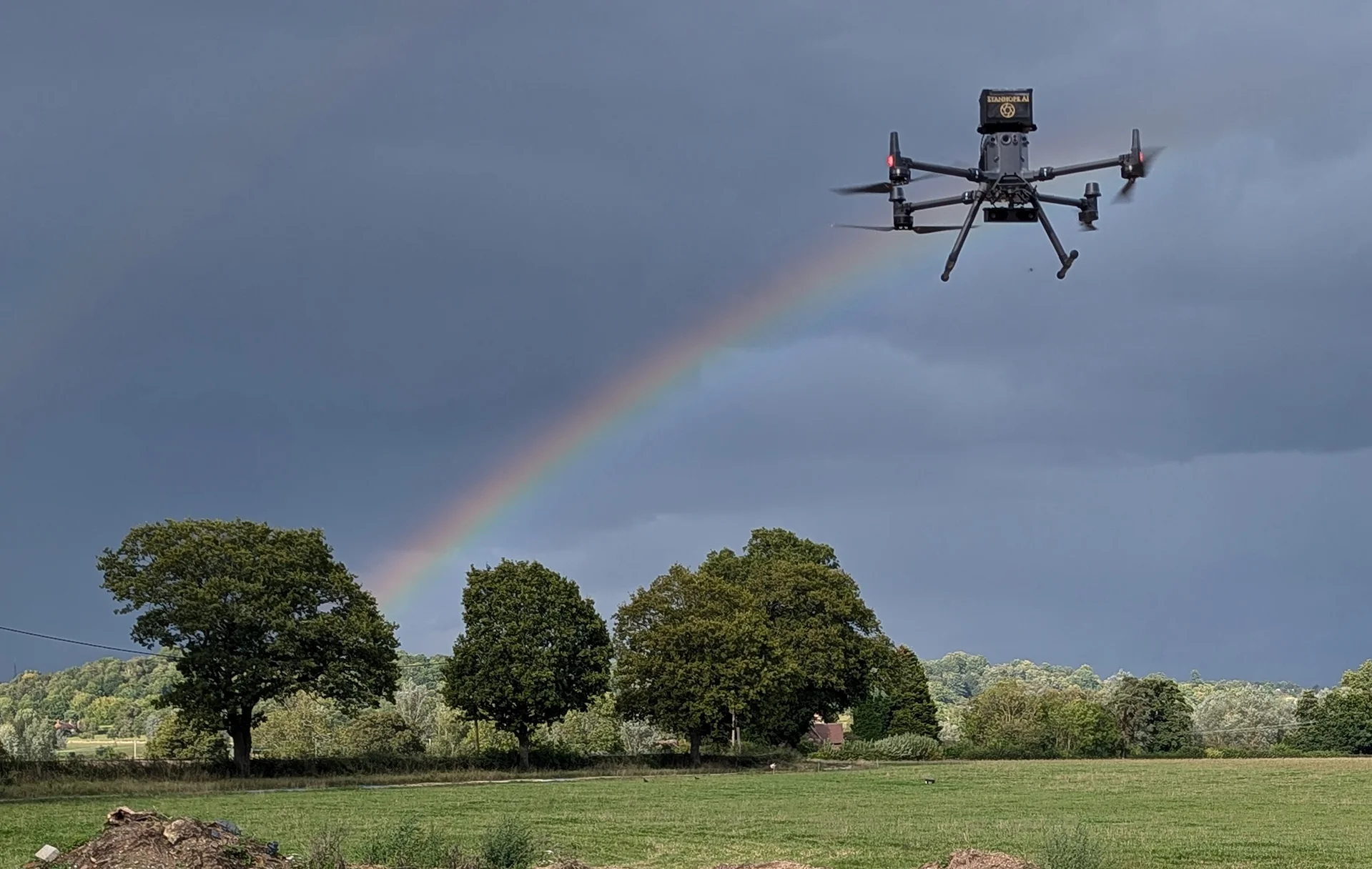
London's Stanhope AI raises $8M in seed funding to develop adaptive AI, moving beyond LLMs to power autonomous systems in robotics and defence with real-time context awareness.