Stanhope AI Closes $8M Seed Round to Propel Advanced Adaptive AI for Robotics and Defence
London's Stanhope AI raises $8M in seed funding to develop adaptive AI, moving beyond LLMs to power autonomous systems in robotics and defence with real-time context awareness.

In a significant boost for the European deep tech landscape, London-based startup Stanhope AI has successfully closed an €6.7 million ($8 million) Seed funding round. This substantial investment is earmarked for the development of a groundbreaking class of adaptive artificial intelligence, explicitly designed to empower autonomous systems operating in the complex and unpredictable environments of the physical world. The funding, led by Frontline Ventures with critical participation from Paladin Capital Group, Auxxo Female Catalyst Fund, UCL Technology Fund, and MMC Ventures, underlines a growing investor confidence in AI solutions that transcend traditional pattern-matching capabilities, particularly for critical applications in robotics and defence. This move positions Stanhope AI at the forefront of a paradigm shift within the AI domain, focusing on systems that can not only perceive but also reason and act with a profound understanding of their context, a departure from the cloud-centric, data-intensive models often associated with large language models (LLMs).
Background and Context
The journey of artificial intelligence has been marked by several waves of innovation, from early symbolic AI to expert systems, and more recently, the dominance of machine learning and deep learning, particularly with the rise of large language models. These LLMs have demonstrated remarkable prowess in processing and generating human-like text, largely due to their ability to identify complex patterns within vast datasets. However, their primary strength lies in the digital realm, often struggling when faced with the dynamic, unpredictable, and resource-constrained realities of physical world applications. The inherent limitations of cloud-dependent, data-hungry models become apparent when designing autonomous systems that must operate reliably on edge devices with minimal latency, limited power, and scarce data. This gap has created a burgeoning demand for AI that can emulate human-like learning and adaptation, moving beyond mere pattern recognition to genuine contextual awareness and agency. Stanhope AI’s emergence from prestigious academic institutions like University College London and King’s College London, founded in 2023, positions it as a direct response to this need, building on foundational theoretical work to create practical, deployable solutions for physical world autonomy, as reported by The Next Web.
Key Developments
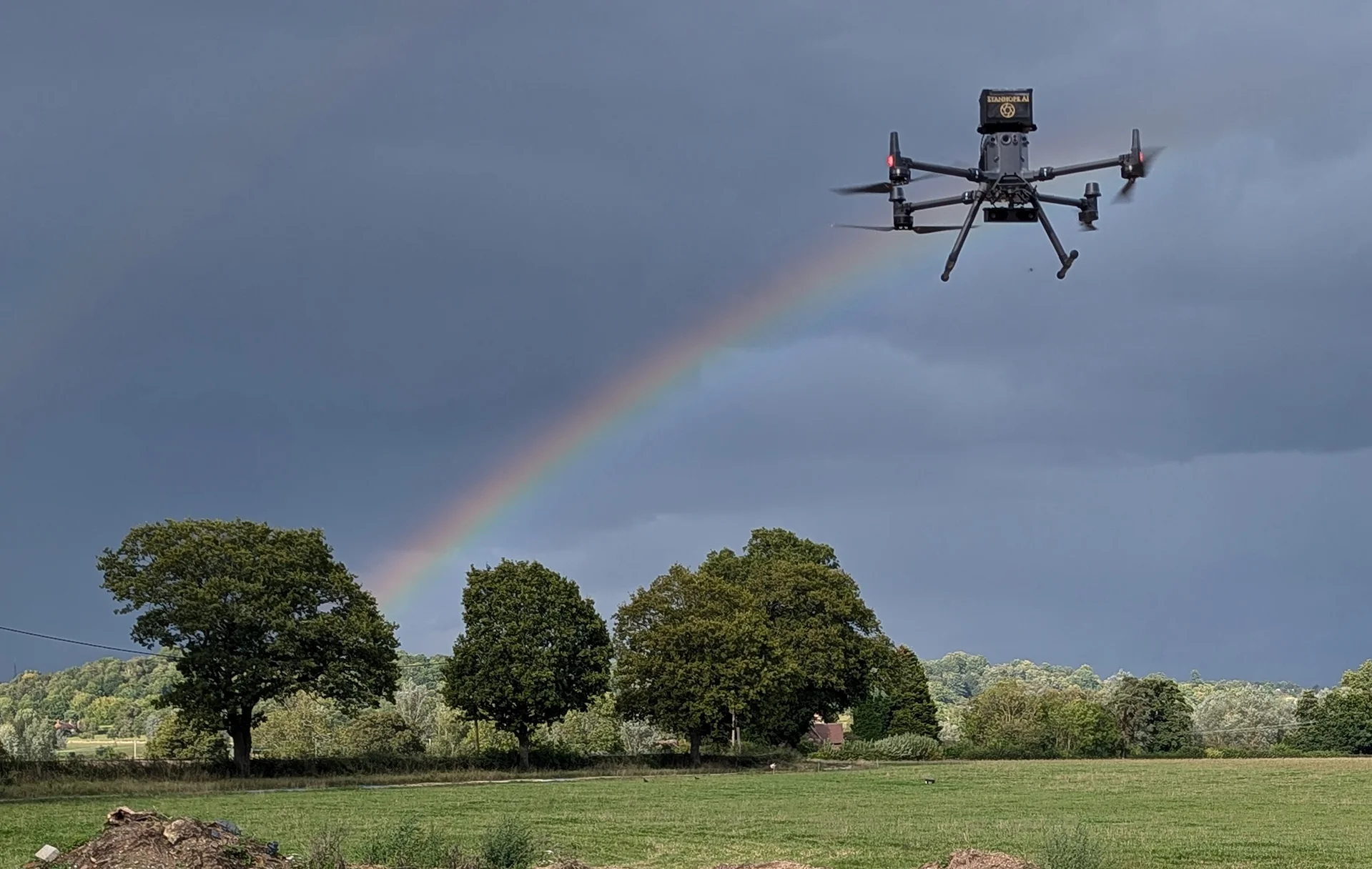
Stanhope AI's core innovation lies in what it terms a “Real World Model,” an adaptive AI system engineered to emulate the learning efficiency and contextual understanding observed in biological cognition. This approach draws heavily from principles of neuroscience and computational theory, notably informed by the work of theoretical neurobiologist Professor Karl Friston, whose Free Energy Principle underpins the startup’s methodology. This theoretical foundation allows Stanhope AI to develop systems that are not just trained on data but are designed to actively learn and adapt in real-time within uncertain environments. CEO and co-founder Professor Rosalyn Moran emphasizes this shift, stating, “We’re moving from language-based AI to intelligence that possesses the ability to act to understand its world – a system with a fundamental agency.” This philosophy represents a crucial divergence from the prevalent cloud-centric deep learning models, which often require immense computational resources and vast datasets. Instead, Stanhope’s models are optimized for efficiency, designed to run effectively on edge devices even with limited data and power. This characteristic is particularly vital for applications like autonomous vehicles, robotics, and robust defence hardware, where timely, on-device decision-making is paramount. The practical application of this technology is already underway, with the firm actively testing its solutions on drones and other autonomous platforms in collaboration with international partners. This tangible progress from theoretical research to production-ready systems was highlighted by Zoe Chambers, partner at Frontline Ventures, who noted Stanhope’s rare combination of academic rigor and practical deployment potential. Christopher Steed of Paladin Capital Group further underscored the technology's immediate relevance for security-sensitive and critical applications, resonating with a broader industry trend of sustained investor interest in European AI and autonomy startups, as detailed in The Next Web.
Analysis: What This Means
The successful funding round for Stanhope AI signals more than just another investment in the booming AI sector; it marks a significant validation of a new philosophical and technical direction for artificial intelligence. For years, the AI narrative has been dominated by large language models and their impressive, yet often brittle, capabilities. While LLMs excel at pattern recognition within existing data, their inherent lack of "common sense," real-world agency, and susceptibility to biases embedded in their training data have raised serious concerns, particularly for decision-making in safety-critical applications. Stanhope AI’s emphasis on "adaptive AI" and "Real World Models" directly addresses these limitations by striving for systems that can perceive, reason, and act with genuine context awareness, rather than simply mimicking learned patterns. This approach, deeply rooted in neuroscience and computational theory, could represent a crucial evolutionary step for AI, moving it from a powerful analytical tool to a truly autonomous and adaptive agent. For industries like robotics, defence, and industrial automation, where real-time decision-making, resilience, and adaptability are non-negotiable, this type of AI could unlock unprecedented levels of capability and reliability. The ability of these models to run efficiently on edge devices also mitigates concerns around latency, data privacy, and dependence on constant cloud connectivity, which are often significant hurdles for widespread adoption of current AI paradigms in hostile or remote environments. This investment suggests a maturing understanding within the investor community that the next frontier of AI isn't just about bigger models, but smarter, more context-aware, and physically grounded intelligence.
Additional Details
Stanhope AI's strategic positioning at the intersection of robotics, industrial automation, and defence underscores the broad applicability and urgent need for its adaptive AI technology. The startup’s ability to attract a diverse group of investors, including specialist venture capital firms like Paladin Capital Group, which focuses on critical infrastructure and security technologies, speaks volumes about the perceived value and potential impact of their work. Paladin Capital Group’s involvement, in particular, highlights the convergence of advanced AI with national security and critical infrastructure resilience. The shift towards on-device AI, where systems must operate reliably in dynamic settings, is a broader industry trend that Stanhope AI is not just participating in but actively shaping. This trend is driven by multiple factors, including the need for lower latency in real-time critical applications (like autonomous driving or drone operations), enhanced data privacy and security (as sensitive data can be processed locally), and reduced bandwidth dependency, especially in remote or connectivity-challenged environments. By designing models that can function efficiently on edge devices with limited resources, Stanhope AI is tackling some of the most persistent barriers to the widespread adoption of AI in the physical world. The new capital infusion of $8 million is intended to accelerate the transition of their technology from academic research and early testing into broader real-world deployments. This phase will be crucial for refining the adaptive capabilities of their models and demonstrating their robustness and resilience in varied operational scenarios, ultimately proving their worth as a next-generation solution for autonomous systems where traditional AI falls short, as per information from The Next Web.
Looking Ahead
The next chapters for Stanhope AI will undoubtedly focus on scaling their "Real World Models" and expanding their real-world deployments across military and civilian autonomous platforms. Success will hinge on their ability to demonstrate consistently superior performance in complex, unstructured environments compared to existing AI solutions. As the global demand for intelligent automation continues to soar in both industrial and defence sectors, Stanhope AI’s distinct approach to adaptive, context-aware AI could position them as a pivotal player. Their ongoing collaboration with international partners and the focus on edge-device efficiency suggest a roadmap towards practical, deployable systems rather than theoretical constructs. The broader industry will be watching closely to see if their neuroscience-inspired methodology can indeed deliver on the promise of true machine agency and resilience, addressing the critical barriers to widespread AI adoption in the physical realm and potentially setting a new benchmark for autonomous intelligence.
Related Articles

Stanhope AI Secures £6M to Drive Brain-Inspired AI Beyond Language Models
London-based deep tech startup Stanhope AI raises £6M ($8M) in seed funding to develop "Real World Model" AI, mimicking the human brain for autonomous drones and robotics, moving beyond LLM limitations.