Shield AI Aims for $1 Billion Raise to Spearhead Global Autonomy in Defense
Defense tech firm Shield AI is reportedly seeking up to $1 billion in funding, quadrupling its valuation to $11 billion amid a surge in autonomous defense systems.

In a move signaling robust investor confidence and an accelerating demand for autonomous defense capabilities, Shield AI, a prominent developer of artificial intelligence-powered software for military applications, is reportedly in discussions to secure a staggering $1 billion in fresh funding. This potential capital injection would propel the company's valuation to an estimated $11 billion, an impressive doubling from its valuation just a year ago. The funding round, if finalized as reported by Bloomberg and cited by PYMNTS.com, underscores a significant inflection point not only for Shield AI but for the broader defense technology sector, which is witnessing unprecedented investment in AI-driven solutions.
Background and Context of Autonomy in Defense
The pursuit of autonomous capabilities in warfare is not new, tracing its origins back to early guided missile systems and remote-controlled vehicles. However, recent advancements in artificial intelligence, sensor fusion, and computational power have moved these concepts from science fiction to imminent operational reality. The geopolitical landscape, marked by escalating tensions and complex threat environments, has accelerated the push for technologies that can augment human warfighters, reduce casualties, and operate effectively in contested domains. This global climate of increased defense spending, particularly in areas promising technological superiority, provides the fertile ground upon which companies like Shield AI are thriving. The company's focus on AI-powered software for autonomous vehicles and drones positions it directly within this strategic imperative, offering solutions that promise to revolutionize intelligence, surveillance, reconnaissance, and even strike capabilities. The sector's growth is further evidenced by other significant funding rounds for autonomous defense developers, indicating a broader trend rather than an isolated incident.
Key Developments in Autonomous Defense Funding
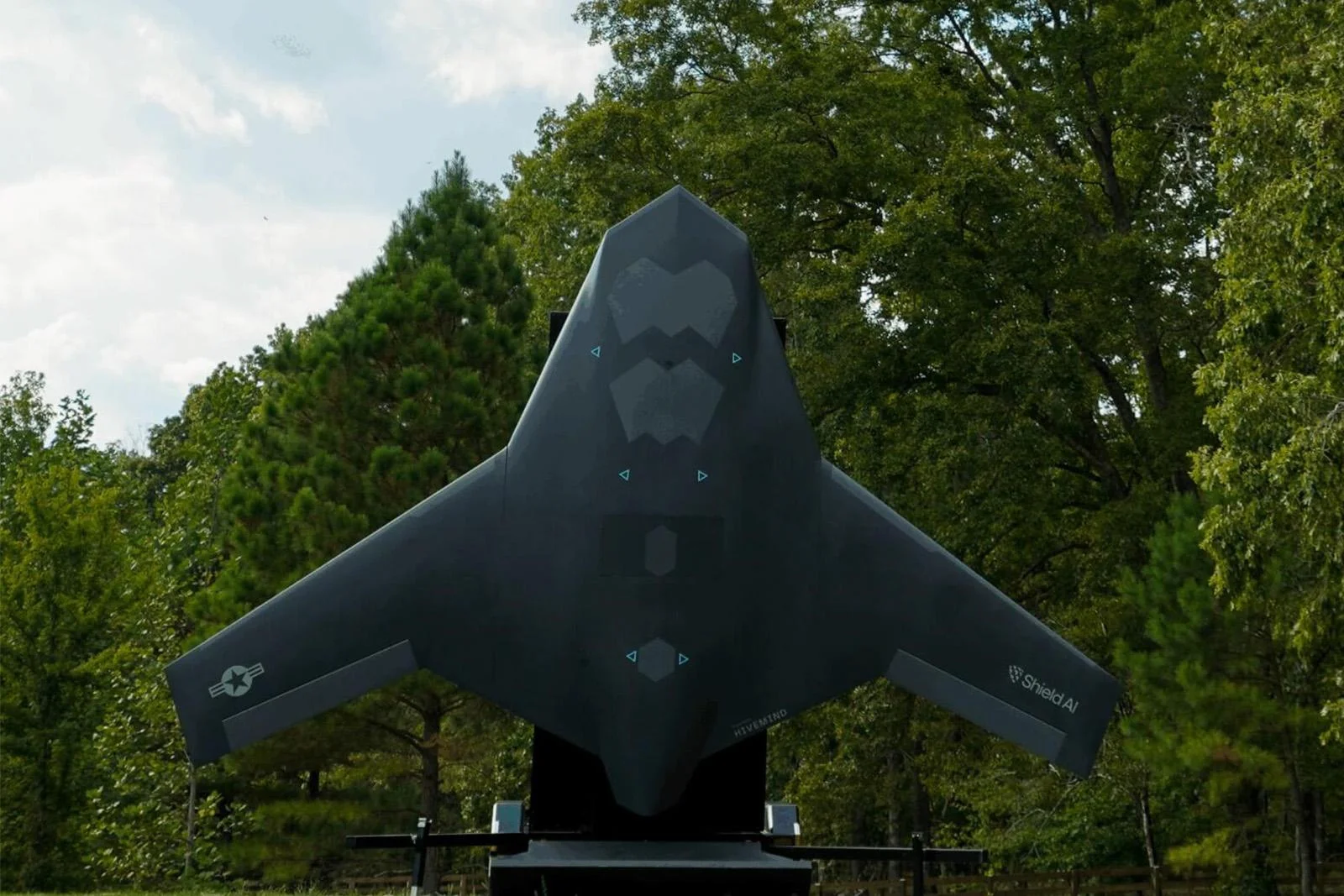
The reported $1 billion funding round for San Diego-based Shield AI represents a pivotal moment in the defense technology landscape. Citing unnamed sources, Bloomberg reported on February 13th that the discussions are ongoing, and terms could yet change, as noted by PYMNTS.com. This potential funding directly follows a March F-1 strategic funding round where Shield AI secured $240 million, valuing the company at $5.3 billion. The rapid increase in valuation and the ambitious new funding goal highlight the intense investor interest and perceived market opportunity for advanced AI in defense. At the core of Shield AI's offerings is Hivemind, an AI pilot system capable of enabling autonomous swarms of drones and aircraft. This technology distinguishes itself by operating without reliance on GPS, external communications, or continuous human piloting, allowing it to adapt to battlefield conditions and execute missions independently. Hivemind has reportedly been in active use since 2018, demonstrating a mature and deployable technology base.
The burgeoning investment in autonomous defense is not exclusive to Shield AI. The sector is witnessing a broader wave of capital infusion into companies developing cutting-edge AI for military applications. For instance, Overland AI, a firm dedicated to autonomous ground systems for defense and national security, announced on February 3rd that it had raised $100 million. This funding is ear-marked to scale operations and support increased adoption across various U.S. armed forces units. Stephanie Bonk, co-founder and president of Overland AI, emphasized the shift from experimental to operational integration of ground autonomy, as reported by PYMNTS.com. Similarly, in January, Harmattan AI, another defense technology company, secured $200 million. This capital is intended to accelerate the integration of controlled autonomy and AI technologies into combat aviation systems for allied forces, further underscoring the widespread investment trend in this critical domain. These concurrent major funding rounds paint a clear picture: autonomous defense is no longer a niche, but a rapidly expanding, high-priority area for both governments and investors.
Analysis: What This Means for Defense and Technology
The potential $1 billion funding for Shield AI, alongside significant raises by Overland AI and Harmattan AI, heralds a transformative era for defense technology. This influx of private capital into the defense sector signals a profound shift in how military capabilities are developed and deployed. Historically, defense innovation has been largely driven by government contracts and lengthy procurement cycles. However, the agility and speed of private tech startups, coupled with the rapid advancements in AI, are now attracting venture capital on an unprecedented scale. This move blurs the lines between Silicon Valley and the Pentagon, fostering a new defense industrial base that prioritizes cutting-edge software and autonomous capabilities over traditional hardware. For military strategists, this means faster development cycles for advanced systems, potentially offering a significant competitive advantage in future conflicts. The ability of systems like Shield AI's Hivemind to operate without GPS or human intervention addresses critical vulnerabilities in modern warfare, such as jammed communications or contested airspaces.
Furthermore, these investments are not merely about developing new tools; they represent a fundamental re-imagining of military operations. Autonomous swarms, AI-piloted aircraft, and self-driving ground vehicles promise to increase operational tempo, reduce human risk in dangerous environments, and enable new forms of coordinated action. The implication for global security is substantial: early adopters of these advanced AI systems could gain a decisive edge, while nations lagging in this development face increasing strategic challenges. The "controlled autonomy" emphasized by Harmattan AI, and the "resilient, high-performance autonomy" cited by Shield AI's CTO Nathan Michael, underline a critical aspect: the goal isn't full robot autonomy without oversight, but rather intelligent systems that can operate effectively even when disconnected, while still adhering to ethical and strategic parameters. This sophisticated approach to AI integration is crucial for building trust and ensuring responsible deployment of these powerful new capabilities, a challenge that will require ongoing dialogue between technologists, military leaders, and ethicists globally.
Additional Details on Shield AI's Technology and Impact
Shield AI's cornerstone product, Hivemind, showcases the sophisticated level of autonomy being pursued in defense. Described as an AI pilot, Hivemind allows for autonomous swarms of drones and aircraft to operate by reading and reacting to battlefield conditions, learning from experience, and self-executing missions. The impressive aspect, as highlighted by PYMNTS.com, is its capability to function in environments devoid of GPS or stable communications, and notably, without the constant input of a human pilot. This resilience is paramount in modern warfare scenarios where jamming and cyber-attacks are common tactics to disrupt command and control. The company’s continued development of Hivemind Enterprise, a suite of products building on this core technology, aims to provide organizations with a "multiyear head start" in developing their own intelligent machine autonomy. As Chief Technology Officer Nathan Michael stated, "Developing autonomy is both complex and costly," and Hivemind Enterprise seeks to solve this by enabling the efficient proliferation of high-performance autonomy across various intelligent machines and industries.
The reported $11 billion valuation is a testament to the perceived value and future potential of Shield AI's offerings. Doubling its valuation in approximately one year since its $5.3 billion valuation in March F-1 funding round underscores the rapid growth trajectory and market confidence. This growth is intrinsically linked to the "worldwide increase in defense spending" noted in the Bloomberg report. Global defense budgets are expanding in response to a more volatile international environment, and a significant portion of this investment is being directed towards advanced technologies that promise a qualitative edge. The parallel funding successes of Overland AI and Harmattan AI further cement the narrative that AI and autonomy are now central pillars of modern defense strategies. These companies are not just developing niche solutions; they are building foundational technologies that will reshape military operations across air, ground, and potentially sea domains, creating a new ecosystem of interconnected, intelligent defense assets.
Looking Ahead: The Future of Autonomous Defense
The substantial investment flowing into companies like Shield AI foreshadows a future where autonomous systems play an increasingly critical role in national security and military operations. As these technologies mature, we can anticipate a greater proliferation of AI-piloted vehicles, drone swarms, and autonomous ground systems across allied forces globally. The ongoing development will likely focus on enhancing the sophistication of AI decision-making, improving human-machine teaming interfaces, and ensuring robust ethical frameworks are in place for systems that can operate with varying degrees of independence. The competitive landscape will intensify, with nations and defense contractors vying for supremacy in AI-driven warfare. Furthermore, the commercial applications of such advanced autonomy, particularly in complex environments, could see significant spillover effects, impacting industries beyond defense, such as logistics, exploration, and disaster response. The next few years will be crucial in defining the operational capabilities, regulatory landscapes, and ethical boundaries of this rapidly evolving technological frontier, solidifying the strategic importance of companies like Shield AI in shaping the future of global defense.
Related Articles

Nabla Poised for AI Leap as Yann LeCun’s AMI Secures $1 Billion for ‘World Models’
Health AI documentation startup Nabla is set to gain early access to Yann LeCun's cutting-edge "world models" technology, fueled by AMI's new $1 billion funding round.