Actor Challenges Albanian Government Over Unauthorized 'AI Minister' Image
Albanian actor Anila Bisha has taken legal action against her government for using her likeness as an "AI minister" without full consent, sparking debate over AI ethics.

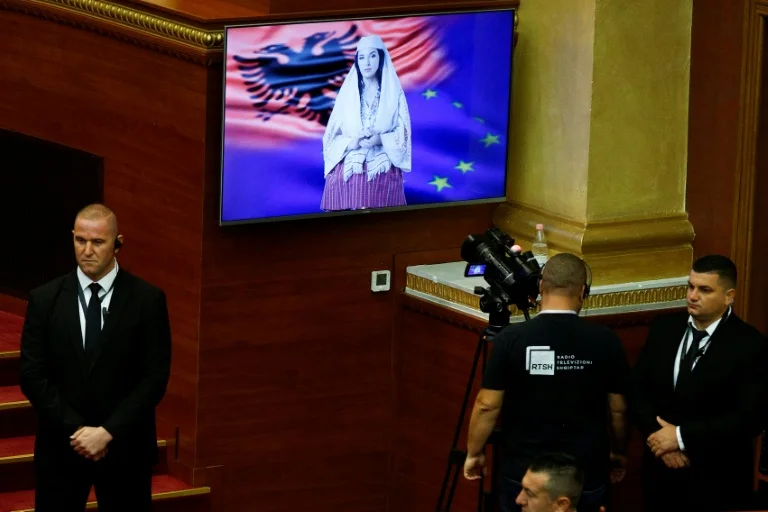
The digital age continues to blur the lines between reality and artificial intelligence, and a recent controversy out of Albania has brought this into sharp focus. Albanian actor Anila Bisha has initiated legal proceedings against her own government, accusing them of unauthorized use of her image and voice to create a virtual "AI minister" named Diella. This unfolding story, highlighted across various news outlets including Hawaii News Now's "What's Trending: CJ on the Today Show" segment and detailed by WKTV, raises significant questions about consent, intellectual property in the digital realm, and the ethical deployment of artificial intelligence by state entities. Bisha contends that her agreement only covered the e-Albania services platform, not the broader, highly visible role of a government spokesperson. Her legal action, a "first legal step" according to her lawyer, underscores a burgeoning global challenge as governments and corporations increasingly adopt AI technologies, often without fully established legal or ethical frameworks for their use.
Background and Context of Digital Personas
The concept of digital personas and virtual assistants has been rapidly evolving, moving from rudimentary chatbots to sophisticated AI constructs capable of mimicking human appearance and voice. This technological leap has offered unprecedented opportunities for efficiency and communication, particularly within public services. Governments worldwide have been exploring and implementing AI solutions to streamline citizen interactions, ranging from simple information dissemination to complex administrative tasks. The Albanian government's creation of "Diella," an "AI minister" utilizing Anila Bisha's likeness, was likely envisioned as a progressive step in this direction, aiming to modernize public outreach and convey a tech-forward image. However, the rapid advancement of AI often outpaces the development of legal and ethical guidelines, leading to grey areas regarding digital rights, consent, and intellectual property. Historically, the use of a person's image or voice, especially for commercial or public-facing roles, has always required explicit consent and defined contractual terms. With AI, where a digital twin can be created and deployed across various platforms, the nuances of these agreements become even more critical and complex. The controversy surrounding Diella highlights this very friction, where traditional consent frameworks struggle to encompass the expansive, generative capabilities of modern AI.
Key Developments in the 'AI Minister' Controversy
The core of the dispute revolves around actor Anila Bisha's claim that her image and voice are being used without her clear, comprehensive consent for the role of the virtual "AI minister" Diella. According to reports from WKTV, Bisha explicitly stated to The Associated Press on Thursday, February 12, 2026, that she "never agreed to appear as the virtual minister Diella." She clarifies that the deal she signed pertained solely to the e-Albania services platform, indicating a significant divergence between what she understood her consent to cover and the government's application of her digital likeness. After months of her messages to officials allegedly going unanswered, Bisha escalated the matter by filing a request in an administrative court. This legal maneuver seeks an injunction to halt the government's continued use of her image and voice, marking a pivotal moment in the nascent field of digital rights governance. Her lawyer characterized this as a "first legal step," suggesting that the path forward could involve more extensive litigation if the government does not comply. As of the latest reports, the Albanian government has remained silent on the issue, choosing not to comment publicly on Bisha's accusations or the legal action taken against them. This silence, coupled with the actor's persistent claims, only amplifies the public and media interest in the case, raising questions about transparency and accountability in governmental AI initiatives.
Analysis: What This Means for Digital Rights and AI Governance
This case, originating in Albania and gaining traction on national news platforms globally including Hawaii News Now and featured in "Today's Trending Topics" by WKTV, is more than just a contractual dispute; it's a bellwether for the future of digital rights and AI governance. As AI technology becomes increasingly sophisticated in replicating human characteristics, the legal and ethical frameworks governing its use are struggling to keep pace. The core issue here is consent: how specific must it be when lending one's image or voice to an AI, especially when that AI's capabilities and applications can evolve rapidly? This incident highlights a critical gap in current legal systems, which were not designed to contend with generative AI's ability to create and deploy digital personas far beyond the original scope of consent. For individuals, particularly those in the public eye like actors, it signals a urgent need for robust, foresightful contracts that explicitly define the boundaries of AI usage of their likeness, including duration, scope, and potential future applications. For governments and corporations, it serves as a stark warning about the reputational and legal risks associated with deploying AI technologies without clear, unequivocal consent and transparent ethical guidelines. The absence of specific legislation around "AI personality rights" could lead to a litany of similar cases, forcing courts to interpret existing laws in unprecedented ways or, ideally, spurring legislators to develop comprehensive regulations that protect individual digital autonomy in the AI era. It forces a public conversation: should a digital twin have rights independent of its human source, and what level of control should the human retain over their AI representation?
Additional Details and Broader Implications
Beyond the legal battle, the "AI minister" controversy encapsulates a broader discussion about trust in public institutions and the ethical deployment of cutting-edge technology. The Albanian government's initiative, while perhaps intended to demonstrate innovation and efficiency, has instead generated a crisis of confidence concerning transparency and respect for individual rights. The idea of a public official, even a virtual one, operating under disputed terms of consent erodes the public's trust in both the technology and the government's stewardship of it. This incident echoes other recent developments and conversations surrounding AI, such as concerns over deepfakes, copyright infringement in creative works generated by AI, and the broader debate on AI's impact on employment and human agency. The situation in Albania underscores the notion that while AI can offer immense benefits, its implementation, particularly in sensitive areas like public communication or governance, demands meticulous ethical consideration and robust legal grounding. The lack of commentary from the Albanian government, as noted by WKTV, may suggest they are reviewing their position or navigating the complexities of legally defending their actions in an uncharted legal territory. This case will undoubtedly contribute to the growing international legal discourse around AI ethics, influencing how future contracts for digital likenesses are drafted and how governments approach "smart government" initiatives. It serves as a reminder that technological advancement must be balanced with foundational human rights and legal principles, even when dealing with entirely new digital frontiers.
Looking Ahead: What to Watch For
The legal proceedings initiated by Anila Bisha will set a critical precedent not only for Albania but potentially for international law concerning digital rights and AI deployment. Observers will be keenly watching for the court's decision on the injunction request, as it will indicate the judiciary's initial stance on unauthorized AI usage. A ruling in Bisha's favor could compel the Albanian government to either cease using her likeness or renegotiate her contract with more explicit terms, possibly involving significant compensation. Conversely, a ruling against her would highlight the need for more specific legislation to protect individuals in the age of advanced AI. This case could also galvanize other individuals whose digital likenesses have been used without explicit, comprehensive consent, fostering a wave of similar legal challenges globally. For policymakers, this incident should serve as a wake-up call to develop proactive, clear legal frameworks that address the nuances of AI, digital identity, and intellectual property. The outcome will influence how governments and private entities approach future AI-driven initiatives, emphasizing the paramount importance of transparent consent and robust ethical guidelines to avoid similar controversies and foster trust in emerging technologies. This story, part of the broader discussion of "What's Trending" as seen on Hawaii News Now, is poised to shape the future landscape of digital rights.
Related Articles
Albanian Actor Sues Over Unauthorized AI Image Use, Sparking Global Debate on Digital Rights
An Albanian actor has filed a lawsuit against her government for using her image and voice to create an "AI minister" without full consent, raising critical questions about digital rights and ethical AI usage.