Supreme Court Strikes Down Trump's National Emergency Tariffs, Reshaping Global Trade
The US Supreme Court has ruled Trump-era tariffs implemented under national emergency powers unlawful, creating uncertainty for global trade and potential economic shifts.

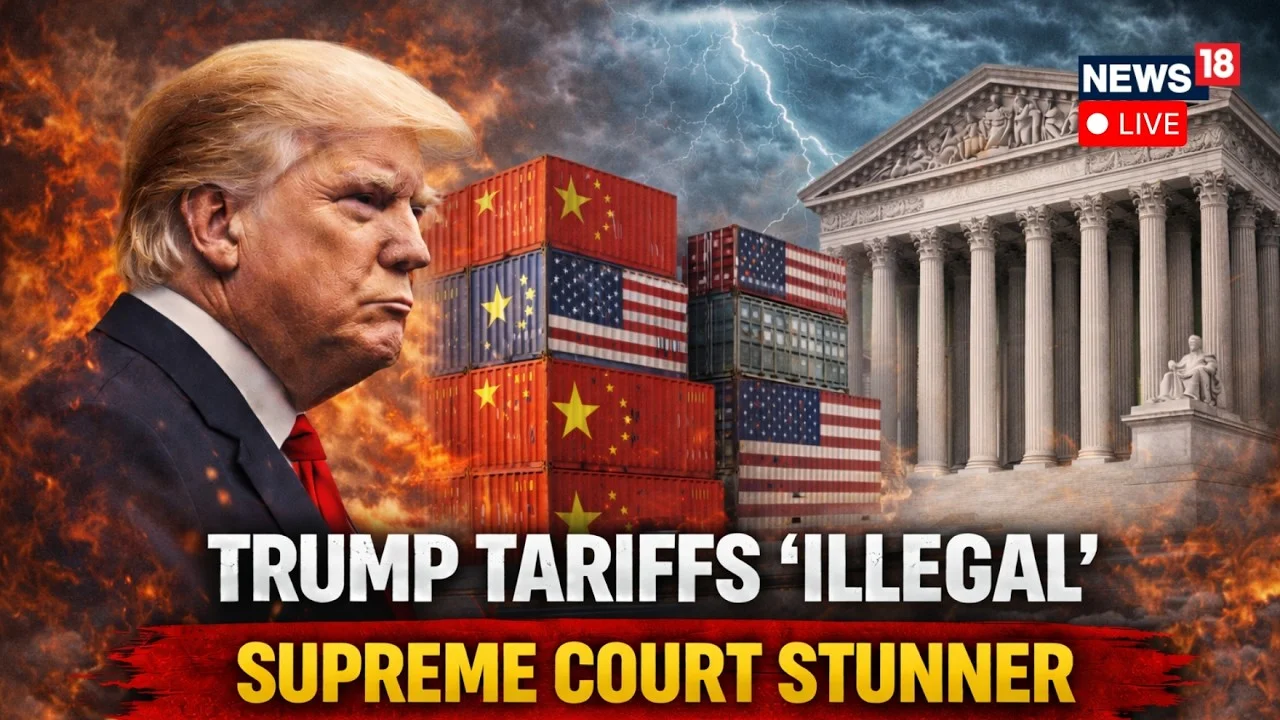
In a landmark decision that sent ripples through global markets, the U.S. Supreme Court on February 24th invalidated tariffs imposed by the Trump administration under the guise of a national emergency. This 6-3 ruling declared these tariffs, enacted via the International Emergency Economic Powers Act (IEEPA), to be unlawful, creating immediate ramifications for international trade agreements, corporate liabilities, and the government’s fiscal outlook. While initial stock market reactions were modestly positive, the long-term implications for U.S. trade policy and extant agreements remain highly uncertain, according to a recent analysis by Deloitte. The decision directly addresses a contentious period where tariffs became a primary tool in U.S. foreign economic policy, signaling a potential return to more conventional trade practices.
Background and Context of Trade Powers
The International Emergency Economic Powers Act (IEEPA), passed in 1977, grants the President authority to restrict economic relations with other countries during times of national emergency. However, as the Supreme Court underscored, this law makes no specific reference to tariffs. The Trump administration, in an unprecedented move in 2025, invoked IEEPA to implement tariffs on a vast array of goods from nearly every country globally. This marked the first instance of IEEPA being used for tariff imposition. The administration's rationale hinged on the argument that the persistent U.S. trade deficit constituted a national emergency requiring such measures to reduce it. Critics, including the plaintiffs in the lawsuit, countered that a decades-long trade deficit did not align with the definition of an emergency intended by the IEEPA, nor was the law designed to be wielded in this manner for trade policy. This fundamental disagreement over the interpretation and scope of presidential power in economic affairs formed the crux of the legal battle, ultimately leading to the Supreme Court's decisive ruling. The legal challenge highlighted the tension between executive authority and legislative intent when it comes to trade instruments.
Key Developments and Judicial Reasoning
The Supreme Court's 6-3 majority opinion sided squarely with the plaintiffs, ruling that the Trump administration's use of IEEPA to levy tariffs was unlawful because the statute does not explicitly grant the President tariff-imposing authority. This decision directly challenges the expansive view of executive power that underpinned the 2025 trade actions. According to Deloitte's weekly economic update, the ruling disrupts the global trade regime established during that period. Many business groups immediately welcomed the verdict, with some expressing anticipation that companies might be reimbursed for tariffs already paid. However, the Court's ruling offered no explicit directive regarding such refunds, leaving that complex issue to subsequent legal processes. Already, legal proceedings are underway by companies seeking tariff refunds, a process anticipated to be protracted and handled on a case-by-case basis. The potential for substantial refunds presents both a stimulative economic impact, if money is returned to businesses, and a significant challenge to the government’s fiscal deficit if the liability proves extensive. Conversely, there's a strong likelihood the current administration may pivot to imposing tariffs through other legal mechanisms, which could mute the overall fiscal effect of this ruling, as articulated by the Deloitte analysis. This critical development shifts the landscape for international trade significantly.
Analysis: What This Means for Global Trade and U.S. Policy
The Supreme Court's decision to invalidate the IEEPA-based tariffs marks a significant recalibration of presidential authority in trade policy and could herald a more structured, arguably less volatile, approach to international economic relations. For years, the use of national security justifications for trade actions has been a point of contention internationally, with many countries viewing them as thinly veiled protectionism. This ruling effectively curtails a broad interpretation of presidential emergency powers, compelling future administrations to adhere more closely to statutory language and congressional intent when enacting trade measures. This could diminish the executive branch's ability to swiftly impose unilateral trade penalties, potentially strengthening the role of Congress in trade legislation and negotiation. Moreover, it creates a precedent that could protect industries from sudden, politically motivated tariff hikes, fostering greater predictability in international supply chains and investment decisions. The "weaponization" of tariffs as a primary foreign policy tool, which characterized the Trump era, will likely be reined in, potentially leading to a more multilateral, rules-based approach to resolving trade disputes. This shift may be welcomed by U.S. trading partners who have long sought greater stability and less arbitrary tariff imposition. The immediate uncertainty surrounding existing trade agreements forged under the pressure of these IEEPA tariffs will need to be carefully navigated by policymakers, as the leverage used to secure those deals has now been removed.
From an economic perspective, the potential for tariff refunds, though uncertain, could inject liquidity into businesses, particularly those heavily impacted by the original tariffs. However, the exact mechanism and scale of these refunds remain undetermined, making it difficult to forecast their precise economic effect. If the government is compelled to issue significant refunds, it would undoubtedly add to the national fiscal deficit, potentially requiring other budgetary adjustments. Furthermore, the ruling creates a strategic dilemma for the current administration. While the IEEPA tariffs are gone, the underlying desire to address trade imbalances or exert economic pressure may persist. This could lead to the exploration of other legal avenues for tariffs, such as those related to national security under Section 232 of the Trade Expansion Act, or anti-dumping and countervailing duties, which are more firmly established in trade law. However, these mechanisms typically involve more detailed investigations and international legal frameworks, limiting the speed and scope of unilateral action. In essence, the Supreme Court has reasserted a degree of checks and balances on presidential trade authority, steering U.S. trade policy away from an expansive, emergency-based approach and back towards a framework more congruent with established trade law and international norms.
Additional Details and Ripple Effects
Beyond the immediate legal and economic ramifications, this Supreme Court ruling has several other notable ripple effects. The case attracted significant attention not just within the U.S. but also from international trade bodies and foreign governments, many of whom viewed the Trump administration's IEEPA tariffs as breaches of World Trade Organization (WTO) rules and broader international trade agreements. While the U.S. trade deficit has been a persistent feature of the American economy for decades, the previous administration's characterization of it as an "emergency" was widely contested by economists and legal scholars. Had the court affirmed the administration's stance, it could have fundamentally altered the global understanding of what constitutes a "national emergency" in an economic context, potentially allowing other nations to invoke similar justifications for their own protectionist measures. The decision therefore acts as a bulwark against such a broadening of emergency powers in trade. As WKTV reported on broader trending topics, the complexity of this tariff issue stands out as a top national story. The ruling demonstrates the judiciary’s role in defining the boundaries of executive action, even in areas historically seen as presidential prerogatives like foreign policy and national security. The legal clarity provided may, in the long run, foster greater stability, even if the immediate aftermath involves some turbulence as companies and governments adjust.
The business community's reaction is particularly telling. From small importers to multinational corporations, many have borne the brunt of these tariffs, struggling with increased costs, complex supply chain adjustments, and competitive disadvantages. The prospect of refunds, even if distant and uncertain, offers a glimmer of relief to these entities. Conversely, domestic industries that may have benefited from the protection offered by these tariffs could now face renewed competition. This decision might also influence how trade negotiations are conducted going forward. During the past year, the Trump administration leveraged the threat of IEEPA tariffs to pressure other countries into new trade deals, often leaving high tariff rates in place while securing commitments for increased U.S. goods purchases and investment, as highlighted by Deloitte. With the IEEPA tariffs now off the table, the U.S. may lose some of that specific leverage, potentially requiring a shift in negotiation strategies and a greater reliance on traditional diplomatic and economic tools. The economic update from Deloitte underscored that the uncertainty created by this ruling is now an "added element" in the global economic outlook, demanding close attention from investors and policymakers alike. The implications extend beyond trade, touching on questions of presidential power, constitutional law, and the fundamental structure of global economic governance. The intersection of politics, law, and economics is profoundly evident in this landmark decision.
Looking Ahead: Navigating the Post-Tariff Landscape
The path forward in the wake of this Supreme Court decision will be complex and multifaceted. Companies that incurred significant tariff costs will likely pursue legal avenues for reimbursement, setting the stage for potentially lengthy and intricate litigation. The U.S. government, on the other hand, faces the challenge of potentially balancing significant fiscal outlays from refunds with its ongoing trade policy objectives. It is highly probable that the administration will explore alternative legal frameworks for imposing tariffs if it deems necessary, but these avenues generally provide less flexibility and are subject to more stringent legal challenges. The decision also prompts a re-evaluation of existing trade agreements that were negotiated under the threat of IEEPA tariffs; the future of these deals, and whether their terms will be revisited, remains to be seen. Globally, the ruling may foster a sense of relief and greater stability, reducing the perceived risk of arbitrary trade barriers. However, the underlying trade tensions and economic imbalances that fueled the original tariff actions could still persist, requiring continued diplomatic engagement and multilateral solutions. The coming months will be critical for observing how the U.S. government, international partners, and the business community adapt to this redefined landscape of presidential trade authority. The economic and political reverberations of this ruling will undoubtedly continue to unfold, shaping global trade for years to come.
Related Articles
Supreme Court's Tariff Reversal Roils Global Trade, Sparks Economic Uncertainty
The US Supreme Court has ruled Trump-era tariffs based on IEEPA unlawful, creating widespread uncertainty for global trade, corporate refunds, and future U.S. tariff strategy.