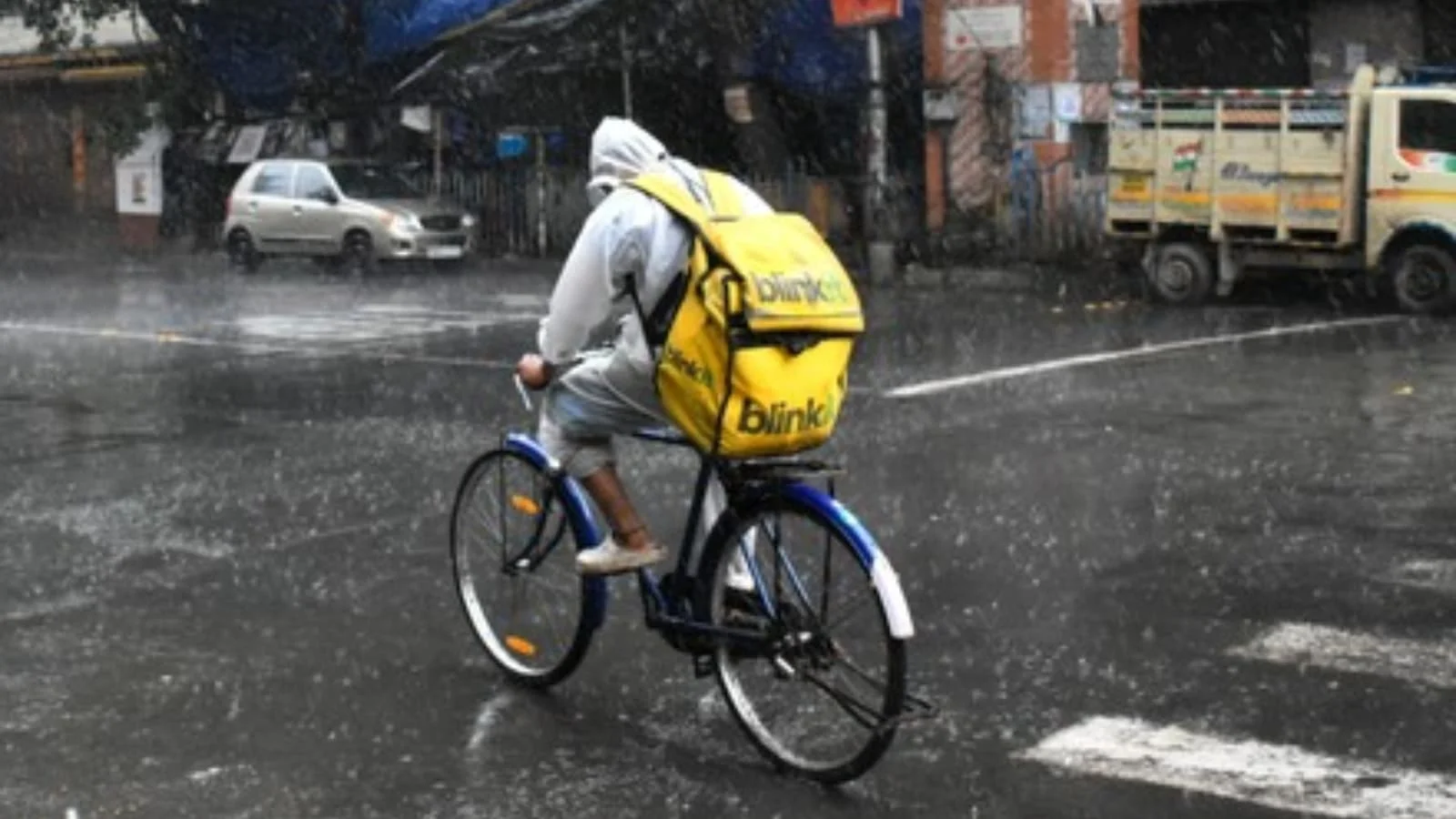
A viral video showing an elderly man with a Blinkit bag on horseback has captivated the internet, sparking humorous reactions and raising questions about quick commerce and gig worker welfare.
In an era dominated by instantaneous digital content and the relentless pace of quick-commerce, a recent viral video has managed to bridge the ancient with the ultra-modern, capturing the collective imagination of netizens across India and beyond. The footage depicts an elderly man, distinctively adorned with a Blinkit delivery bag, navigating what appears to be a rural landscape atop a horse. While the authenticity of this being an actual Blinkit delivery remains unconfirmed, the sheer incongruity of the scene has propelled it into viral stardom, eliciting a flood of humorous reactions, memes, and an unexpected spotlight on various facets of contemporary life, from the efficiency of delivery services to the often-overlooked realities of gig workers.
The rise of quick-commerce platforms like Blinkit has fundamentally reshaped consumer expectations, promising deliveries in unprecedentedly short timeframes. This aggressive pursuit of speed, however, has not been without its criticisms, drawing scrutiny from politicians and citizens alike regarding its impact on urban infrastructure, environmental concerns, and crucially, the working conditions of its delivery personnel. The viral video, initially shared on X (formerly Twitter) by user Kapil Bishnoi, cuts through this complex discourse with an image so visually striking and anachronistic that it instantly commanded attention. The caption accompanying the video, roughly translating to "This is Rajasthan, youth are not getting to ride horses... and old people are delivering online on horses," adds a layer of social commentary, playfully highlighting perceived generational divides and economic realities.
Such a quirky phenomenon, as reported by Storyboard18, is a testament to how online content transcends simple entertainment, often sparking unexpected conversations. While the internet is typically abuzz with diverse viral content, from heartwarming stories to bizarre occurrences, the Blinkit horse rider exemplifies content that is both uniquely amusing and thought-provoking, prompting laughter while subtly hinting at deeper narratives surrounding labor and innovation in India.
The video showcasing the Blinkit rider on horseback rapidly gained traction, accumulating over 120,000 views on X within hours and continuing to climb. Its immediate impact was a wave of effusive and humorous responses from online viewers. As detailed by Storyboard18, reactions ranged from playful jabs at regional identity, with one viewer exclaiming, "Rajasthan truly next-level startup state," to suggestions for acknowledging the rider’s unique approach. Comments such as "inko special incentive de do . Green Delivery" and the moniker "Royal Delivery" emerged, reflecting a sense of appreciation for the ingenuity, albeit possibly accidental, displayed in the video.
The widespread sharing and commentary have also led to numerous social media users tagging Blinkit directly on X, seeking an official response or clarification regarding the incident. As of now, the quick-commerce platform, led by Albinder Dhindsa, has not issued any public statement on the matter. This silence, however, has not deterred the internet's engagement, which thrives on speculation and shared humor. The incident highlights the power of user-generated content to dictate conversation and even momentarily shift the public perception of large corporations, regardless of the content's origin or intent.
This lighthearted viral moment stands in contrast to other significant online discussions, such as the widely circulated convocation video of an Indian woman in Canada. In that instance, as reported by Hindustan Times, a mother's enthusiastic "Do it balle balle" cheer during her daughter's ceremony resonated with viewers for its wholesome humor and cultural pride, becoming a different kind of viral sensation, celebrated for its warmth and relatability. Both cases demonstrate how social media platforms serve as powerful stages for diverse human experiences, some evoking laughter and joy, others sparking debate or, in the case of the Blinkit rider, a unique blend of amusement and subtle social commentary.
The viral Blinkit horse rider video, while undeniably humorous, inadvertently touches upon several critical aspects related to the gig economy, brand perception, and the evolving landscape of last-mile delivery. Firstly, it offers a stark visual representation of the lengths to which individuals in the gig economy may go, or the conditions under which they might operate, to fulfill delivery mandates. While the specific context of the horse rider remains unverified – it could be an individual’s personal mode of transport, a staged video, or an actual, albeit unconventional, delivery method in a specific terrain – it prompts reflection on the diverse and often challenging realities faced by delivery personnel, particularly in rural or semi-urban areas where conventional vehicles might be less practical or accessible.
Secondly, from a brand perception standpoint, Blinkit finds itself in an interesting position. While the video is generating significant positive engagement through humor and curiosity, it also implicitly raises questions about the brand's reach and the extent of its operational network. A company synonymous with lightning-fast, urban-centric deliveries is suddenly associated with a much more traditional, almost archaic, mode of transport, prompting audiences to ponder the true scope and flexibility, or perhaps the limitations, of its services. The lack of an official response from Blinkit, as noted by Storyboard18, leaves room for both positive interpretations (such as resourceful delivery, "green delivery") and less flattering ones. This incident also underscores the unpredictable nature of viral content and how it can shape public discourse around a brand, often outside the control of the company itself. Unlike carefully crafted marketing campaigns, organic virality, especially around quirky incidents, can create a powerful and often more memorable narrative.
Beyond the immediate amusement, the viral video serves as a poignant, albeit indirect, reminder of the broader discussions surrounding the welfare of gig workers, a critical issue that quick-commerce platforms frequently encounter. While the internet collectively enjoys the "Royal Delivery" spectacle, policymakers and labor advocates are engaged in more serious undertakings to secure the rights and social security of these workers. For instance, in a significant development reported by Storyboard18, the Karnataka government is moving forward with the implementation of a welfare fee on e-commerce and app-based service platforms. This fee is earmarked for funding social security measures for gig workers under the Karnataka Platform-based Gig Workers (Social Security & Welfare) Act, 2025.
This initiative, which includes the establishment of a dedicated Gig Workers Welfare Fund overseen by a 16-member board chaired by the state labor minister, highlights a growing recognition of the need to protect this burgeoning workforce. The formal notification detailing the fee structure and compliance requirements is anticipated shortly, signaling a tangible step towards mitigating the precarity often associated with gig employment. This commitment from government bodies contrasts sharply with trivial viral content, serving as a reminder that behind every delivery, whether by horse or electric scooter, there's a human element whose well-being is increasingly becoming a focal point of legislative action. Such legislative efforts are crucial for creating a sustainable and equitable environment within the rapidly expanding gig economy, addressing concerns that often get overshadowed by the immediate gratification quick-commerce offers.
The Blinkit horse delivery video, despite its unverified nature, is more than just a fleeting internet sensation; it's a cultural touchstone that encapsulates the contradictions and rapid evolution of modern logistics and employment. In the immediate future, its virality will likely continue, potentially inspiring similar themed content or even some creative marketing responses from quick-commerce brands, should they choose to acknowledge the trend. The incident highlights the power of social media to turn an everyday oddity into a global conversation starter, influencing public perception and brand identity in unpredictable ways. Furthermore, it subtly presses on the question of accessibility and infrastructure in diverse geographies – does quick commerce truly penetrate all corners of a vast and varied country like India, and if so, what unorthodox methods might be employed to achieve it?
On a more serious note, as governments like Karnataka continue to implement robust social security frameworks for gig workers, the narrative around quick-commerce will increasingly shift from mere speed and convenience to ethical labor practices. The juxtaposition of a "royal delivery" on horseback with discussions about gig worker welfare underscore the duality of the industry: innovative and efficient on one hand, yet frequently challenged on social responsibility. This evolving landscape means that while amusing viral moments will continue to capture attention, the underlying issues of fair wages, working conditions, and social safety nets for those who power the quick-commerce revolution will remain at the forefront for consumers, companies, and policymakers alike. The future of delivery, therefore, isn't just about faster routes or advanced technology; it's also about ensuring a humane and sustainable ecosystem for its human facilitators.

A Florida man's viral video of him riding his horse into a Chick-fil-A drive-through highlights the impact of rising gas costs and sparks wider conversations about alternative transportation.

Nine-year-old Lucy Milgrim stuns the internet deadlifting 180 pounds, tripling her bodyweight. Her viral feat sparks discussions on youth sports and social media's role.

A viral video purportedly showing Jeffrey Epstein alive and driving in Florida has sparked widespread speculation, quickly debunked by authorities and fact-checkers. This comes as controversial emails from Sarah Ferguson in Epstein documents resurface.