Erika Kirk Did Not Slam Grok or Reply to Druski: Fact-Checking Viral Claims
Viral claims that Turning Point USA CEO Erika Kirk publicly slammed Elon Musk's Grok AI or responded to comedian Druski's satirical video have been debunked.

In the whirlwind of social media, where information (and often misinformation) spreads at lightning speed, prominent figures frequently find themselves at the center of viral claims. Such is the case for Erika Kirk, the CEO of Turning Point USA, who recently became the subject of widespread speculation regarding her reactions to a comedian's video and Elon Musk's AI chatbot, Grok. Claims circulated across X (formerly Twitter) suggesting Kirk had vehemently responded to a satirical skit by actor and comedian Druski, and separately, lashed out at Grok for misidentifying a character in that skit as herself. However, a closer look at the digital trail, as reported by Hindustan Times, reveals these viral assertions to be unfounded, illustrating the persistent challenge of distinguishing fact from fiction in the online sphere.
Background and Context of the Viral Claims
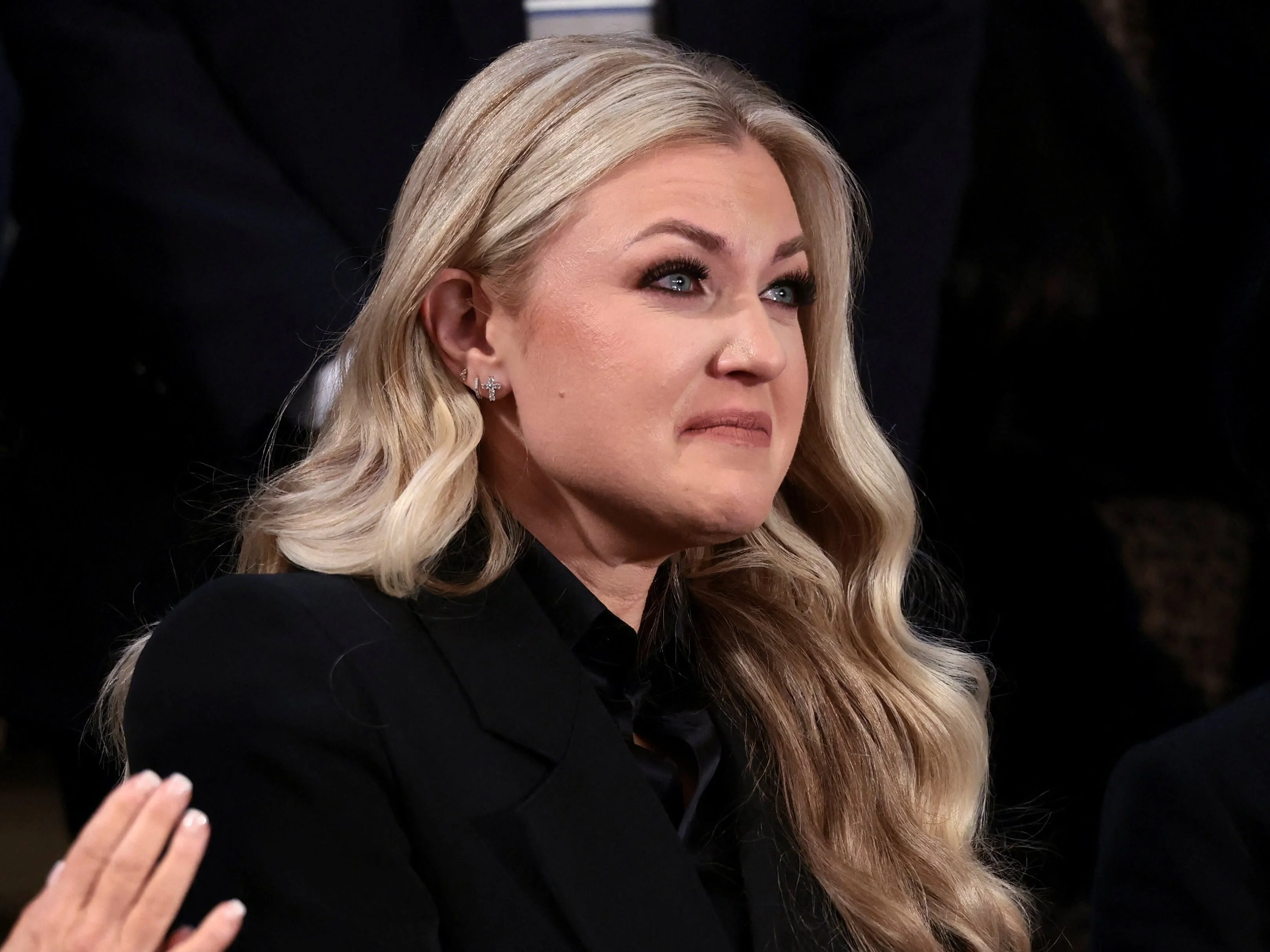
Erika Kirk, known for her role at the helm of Turning Point USA, a conservative student organization, is no stranger to public scrutiny and debate. Her public profile and vocal stance on political and cultural issues often place her in the crosshairs of online discussions. The specific claims that garnered significant traction began with a video released by actor and comedian Druski, which humorously depicted conservative women in the US. Many viewers, observing the blonde woman in a white pantsuit portrayed by Druski, drew immediate comparisons to Kirk’s recognizable public image. This resemblance, whether intentional or coincidental, served as the initial spark for the subsequent cascade of viral claims. The internet’s quick-to-judge nature then fostered an environment where unverified assertions could take root, leading to the widespread belief that Kirk had indeed reacted publicly and heatedly to the perceived slight and a related AI blunder, as noted by Hindustan Times.
Key Developments and Debunked Allegations
The core of the viral controversy centered on two distinct but related allegations. Firstly, it was claimed that Erika Kirk posted an indignant reply directly on Druski’s Instagram video. The alleged comment, which quickly circulated in screenshots, read: “Druski this is sick. You fully dressed up as me, copied my look, my voice, my mannerisms, and turned me into a joke for millions of people. But let me guess, when it's done to me it's suddenly 'comedy.' If I did anything even remotely comparable, y'all would be trying to ruin my life. This is racist, humiliating, and you know exactly what you're doing.” An equally viral alleged response from Druski then sarcastically countered, “I never even said your name in the video the fact you saw a wig, a Bible, and a character and immediately decided it was about you is kind of telling on yourself.” However, HT.com conducted a thorough search and was "unable to find Erika Kirk's highlighted comment on Druski's post," concluding that neither of these alleged exchanges exists in the comment threads. This pattern of misattribution extends beyond individuals; even technologies like AI are not immune to becoming subjects of false narratives. For instance, the claim that "mini Kindle pods" are a new Amazon product has also been debunked, demonstrating how brand names are co-opted to lend false legitimacy to unrelated products, as reported by Mashable.
Secondly, another viral post alleged that Kirk took to X to criticize Elon Musk's Grok AI chatbot with the message: “Elon Musk fix your damn AI. That is NOT me…" This accusation stemmed from reports that Grok had mistakenly identified the character in Druski’s satirical skit as Erika Kirk. Yet, much like the Druski comment, this claim was swiftly fact-checked by other X users. Their findings highlighted that “The screenshot in the video is not authentic. Erika Kirk did not post this; her account has no such post and her last was March 21, 2026. She has not responded to the Druski skit or Grok.” This direct refutation, cited by Hindustan Times, unequivocally debunks both major parts of the viral narrative. An earlier claim regarding a cease and desist letter sent by Kirk or TPUSA to Druski had also been disproven, further illustrating a pattern of fabricated narratives surrounding this particular online episode.
Analysis: The Anatomy of Digital Misinformation
This incident vividly illustrates the precarious nature of information dissemination in the age of social media. The speed with which these claims about Erika Kirk propagated, despite their lack of verifiable evidence, underscores several critical aspects of digital misinformation. Firstly, the "lookalike" phenomenon provides fertile ground for immediate, albeit often erroneous, conclusions. When a public figure is thought to be caricatured, the emotional response can bypass critical thinking, leading users to instantly believe and share unsubstantiated reactions. Secondly, the ease of creating fake screenshots or fabricating comments on platforms like Instagram and X means that visual "evidence" can be manufactured and deployed with minimal effort, deceiving many. The lack of built-in verification mechanisms on these platforms, or at least the general public’s disinclination to utilize them, exacerbates the problem. This incident also highlights the weaponization of online interactions, where fabricated responses can be designed to elicit specific emotional or political reactions, effectively manipulating public discourse. As platforms host an ever-increasing volume of content, individuals must cultivate a higher degree of skepticism and employ basic fact-checking techniques before accepting and amplifying viral claims. The parallel trend of "mini Kindle pods," which are not actual Kindles but rather re-branded MP3 players leveraging a popular brand name, as detailed by Mashable, further underscores this pervasive issue of deceptive branding and the spread of misleading information about consumer products, mirroring the tactics employed in political and personal smears.
Additional Details and Broader Context
The broader implications of such incidents extend beyond the individuals involved, touching upon the integrity of online discourse and the mechanisms of public perception. The rapid debunking by users on X, later confirmed by professional news organizations like Hindustan Times, demonstrates the crucial role of collective fact-checking within online communities. However, the initial viral spread often outpaces the corrections, leaving a lasting impression that can be difficult to erase. This phenomenon is a constant challenge for public figures, who perpetually operate under the shadow of potential online hoaxes and character assassinations. It also shines a light on the responsibilities of social media platforms to implement more robust safeguards against the proliferation of fabricated content. While platforms have faced pressure to combat misinformation, the sophisticated nature of these fabrications often makes detection difficult without direct user reporting and subsequent investigation. The sheer volume of content makes manual verification impractical, pushing the onus onto users to maintain a critical perspective. Moreover, the cultural impact of viral content, even when false, can be significant. It shapes narratives, influences opinions, and can contribute to a climate of distrust, blurring the lines between legitimate news and malicious fabrications. This environment makes it challenging for audiences to discern authentic voices and legitimate commentary from content designed to mislead or provoke. In a different vein illustrating the power of cultural resonance, David Bowie's 'Starman' has been elevated to "humanity's theme song" through its use in films like 'The Martian,' as highlighted by Yahoo, showcasing how cultural touchstones can build shared narratives, a stark contrast to the divisive narratives created by misinformation.
Looking Ahead: Vigilance in the Digital Age
Moving forward, the incident involving Erika Kirk serves as a potent reminder of the ever-present need for media literacy and critical thinking in navigating the digital landscape. For news organizations, the imperative to verify and contextually report on viral claims becomes even more paramount. The rapid nature of online virality necessitates equally rapid and accurate fact-checking to counteract false narratives before they become entrenched. For social media users, cultivating a habit of questioning, cross-referencing, and seeking out primary sources before sharing information is vital. As AI technologies like Grok become more integrated into our informational ecosystem, their potential for misidentification, as seen in this case, adds another layer of complexity. Developers must prioritize accuracy and provide clear mechanisms for correction to maintain trust. This entire episode underscores that while the digital age offers unprecedented access to information, it also demands an unprecedented level of vigilance from both information creators and consumers alike to safeguard against the insidious spread of misinformation.
Related Articles

Elon Musk's xAI Hosts Boston Event as Massachusetts Courts AI Industry
Elon Musk's xAI held an invite-only event in Boston, signaling its presence as Massachusetts actively works to attract leading artificial intelligence companies.