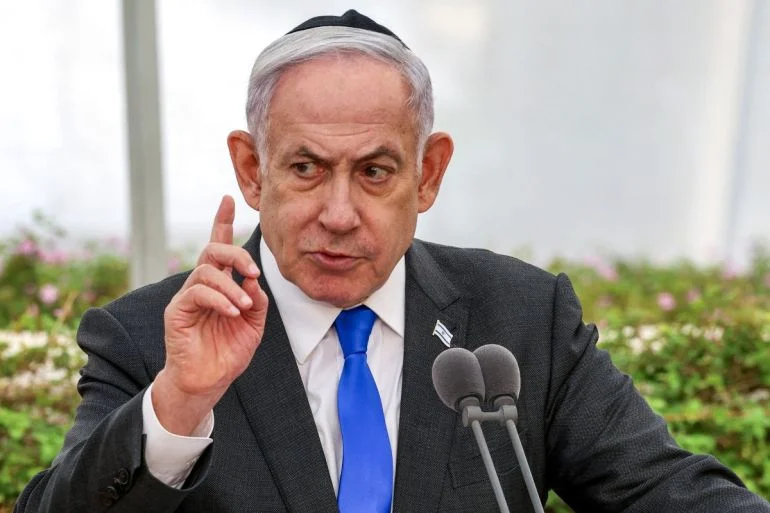
In a period of heightened geopolitical instability in the Middle East, a wave of online misinformation has stirred confusion and fueled speculation, with a particular focus on Israeli Prime Minister Benjamin Netanyahu. Rumors suggesting the death or disappearance of the long-serving Israeli leader rapidly propagated across social media platforms, coinciding with escalating tensions involving Israel, Iran, and the United States. These viral claims, often accompanied by digitally manipulated or misinterpreted visual content, prompted urgent fact-checking efforts and official statements to clarify Netanyahu's status, underscoring the challenges of information dissemination during international crises. The incident highlights how rapidly unverified information can spread and profoundly impact public perception and diplomatic narratives, particularly when an already volatile region is on edge.
The Genesis of Misinformation: A Digital Deluge
The recent surge in online misinformation concerning Benjamin Netanyahu’s alleged demise can be directly traced back to highly circulated social media posts and a specific video clip. According to The Sunday Guardian, the rumors intensified after a short video, purportedly showing "unusual visual details," went viral. Some users on various platforms seized upon these perceived anomalies, suggesting the footage might be artificially generated or indicative of a cover-up regarding Netanyahu's well-being. The most prominent of these claims centered around a moment where, due to camera angles and rapid hand movement, Netanyahu appeared to have six fingers on one hand. This optical illusion quickly became prime evidence for those pushing theories of artificial intelligence manipulation or the circulation of deepfakes, further muddying the informational waters during an already sensitive time. The rapid spread of such visually deceptive content underscores the vulnerability of the public to misinformation, especially when traditional media channels struggle to keep pace with the velocity of social media.
Netanyahu: A Profile in Leadership and Controversy
Benjamin Netanyahu stands as one of Israel's most enduring and influential political figures, a testament to his strategic prowess and firm stance on national issues. He first ascended to the premiership in 1996 and has since held the position multiple times, making him the country’s longest-serving prime minister. His political career has been characterized by an unwavering focus on national security, often navigating complex diplomatic relations and regional conflicts. Netanyahu's leadership is intrinsically linked to Israel's approach to defense, its interactions with global powers, and its management of turbulent neighbors. During periods of geopolitical instability, he consistently takes center stage, leading press briefings, convening security meetings, and orchestrating the nation's response to perceived threats. His public image is one of a resolute leader, deeply involved in every facet of Israel's security and foreign policy decisions. This deep involvement, as highlighted by The Sunday Guardian, is precisely why rumors of his absence or death would send shockwaves through both domestic and international communities, necessitating prompt and clear rebuttals from official sources.
Current Status and Official Rebuttals
Despite the widespread online speculation regarding Benjamin Netanyahu's health and whereabouts, official reports and public evidence overwhelmingly confirm that the Israeli Prime Minister is alive, active, and fully engaged in his duties. The Sunday Guardian unequivocally states that "there is no evidence that Netanyahu has died or disappeared." Recent public appearances, including televised addresses, and continuous official communications from his office, affirm his active role in Israel. Israeli officials have explicitly confirmed that he remains at the helm during the ongoing regional crisis, actively participating in security briefings and crucial discussions concerning military operations and diplomatic strategies. His official residence in Jerusalem serves as both a home and a central hub for governmental activities, a base from which he continues to operate. While leaders might utilize protected government facilities during elevated security threats, there is no credible information suggesting Netanyahu has left Israel. Furthermore, the particularly tenacious "six fingers" video theory has been thoroughly debunked by fact-checkers, with explanations attributing the anomaly to visual illusions caused by camera angles, motion blur, and specific hand gestures, rather than any artificial intelligence manipulation. For example, Grok, a fact-checking entity, clarified that the image resulted from "an optical illusion" and that Netanyahu has the standard five fingers on each hand.
Analysis: The Broader Implications of Viral Misinformation
The rapid global spread and virality of misinformation surrounding Benjamin Netanyahu's alleged death serve as a stark reminder of the fragile state of information ecosystems, particularly during times of international crisis. This specific incident, much like other viral content that gains traction almost instantaneously—such as the emotional video of daughters surprising their parents with a new car, as reported by Hindustan Times, or the public outrage over a bullying video at an Edo school highlighted by TVC News—demonstrates the immediate and powerful impact social media has on public perception. However, unlike heartwarming family moments or local incidents, geopolitical death hoaxes carry far weightier consequences.
The implications of such misinformation are profound. Firstly, they can destabilize an already volatile region. False news about a leader's demise can lead to market volatility, diplomatic uncertainty, and even unintended military escalations, as adversaries might misinterpret situations or opportunistically act on perceived weakness. Secondly, it erodes public trust in both traditional media and official communications. When false narratives proliferate, citizens become more skeptical, making it harder for accurate information to gain traction and for leaders to maintain credibility. Thirdly, it highlights the growing sophistication of visual manipulation. Whether it’s an optical illusion or a deliberate deepfake, discerning truth from falsehood is becoming increasingly challenging, placing a greater burden on media literacy and critical thinking. The Netanyahu death rumor is not just about one leader; it’s a symptom of a larger digital pandemic where truth is often the first casualty of conflict.
Context of Escalation: Israel, Iran, and the US
The environment in which these rumors about Netanyahu emerged is one of deep-seated geopolitical tension, specifically concerning the fragile dynamics between Israel, Iran, and the United States. Following a period of tentative reduction in hostilities, a "fragile ceasefire" between Israel and Iran had been in place, as noted by The Sunday Guardian. However, this calm was shattered by renewed military actions, which Israeli authorities justified as necessary responses to severe security concerns and perceived threats emanating from Iranian-backed forces throughout the region. Israeli officials argue that inaction would compromise national security, emphasizing that their defensive measures were informed by intelligence reports and a dynamic assessment of regional developments.
This cycle of action and reaction has placed the Middle East on a knife-edge, with rising fears of a broader regional conflict pulling in global powers. The US, a steadfast ally of Israel, finds itself deeply entrenched in these complex dynamics, often walking a tightrope between supporting its ally's security and de-escalating wider hostilities. The heightened military posturing and rhetorical exchanges have prompted significant international attention and diplomatic pressure, as the international community scrambles to prevent the situation from spiraling further out of control. It is within this combustible environment that rumors such as Netanyahu's death could potentially ignite unforeseen and dangerous consequences, illustrating the critical importance of verifiable information during periods of extreme sensitivity.
Looking Ahead: The Battle for Truth in a Digital Age
As the conflict between Israel and Iran continues to unfold, the spread of misinformation and misleading visuals will likely remain a persistent challenge. The incident involving Benjamin Netanyahu's alleged death serves as a critical case study in how easily unsubstantiated claims can gain traction, especially when emotions are high and reliable information feels scarce. The focus for observers, political analysts, and the international community will undoubtedly remain on diplomatic efforts, the trajectory of military actions, and the effectiveness of international mediation to prevent further escalation. However, an equally critical focus must be placed on combating the digital pandemic of misinformation. Enhanced collaboration between social media platforms, fact-checking organizations, and government entities will be essential not only in debunking false narratives but also in proactively educating the public on media literacy. Without a concerted global effort to ensure the accuracy and integrity of information, periods of geopolitical tension will continue to be fertile ground for destabilizing rumors, complicating efforts towards peace and understanding in an already volatile world. The future will hinge not just on battlefield decisions and negotiating tables, but also on the collective ability to discern truth from the digital noise.