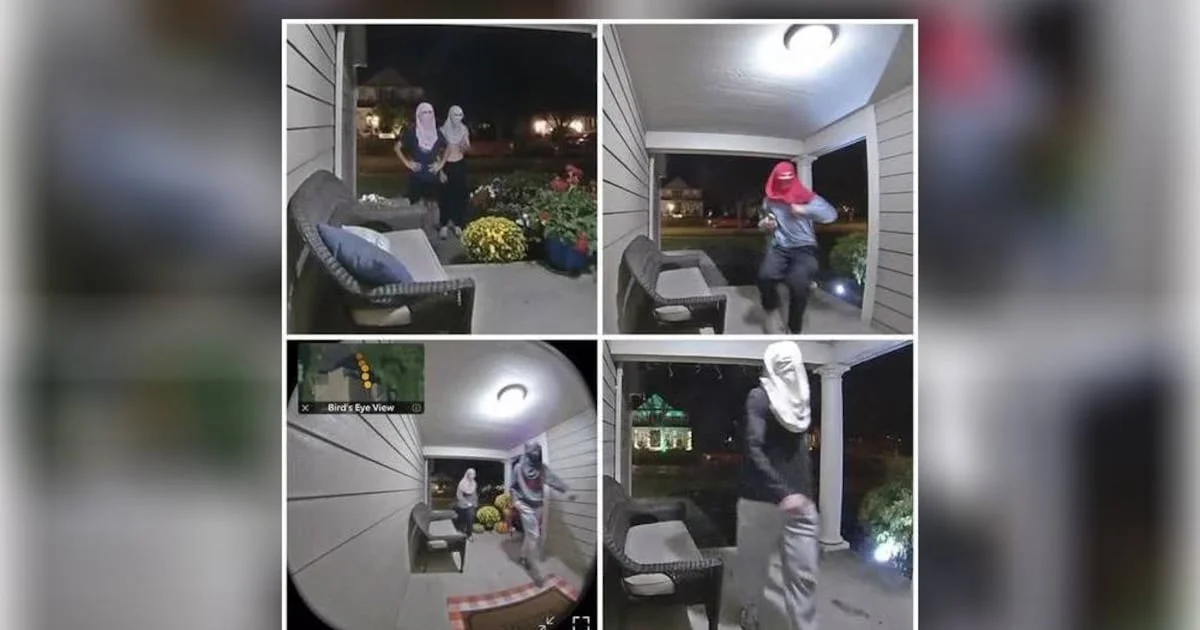
Police across Ohio are sounding the alarm over the "door kick challenge," a dangerous viral social media trend where individuals, often teens, kick doors and flee, leading to property damage, fear, and even potentially violent confrontations.
Police departments across Ohio are issuing urgent warnings against a rapidly spreading and potentially dangerous social media phenomenon dubbed the "door kick challenge." What some participants perceive as a harmless prank is escalating into significant property damage, instilling fear in homeowners, and raising serious concerns about an unintended confrontation turning violent. The trend involves individuals, often masked and presumed to be teenagers, approaching residential homes, violently kicking doors – sometimes garage doors, sometimes front doors – and then fleeing the scene. This behavior, far from being an innocent youthful escapade, is prompting increased police reports and sparking widespread distress among a populace that frequently mistakes these actions for attempted burglaries or home invasions. The risks, authorities warn, are far too high, extending from criminal charges for perpetrators to potentially tragic outcomes for all involved.
While the "door kick challenge" might seem like a new iteration of the classic "ding-dong ditch," authorities emphasize that its impact is significantly more severe. According to Hilliard Police Sergeant Maggie Reed, the intent behind these actions is often misconstrued by those carrying them out. "What they don’t realize is they think it’s a laughable matter, and the homeowners perceive it as potentially a threat," Sgt. Reed explained, as reported by WKBN.com. The distinction is crucial: kicking a door with force, especially when masked and under the cover of darkness, goes far beyond a mischievous doorbell ring. It mimics the initial actions of a home invasion, triggering deep-seated fears and defensive instincts in residents. This perceived escalation of a prank highlights a concerning trend where social media challenges increasingly push boundaries, often without sufficient consideration for real-world consequences or the emotional and financial toll on victims. The motivation appears to be online notoriety or peer validation, but the outcome is a tangible threat to public safety and property.
The severity of the "door kick challenge" is underscored by the growing number of police reports and the palpable fear it instills in communities. Hilliard, Ohio, police have noted a significant uptick in incidents related to the trend, detailing reports of broken glass front doors and extensively dented garage doors. One Hilliard resident, a widow living alone, recounted her harrowing experience to WKBN.com, stating, "I heard a bang, thinking something had fallen off the wall... It was kind of unnerving, and I did call 9-1-1." She now faces hundreds, if not thousands, of dollars in damage to her garage door. The signs of these incidents are often subtle initially—a dent, a footprint, a scuff mark—but they quickly reveal themselves as intentional acts of vandalism. The widespread nature of this phenomenon is also a point of concern for law enforcement, with Sgt. Reed confirming that the activity is not confined to a single neighborhood but is being reported across various areas. The psychological impact on residents, particularly those living alone, is profound, creating a sense of vulnerability and unease that transcends the immediate property damage. Police are actively seeking public assistance, circulating surveillance images in hopes of identifying those responsible, emphasizing that what perpetrators view as a game carries serious criminal ramifications.
The most alarming aspect of the "door kick challenge" is the inherent danger of a homeowner misinterpreting the act as a genuine threat to their safety and responding with force. This potential for tragic escalation is not hypothetical; it has already manifested in a terrifying incident in a Cincinnati suburb. As detailed by WKBN.com, police reported that a homeowner, believing their property was being invaded during a similar prank-style incident, fired shots at a group of teens. While no one was directly hit by the gunfire, a vehicle and nearby homes sustained damage. This incident serves as a stark and tragic illustration of the unpredictable and violent consequences that can arise when playful pranks intersect with legitimate fears of home invasion. Police emphasize the universal human instinct to protect one's home and family, an instinct that can lead to quick, defensive actions in moments of perceived threat. The line between a "prank" and a "threat" is razor-thin when someone is violently attempting to breach your home, and in a country where gun ownership is prevalent, this misunderstanding can have fatal consequences. Law enforcement officials are urging parents to engage in serious conversations with their children about these risks, stressing that what seems like "innocent fun" can lead to criminal charges, serious injury, or worse. The "door kick challenge" is not merely about property damage; it’s about the very real risk of provoking a deadly confrontation born from fear and misinterpretation.
The "door kick challenge" is one in a long and ever-evolving line of viral social media trends, highlighting a complex modern phenomenon where online culture spills into the physical world with both benign and dangerous consequences. While the "door kick challenge" is undeniably harmful, the spectrum of viral trends is vast. For instance, the "Books on the Delhi Metro" initiative, detailed by India Today, began as a viral concept in 2017. Inspired by "Books on the Underground" in London, this trend encouraged strangers to leave books behind for others to discover, read, and pass on, fostering a sense of community and promoting literacy. This positive trend demonstrates the powerful potential of social media to amplify positive and enriching ideas, turning everyday commutes into unexpected literary discoveries. The stark contrast between these two trends – one destructive and fear-inducing, the other constructive and community-building – underscores the dual nature of virality. Social media platforms, while powerful tools for connection and information sharing, often lack inherent mechanisms to filter for safety or ethical impact, leaving the burden of responsibility largely on individual users and, increasingly, on parents to guide their children through this digital landscape. This dichotomy necessitates a more nuanced public discourse around digital citizenship and the real-world implications of online behavior.
Police warnings, while crucial, are only one part of the solution. The core of addressing viral trends like the "door kick challenge" lies in proactive parental engagement and heightened community vigilance. Sgt. Reed's plea for parents to speak with their children resonates deeply within this context. "We really want the parents to talk to their kids and just explain how these situations can go south and turn violent, because these unexpected disturbances can create a dangerous situation," she urged, as quoted in WKBN.com. Many young people, influenced by online trends and peer pressure, may genuinely fail to grasp the gravity of their actions and the potential for severe, unintended consequences, including criminal charges for vandalism, trespassing, or even assault if an altercation occurs. Beyond direct conversations, monitoring online activity and fostering open communication channels within families are paramount. Communities, too, play a vital role. Neighbors looking out for one another, reporting suspicious activity promptly, and sharing information can significantly aid law enforcement in deterring these incidents and identifying perpetrators. The incident in the Cincinnati suburb serves as a critical warning that inaction or ignorance is no longer an option. This is not simply about preventing property damage; it is about preventing potentially life-altering or even fatal encounters, necessitating a collective effort from families, schools, and local authorities to re-educate and protect.
The "door kick challenge" exemplifies the ongoing struggle communities face in navigating the unpredictable currents of social media trends. As platforms evolve and new challenges emerge, the onus will increasingly fall on a multi-pronged approach involving law enforcement, tech companies, educators, and, most importantly, parents. While police will continue to enforce laws and issue warnings, there's a growing need for broader digital literacy initiatives that teach young people critical thinking about online content and the real-world implications of their actions. Tech companies could also explore more proactive measures to identify and flag content that promotes dangerous activities. For communities in Ohio and beyond, remaining vigilant, reporting suspicious activities promptly through channels like those highlighted by Hilliard police, and fostering open dialogue about responsible online behavior will be key to mitigating the risks posed by such trends. The ultimate goal must be to transform the digital realm from a "wild west" of impulsive challenges into a space where creativity thrives responsibly, without endangering lives or properties.

A popular TikTok energy-saving hack for radiators, involving foil or shelves, is being warned against by property experts, who say it could lead to significant mold damage costing homeowners up to $30,000.

The Goo Goo Dolls have canceled the remainder of their Canadian tour due to frontman John Rzeznik's pneumonia, coming days after the band experienced a significant resurgence in popularity thanks to a viral TikTok trend featuring their 1998 hit "Iris."

The "NeeDoh hunting" phenomenon, driven by social media, sees parents scrambling for squishy stress toys, leading to long lines and concern over reseller markups.