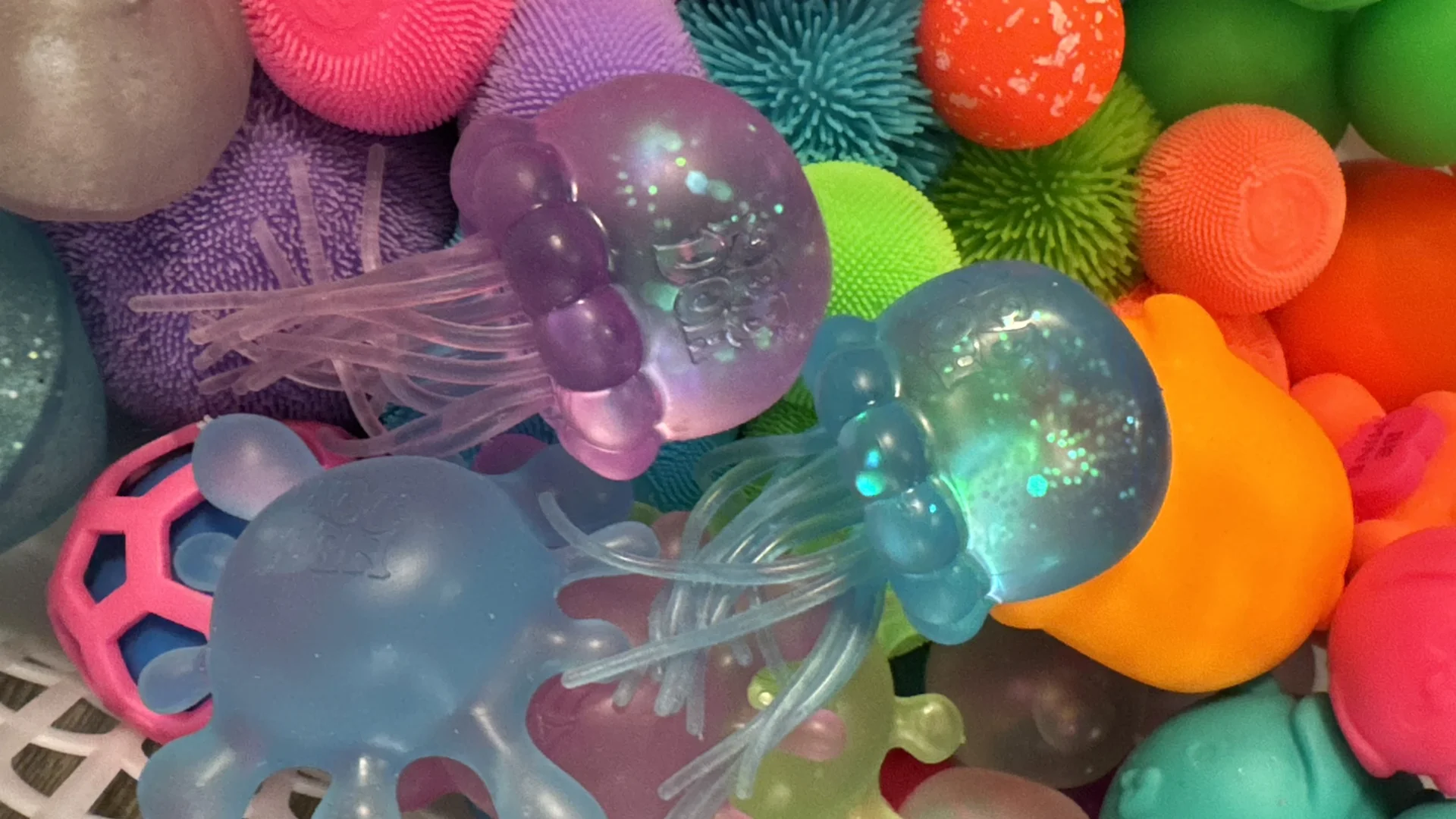
NeeDoh Hunting: The Viral Squishy Toy Craze Taking Over Classrooms and Homes
The "NeeDoh hunting" phenomenon, driven by social media, sees parents scrambling for squishy stress toys, leading to long lines and concern over reseller markups.

A vibrant, tactile obsession known as “NeeDoh hunting” has swept across schoolyards and suburban homes, catapulting a decades-old stress toy brand back into the spotlight. What started as a simple, colorful squishy ball has evolved into a full-blown phenomenon, sending parents on a retail quest to secure the elusive NeeDoh toys for their children. This unexpected resurgence, fueled heavily by social media, is creating unprecedented demand, leading to long lines outside stores and a burgeoning secondary market with inflated prices, turning a seemingly innocent plaything into a must-have collectible.
Background and Context
While the sensation feels fresh and new, squishy toys, and specifically the NeeDoh brand, are far from recent innovations. As NBC 6 South Florida reports, NeeDoh has been a staple on store shelves for over a decade, often found in toy stores as a simple, inexpensive stress reliever. The concept of sensory toys, designed to provide tactile stimulation and aid in focus or anxiety reduction, dates back even further, with various forms of stress balls and fidgets gaining popularity at different times. What distinguishes the current "NeeDoh hunting" craze is not the novelty of the product itself, but the intensity and scale of its adoption, predominantly by school-aged children, making it less about a niche therapeutic tool and more about a widespread cultural trend. The shift from a quiet, consistent seller to a feverishly sought-after item underscores the unpredictable power of modern viral marketing, especially within younger demographics.
Key Developments in the NeeDoh Craze
The "NeeDoh hunting" trend is characterized by parents and guardians actively searching for these squishy toys, often at the urgent request of their children. Stephanie Calzadilla, a South Florida mother, articulates the daily routine, telling NBC 6 South Florida, "Every day when I pick them up from school, it’s, ‘Did you go NeeDoh hunting?’" This daily ritual highlights the pervasive nature of the trend among school-aged children. These aren't just limited to the original NeeDoh brand; as a 6th grader named Lauren explains, kids are collecting various squishy shapes — cheese, butter, strawberries, ice cubes — swapping them and treating them as coveted treasures, often trying to keep them hidden from teachers. The demand has created a frenzied retail environment, with stores like Target, Five Below, and Learning Express Aventura experiencing long queues of eager shoppers. Isaac Bendrao, manager at Learning Express Aventura, confirms the phenomenon, noting that while they've stocked these toys for over ten years, current demand is unprecedented. He attributes this surge directly to social media, stating, "The thing now is that a video that can be seen by 10 or 100,000 people, now it’s being seen by millions." This amplified exposure has transformed a steady niche product into a mainstream obsession. The rush to acquire these toys has also led to concerns about online resellers hoarding inventory and dramatically increasing prices, prompting stores like Learning Express Aventura to implement limits on purchases, often one or two items per customer, to ensure fair access to the $3-$15 toys. The overwhelming nature of this social media-driven fad means parents like Stephanie offer stark advice: "All I can say is, if you can find it, just grab it, that’s all I can say."
Analysis: What This Means for Consumers and Retailers
The "NeeDoh hunting" phenomenon offers a fascinating case study in modern consumer behavior, particularly within the toy market. Its rapid ascent, primarily driven by viral social media content, exemplifies how digital platforms can resurrect dormant products and create hyper-localized demand that quickly escalates nationally. For consumers, especially parents, it signifies another entry into the ever-evolving landscape of "must-have" items that can appear almost overnight. This creates pressure, not only financially but also in terms of time and effort expended in the search. The rise of online resellers capitalizing on scarcity is a predictable, albeit frustrating, byproduct, pushing prices far beyond the intended retail value and creating an unequal playing field for average consumers versus those looking to profit. Retailers, on the other hand, face the dual challenge and opportunity of managing these unpredictable demand spikes. While it brings customers into stores, it also necessitates careful inventory management, rapid supply chain adjustments, and the implementation of fair purchasing limits to prevent price gouging and customer frustration. The underlying mechanism, however, is a testament to the power of peer-to-peer influence and micro-influencers among children, where a simple squeeze or toss of a colorful goo can instantly become a widespread aspiration. This trend also underscores a broader societal appreciation for sensory objects, suggesting that amidst increasingly digitized lives, there remains a strong human need for tangible, calming, and tactile experiences.
Beyond the Squeeze: A Look at Viral Trends and Fads
The "NeeDoh hunting" craze isn’t an isolated incident but rather another in a long line of viral trends that capture the collective imagination, often driven by younger demographics and amplified by social media. Historically, fads like Beanie Babies, Silly Bandz, or even earlier phenomena like Cabbage Patch Kids, shared similar characteristics: sudden, intense demand, perceived scarcity, and a cultural conversation around acquisition. What's different today is the speed and reach afforded by platforms like TikTok and Instagram. A single video can expose millions to a product overnight, triggering an immediate and unmanageable surge in demand. This contrasts sharply with pre-internet fads, which often had slower burn rates as word-of-mouth spread more gradually, or were driven by traditional advertising campaigns. The "NeeDoh hunting" trend also aligns with a growing understanding of the benefits of sensory play and stress-relief tools. While adults might gravitate towards fidget spinners or sophisticated stress balls, children are drawn to the vibrant colors, satisfying squish, and collectibility of items like NeeDoh. These toys offer a tangible, non-screen-based outlet for energy or anxiety, making them appealing to both kids seeking fun and parents looking for simple comfort items. The communal aspect — collecting, swapping, and discussing — further cements their place as cultural touchstones within school communities, even if for a fleeting period. This highlights how fads, while often dismissed as passing novelties, can tap into genuine psychological, social, and developmental needs.
Additional Details of the Phenomenon
The allure of NeeDoh extends beyond its primary function as a stress ball. As the 6th grader Lauren articulated in the NBC 6 South Florida report, its appeal also lies in the variety of textures and shapes, not just the original spherical squishy. This diversification into items shaped like cheese, butter, or fruits allows for a broader collecting appeal, turning each acquisition into a unique find rather than a repetitive purchase. The social dynamic among school children also plays a crucial role; the act of collecting and swapping these toys fosters a sense of community and status, and the minor rebellion of trying to keep them out of teacher’s sight adds to their mystique and desirability. For retailers, the challenge is significant, as exemplified by Learning Express Aventura’s experience. Manager Isaac Bendrao stressed the unprecedented lines, sometimes up to 150 people waiting before opening, purely for these toys. The strategy of limiting purchases to one or two per customer, dependent on shipment availability, is a direct response to both the overwhelming demand and the predatory practices of online resellers. These resellers often purchase in bulk, artificially reducing availability, and then list the same items online at exorbitant markups, transforming a $5 toy into an item costing several times its original price. This practice not only frustrates general consumers but also forces parents into the undesirable position of paying inflated prices to satisfy their children's latest obsession, adding an economic layer to an otherwise simple toy trend.
Looking Ahead: The Longevity and Impact of the Squishy Craze
The "NeeDoh hunting" craze, much like its predecessors, shows little sign of slowing down in the immediate future. For parents and caregivers, it means that "NeeDoh hunting" will likely remain a regular part of their routine, a testament to the powerful influence of viral trends among children. The trajectory of such fads is often difficult to predict; some gradually fade as a new "must-have" item emerges, while others, like certain fidget toys, retain a steady, albeit less frenzied, presence in the market. The long-term impact on the toy industry could reinforce the strategy of leveraging social media organically for product re-discovery. It also highlights the growing importance of rapid response retail strategies — both in manufacturing to meet sudden demand spikes and in store-level management to ensure equitable distribution. For the children involved, it will likely be remembered as a fun, tactile, and social phenomenon that colored their school days, underscoring the enduring appeal of simple, sensory-rich play in an increasingly digital world.
Related Articles

Deceptive Digital Gardens: Why Viral Trends Are Failing in Real Backyards
Social media's picture-perfect gardening trends, promising easy beauty, are leading to widespread disappointment among gardeners as they clash with environmental realities and ignore fundamental horticultural principles.