
Al Jazeera Traffic Soars 397% as Iran-Israel War Fuels Global News Interest
Al Jazeera's web traffic surged by nearly 400% in March, driven by intense interest in the Iran-Israel conflict, which saw a recent ceasefire agreement.

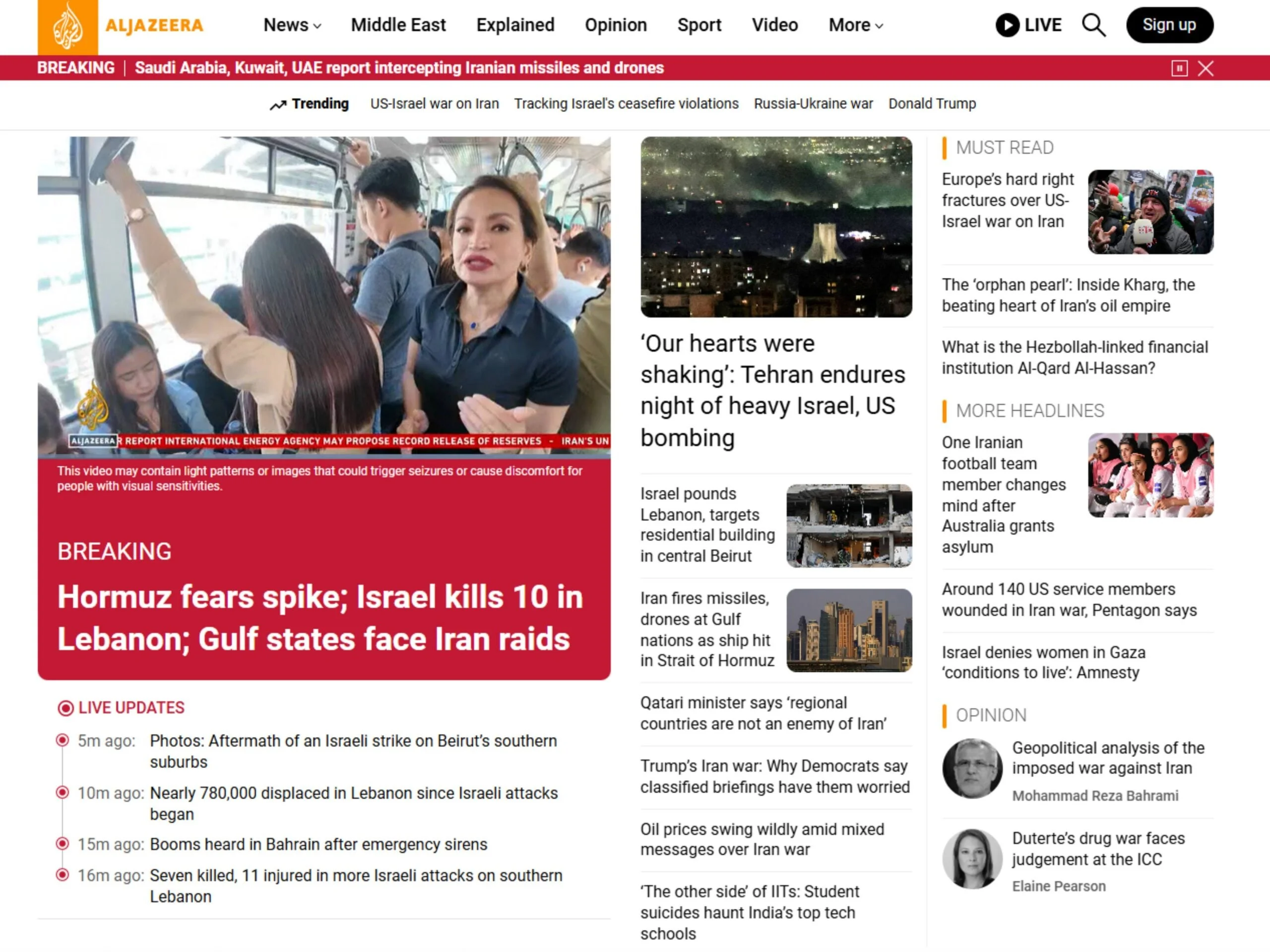
In an unprecedented surge reflecting heightened global interest in the escalating Middle East conflict, Qatar-based news giant Al Jazeera witnessed an extraordinary nearly 400% increase in its global web traffic in March compared to the previous year. This monumental leap catapulted the English-language news site from 31st to 11th on Press Gazette’s monthly ranking of the top 50 English-language news websites worldwide. The dramatic rise, which saw Al Jazeera accumulate 210.8 million global visits in March, up 233% month-on-month, is directly linked to the recent military engagements between the US, Israel, and Iran, culminating in a fragile eleventh-hour ceasefire agreement to halt what President Trump had warned could be the annihilation of "Iran's whole civilization."
Background and Context of the Conflict's Impact
The geopolitical landscape of the Middle East has long been a complex tapestry of alliances and rivalries, but the recent flare-up at the end of February has thrust it back into the global spotlight with unprecedented intensity. The US and Israel initiated strikes against Iran, precipitating a rapid escalation of tensions that captivated international audiences. This period of heightened conflict and diplomatic maneuvering created a voracious appetite for news, particularly from outlets perceived to have direct insight or proximity to the unfolding events. As early as February, Al Jazeera had already demonstrated significant growth, recording a 62% year-on-year increase in traffic to 63.4 million visits, foreshadowing the even more dramatic surge to come. This initial growth was recognized by Press Gazette as ending newsletter platform Substack's seven-month reign as the leader in year-on-year traffic increases, signaling a fundamental shift in reader priorities towards hard news and real-time conflict reporting.
Key Developments in Traffic and Geopolitical Landscape
The surge in Al Jazeera's traffic to 210.8 million visits in March marks a pivotal moment in digital news consumption, directly correlating with the military actions in the Middle East. This growth, a stunning 397% year-on-year and 233% month-on-month, underscores the immediate and profound impact of major global events on news consumption patterns. The peak interest coincided with a critical juncture in the conflict: the US and Israel launching strikes on Iran in late February. Adding to the urgency, President Trump issued a stark warning to Iran regarding commercial shipping through the Strait of Hormuz, threatening severe repercussions if his demands were not met. This high-stakes brinkmanship propelled audiences towards news sources offering immediate updates and context.
An eleventh-hour ceasefire, brokered by Pakistan and China, was announced on Tuesday evening, just hours before President Trump’s deadline for Iran to comply with his demands. This agreement, as reported by The New York Times, stipulated a two-week cessation of hostilities, with Iran agreeing to allow safe passage through the vital Strait of Hormuz for oil, gas, and other vessels. US military strikes ceased, and Iran’s foreign minister confirmed they would "cease their defensive operation" for the designated period. Israel’s Prime Minister Benjamin Netanyahu also supported the ceasefire, contingent on the immediate reopening of the Strait and the cessation of Iranian attacks against the US, Israel, and other regional countries, though his office noted the ceasefire did not extend to Lebanon. This diplomatic breakthrough, while temporary, significantly impacted global markets, with Brent crude prices falling and Asian stocks opening higher. The immediate global reaction to these rapid developments was mirrored in the frenzied search for reliable information, driving traffic to outlets like Al Jazeera and those covering the breaking news, such as Geo News.
Beyond Al Jazeera, other platforms also experienced notable shifts. Substack recorded the second-largest year-on-year traffic increase in March, up 45% to 169.1 million, showcasing the continued, albeit less dramatic, growth of newsletter platforms. India-based NDTV also saw significant growth, rising 32% to 199.5 million visits. Conversely, several Indian news sites, including India.com and The Hindustan Times, experienced substantial declines in traffic, continuing a trend witnessed in February and January, suggesting a possible repatriation of news consumption or a saturation in their domestic market for specific content. Even established players like Newsweek saw a considerable fall. These varied traffic patterns highlight a dynamic and competitive digital news environment, where major geopolitical events can profoundly reshape audience engagement, sometimes at the expense of other content categories.
Analysis: What This Means for Digital News and Geopolitics
The dramatic fluctuations in web traffic for news organizations, particularly Al Jazeera's astronomical rise, offer critical insights into the evolving dynamics of global information consumption during times of crisis. This isn't merely about numerical spikes; it reflects a fundamental shift in how readers prioritize and seek out news. When geopolitical tensions escalate to the point of armed conflict, the demand for immediate, reliable, and often geographically proximate information becomes paramount. Al Jazeera, strategically located in Qatar, often provides a different vantage point and regional context that Western news outlets may not consistently offer, making it a crucial source for audiences seeking a comprehensive understanding of Middle Eastern affairs. This surge underscores the enduring power of traditional news brands, especially those with a strong regional focus, to capture audience attention amidst a fragmented digital landscape.
Furthermore, the data suggests a direct correlation between the severity and immediacy of a global crisis and the engagement with "hard news" platforms. While newsletter platforms like Substack continue to grow, their ascent is more gradual and sustained, indicative of a different kind of reader engagement – perhaps more in-depth analysis or niche interest. In contrast, a conflict like the Iran-Israel war triggers a swift and massive redirection of eyeballs towards live updates and breaking news. This poses an ongoing challenge and opportunity for news organizations: how to build and maintain trust and audience loyalty during peacetime, so they become the default choice during crises. The decline of some Indian news sites, even as others like NDTV grew, might also indicate an increasing selectivity among global audiences, where niche or localized content loses out when a major international story dominates the news cycle, or perhaps reflects specific regional content strategies that did not resonate during this particular crisis.
From an industry perspective, this data reinforces the notion that while content diversification and new engagement models are important, the core mission of timely and authoritative reporting on significant global events remains indispensable. It also highlights the fragility of digital audiences, who flock to where the most pressing story is being told with the greatest perceived authority. For media organizations, understanding these patterns means investing in robust foreign correspondent networks and digital infrastructure capable of handling massive traffic surges. It also raises questions about the long-term sustainability of such peaks once the immediate crisis subsides, and how news outlets can convert transient crisis-driven traffic into lasting readership, by demonstrating continuous value and unique perspectives beyond the immediate event, while also adhering to journalistic principles of accuracy and neutrality.
Additional Details and Broader Trends
Looking at the broader landscape of digital news, the Press Gazette data reveals a mixed bag beyond the Al Jazeera phenomenon. Out of the 50 biggest English-language news websites globally, only 17 managed to achieve year-on-year traffic growth in March, while a significant majority of 31 sites experienced declines. This indicates that while major geopolitical events can cause surges for specific outlets, the overall trend for many established news brands remains challenging in a highly competitive digital environment. The sustained year-on-year declines for several Indian-based news sites (India.com, The Hindustan Times, Indian Express, News 18) and Newsweek highlight persistent struggles for certain players, suggesting deeper structural issues or content strategy mismatches that were exacerbated rather than alleviated by global news events.
Month-on-month data for March, however, paints a slightly more optimistic picture for many, with 44 out of 50 sites seeing traffic grow compared to February. This suggests a general uptick in news consumption across the board, possibly driven by continued global interest in the Middle East conflict and other world events. Reuters, for instance, experienced the second-biggest month-on-month growth, up 46% to 119.5 million, followed by Russian website RT (up 38% to 55.9 million). Conversely, Canadian broadcaster CBC saw the biggest decline compared to February, down 39% to 62.6 million visits, with Forbes also experiencing a drop. These fluctuations underscore the volatile nature of audience attention in the digital age, where a single event can dramatically alter viewing habits.
The methodology used by Similarweb, the data provider, is also an important detail, particularly regarding the BBC. As Press Gazette notes, Similarweb has recently refined its calculation for the BBC's global audience to account for complex redirection patterns between bbc.co.uk and bbc.com. This attention to detail in data collection is crucial for accurate comparisons and highlights the technical complexities involved in measuring global digital audiences. Such methodological improvements ensure that rankings are as precise as possible, providing a clearer picture of who is engaging with which news platforms and where, facilitating a deeper understanding of audience behavior in an increasingly interconnected and crisis-prone world. The constant evolution of measurement tools reflects the dynamic nature of online consumption, demanding flexible and accurate analytical approaches.
Looking Ahead: Sustaining Engagement Beyond the Crisis
The immediate cessation of hostilities between the US, Israel, and Iran, following intense diplomatic efforts, marks a critical pause in what had become a dangerously escalating situation. This two-week ceasefire, agreed upon as described by The New York Times, offers a window for de-escalation and potential negotiation for a longer-term resolution. The global economy has already reacted positively to the news, with oil prices dropping and stock markets showing upward trends. However, the underlying tensions and complex geopolitical interests in the Middle East remain, suggesting that this ceasefire might only be a temporary reprieve. News organizations, having experienced the recent surge in traffic, will now face the challenge of retaining these newly acquired audiences.
What remains to be seen is how news consumption patterns will evolve post-ceasefire. Will Al Jazeera be able to convert its massive surge in traffic into sustained readership, or will audiences revert to their previous habits once the immediate crisis abates? The continued growth of Substack, even amidst the hard news dominance of the conflict, indicates a diverse appetite for news and analysis. The ability of news outlets to provide in-depth analysis, multiple perspectives, and reliable coverage beyond the headlines will be crucial in maintaining engagement. Furthermore, the effectiveness of the two-week truce, and whether it leads to genuine diplomatic progress or simply a rearming for future conflict, will dictate the next wave of global news interest. The world will be watching closely for any signs of renewed hostilities or, hopefully, concrete steps towards a lasting peace, continuously driving the ebb and flow of digital news traffic.
Related Articles
Al Jazeera Surges to Top of Global News Site Growth Amid Middle East Turmoil
Al Jazeera saw a 62% year-on-year traffic increase in February, leading global English-language news sites as Middle East tensions escalate. Substack and CBC also saw significant growth, while many Indian news sites faced sharp declines.