AI Companions Surge at CES 2026 as Society Grapples with Deepening Loneliness
The Consumer Electronics Show 2026 highlighted a striking shift: tech companies are now selling companionship through AI, reflecting a growing loneliness epidemic.

Las Vegas, NV – The Consumer Electronics Show (CES) 2026, a global beacon for technological innovation, showcased an array of futuristic advancements from transparent solar panels to coffee-making robots. However, among the dazzling displays, a more profound trend emerged: the advent of artificial intelligence (AI) companions designed to combat loneliness, signaling a significant shift in the tech industry's focus. This development comes as modern society grapples with a deepening loneliness epidemic, prompting questions about the role of technology in fulfilling fundamental human needs.
The Rise of Companionship Tech
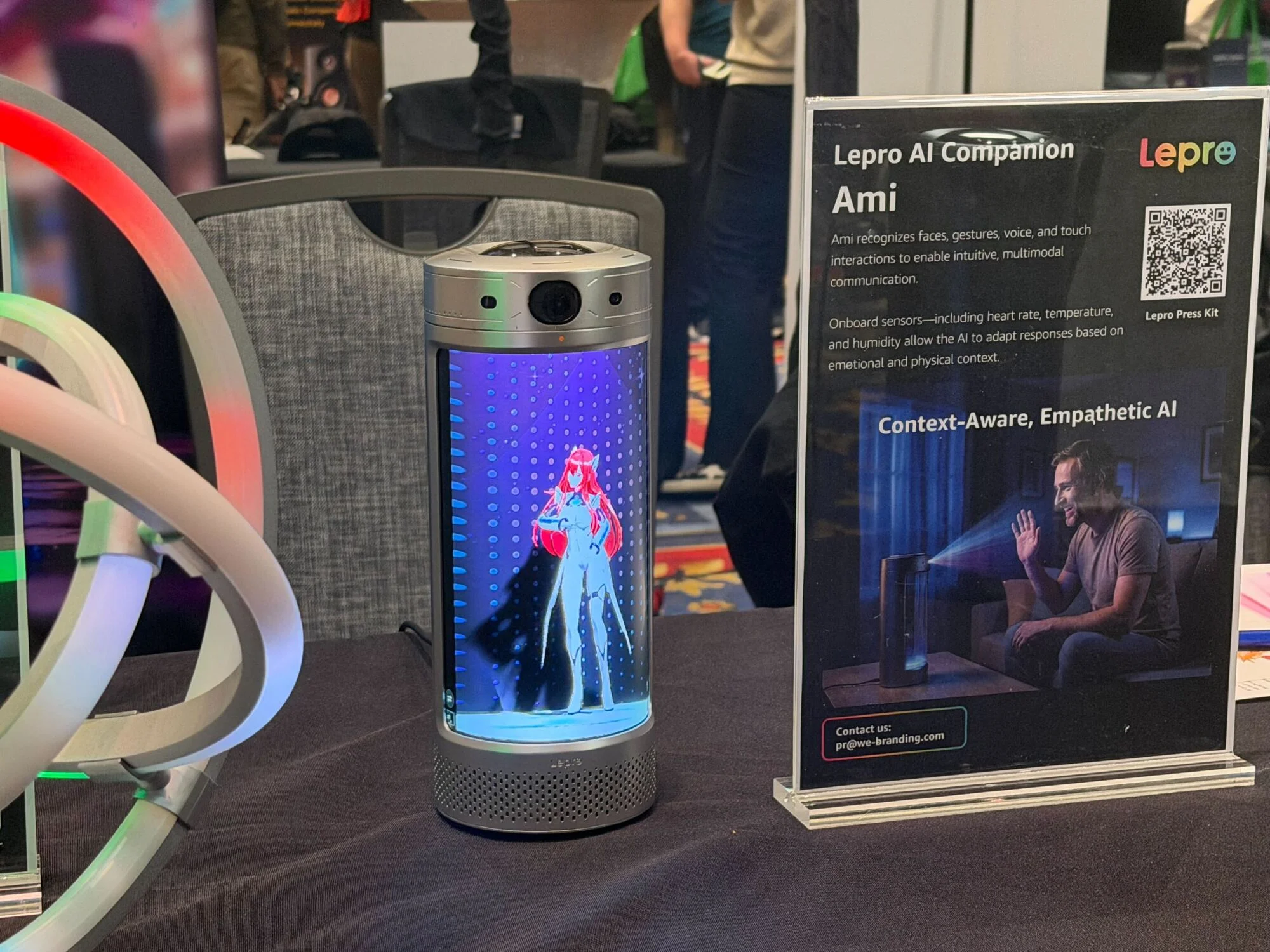
During the recent CES, a notable collection of companies like Ollobot, Dipal, and Ludens AI captured significant attention, not for their utility tools, but for products specifically designed to offer companionship. These innovations transcend traditional smart devices, aiming instead for an emotional presence. For instance, Dipal, a Chinese tech startup, successfully crowdfunded over $1.5 million for its Dipal D1. This small, cylindrical display features a customizable anime-style character that speaks and dances, encapsulated by its slogan: “A companion that’s just as real as you are.”
Unlike conventional smart speakers, the Dipal D1 utilizes cameras and sensors to track eye movements and learn user habits, adapting to their routine. Its primary objective is not to perform tasks but to simulate a reliable presence when a room is empty. Similarly, Japanese startup Ludens AI unveiled Cocomo, a companion robot reminiscent of a robotic pet. Cocomo moves independently, follows its owner, and interacts through touch and sound. Its outer shell is engineered to maintain a human-like temperature of approximately 98 degrees Fahrenheit, avoiding the cold, mechanical feel often associated with robots. These examples highlight a clear pivot in tech development towards addressing emotional needs rather than just practical ones, as reported by the Indiana Daily Student.
A Society Grappling with Isolation
The emergence of AI companions at CES 2026 is not an isolated phenomenon but rather a reflection of a growing loneliness epidemic. In May 2023, then-U.S. Surgeon General Vivek Murthy declared loneliness a public health crisis. By early 2024, 30% of adults reported experiencing loneliness at least once a week, with younger adults disproportionately affected, according to the American Psychiatric Association. This pervasive sense of isolation creates fertile ground for technologies promising connection.
Paradoxically, while social media offers constant interaction, it often lacks genuine intimacy. Adults who are heavy social media users are more than twice as likely to report feeling lonely. Concurrently, Americans are spending less time with friends; weekly social time dipped from 6.5 hours in 2014 to just four hours in 2019. Young people, in particular, spend significantly more time in solitude than they did a decade ago, intensifying a sense of isolation even amidst a hyper-connected digital landscape.
Structural Factors Deepen the Divide
Beyond individual habits, structural shifts in modern life are further exacerbating feelings of loneliness. The workplace has become a significant contributor, with 45% of employees in 2025 reporting feelings of isolation. Remote workers face an even steeper challenge, being nearly twice as likely to experience loneliness compared to their onsite counterparts. Furthermore, the demographic landscape has changed dramatically; single-person households in the United States have more than doubled since 1960, reaching 29% in 2022. These societal transformations collectively contribute to the increasing demand for technologies that simulate companionship, as detailed in an Indiana Daily Student letter.
The Double-Edged Sword of AI Companionship
While AI companions offer a potential solution to pervasive loneliness, their rise is not without unease. Critics suggest that relying on machines to fill emotional gaps presents a "shortcut to connection" that bypasses the essential vulnerability and complexity inherent in human relationships. There's a concern that tech companies might inadvertently foster a future where loneliness is treated as a "product flaw to be fixed by a vendor," rather than a deeper societal issue requiring genuine human engagement. The Indiana Daily Student letter noted that the prominence of AI companions at CES 2026 indicates a future where emotional needs are increasingly met, albeit often superficially, by technology.
Navigating a Hopeful or Troubling Future
The trajectory of AI companionship technology remains uncertain, presenting both hopeful possibilities and significant risks. These inventions could offer comfort and support to those who are isolated or struggling. However, research indicates that over-reliance on technology for emotional fulfillment can paradoxically weaken human connections and exacerbate feelings of loneliness. The crucial question is how society chooses to respond. The future depends on whether AI is leveraged to enhance human connection or to replace it, potentially leading to a world where emotional needs are addressed but never truly met.
As AI companions become a more integrated part of the technological landscape, it urges a critical societal reflection: beyond marveling at technological advancement, it is imperative to understand why so many individuals feel a deep enough sense of isolation to seek solace in these digital companions.
Related Articles

Apple Bolsters AI Prowess with Acquisition of Stealthy Israeli Startup Q.ai
Apple confirms the acquisition of Q.ai, an Israeli AI startup focusing on whispered speech and advanced audio, founded by PrimeSense co-founder Aviad Maizels.