CES Director Urges Boost in Indian Tech Participation Amidst Global Innovation Surge
CES Director John T. Kelley emphasizes the need for more Indian innovations and technologies at the world-renowned consumer and auto tech show, highlighting India's growing tech influence.

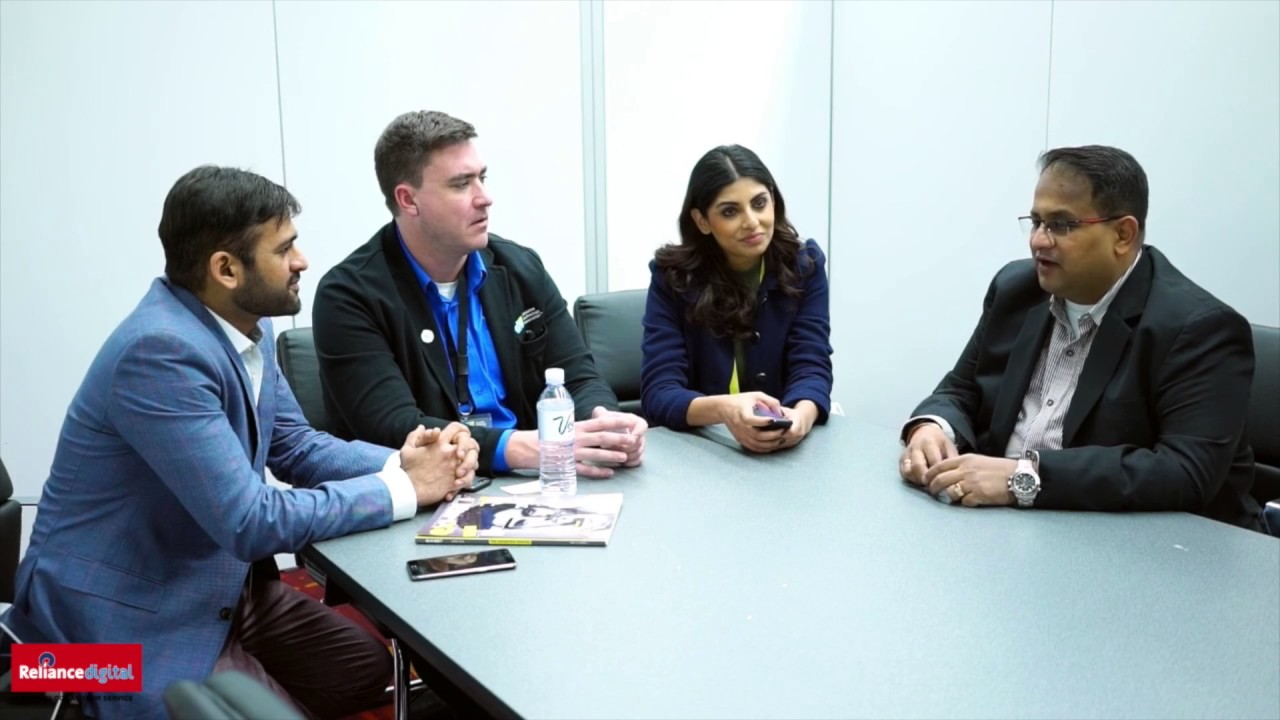
CES 2017, Exclusive talk John T kelley , Mr Kaushal Nevrekar and Mr. Ramesh Somani
The Consumer Electronics Show (CES), the world's preeminent consumer and auto tech exhibition, is making a significant call for increased participation from Indian companies and innovators. This invitation comes at a pivotal moment, as India attracts substantial investments from leading American tech giants like Google, Microsoft, and Amazon in burgeoning fields such as AI and cloud infrastructure. The nation is also emerging as a trusted hub for developing enterprise and consumer applications utilizing cutting-edge technologies.
India's Untapped Potential at CES
John T. Kelley, Vice President and Show Director of CES, which recently concluded its 2026 edition, articulated that while global participation at CES remains robust, with luminaries such as Nvidia's Jensen Huang, AMD's Lisa Su, and Lenovo's Yuanqing Yang in attendance, there is a compelling argument for a more substantial Indian presence. He noted the country's expanding footprint across the global tech ecosystem. "We had about 25 companies from India participating at the CES this year. India is a big and important market. It’s an educated market with a lot of very smart people and growing technology companies. There’s a huge opportunity to attract more Indian companies to the show,” Kelley stated. Despite this, he emphasized that India's current presence falls short of its potential, given its vast size and numerous innovative tech enterprises. "For a country of over a billion people, 25 companies is a small number. I’d like to see many more Indian companies participate here in the future," Kelley added, underscoring the untapped opportunities for Indian innovators at the global stage Times of India.
Indian Innovations on Display
Several Indian companies made notable announcements and showcased their advancements at CES. Bengaluru-based wearables and health tech firm Ultrahuman, for instance, garnered special mention from Kelley for its innovative products, which include the world's lightest sleep-tracking wearable, a continuous glucose monitoring platform, and a preventive blood testing platform. Auto component major Sona Comstar unveiled its autonomous mobile robot platform, marking a significant expansion into robotics, with MD & Group CEO Vivek Vikram Singh highlighting that the entire development was done in-house. Ahmedabad-based electric mobility company Matter Motor Works announced a collaboration with Niron Magnetics to integrate Iron Nitride magnet technology and Variable Flux Motor (VFM) designs into its next-generation electric motorbike platforms. Pune-based KPIT Technologies showcased its next-gen agent AI solution suite, designed to revolutionize vehicle software development, leveraging Generative AI and Microsoft Foundry. Other participating Indian firms included Bhopal-based pseudo-reality and robotics startup ArvyaX Technologies, Gurugram-based smartwatch brand Noise, and Noida-based electronics contract manufacturer Optiemus.
AI and Humanoid Robots Dominate Global Themes
Across the broader CES landscape, Artificial Intelligence (AI) and humanoid robots emerged as central themes. Global participants showcased a diverse range of AI-driven products and solutions catering to consumer and enterprise needs in areas such as transportation, healthcare, manufacturing, energy transition, and immersive technologies. Kelley highlighted that AI was a foundational technology threading through nearly every category at the show, reflecting its growing influence in both consumer-facing products and industrial applications. The event featured over 4,000 exhibitors, including approximately 1,200 startups, with participation from nearly 150 countries, underscoring CES's international reach. A new addition this year, CES Foundry, was a dedicated area for AI and quantum technologies, demonstrating real-world applications and the transition of these concepts into practical deployment across various industries.
Global Leaders and Startup Ecosystems Converge
The CES stage also saw a convergence of global corporate leadership, with over 1,300 speakers contributing to discussions and presentations. Nvidia founder and CEO Jensen Huang delivered a high-profile session outlining the company’s latest AI initiatives and their impact on sectors like autonomous driving. Other keynote speakers included chief executives from AMD, Siemens, Havas, Lenovo, and Caterpillar, discussing topics from "Smarter AI for All" by Lenovo’s Yuanqing Yang to the reshaping of computing infrastructure by AMD’s Lisa Su. Major global companies such as Samsung, LG, Sony Honda Mobility, Hyundai, BMW, and Google showcased future-forward innovations across a spectrum of technologies, including digital health, fintech, gaming, advanced mobility, and XR. Beyond established players, CES also fostered a vibrant startup ecosystem through the Global Innovation Forum, where support agencies from seven leading innovation hubs – South Korea, Taiwan, Switzerland, Israel, Japan, Canada, and France – collaborated for cross-border pitching and investor connections. This initiative, building on a pilot program, featured an investor-facing pitch competition, with South Korea’s Firsthabit taking the top award, showcasing the global desire for structured international startup collaboration Times of India.
Related Articles
Apple Bolsters AI Prowess with Acquisition of Stealthy Israeli Startup Q.ai
Apple confirms the acquisition of Q.ai, an Israeli AI startup focusing on whispered speech and advanced audio, founded by PrimeSense co-founder Aviad Maizels.