OpenAI Unveils 'Operator' AI Agent to Automate Web Tasks for Users
OpenAI introduces 'Operator,' an AI agent that automates web tasks like booking and shopping, marking a new era in AI's role in daily digital life.

OpenAI Launches Operator AI to Automate Web Tasks for Users | News Coverage
🤖 OpenAI Launches Operator: AI Agent for Automating Browser Tasks 🌐
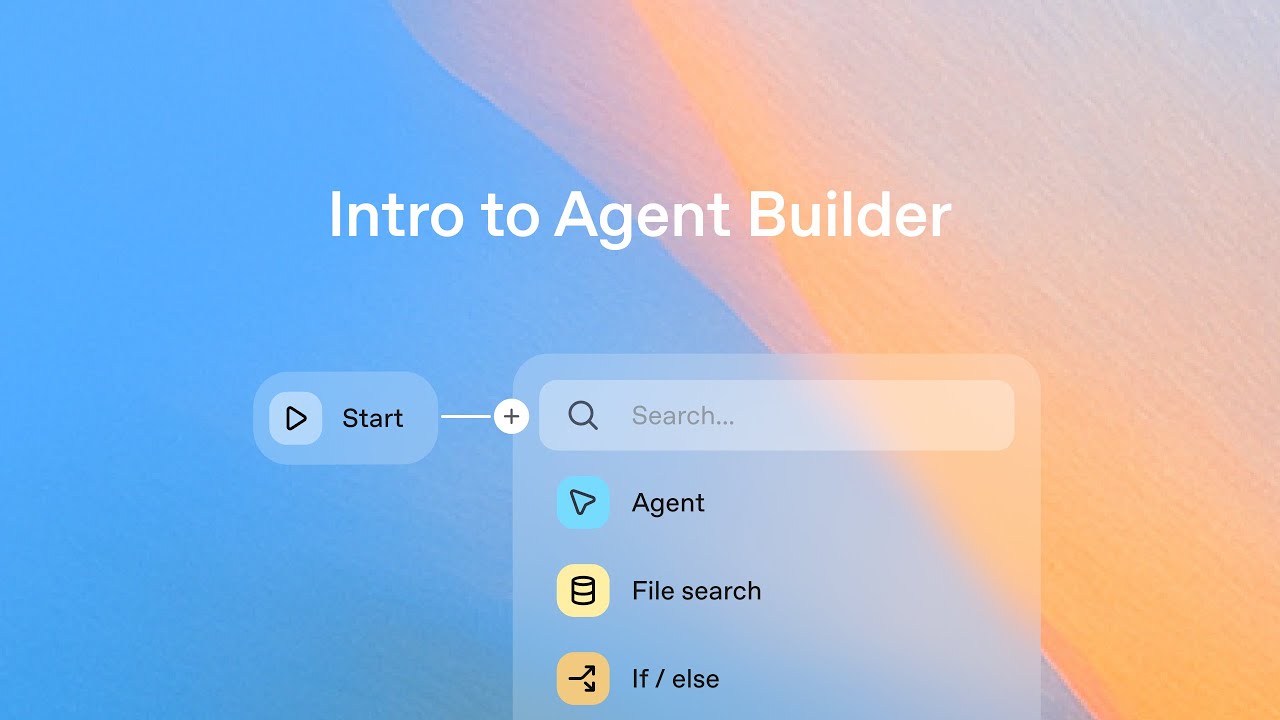
Intro to Agent Builder
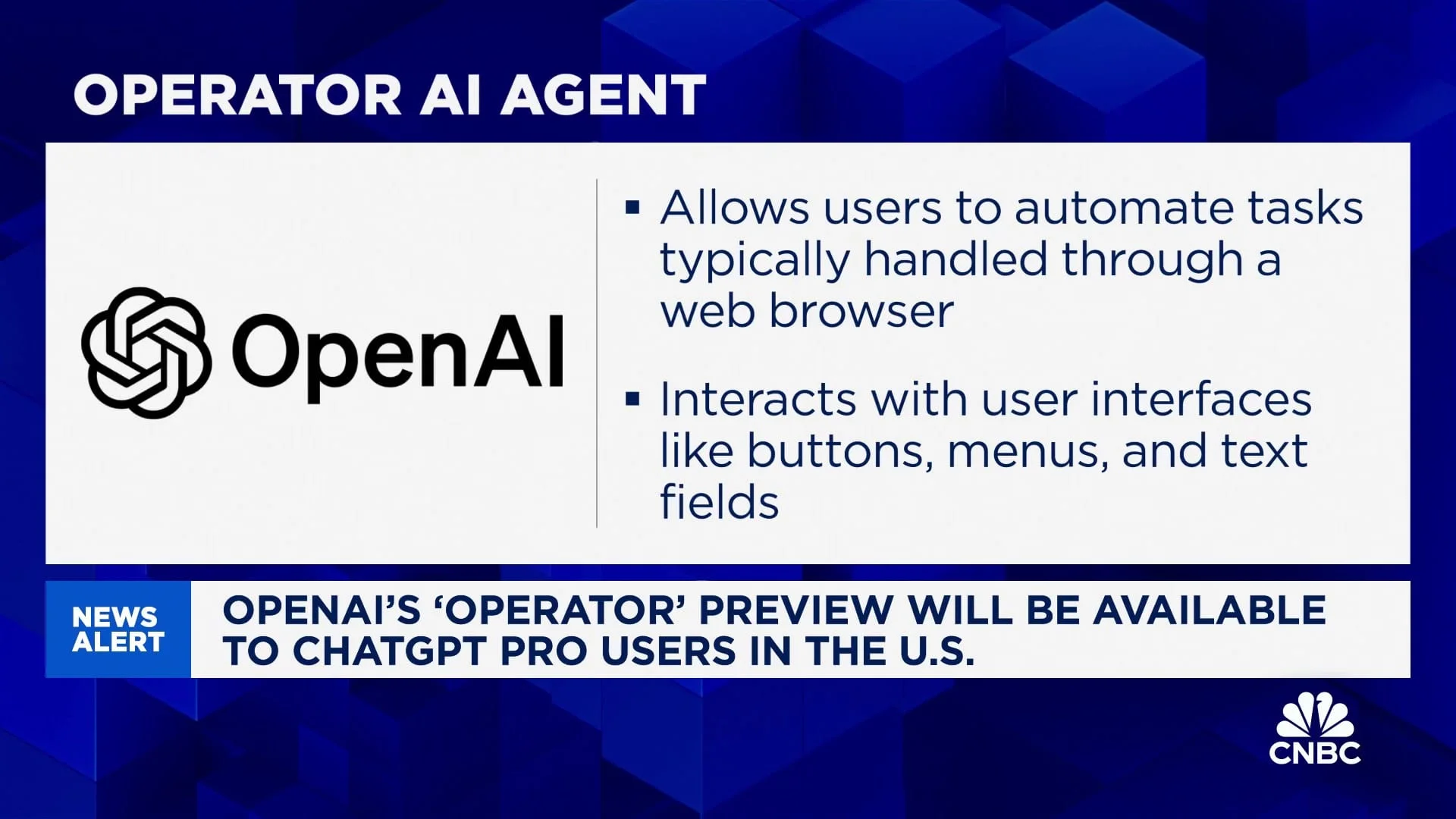
SAN FRANCISCO – OpenAI, the generative artificial intelligence powerhouse, has taken a significant leap forward in AI capabilities with the unveiling of 'Operator,' an AI agent designed to automate a wide array of web tasks for users. The new tool, powered by a sophisticated model that allows it to interact with on-screen elements like buttons, menus, and text fields, signals a new frontier in AI development where intelligent systems move beyond mere information processing to actively executing actions on a user's behalf.
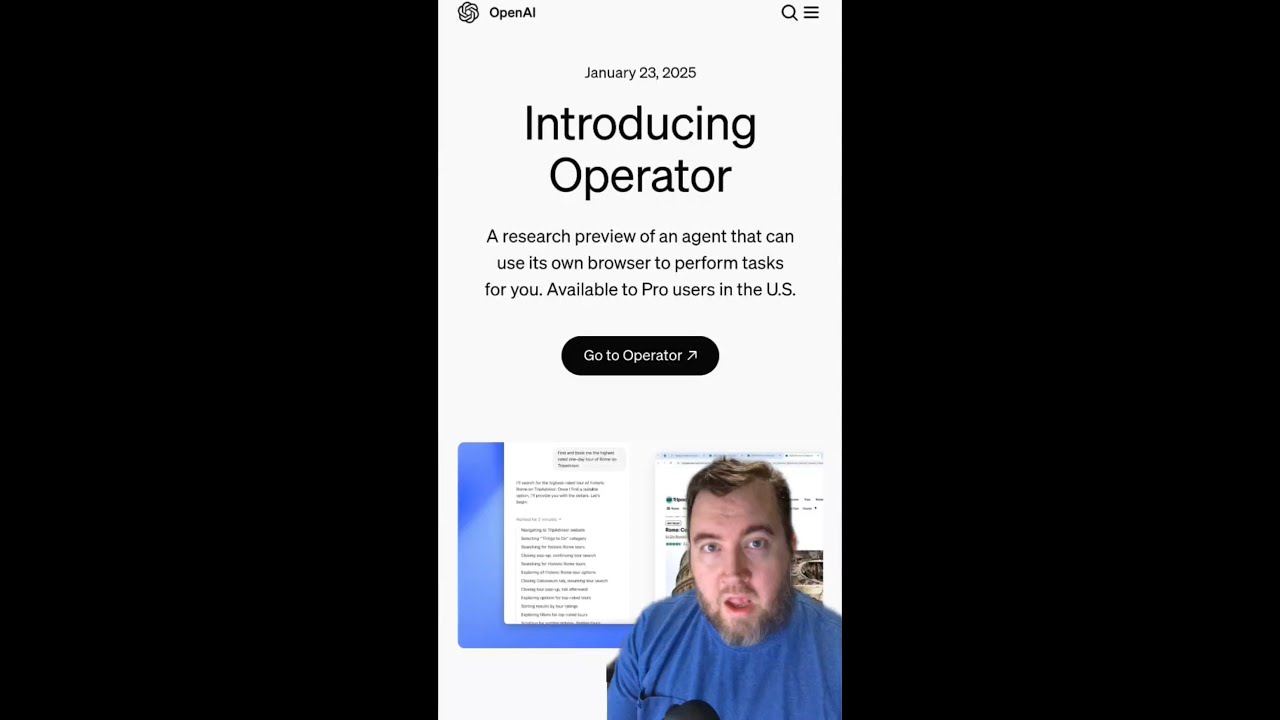
Announced on January 23, 2025, Operator is currently available as a research preview for Pro users in the U.S., with plans for wider rollout to Plus, Team, and Enterprise subscribers. This development positions OpenAI at the forefront of a burgeoning "agentic" AI movement, where AI systems are capable of performing multi-step tasks without constant human intervention.
A New Era of AI Interaction
The introduction of Operator marks a pivotal moment in how users interact with the internet. Traditionally, AI has been largely confined to answering queries, generating content, or performing analytical tasks. Operator, however, ushers in an era where AI can "use the same tools humans rely on daily," according to OpenAI, effectively bridging the gap between passive AI assistance and active, autonomous task execution. Reuters reported that the company stated this capability "marks the next step in AI development, and opening the door to a vast range of new applications."
The system operates by observing content within its virtual browser environment, processing screenshots of the interface to understand its state, and then making decisions about how to interact—clicking, typing, and scrolling—much like a human user would. This visual interface control is a key differentiator, allowing Operator to navigate complex web pages and applications.
Capabilities and Use Cases
Operator promises to automate a diverse set of tasks that typically consume significant user time. Examples highlighted by OpenAI and demonstrated in early previews include creating to-do lists, assisting with vacation planning, booking dinner reservations, and even online shopping. The New York Times detailed demonstrations where Operator autonomously booked a San Francisco restaurant reservation through OpenTable and purchased groceries via Instacart.
During a task, Operator takes user input and, for certain sensitive actions like entering login details, it seeks confirmation. Users can also observe the AI agent's actions within a dedicated web browser interface, which also provides explanations of the steps being performed. Should the agent make a mistake, OpenAI highlights its ability to self-correct, similar to how it overcame a geographical misidentification during a demonstration, initially assuming a user was in Iowa before locating a restaurant in San Francisco. This blend of automation and user oversight aims to build trust and ensure control remains with the human.TechCrunch quoted OpenAI CEO Sam Altman, who said, “Operator will be in other countries soon. Europe will, unfortunately, take a while.”
The Growing "Agentic" AI Landscape
OpenAI's Operator is not an isolated development but rather a significant entry into an increasingly competitive and rapidly evolving field of "agentic" AI systems. Other major tech players have also been pushing capabilities in this direction. Perplexity notably launched an agent-based assistant for Android devices on the same day, capable of booking dinner reservations, hailing rides, and setting reminders. Last year, Apple integrated "Apple Intelligence" into Siri, enhancing its voice assistant, and partnered with OpenAI to incorporate ChatGPT functionality with user permission.
Furthermore, OpenAI's release follows others in the space. In December 2024, Google announced Project Mariner, which performs automated tasks through the Chrome browser. Two months earlier, Anthropic released "Computer Use," a web automation tool focused on developers that allows the AI to control a user's mouse cursor and take actions on a computer. Some observers, like AI researcher Simon Willison, have drawn parallels between Operator's interface and Anthropic's demo, noting similarities in their chat panel and visible interaction interfaces. Ars Technica highlights that the "Operator interface looks very similar to Anthropic’s Claude Computer Use demo from October."
Technical Underpinnings and Future Vision
Operator is powered by a new AI model dubbed Computer-Using Agent (CUA), pronounced "coo-ah," which is built upon OpenAI’s multimodal large language model GPT-4o. This foundation enables CUA to understand and interact with the visual and textual information presented on a web page, facilitating its decision-making process for task execution.
While the initial research preview is accessed through a dedicated portal at operator.chatgpt.com, OpenAI intends to integrate these capabilities directly into ChatGPT and later release CUA through its API for developers. This strategic move suggests a future where AI agents are seamlessly embedded into our daily digital workflows, empowering both end-users and developers to leverage autonomous web interaction. The company believes that the emergence of step-by-step reasoning approaches, such as those used in its o1 model, are making these once-elusive agentic tasks possible.
Industry experts view this shift as a natural progression for AI. Ali Farhadi, CEO of the Allen Institute for AI (AI2), commented that "moving from generating text and images to doing things is the right direction. It unlocks business, solves new problems." Farhadi also noted that operating on a computer screen is an ideal "first step for agents" because it is "constrained enough that the current state of the technology can actually work" while simultaneously being "impactful enough that people might use it." MIT Technology Review highlighted Farhadi's perspective on this development.
Challenges and Considerations
Despite the immense promise, the deployment of such powerful AI agents also raises important considerations regarding security, privacy, and potential for misuse. As these agents gain direct control over online actions, the implications for protecting user data and preventing unintended consequences become paramount. OpenAI's approach of offering a research preview and seeking user confirmation for sensitive tasks indicates an awareness of these challenges.
The rapid advancement of AI agents also sparks broader discussions about the future of work and human-computer collaboration. While Operator's current capabilities are focused on automating simpler web tasks, the underlying technology has the potential to evolve into more complex and sophisticated forms, fundamentally altering how we interact with digital services and the internet itself.
OpenAI's Operator represents more than just a new product; it signals a fundamental shift in the AI paradigm, moving towards proactive and autonomous intelligent systems that promise to reshape our digital experiences. As these "agents among us" mature, their impact on productivity, daily life, and the very nature of computing is likely to be profound.
Related Articles

Apple Bolsters AI Prowess with Acquisition of Stealthy Israeli Startup Q.ai
Apple confirms the acquisition of Q.ai, an Israeli AI startup focusing on whispered speech and advanced audio, founded by PrimeSense co-founder Aviad Maizels.