
Salman Khan's 'Maatrubhumi,' originally 'Battle of Galwan,' has undergone major content revisions, removing all mentions of China following Ministry of Defence directives, delaying its release.
In a significant development for the Indian film industry, superstar Salman Khan’s eagerly anticipated film, ‘Maatrubhumi,’ has undergone extensive content sanitization, removing all direct references to China. The film, initially titled ‘Battle Of Galwan’ and based on the contentious 2020 India-China border conflict, has faced considerable scrutiny from the Ministry of Defence. This directive, as reported by Bollywood Hungama, stems from improved bilateral relations between the two nations, prompting concerns about the film's potentially sensitive themes. The rigorous editing and reshooting process, which reportedly impacted nearly 40% of the film, reflects the complex interplay between creative freedom, political sensitivities, and national interests in contemporary Indian cinema.
The genesis of ‘Maatrubhumi’ lies in one of the most high-stakes geopolitical confrontations of recent times: the Galwan Valley clash of June 2020. This skirmish, which resulted in casualties on both sides, dramatically heightened tensions between India and China and became a focal point of national discourse. Naturally, Bollywood, often a mirror to national sentiment, quickly moved to adapt these events for the big screen. Salman Khan and director Apoorva Lakhia initially conceptualized the project as ‘Battle Of Galwan,’ signaling a direct and unambiguous portrayal of the conflict. However, the path from concept to screen has proven challenging, reflecting the delicate diplomatic tightrope India has walked since. The decision to rechristen the film to the more generic ‘Maatrubhumi’ (meaning 'Motherland') earlier this year was the first hint of a strategic shift away from explicit confrontation, indicating an awareness of the evolving political landscape before the full extent of the Ministry’s intervention became public, as detailed by Bollywood Hungama.
The core issue revolves around the Ministry of Defence’s reservations about the film's content, particularly its depiction of the 2020 India-China conflict. According to sources close to the production, as cited by Bollywood Hungama, the improved relations between India and China prompted direct communication from the Ministry. The primary directive was unequivocal: China was not to be explicitly mentioned in the film. This necessitated a substantial overhaul of the narrative. Salman Khan and Apoorva Lakhia were reportedly compelled to reshoot nearly 40% of the film, adding fictional elements, romantic subplots, and character backstories to dilute the real-life conflict's prominence and to provide an alternative, less politically charged context. Despite these significant creative compromises, the Ministry of Defence reportedly still harbors apprehensions, suggesting a high level of sensitivity surrounding the subject. The film, which was submitted for a No Objection Certificate (NOC) earlier this month, now presents a version where the "neighbouring country" is referenced without being explicitly named, a clever but noticeable workaround that the core team reportedly understands. This ongoing back-and-forth illustrates the bureaucratic hurdles and political considerations that can significantly impact major Bollywood productions, especially those touching upon sensitive national security issues.
The extensive sanitization of ‘Maatrubhumi’ underscores a significant challenge faced by Indian filmmakers when their narratives intersect with sensitive geopolitical realities. While Bollywood has a long history of nationalistic cinema, particularly in portraying conflicts, the intervention from the Ministry of Defence in this instance highlights a shift towards a more cautious and diplomatically sensitive approach. The decision to remove direct references to China, despite the film's explicit origin in the Galwan conflict, suggests that the Indian government views cultural output as a tool that must align with its broader foreign policy objectives. This is not merely about censorship but about strategic national image management, particularly at a time when India seeks to stabilize its complex relationship with China while upholding national interests. For Salman Khan, a prominent figure whose films often carry significant national weight, this situation presents a unique test of balancing artistic vision with governmental expectations. It reveals the often-invisible strings that can guide and reshape creative projects when they venture into politically charged territory, emphasizing that even the biggest stars are not immune to such pressures. The delay in release and the creative compromises inherent in reshooting such a substantial portion of the film could set a precedent for how future projects dealing with similar themes might be handled.
Moreover, this incident resonates within a broader context of how media, globally, is often influenced by government stances on international relations. In India, film has always been a powerful medium for public sentiment and state messaging. The government's apparent desire to de-escalate any narrative that could inflame or complicate diplomatic efforts with China means that filmmakers must tread carefully. This kind of intervention raises important questions about creative freedom versus national interest, a debate that is often at the forefront of cultural production in many nations. While the film may still tap into patriotic sentiments, the absence of a specific named adversary transforms its narrative significantly, moving from a direct historical account to a more generalized portrayal of valor, which may have implications for how audiences perceive its authenticity and message. This delicate dance between artistic expression and political expediency is a perpetual challenge, made even more complex when international relations are at stake.
The revised version of ‘Maatrubhumi’ aims to secure a No Objection Certificate (NOC) from the Ministry of Defence, a crucial clearance for films that touch upon military subjects or governmental affairs. The protracted process underscores the exhaustive vetting such projects can undergo, especially when real-world diplomatic relations are at play. While the film's release date, originally set for May 15, now appears uncertain due to these revisions, Salman Khan's busy schedule suggests he is moving forward with other commitments. For instance, he is slated to begin shooting for Dil Raju’s next project, co-starring Nayanthara and directed by Vamshi Paidipally. Additionally, he has Raj-DK’s superhero film in his pipeline, indicating his consistent output despite the 'Maatrubhumi' delays, as reported by Bollywood Hungama.
This situation also implicitly contrasts with other recent events within the entertainment industry. For example, while films like ‘Maatrubhumi’ face governmental scrutiny, figures like Farhana Bodi, a reality TV star and model, seamlessly transition between global platforms and local events. Her appearance as a showstopper at Mumbai Fashion Week 2026, enjoying a Ragi Dosa minutes before hitting the runway, as chronicled by Gulf News, highlights a different facet of the media landscape, where personal branding and lifestyle content operate with fewer political constraints. Yet another example from the broader entertainment landscape, as seen on IMDb, showcases the routine tracking of box office collections for films like 'Dhurandhar 2' and 'The Super Mario Galaxy Movie,' demonstrating the commercial juggernaut of cinema that largely remains untouched by such direct governmental interventions. These examples collectively illustrate the diverse spectrum of concerns and freedoms across different segments of the entertainment world when compared to projects like 'Maatrubhumi' that delve into sensitive political territory.
The fate of ‘Maatrubhumi’ now hinges on its ability to satisfy the Ministry of Defence’s revised expectations. The ongoing negotiation between the filmmakers and the government body sets a precedent for future productions that might draw inspiration from real-world geopolitical events. It raises important questions about the sustainability of explicit, fact-based narratives in a politically sensitive environment and whether filmmakers will increasingly lean towards fictionalized or allegorical approaches to circumvent such direct interventions. The eventual release and reception of ‘Maatrubhumi’ will be keenly watched, not just for its box-office performance but also for its cultural and political implications. It will demonstrate how effectively a major Bollywood production can navigate the complexities of national security concerns while still delivering a compelling cinematic experience in a landscape where nationalistic themes often find resonance with the audience. The success or struggle of this altered film will provide valuable insights into the evolving dynamics between creative expression and state interests in India’s vibrant film industry.

The severe health decline of veteran writer Salim Khan, 92, deeply impacts son Salman Khan's focus on his film 'Maatrabhumi', raising concerns for recovery and professional commitments.
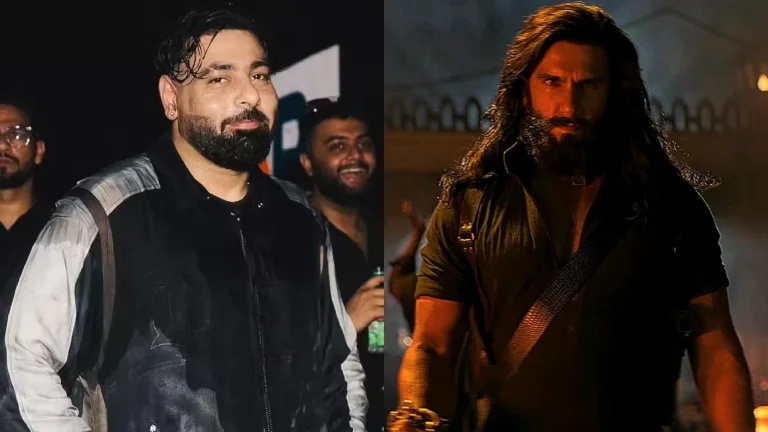
Rapper Badshah praises Aditya Dhar's 'Dhurandhar 1 & 2' as bold, experimental, and a sign of a new era in Indian filmmaking, sparking discussions on cinematic evolution.

Bollywood star Kartik Aaryan has filed an intellectual property suit in the Bombay High Court to protect his name, image, and likeness from unauthorized commercial use online, including AI-generated content. This move highlights growing celebrity efforts to safeguard personality rights amid rising digital exploitation.